


 EN
 ไทย


Customers Also Purchased




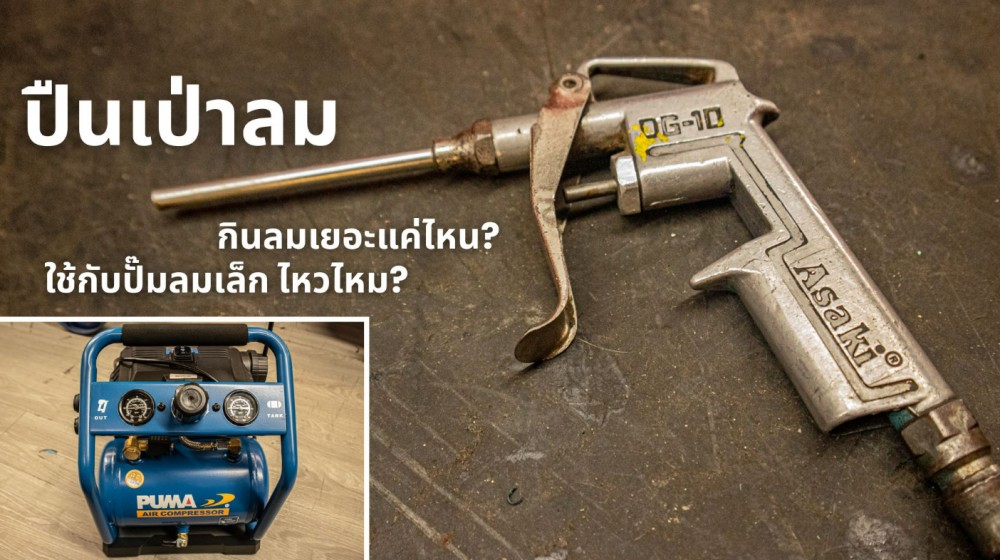
When talking about pneumatic tools, we might think of air impact wrenches, air ratchets, or air drills. For painting jobs, there are spray guns or, more specialized, airbrushes, right? But there is one tool that technicians grab and use all the time—far more often than most people think.
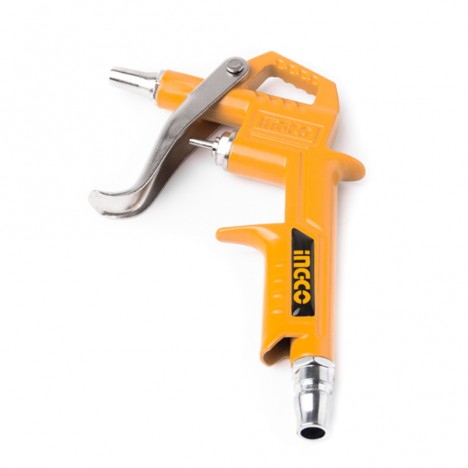
That tool is Air Duster Gun an air blow gun. A simple-looking tool where air just comes out whenever you pull the trigger. But the questions are: "How much air does an air blow gun consume?" and "If used with a small air compressor, can it handle it, or should it be avoided altogether?" Because as we all know, the longer you blow continuously, the longer you need a constant supply of air.
These questions are directly tied to the everyday experience of air compressor users—such as the compressor cycling frequently, rapid pressure drops, loud noise, or feeling like the compressor runs loudly non-stop after using the blow gun for just a short moment.
That's why in this article, I want to address the points many people often overlook, point by point: from the working principle of an air blow gun that seems simple but affects the air system more than you'd think, to an overview of how well small air compressors can handle blow guns, how to use them adequately, and how to operate them without straining your compressor in the long run.
How an Air Blow Gun Works and Its Impact on the Air Compressor
Many people might think an air blow gun is just a tube that releases air—no motor, no complex parts—so it should consume less air than other pneumatic tools. But in reality, its working principle is simply to allow air to flow out continuously, which is precisely what makes an air blow gun's air consumption different from rotary, impact, or cyclic pneumatic tools.
Many pneumatic tools, like air impact wrenches or air drills, consume air intermittently—having rest phases and acceleration phases. But with an air blow gun, once you pull the trigger, air flows out continuously as long as you hold it down. The volume of air discharged depends directly on tank pressure and nozzle orifice size—with no throttle damping and no cycle limits like rotary tools.
If you ask whether Why Air Compressor Owners Should Have an Air Blow Gun at Home One answer is that it is the most "straightforward air-consuming" tool. However, if used continuously for long stretches, it draws air out of the tank quite rapidly—especially when using wide-nozzle blow guns or those designed for extra-high flow.
How Much Air Does an Air Blow Gun Consume? What Many People Might Overlook
If you ask, "Does an air blow gun consume a lot of air?", the answer isn't as straightforward as you might think, because it depends on the blow gun design and how it is used. General blow guns consume approximately 150 - 300 liters/minute (L/min) While small air compressors of 24-30 liters usually produce only 50 - 120 liters/minute When you continuously hold down the trigger of a blow gun, the air in the tank will noticeably drop in just a few dozen seconds.
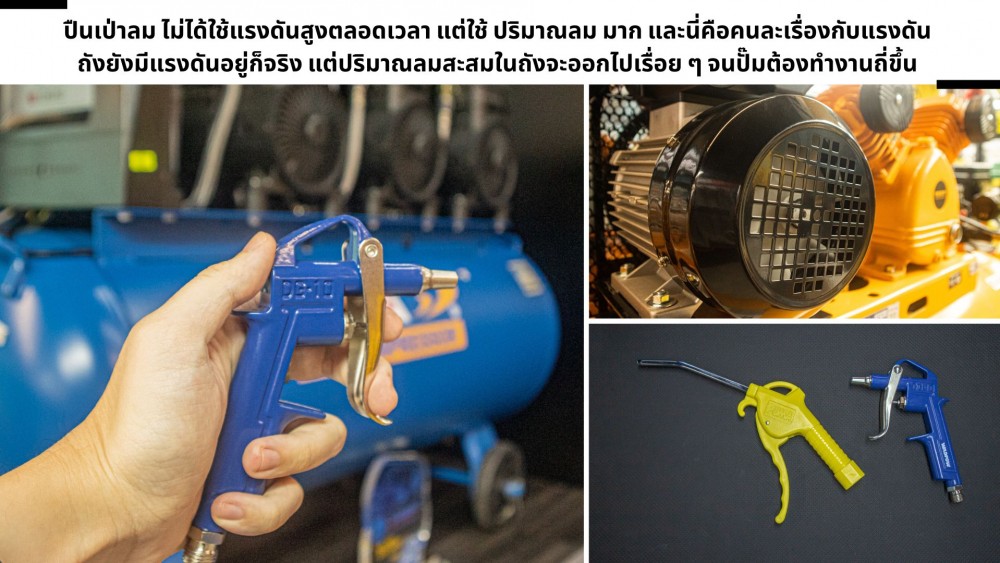
Why does a blow gun consume different amounts of air each time?
If you use a blow gun with short trigger pulls in bursts, the air discharged each time will not be much, and a small air compressor can still handle it. But if you blow continuously, standing and blowing dust for long periods without releasing the trigger, air flows out constantly and causes the small air compressor to start working hard and consume a lot of air.
Therefore, each person's experience differs: some say it works smoothly without problems, while others feel the compressor barely rests. These experiences do not contradict each other; they simply reflect different usage habits.
Blowing air does not always require maximum pressure (such as 8 bar). Reducing it to 4 - 5 bar will save a huge amount of air and reduce the compressor's load significantly. Just knowing how to adjust blow gun pressure properly, safely, and to reduce damage helps you use the tool at full efficiency.
Everything you should know before choosing an air blow gun: is it true that buying the wrong one will cause breakdowns? Some blow gun models are designed for wide air dispersion and powerful blowing, suitable for industrial work, which naturally consumes more air than smaller nozzles or models with flow limiters.
Straight and angled blow guns
Just the shape of the nozzle affects air consumption. Straight-nozzle blow guns deliver a direct, strong, and continuous air stream, ideal for blowing dust out of deep crevices, but at the cost of a higher air flow rate. Meanwhile, angled or tapered nozzles offer better directional control and often consume slightly less air.
Standard vs. Industrial blow guns
Blow guns designed for industrial plants focus on "power" and "speed" to be used with large air systems. If used with a small air compressor, you will immediately notice the air depleting unusually fast. In contrast, general-purpose blow guns are designed to balance air power with air economy.
Can you really use a blow gun with a small air compressor?
To answer this question straightforwardly: it can manage, but you need to know its limits. Small air compressors, such as 24-liter or 30-liter tank models, can certainly be used with air blow guns—especially for light tasks like blowing dust off workpieces, cleaning workbenches, or dusting off small parts.
However, if you plan to use an air blow gun to blow dust off an entire vehicle, clean large machinery, or run it continuously for long periods, a small air compressor definitely won't be fun to use. It will have to cycle on and off frequently, temperatures will rise, and its lifespan will be shortened. Therefore, small air compressors are better suited for "supplementary" rather than "primary" air blow gun use. If you understand this point, you won't be disappointed and won't blame the equipment.
How well can a portable air compressor handle an air blow gun?
Nowadays, compact portable air compressors, such as PUMA FORCE BL or DEWALT DCC1020N those featuring brushless motors or battery-powered systems, have started replacing traditional corded air compressors. With their compact size, lightweight build, portability, and quieter operation, many people wonder whether they can truly keep up with an air blow gun.
The answer is: these air compressors can indeed be used with air blow guns, but they are suitable for short, intermittent bursts or spot cleaning rather than continuous, prolonged blowing. That's because they are designed for mobility and convenience, not for storing large air volumes like big-tank compressors.
If used with proper rhythm, they will be convenient, agile, and effective. But if you hold the trigger continuously, the system will cycle frequently and overheat quickly. These air compressors are therefore not suitable for heavy-duty industrial work.
Overlooked habits when using air compressors with air blow guns
What causes small air compressors to break down quickly often isn't the air blow gun itself, but habitual operating behaviors—such as holding down the trigger while walking over to grab something, or even using the air blow gun in place of a broom or wiping cloth. These may seem like minor things, but over time, they place a heavy burden entirely on the air system.
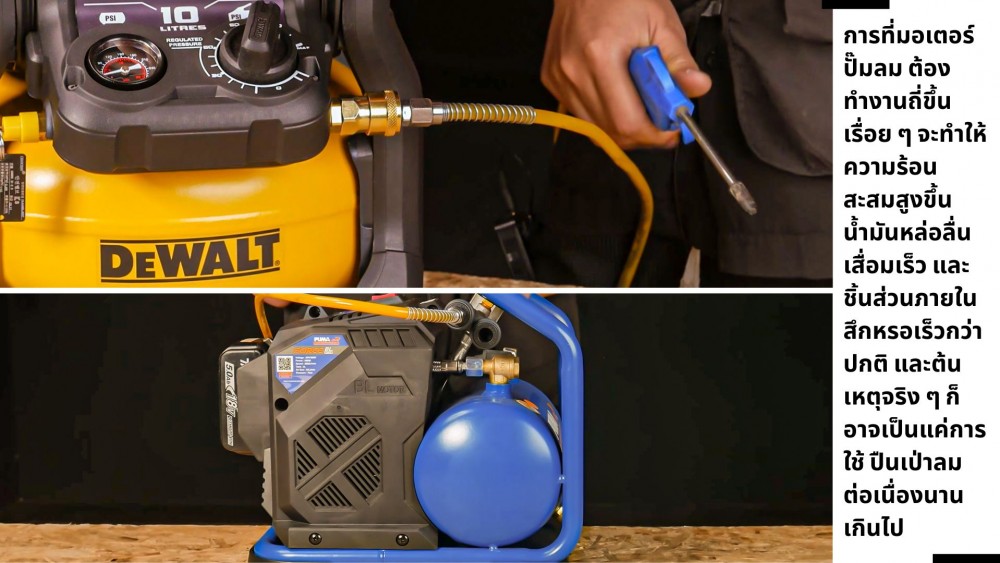
If you want to use an air blow gun primarily, what kind of air compressor should you look for?
If you already know that your work requires frequent, prolonged, and continuous air blow gun usage, moving up to an air compressor with a larger tank or higher continuous airflow output will make your work much smoother. A larger tank doesn't just help with pressure; it provides stored air capacity so the motor doesn't have to start up too frequently.
From a practical standpoint, investing in an appropriate air compressor is usually more cost-effective than pushing a small compressor beyond its limits, only to face frequent repairs or premature replacement. Most importantly, it keeps using the air blow gun from becoming a frustrating experience.
How to use an air blow gun without overloading a small air compressor?
First, try to use the air blow gun in short, intermittent bursts—avoid holding the trigger down unnecessarily long. Intermittent air bursts are more than enough for most jobs. Second, choose an air blow gun suited to the task; you don't always need the most powerful one.
Another point that many people overlook is the air hoses and fittings. If there's a leak in the system, part of the air generated by the compressor is wasted. In some cases, the compressor has to work extra even when the air blow gun isn't being used.
Are air blow guns still necessary in an era with other types of cleaning tools?
Even though we now have electric vacuum cleaners, blowers, and cordless tools—essentially an abundance of specialized cleaning devices—air blow guns remain hard to replace thanks to their simplicity, agility, and ability to reach tight crevices that other tools struggle with. It simply requires switching our usage from mere habit to a better understanding.
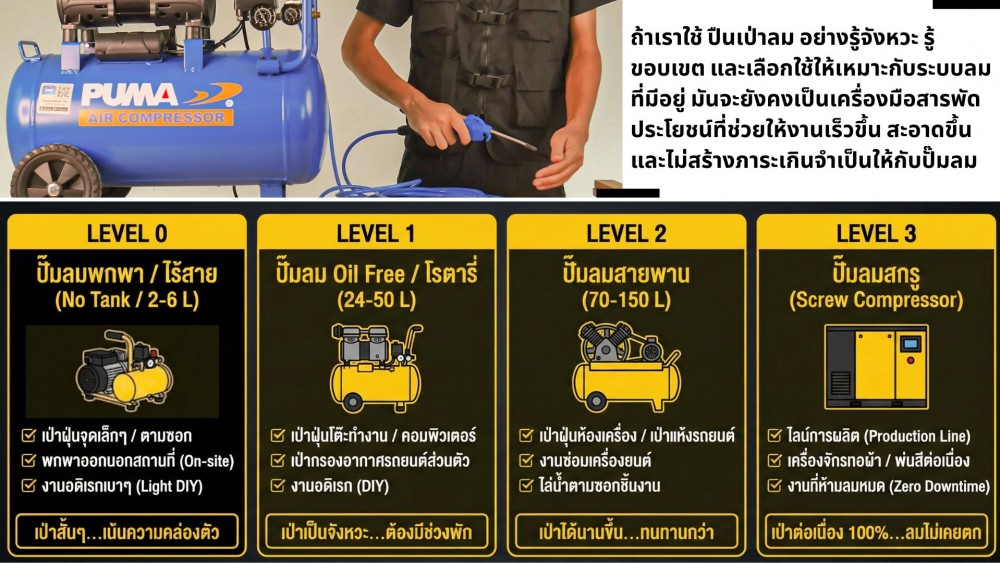
Conclusion: Do air blow guns consume a lot of air? Should you use them with a small air compressor?
The question "How much air does an air blow gun consume?" may not be as crucial as "How do we use an air blow gun?" In the end, every tool consumes resources based on how it is operated. If we understand the nature of the air blow gun, recognize the limits of small air compressors, and adjust our operating habits accordingly, concerns about high air consumption will hardly be an issue at all.
Therefore, I would conclude that: Blow guns do not have an inherent problem with small air compressors Instead, they are tools that require an understanding of how to use them properly. They naturally consume a lot of air when opened continuously, and improper use can quickly overload a small air compressor unnecessarily.
Small air compressors—even portable ones—can easily run a blow gun if used within reasonable limits, such as:
- Using the blow gun for light jobs, such as blowing away dust or small debris
- Using it intermittently rather than holding the trigger down continuously
- Selecting a blow gun and pneumatic fittings appropriate for the compressor size
- The air compressor does not need to cycle on and off constantly
- The noise level and operating temperature of the air compressor remain within normal ranges
If you start noticing that the air compressor is running constantly, making continuous noise, or getting unusually hot, that may be a sign your workload is exceeding the limits of your current air system.
Just understand this point, Air Duster Gun and it will be a great helper rather than a burden on your air system.