


 EN
 ไทย


Customers Also Purchased


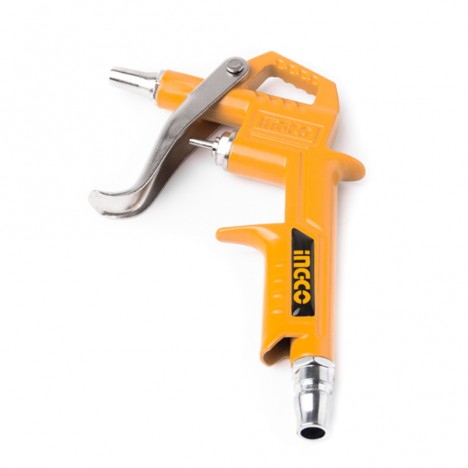


Anyone who works in trades or is familiar with pneumatic tools probably knows many small accessories that seem insignificant, but in reality, these devices make work much easier. And one of them is Air Duster Gun
I believe many people have seen, used, or at least heard of them or come across them. But when it actually comes time to buy, a big question pops up immediately: "Which type should I choose?" Some people buy them and use them for the wrong application, sometimes the air flow isn't strong enough, or sometimes they break shortly after use.
"Can buying the wrong one really lead to damage?" Imagine this: someone bought a cheap blow gun for use in an auto garage, but when using it to blow away oil stains, it lacked the power, leaving the stains stuck as before. Or someone else bought a short-nozzle blow gun when they actually needed to blow into deep crevices, so it couldn't reach, causing frustration—feeling like the item wasn't worth the price paid or the time spent setting it up. Yet, if they had chosen the right tool for the job from the start, these problems wouldn't have happened at all.
Therefore, in this article, I will take you through in-depth answers so you truly understand: when choosing an air blow gun, if you choose the wrong one, how likely is it to break or cause damage, harm the workpiece, or fail to perform at full efficiency? This is to ensure you get the device that fits your needs without wasting time fixing mistakes or buying duplicate tools.
Why Is Choosing the Right Air Blow Gun Important?
First, let's understand by In-depth: What is an air blow gun, and why is it so popular in mechanical work? Because many people still think it's just a small nozzle connected to an air hose used to blow away dust, right? Yes, but it doesn't stop there. In real-world applications, air blow guns are used in many situations—from clearing wood shavings, metal chips, and factory dust, to delicate jobs like blowing clean electronic circuit boards or drying engines after washing.

Does Choosing the Wrong Air Blow Gun Really Cause Damage? And What Breaks?
The word "broken" or "ruined" here, let me define it: it doesn't just mean that the air blow gun will crack, break, or become completely unusable. It also includes Buying something that isn't worth the money, doesn't match the job, ruins the work, and potentially wastes time and money on duplicate purchases. Let's take a look at what "ruined" means in these contexts.
Airflow isn't strong enough, practically unusable
Some people buy very cheap air blow guns to use with large air compressors, only to find the airflow is as weak as a soft breath. That's because the internal structure of the gun isn't designed to handle high pressure. When faced with heavy-duty tasks like blowing off grease stains or tightly stuck metal shavings, it just can't handle it—even if the compressor itself is powerful.
Improper use, hazardous to workpieces
Another common problem is using the wrong type of air blow gun for the job, such as using a high-pressure air gun to blow electronics. The result is damaged workpieces from excessive pressure. Or using a gun without a filter nozzle to blow out an engine, causing debris to blow back into the system.
In cases like this, even if the gun doesn't break, the "work is ruined"—and you might even incur additional repair costs.
Poor material quality, shortened lifespan
If you choose an air blow gun made of flimsy materials, such as low-grade plastics, it often cracks at the joints or trigger mechanism before long. Especially for daily, frequent use, buying too cheap means having to replace it repeatedly, which ultimately costs more in the long run.
How many types of air blow guns are there, and which one is right for you?
When choosing an air blow gun, the first thing to know is that there isn't just one type; they can be divided into several categories. Here are the main groups commonly found on the market.
1. Standard handle air blow gun (short nozzle / long nozzle)
Suitable for general use, such as blowing away dust, wood chips, and metal shavings on workbenches or machinery. Short-nozzle guns are agile and ideal for confined spaces, while long-nozzle models are great for reaching deep into crevices. The spray coverage area may be narrower, making it better suited for hard-to-reach spots rather than broad general cleaning.
2. Interchangeable nozzle air blow gun (complete set)
Some air blow gun models and brands come with a variety of interchangeable nozzles suited for different tasks—such as small needle nozzles for tight crevices, flat nozzles for wide coverage over larger areas, and specialized nozzles for specific applications. Ideal for those who want all-in-one versatility.
I think this type of air blow gun is ideal for technicians because you can switch nozzles according to the task—whether small jobs, big jobs, or high-precision work. It saves time and money, eliminating the clutter of owning multiple air blow guns.
5. Extra-long handle air blow gun
Air blow guns with extra-long tubes are used for jobs that require reaching deep inside machinery or areas inaccessible by hand. Their highlight is making it easy to work in blind spots and offering greater safety since you don't have to put your face close, which also reduces the risk of dust or metal shavings blowing back at the user.
This type is suitable for maintenance work in narrow spaces, such as blowing clean engine bays, factory machinery, or ducts where dust accumulates inside. It saves time and increases convenience for thorough work.
6. Specialized air blow gun
Sometimes you need an air blow gun that does more than just blowing away dust or water in small tasks—such as an air blow gun designed for spray drying (Dry Gun), used in automotive painting or applications specifically requiring moisture removal. These models are higher priced, but they deliver distinctly different results.
What to look for when choosing an Air Blow Gun?
Many people may have wondered how to choose an air blow gun: is a cheap, fixed-nozzle model easier to use, or is it better to go for a versatile one for long-term use?

Pressure Level and Airflow Rate
Before purchasing, check how much pressure the air compressor you plan to use can deliver, and choose an air blow gun that matches your compressor's pressure rating. For example, if you pair a high-pressure air blow gun with a small compressor, the airflow may be so weak that it performs no differently than a regular air blow gun, while also consuming a lot of air and causing the compressor to work overly hard. Conversely, connecting a cheap air blow gun with low pressure tolerance to a large compressor could cause it to leak quickly, requiring a replacement after just a short time of use.
Materials and Durability
For occasional general use, high-grade plastic is sufficient. However, if you use it daily in an automotive shop or factory, you should opt for metal or aluminum alloy materials, which offer better resistance to high pressure and impact from drops.
Additional Features
Some air blow gun models come with extra features such as adjustable pressure, built-in filters, or interchangeable nozzles. If you tackle a wide variety of tasks, these features can save both time and money compared to buying multiple individual tools.
Head Length
Do not overlook this aspect. If you need to blow out deep crevices or hard-to-reach areas, choose a long nozzle or an interchangeable nozzle model. For general-purpose tasks, a short nozzle will be more convenient and maneuverable.
Common Misconceptions About Air Blow Guns
Often when talking with technicians or customers coming in to purchase tools, I frequently encounter misconceptions regarding air blow guns. These misunderstandings can lead to poor buying decisions and prevent users from achieving optimal performance. Such misconceptions might seem minor, but their impact on real-world work is certainly not negligible.
- Thinking that all types are the same In reality, each model is designed differently. For light-duty or heavy-duty work, you must choose appropriately. Some people buy a short-nozzle gun for deep crevices, only to find that it makes the task much harder than it needs to be.
- The most expensive is always the best That's not always true; the best tool is simply the one that suits your specific job. If you buy a top-tier model just to blow dust off a workbench, you might feel like you've wasted money unnecessarily, when a smaller model would have completely met your needs.
- Can be used for any kind of task Certain applications, like working with electronics or circuit boards, can easily get damaged if the airflow is too strong.
- The louder it is, the more powerful it is Many people mistakenly believe that a louder air blow gun must be more powerful, but that is actually not the case. Some small air blow guns deliver excellent airflow without being annoyingly loud.
- No need to check the compressor's pressure Many people think that an air blow gun can be connected to any air compressor with the same result. That's incorrect, because as mentioned, if the pressure doesn't match, the airflow will be weak or the gun may wear out quickly.
How to buy an air blow gun without wasting money?
In simple terms, before buying, ask yourself: What will we use the air blow gun for? How often will it be used? What air compressor pressure will it be used with? These questions actually matter a lot in making your choice. In addition, you should also ask yourself how much maneuverability you need, whether you need a short or long nozzle, and how often it needs to be used per day, because if used heavily every day, materials and durability are extremely important.
Once we've thought through all these angles, then choose the appropriate model. This will greatly reduce the risk of buying the wrong one.

Conclusion: Can buying the wrong one lead to breakdown? Is it true?
The answer is It's true! It's not just breaking in terms of cracking or getting damaged to the point of being unusable, but what could also happen is: Not getting your money's worth, not matching the job, and causing problems instead of making work easier.
However, if we understand the types and functions and select materials suited for the application, the chance of feeling like you wasted your money is practically zero.
So, if you are about to choose and buy an air blow gun, try looking back at everything I've shared here first, so you won't have to regret later thinking, "If I'd known, I would have chosen a different model."
Because Air Duster Gun Even though it's just a small tool, believe me, making the right choice once will give you long-lasting use that's many times more worthwhile.