


 EN
 ไทย


Customers Also Purchased


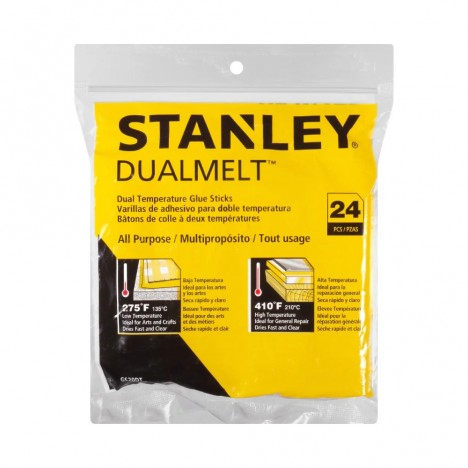
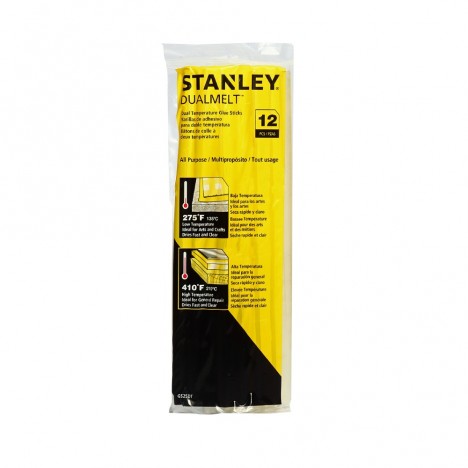
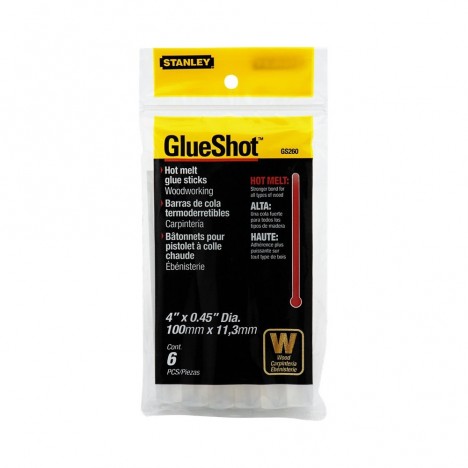
Glue Gun Just hearing the name of this small craft tool, I believe many people think back to school craft projects. Some still use it for home repairs, while others reach for it in DIY projects that require speed and flexibility.
Various materials that seem mismatched—wood, plastic, fabric, or foam—can be easily bonded together with hot glue sticks from a single glue gun. This is precisely why many view it as a simple, straightforward, and seemingly harmless tool.
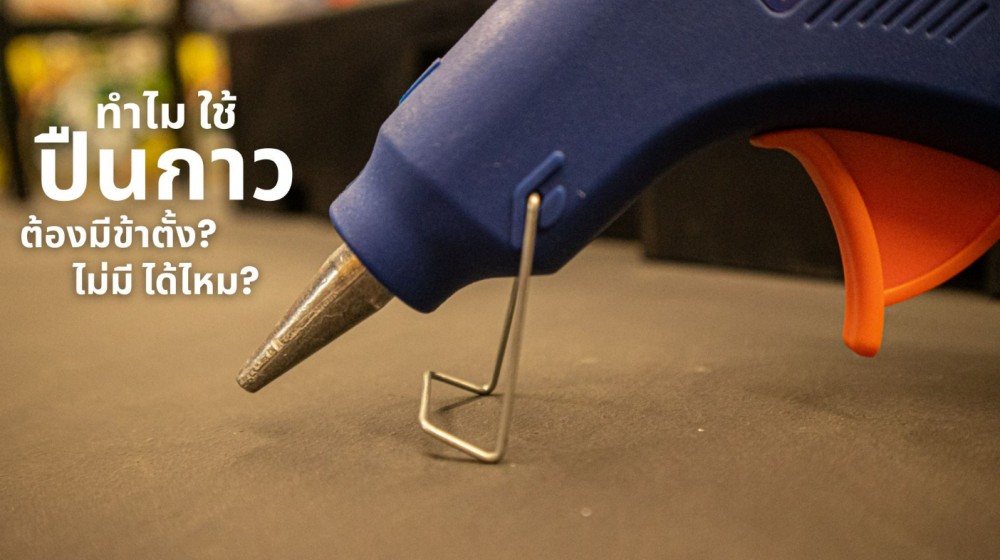
Ever wondered why glue guns in tool shops, whether cheap or expensive, always come with a stand? It raises the question: "What happens if you don't have or use one?" Many have used them for years laying flat on a table without issues. Others find the stand cumbersome or awkward to fold out, so they leave it tucked away. Doing this isn't necessarily wrong, and we're here to dive deep and find the answer!
In this article, we will walk through the basics, operating principles, and real-world usage perspectives to explain why a glue gun stand isn't just there to make the tool look complete or professional, but plays a direct role in safety, convenience, and finished work quality.
How Does a Glue Gun Work, and Why Does "Tool Placement" Matter?
A glue gun isn't just an ordinary glue applicator, as heat is generated during operation and must be constantly managed. This level of heat is enough to quickly melt hard thermoplastic glue sticks, but at the same time, it is enough to damage surfaces, materials, or the user's hands.
Operating it without understanding certain details can be risky, and one small detail often overlooked is the "stand."
Common Misconceptions About Glue Guns: Use Them Right, Use Them Well, Bond Easily Without Ruining Your Work Before discussing the stand, let's review how a glue gun works. A glue gun uses an internal heating element to melt a solid glue stick into a semi-liquid hot glue. Squeezing the trigger dispenses the glue through the front metal nozzle, which can easily reach temperatures exceeding 150–200 degrees Celsius.
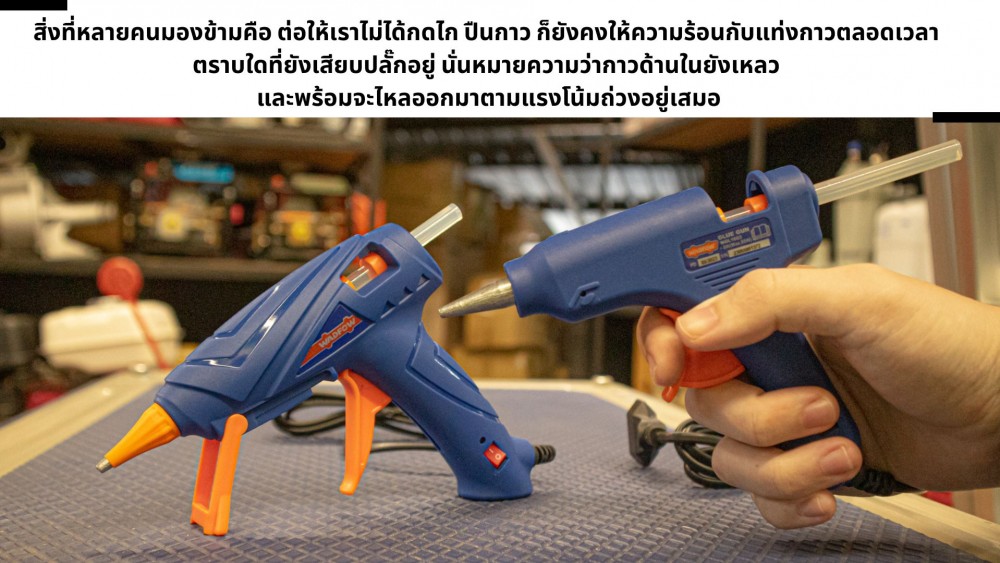
Glue Dripping Without Pressing the Trigger: A Normal Occurrence You Shouldn't Overlook
A slight drip from the nozzle doesn't mean the glue gun is broken; it's the natural behavior of hot glue. The longer the temperature remains steady, the lower the glue's viscosity becomes, making it flow more easily. Therefore, how you rest the tool immediately becomes a critical factor.
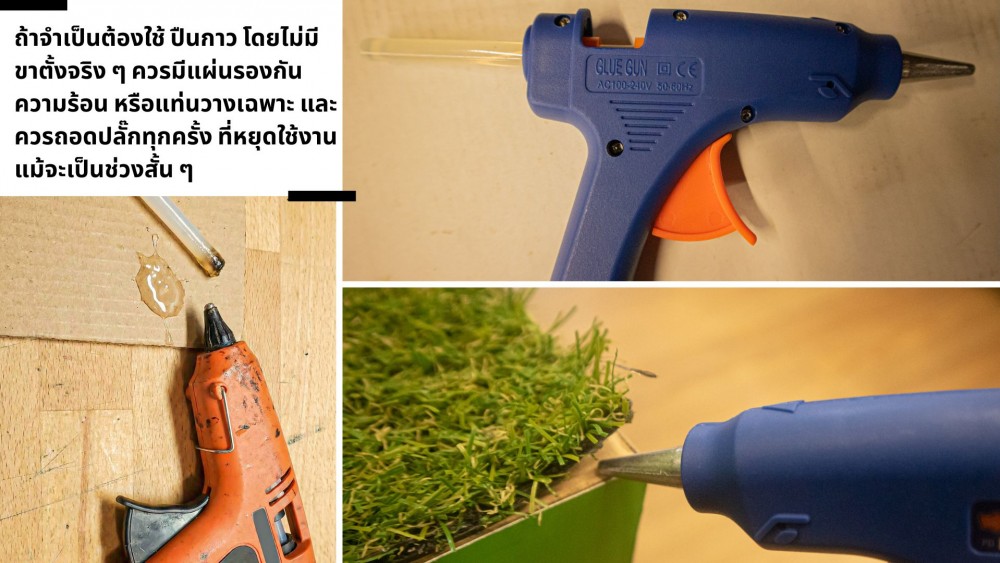
If you place a glue gun with the nozzle facing down too low or directly touching a surface, dripping glue will pool there. Both the heat and the glue itself can unintentionally damage the surface, workpiece, or surrounding tools. Besides placement, proper storage is equally vital, so it's important to understand: How to Store a Glue Gun for Long Life, No Clogs, and No Messy Leaks on Your Table as well.
What Exactly Is a Glue Gun Stand, and What Is It Designed For?
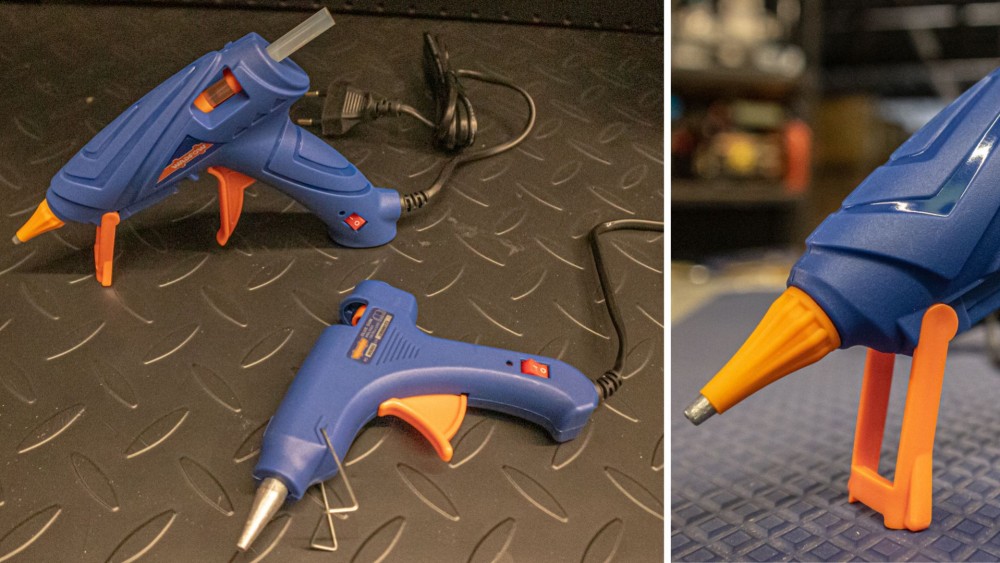
A glue gun stand is typically a bent metal wire or rigid plastic piece attached to the tool body, designed to support weight and keep the nozzle elevated off the work surface. Many view it as a mere accessory or bonus, but in design terms, the stand is part of the basic safety system. It is engineered to accommodate real-world habits where users repeatedly set the glue gun down while working—whether picking up parts, aligning materials, or waiting for glue to set.
An Intentionally Designed Angle
Notice that a glue gun stand usually angles the tool forward at just the right pitch—neither too steep nor too flat. This precise tilt directs melted glue to drip predictably, reducing the chance of glue backing up inside the chamber or accidentally spreading across surrounding surfaces.
Reducing the Natural Tendency to Tip Over
Beyond controlling drip direction, a glue gun is front-heavy due to the heater and metal nozzle at the front. Lying flat, it can easily roll or flip over. The stand provides extra points of contact with the surface, keeping it stable without fussy positioning and preventing the hot nozzle from touching other items.
The Role of the Glue Gun Stand
- Helps elevate the nozzle off the surface, reducing direct heat transfer.
- Controls the dripping direction of the glue to a predictable spot.
- Increases stability, reducing the risk of the tool falling over or rolling.
- Allows you to put the tool down immediately without overthinking or being overly cautious.
- It is an integral part of safety design, not just a decorative accessory.
What actually happens in practice if you use a glue gun without a stand?
To answer this question straightforwardly: You don't have to use a stand, but you must clearly understand the consequences. Because the effects of not using a glue gun stand don't show up immediately during the first or second use, but gradually accumulate through repeated usage habits—such as resting position, familiarity, and the surrounding environment. Eventually, these effects may become apparent in the form of damage, inconvenience, or risks that are hard to avoid if prevention was never considered from the start.
1. Dripping glue mess is the first issue encountered
When we lay the glue gun flat, the nozzle naturally becomes the lowest point. The hot glue, remaining in a semi-liquid state, will slowly flow out and drip onto the workbench, floor, or nearby workpieces.
Even small droplets of hot melt glue possess very high adhesive strength, and once cooled, they are often difficult to remove, leaving stains or marks that make the workspace look untidy, and sometimes directly affecting the quality of the workpiece.
2. Hidden accumulated heat
The metal nozzle of the glue gun can continuously transfer heat directly to the contacting surface. The longer it rests, the more heat accumulates. If that surface is made of heat-sensitive materials—such as certain plastics, laminates, or synthetic materials—this accumulated heat may cause the surface to deform, discolor, or deteriorate faster than usual.
3. Instability unknowingly increases risks
When a glue gun is not elevated or supported by a stand, the tool remains in an unstable state. A slight nudge to the table, a pull on the power cord, or even minor vibrations from nearby work can easily cause the glue gun to shift or flip over. And when the high-temperature nozzle moves unintentionally, it naturally increases the chance of it contacting things it shouldn't.
Why many people can still use a glue gun without a stand
In many cases, tasks involving a glue gun are short and quick—such as attaching small parts, fixing a single item, or crafting simple projects that require only a few glue presses before being done.
With this type of usage, users rarely need to leave the glue gun sitting idle for long periods. The risks from dripping glue or heat buildup are not obvious, leading to the perception that going without a stand causes no issues at all.
Another factor is habit. When we repeatedly do something the same way without facing negative consequences, our brain starts to evaluate that method as "safe enough"—even though safety actually depends on surrounding conditions such as usage duration, resting surface, or work continuity, rather than the behavior alone. Then, once a project runs longer or circumstances change, the risks previously overlooked begin to increase.
Is it necessary to use a stand every time?
If you ask in terms of safety, The answer is that you should use the stand every time you put the glue gun down. Even if you only put it down for a few seconds, because there is no way of knowing when the glue will leak out or when someone might bump the table.
Does a stand make working with a glue gun smoother?
So, does a stand really make working with a glue gun smoother? Yes, it makes it much smoother than many people think, especially for tasks that require frequently switching hands, picking up workpieces, adjusting positions, checking alignment, or waiting for the glue to set briefly during work.
Having a stand gives the glue gun a dedicated resting spot instead of placing it randomly, so you don't have to constantly think about where it is safe enough to put down. This small detail helps maintain a continuous work flow and reduces disruptions in ways you might not notice at the moment, but which genuinely impact the overall work.
Reduces unnecessary rushing
With a stand, you can set the glue gun down immediately without having to look for a specific safe spot or nervously steadying the tool. This peace of mind eliminates the rush caused by the fear of dripping glue or the hot nozzle touching other objects. When you don't have to rush, the work turns out neater, your movements become more precise, and you have more time to align workpieces exactly as intended.
Better control over your workspace
When the glue gun is placed in a fixed and stable position, any glue that drips out will fall in a predictable spot. This makes organizing your workspace easier, keeps the table from getting unnecessarily messy, and eliminates the need to constantly wipe up or stay on guard. An organized workspace also allows you to see workpieces and other tools more clearly, reducing clutter and making the overall work more steady and systematic.
Conclusion
Using a glue gun with a stand makes your work smoother, keeps the table cleaner, and eliminates the worry of the hot nozzle touching materials it shouldn't. The longer the job takes, the clearer the difference becomes.
Many people might not realize the importance of a stand on their first day using a glue gun, but after using it continuously for a while, you'll begin to see that it genuinely helps prevent small issues from accumulating into major problems.
A glue gun is a deceptively simple tool, but it involves heat and risks. Therefore, a stand is not just an accessory meant to complete the box, but part of the design intended for safe, organized, and high-quality use.
If you are wondering whether Glue Gun you should have a stand, the answer is yes, you should have one and use it every time you put the tool down. Most problems stem from familiarity, which makes us careless without even realizing it.