EN
 ไทย


Customers Also Purchased
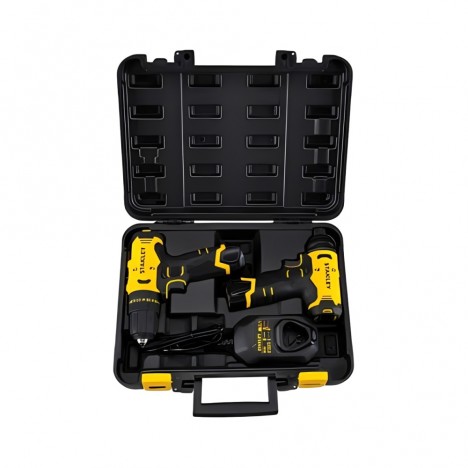
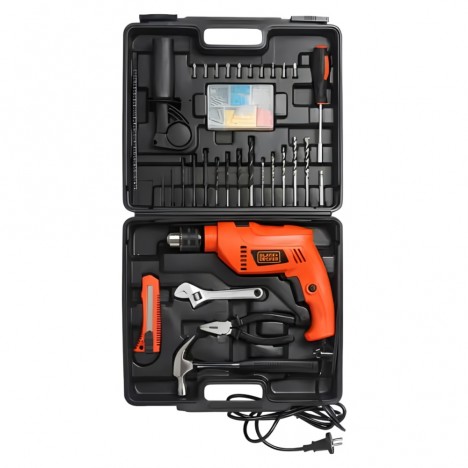


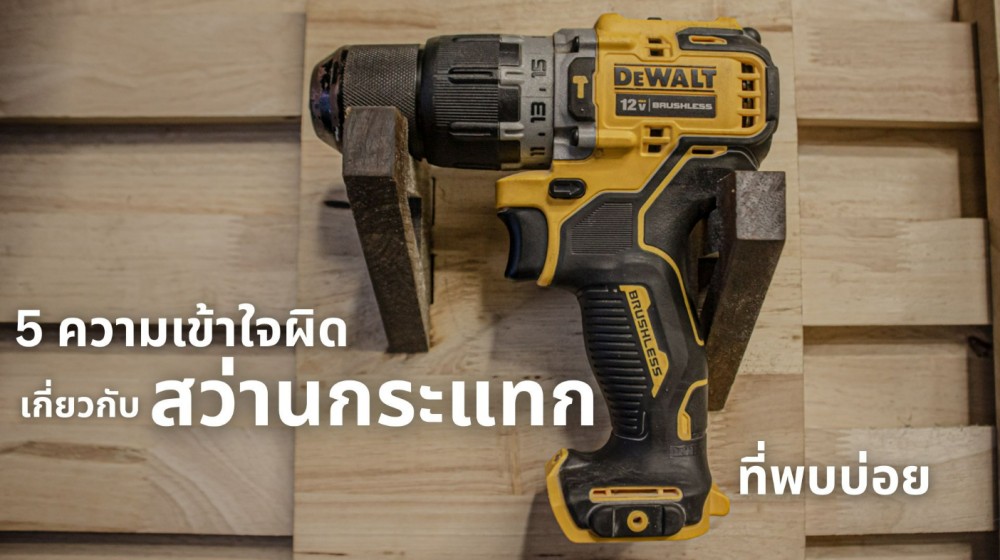
If I said that hammer drill is one of the most confusing power tools for people, you might find yourself nodding in agreement without even realizing it. Almost every day, the same questions pop up repeatedly, from in-store counters to online chat boxes.
Those questions revolve around just a few topics, yet they constantly make buyers hesitate—such as how an impact drill differs from a regular drill, whether buying just one can truly drill through everything, or why some craftsmen say you shouldn't use impact mode for certain jobs even though its name makes it sound ready to tackle any situation.
That is why this article won't tell you whether you should or shouldn't use an impact drill. Instead, we will walk through the common misconceptions about impact drills, from the moment you step into the store to the point where you have to decide to actually put it to use, looking beyond just the catalog specifications.
1. By using impact mode, an impact drill can drill through anything
This is the number one misconception that often begins the moment a customer steps into the store. Many people say with full confidence, "Give me an impact drill; I'll use it for everything." It sounds like the safest choice, like picking a middle ground that can't go wrong. But in reality, this mindset is the root cause of using an impact drill incorrectly for the wrong tasks.
Why do so many people think an impact drill must be all-purpose?
One reason is its very name. The term "impact drill" makes many people feel that this tool must be powerful, rugged, and capable of handling any material—whether wood, steel, or masonry. But the truth is, an impact drill wasn't designed to excel at every job; it was designed to excel better at certain tasks only.
What is the true role of an impact drill, and what was it designed for?
An impact drill is developed to make drilling into hard materials like brick, plaster, and general concrete (masonry) easier. The impact mechanism creates high-frequency vibrations along the drill bit's axis while rotating, allowing the bit to gradually chip through hard, brittle materials.
This impact force is very useful when used for the right application, but that doesn't mean it's suitable for every situation—especially tasks that require stability, precision, or fine torque control.
When using impact mode on the wrong task, where do the problems begin?
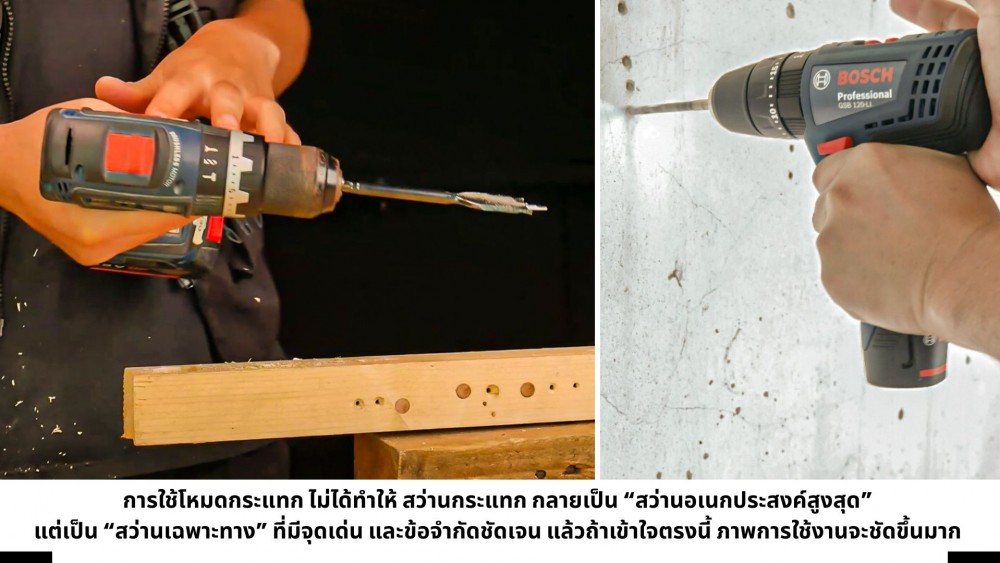
Imagine using an impact drill in impact mode to drive long screws into softwood. The continuous impact force will cause the screw tip to wander, skew the screw line, strip the screw head, or even split the wood! A job that should have been neat might end up wasting time on repairs, fixes, or replacing the workpiece entirely!
Additionally, when drilling metal, vibrations from the impact system do not help at all. On the contrary, it can cause the bit to wear down quickly, produce rough holes, and make controlling the pace harder than before.
A quick summary before moving on to the next misconception
- Impact mode is suitable for drilling brick, plaster, and general concrete where extra force is needed to chip through the material.
- It is not suitable for tasks requiring stability and high control, such as driving screws, drilling wood, or drilling thin metal.
- Impact mode should be used selectively, not left on continuously for the entire operation.
- Using an impact drill for the wrong type of work can cause premature bit wear, poor work finish, and excessive tool vibration.
2. The term 'impact drill' means it must be more powerful and better
Many people interpret the word "impact" to mean more power, greater durability, and superiority over a standard drill. Intuitively, it sounds very reasonable because the word evokes images of heavy-duty work, drilling fast, and drilling hard. However, in terms of actual usage, the answer is "not always," and in some cases, it can even be the exact opposite.
The power of an impact drill is more than just the word 'impact'
A drill's capability is not measured simply by whether it has an impact mechanism, but by a combination of multiple factors working together—from motor power and torque delivered to the bit, to speed control, stability, and suitability for the material being drilled.
In woodworking, thin sheet metal work, or high-precision drilling, a standard drill with good torque and smooth speed control can perform better and deliver cleaner results than a powerful but hard-to-control impact drill.
When power is excessive and uncontrollable, results can end up worse
There are many cases where users choose an impact drill thinking "it's more powerful, so it should be easier to use." In actual use, they find excessive tool vibration, poor alignment control, and the bit wandering—especially in detailed tasks like drilling aligned wall plug holes or drilling near the edge of a workpiece.
3. If your home has concrete/plaster, you must only use an impact drill
This is another deeply ingrained belief, especially among beginners who think, "If it's a concrete/plaster home, I definitely need an impact drill first," otherwise it won't drill at all. This mindset often stems from the fear of being unable to drill into walls or worrying that a standard drill won't handle household tasks.
The truth is that many household tasks do not require impact force all the time. For drilling walls to hang picture frames, lightweight shelves, or low-load fixtures, a standard drill paired with a good quality masonry drill bit is sometimes more than enough. Moreover, it is easier to control, quieter, and reduces unnecessary damage to the wall.
Tasks that do not require impact mode, such as:
- Drilling thin plaster walls to hang picture frames, clocks, or decorations
- Installing small shelves that do not carry much weight
- Drilling to install small electrical equipment, such as switch boxes or wire raceways
- Drilling tasks that require high precision and where wall cracking must be avoided
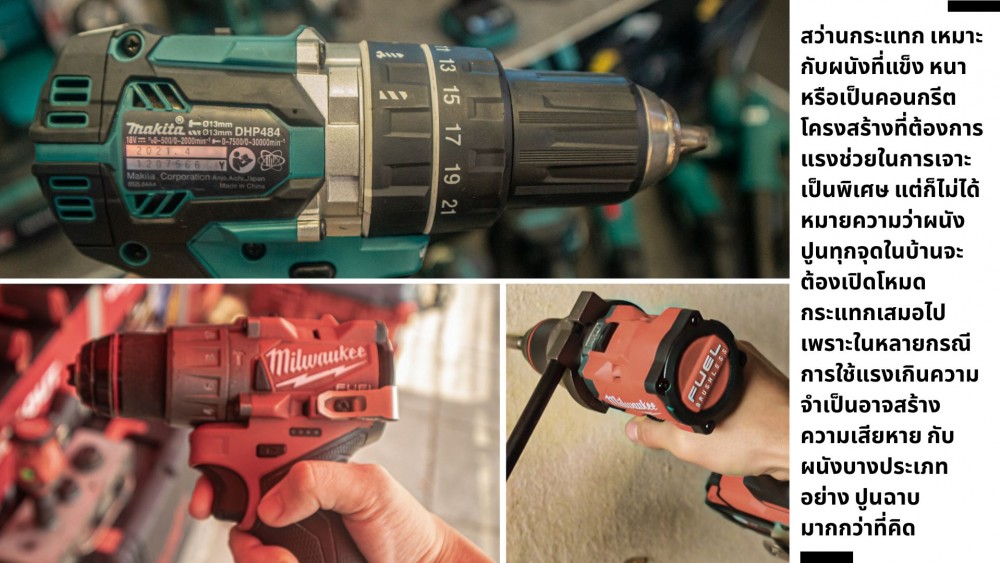
The signs telling you that you should use impact mode are usually felt in your hands and heard from the tool's sound—for example, the drill bit rotates without penetrating the material, an unusually high pressing force is needed, or a continuous harsh grinding noise is heard without the hole getting as deep as it should.
On the other hand, if the drill bit can penetrate steadily, stays on track easily, and does not require much pushing force, that usually means the job does not yet require impact force.
4. Using an impact drill with impact mode always on makes drilling easier
In the previous section, we concluded that Impact mode should be turned on only when necessary However, the reason many people inadvertently leave it on comes from the feeling or misconception that "leaving it on makes the impact drill drill easier," or simply forgetting to switch modes after finishing drilling masonry. This small habit is precisely what causes problems in the long run.
Disadvantages of using impact mode unnecessarily
If you ask whether Can the impact mechanism in an impact drill be used for drilling wood or metal? The answer is The impact mechanism is designed for drilling concrete and hard, brittle materials—not for wood or metal. Leaving impact mode active on tasks that do not need impact force—such as drilling wood, drilling metal, or driving screws—creates continuous vibration. This causes bits to wear out quickly, forces the impact drill itself to work harder, and makes maintaining the drill line noticeably more difficult. What should have been straight ends up crooked, and what should have been smooth gradually accumulates minor mistakes.
Many people might feel at first that "leaving it on doesn't seem to cause any harm," but the consequences of this habit usually show up in the long run—whether through shortened drill bit lifespans, the tool developing looseness, or a noticeable drop in work precision compared to when it was first used.
Recommended habits for using an impact drill
- Impact mode is not a default mode that must be kept on all the time
- Use it only for drilling concrete, brick, or hard materials where genuinely necessary
- Turn off hammer mode immediately if working with wood, metal, or driving screws.
Using the various modes of a hammer drill at the right moment will extend the life of both the drill bit and the tool itself. Your work will noticeably become steadier, cleaner, and easier to control.
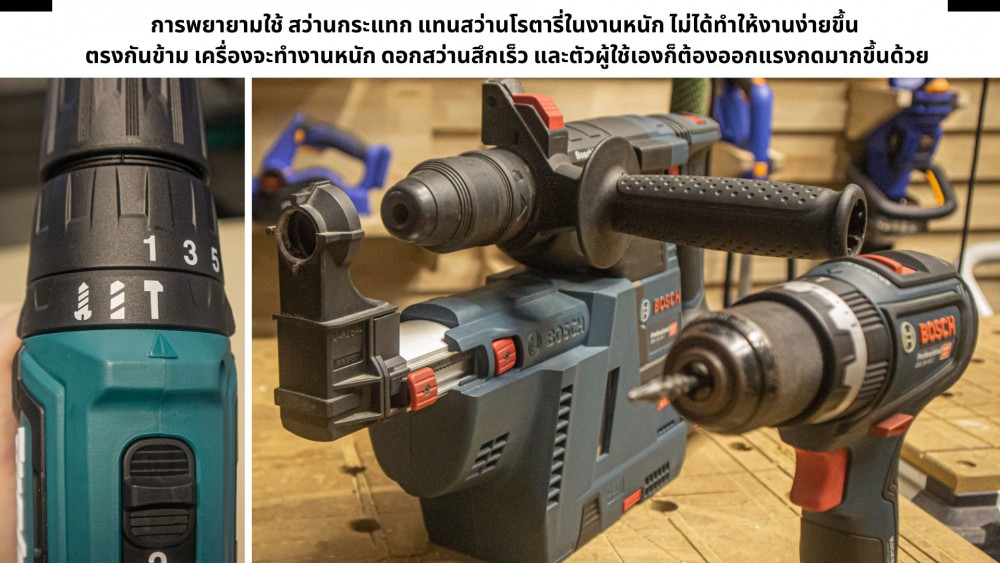
5. A hammer drill is just a cheap rotary hammer.
This is another major point of confusion and frequently leads people to choose the wrong tool. Because of their names and sometimes similar appearances, many people think a hammer drill is just a less powerful or cheaper version of a rotary hammer, even though they are designed for completely different applications.
Differences in the impact mechanism you shouldn't overlook
How does a hammer drill mechanism work? Do different sizes drill masonry the same way? A hammer drill uses a mechanical impact system that relies on gears or ratchet plates to generate high-frequency vibrations alongside the rotation of the drill bit. This impact force helps in drilling masonry or brick, but it is generated by vibration rather than true hammering action.
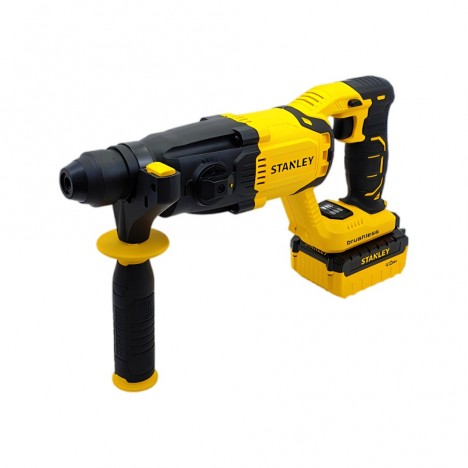
A rotary hammer, on the other hand, utilizes a piston-driven impact mechanism that generates a direct hammering force along the axis of the drill bit. The resulting force is much heavier, more solid, and more consistent, allowing you to drill through hard or structural concrete effortlessly without exerting as much pushing force as with a hammer drill.
As a result of this difference in impact mechanisms, the roles of these two tools are distinctly separated—to the extent that they don't even use the same types of drill bits.
Wrong application, noticeably different results
A hammer drill is suitable for general masonry drilling, home installation tasks, or occasional use. But if you need to drill through thick, hard concrete, make large-diameter holes, or drill repeatedly, a rotary hammer is the right choice—which is why installation technicians almost always carry one with them.
Conclusion: How should you understand hammer drills before deciding to use one?
If I were to sum up everything in this article in a single sentence, I would say: "Hammer drills, especially their hammer mode, must be used in the right place for the right job." .
Before deciding to buy, ask yourself: What tasks do you do most often? How heavy is your masonry drilling? Do you use it frequently or occasionally? And do you prioritize precision or power? These answers will tell you whether a hammer drill is right for you.
And if you understand the hammer drill correctly, it will be a tool that makes work easier, more enjoyable, and free of subsequent issues. But if misunderstood, it might just become a tool that leaves you second-guessing yourself every time you pick it up.
Understand hammer drill clearly before choosing it for your work.