EN
 ไทย


Customers Also Purchased


If you have ever stood puzzled in front of a tool shelf, picking up a drill, turning it over, and asking yourself: " hammer drill how does it actually hammer?", you are definitely not alone.
For anyone unfamiliar with power tools, seeing a hammer icon on a drill or the Hammer mode might leave you wondering what kind of hammering it actually does, how it impacts, or if it is just a fancy name. Especially for drill owners who have never really understood the hammering mechanism, this question has probably crossed your mind.
Popular questions like "Can a small hammer drill really drill into masonry?" or "Does the size affect the impact force?" come up all the time. Some think it works fine, some say it can't penetrate, and some say it's so exhausting their arms go numb. Everyone has different experiences, leaving people unsure about what a hammer drill is actually supposed to do and how to choose the right one for their needs.
Therefore, I'm here to help clear up these doubts so you can visualize how a hammer drill mechanism works and understand whether drill size really affects masonry drilling performance and how easy or difficult the job will be. All these things that many have experienced but couldn't explain will help you choose the right hammer drill for your work.
Starting with the mechanism: how does a hammer drill actually "hammer"?
What Exactly Is a Hammer Drill? When seeing the term "hammer mode," some people imagine there must be a piston, a striking hammer, or something hammering the bit forcefully into the material inside the drill. But in reality, the mechanism is much simpler and even cleverer than you might think.
The impact mechanism is created by two friction gears rubbing against each other
Inside an impact drill, there are 2 cam discs fitted behind the drill chuck. Their function is to create an up-and-down thrusting motion when the user presses the drill against the wall.
The motion goes something like this: when you push the drill against the wall in hammer mode, the two gears rub and slip against each other, generating a force similar to tiny hammers striking the drill bit thousands of times per minute. The bit rotates while simultaneously delivering impacts. For me, it brings to mind large pavement breakers or demolition hammers that vibrate intensely, but in a hammer drill, it is much smaller and lighter, operating at a millimeter scale.
The result is that a hammer drill drills into (light) masonry much more easily than using a regular electric drill or cordless drill alone. But if you ask, Can the impact mechanism in an impact drill be used for drilling wood or metal? The answer is: it's not designed for wood and steel. Therefore, using it strictly for masonry is best.

How does this mechanism differ from an SDS rotary hammer?
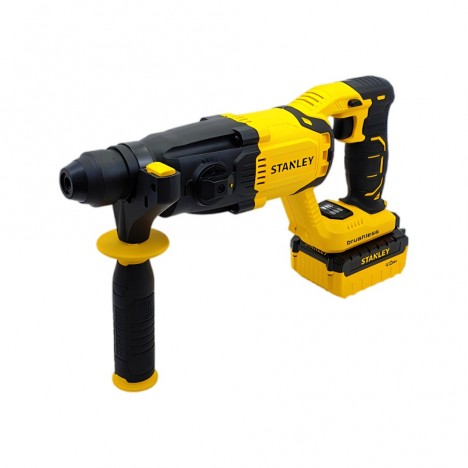
How does the piston-driven impact mechanism of a rotary hammer work? In an SDS rotary hammer, there is a pneumatic hammer system, which uses a piston to deliver direct impact force to the tip of the drill bit without relying on the user's pushing force like a standard hammer drill. As a result, the impact energy is much higher, drilling into masonry and concrete is smoother, and you can work longer without fatigue.
So if you need to drill thick concrete, drill into ceilings, or drill walls all day long, let me tell you: a standard hammer drill will tire you out quickly and won't fit the bill.However, if your work involves general household tasks like hanging shelves or drilling light partition walls, it handles them with ease.
Does the size of a hammer drill affect its performance?
Absolutely. This is an issue that most people often misunderstand, as some might think size doesn't matter: "a small tool can drill just as well as a large one" or "the power is exactly the same?" In reality, it has significant effects across multiple aspects, much more than many would expect. The size of the drill doesn't just affect motor power; it also relates to the size of the impact gears, the ability to maintain RPM when drilling into hard materials, stability when applying downward force, as well as durability during prolonged, continuous use.
Bigger Motor, Higher Rotational Force, More Stable Impact
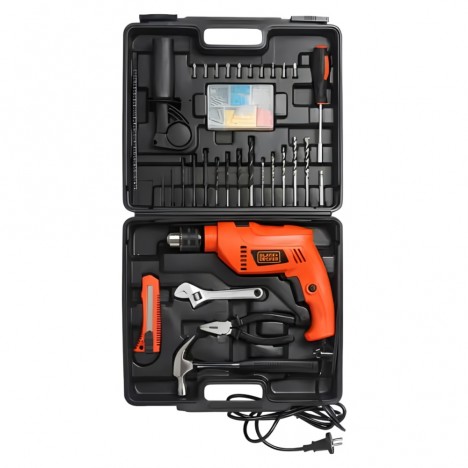
- A larger impact drill, such as a 600–800W corded drill or an 18V cordless drill, delivers higher torque, maintains rotational speed better under pressure, and has larger impact gears, delivering more powerful and consistent impacts.
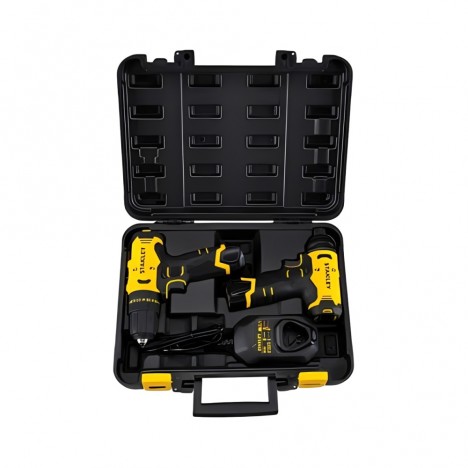
- A smaller impact drill, such as a 12V cordless drill, can drill into thin masonry; however, when drilling into thick masonry, it may easily "bog down" and require much more pushing force.
Simply put, whether an impact drill is small or large, both can drill, but the level of difficulty is not the same. .
The Drill Bit Size Used Also Matters
Certainly. Generally, impact drills specify the supported bit capacity for each material type, especially concrete. If you use a bit larger than supported, the risk of the drill drilling very slowly or bogging down significantly increases.
- Larger bits require more rotational force.
- A larger surface area requires greater impact energy.
- A small motor lacks the power to push the impact mechanism to work at full capacity.
This is precisely why many tradespeople say, "Drilling an 8 mm hole in masonry with a compact impact drill is easy, but as soon as it's 12 mm, your arms get tired and it still won't penetrate."
Can an Impact Drill Drill All Types of Masonry?
This needs to be clearly distinguished, because masonry, stone, and brick materials come in many varieties with different densities and hardness levels, making drilling difficulty vary significantly.
Plaster is the easiest material for an impact drill to penetrate because it is not overly hard or dense, allowing it to drill through effortlessly with virtually no downward pressure—unlike structural concrete or gravel-mixed concrete, which are significantly stronger.
Structural concrete contains aggregates like stone, gravel, and hard particulates that cause the drill bit to bounce and lose impact force. An impact drill requires so much downward pressure that your hands go numb just to get the bit to bite into the material, making it unsuitable for this type of work. A rotary hammer, on the other hand, delivers smoother, faster results and significantly reduces user fatigue.
Drilling Depth: Compared to a Rotary Hammer
Although an impact drill can drill into masonry, when it comes to "drilling depth," the difference becomes clearly noticeable compared to a rotary hammer. Both systems deliver different impact energies and handle completely different workloads, leading to vastly different results in deep drilling. For example, when drilling deeper than 4–5 cm, an impact drill starts to lose power and relies more heavily on user pressure, whereas a rotary hammer maintains consistent power even when drilling across various depth levels.

Hitting Rebar in Concrete: A Serious Issue
Whether using an impact drill or a rotary hammer, if the bit hits rebar, you will know immediately from the sharp "clack!" vibrating through your hands. Here, an impact drill simply cannot cope because of its light impact force; the drill bit may jam or bounce back, and the motor will overheat quickly.
SDS rotary hammers can still handle it, but you still need to be careful. Forcing it may break the bit or put excessive kickback on the motor.
Cordless Hammer Drill vs. Corded Hammer Drill: Which is Better?
Nowadays, more people are switching to cordless drills, yet there is still a belief that cordless hammer drills lack the power of corded models. While that's somewhat true, it doesn't tell the whole story.
Cordless drills have become much more powerful
As we all know, the advantage of cordless drills is portability and outdoor convenience. Newer brushless motors deliver improved power, to the point where many users hardly feel the difference from corded drills in light-duty jobs.
Even so, they still have unavoidable limitations—especially regarding battery voltage. If you drill into masonry frequently, you'll need at least 18V to see truly good results; with larger bits (like 10 mm and up), smaller tools may require substantial physical effort.
In technician's terms: an 18V cordless hammer drill is roughly equivalent to a 600–700W corded drill, while a 12V cordless drill is suited only for light work and occasional masonry drilling, not for heavy-duty or prolonged continuous drilling.
Where does a corded drill excel?
Corded electric drills remain the go-to choice for many pros when drilling masonry, for a simple reason: they deliver consistent power, maintaining torque even under prolonged continuous use, unlike cordless drills whose performance drops as the battery depletes.
In addition, corded drills dissipate heat better thanks to their larger motor construction, allowing continuous heavy-duty use through thick masonry without quickly losing steam. They are also ideal for tasks requiring steady RPMs, such as using large bits, deep drilling, or drilling hard materials for extended periods.
All of this gives corded electric drills a clear advantage. Especially for hammer drills, when it comes to continuous work and tasks needing unwavering, steady power, they clearly outperform cordless drills.

Conclusion
Let me sum it up simply: "Hammer drills weren't made to conquer concrete; they were made to make DIY and home repairs easier for everyday people."
So don't expect it to rival an SDS rotary hammer. But if you want a versatile all-around drill that handles regular drilling, makes light masonry drilling easier, and tackles every task around the house, a hammer drill is the answer.
If you ask how a hammer drill mechanism works, what effect size has, and how well it drills into masonry? The answer: It uses ratcheting cams to generate impact from the user's pushing force. Larger sizes (like 18V or 600–800W motors) offer better torque and more consistent impact. While hammer drills can drill masonry, they are suited for thin brick/mortar and light jobs, not for thick concrete or structural work.
Select hammer drill When choosing a good drill, don't forget to check the size and motor power, and you'll find drilling at home becomes much easier. But for serious, heavy-duty work, a rotary hammer still wins every time.