


 EN
 ไทย


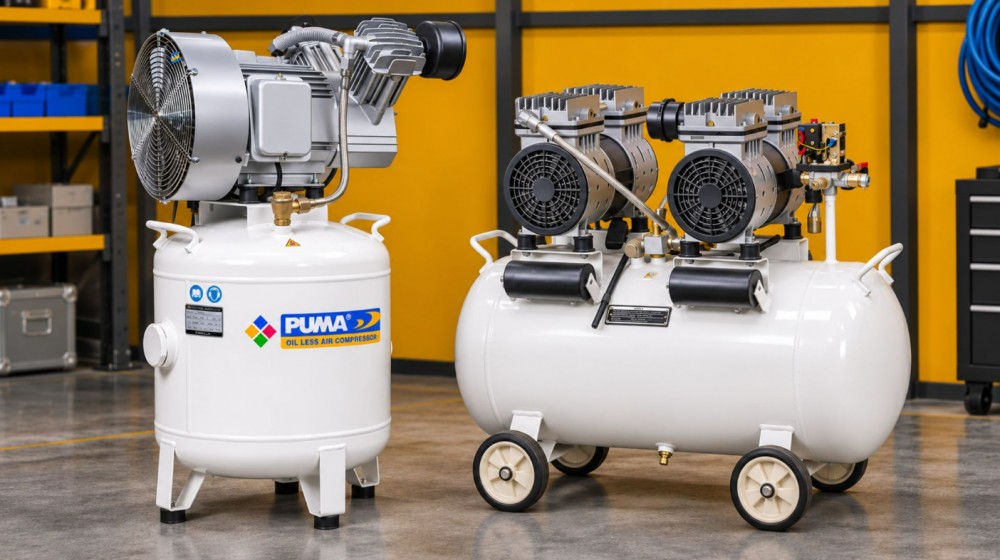
Small dental clinics with two operatories, laboratories that need air to blow workpieces and measuring instruments, or food businesses such as bakeries using airbrushes to decorate cakes often start with the same requirement: finding Silent air compressor one that can be placed in the same room with people without disturbing anyone. When choosing a silent air compressor based solely on noise levels, subsequent problems are not about noise, but rather moisture droplets, odors in the compressed air, or spotted discoloration on cake decorations.
Many assume that silent air compressors or oil-free compressors must inherently deliver clean air, right? In reality, 'oil-free' only means the machine doesn't introduce oil into the compressed air, but it does not mean it removes water, dust, or ambient odors present in the incoming air.
Let's explore what clean air means for each type of application, what downstream equipment needs to be added, where to locate the unit, and which applications should not substitute standard compressors for specialized ones.
Why Are Silent Air Compressors the First Choice for Clean Air Applications?
Silent air compressors commonly used in homes, shops, and small businesses are mostly oil-free models that do not use lubricating oil within the compression chamber, thus eliminating oil contamination sources from the compressor pump right from the start.
However, not every silent air compressor is oil-free, and not every oil-free air compressor is suitable for applications requiring ultra-clean air.
Read more in the article Why Oil-Free Air Compressors Are Called Silent Air Compressors
Oil-Free Doesn't Mean Contaminant-Free Air
Air compressors do not generate fresh air from nothing; they draw in ambient air from around the unit and compress it. If the installation area has dust, chemical vapors, or oil mist from working processes, certain contaminants may be drawn into the machine along with the air.
Even when using an oil-free silent air compressor, you still need to consider inlet air quality, filtration systems, moisture control, and the cleanliness of the piping or air hoses connected to the end tools—especially for applications with hygiene requirements.
Moisture in the Air: Something a Silent Air Compressor Cannot Remove on Its Own
When air is compressed and cools down inside the tank, water vapor condenses into liquid water. The more humid the room air, the more water accumulates in the tank. Some of this water settles at the bottom of the tank, while the rest travels as fine mist along the airline to the end of the hose.
In a clinic, water droplets at the tip of a dental handpiece or air syringe prevent the tooth surface from drying as needed. In a lab, water droplets cause stains on workpieces. And for airbrushing cake decorations, water droplets create blotches or runny colors.
The Ambient Air Around a Silent Air Compressor Matters More Than Many People Think
Many businesses choose to place their silent air compressor in out-of-the-way corners, such as storage rooms, behind the kitchen, or in the back of the building, thinking only that the unit is quiet and won't block walkways—without checking whether the air in that area is suitable to be drawn into the compressed air system.
The truth is that the air surrounding the machine directly affects the quality of the compressed air produced. Choosing an installation location must therefore take into account air cleanliness, heat dissipation, safety, and ease of maintenance together.
Laboratories with Chemicals or Solvents
Certain types of laboratories use alcohol, solvents, or chemicals that can evaporate into the air. If the air compressor is installed near areas with chemical vapors, the machine may draw those substances into the system, causing odor in the air or contamination at the point of use.
The solution is not simply pointing the air intake toward the other side of the room, because if vapors are dispersed throughout the space, they can still be drawn into the machine.
Silent air compressors should be installed in areas with clean, suitable air in accordance with manufacturer specifications, separated from sources of chemical vapors—especially flammable substances. Consider an air intake system from a contamination-free area when necessary. In any case, do not modify the air intake or cooling system without guidance from the manufacturer.
Restaurants and Bakeries with Kitchen Oil Mist
Inside a kitchen, there can be oil mist, moisture, flour dust, and contaminants from cooking activities. If the air compressor is placed near frying stations or areas where oil mist accumulates, these substances can enter the machine's air intake and affect air quality.
A suitable installation location should therefore be a clean, well-ventilated area separated from zones with heavy oil mist or dust. If it is necessary to run air lines into the food preparation area, you must also inspect the airline material, cleanliness, and air quality at the destination—simply moving the machine out of the kitchen does not automatically make the system safe.
Dental Air Compressor vs. Silent Air Compressor: What's the Difference?
When viewed from the outside, Dental air compressors and general silent air compressors may have similar appearances and operating principles. Some models also use an oil-free system, featuring an air tank and an electric motor just the same. This makes many people wonder whether a general unit that is quiet and has no oil in the compression chamber can be used with a dental unit.
Dental air compressors are designed with air quality and the specific requirements of dental equipment in mind. Meanwhile, the term "silent air compressor" primarily emphasizes operating noise levels and does not directly indicate that the machine is suitable for medical or dental applications.
Differences in air filtration systems and moisture control
Many general silent air compressors come with an intake air filter and an air tank. If additional control over dust, moisture, or vapors is needed, air treatment equipment must be selected to match the specific application.
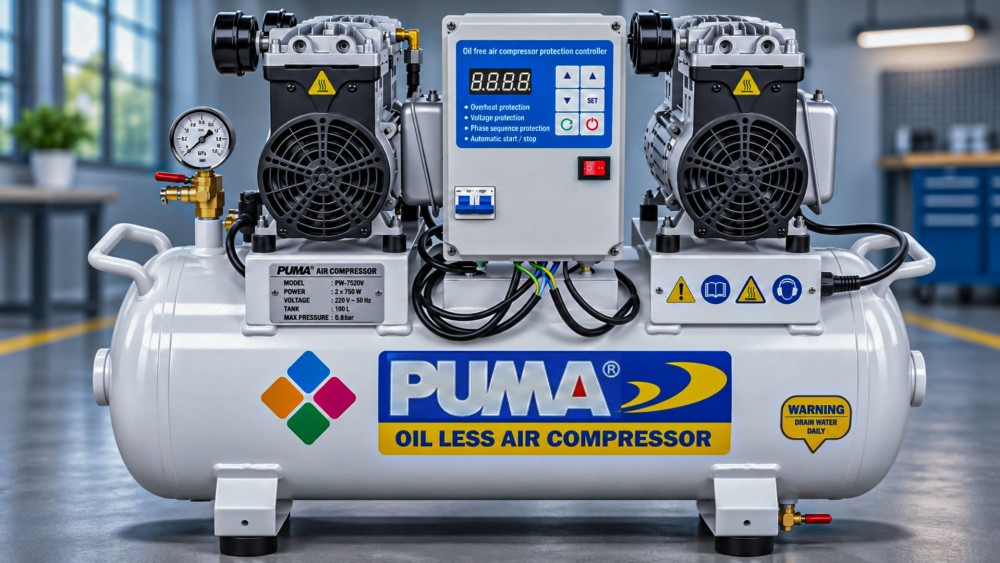
On the other hand, many dental air compressors include an air dryer and filtration units designed for specialized tasks. Some models feature automatic drain systems, internal tank coatings to reduce corrosion, or operating status monitoring systems to assist with maintenance planning. Actual features must always be verified with the manufacturer's specifications for each model.
For central dental compressed air systems, the ISO 22052:2020 standard specifies air quality requirements and test methods, as well as installation and maintenance guidelines. This exemplifies why choosing an air compressor for dental work requires considering much more than just being "oil-free" or "silent."
Differences in air delivery volume and supported dental units
For a dental clinic with two dental chairs, choosing a compressor does not mean looking at tank capacity alone, as you must calculate the actual air consumption of the equipment—especially when multiple units are operated simultaneously.
Selecting a machine with insufficient air delivery can cause pressure drops during continuous use, even if the unit features a large air tank.
Laboratories require silent air compressors that provide stable pressure rather than high pressure
Many types of laboratory equipment do not require the highest air pressure, but rather an optimal and consistent pressure. Examples include pneumatic control devices, workholding clamping systems, or certain measuring instruments. Excessive pressure fluctuations can affect the operation or accuracy of the process.
Install a regulator near the equipment to maintain proper pressure control
A pressure regulator serves to reduce and control the air pressure supplied to tools and equipment. It should be set according to the device's specifications, ensuring the inlet pressure remains adequately higher than the required operating pressure—even when the tank pressure drops to the cut-in point.
Using silent air compressors in food applications requires vigilance regarding air cleanliness
Bakeries using airbrushes to spray food coloring on cakes typically require low pressure and relatively low air volume, so a small compressor might suffice. However, the critical condition is not just delivering enough air, but ensuring the air from the spray nozzle is safe, as it comes into direct contact with food.
Air in direct contact with food requires stricter contaminant control than general applications
Selecting an air compressor for food applications should take the entire system into account. Some tasks may require fine particulate filtration, vapor removal systems, or additional microbial control, depending on the food category, the nature of contact, and the food safety standards that the facility must comply with.
Do not share food-grade air hoses with mechanical tools
Hoses previously connected through an oil lubricator for pneumatic tools may retain residual oil inside the hose or fittings.
When switched to an airbrush, these contaminants can be released with the air and enter the nozzle. Therefore, you should set up a dedicated air system for food applications or use a system properly designed and controlled for air quality in that process. Never switch and use hoses or fittings that have been exposed to lubricating oil.
After use, clean the airbrush according to its manual and regularly inspect filter equipment and system cleanliness to maintain process quality.
Quiet air compressor located near the workspace: How to place it so noise doesn't disturb?
The noise heard in a room doesn't come from the unit alone; part of it comes from vibrations transmitted through floors and walls. A unit that seemed quiet when tested in the shop might sound noticeably louder when placed on a wooden floor or against a partition wall.
Place the quiet air compressor on a solid, flat surface, use anti-vibration rubber pads, leave space from walls for heat dissipation, and do not enclose the unit in a box without ventilation openings.
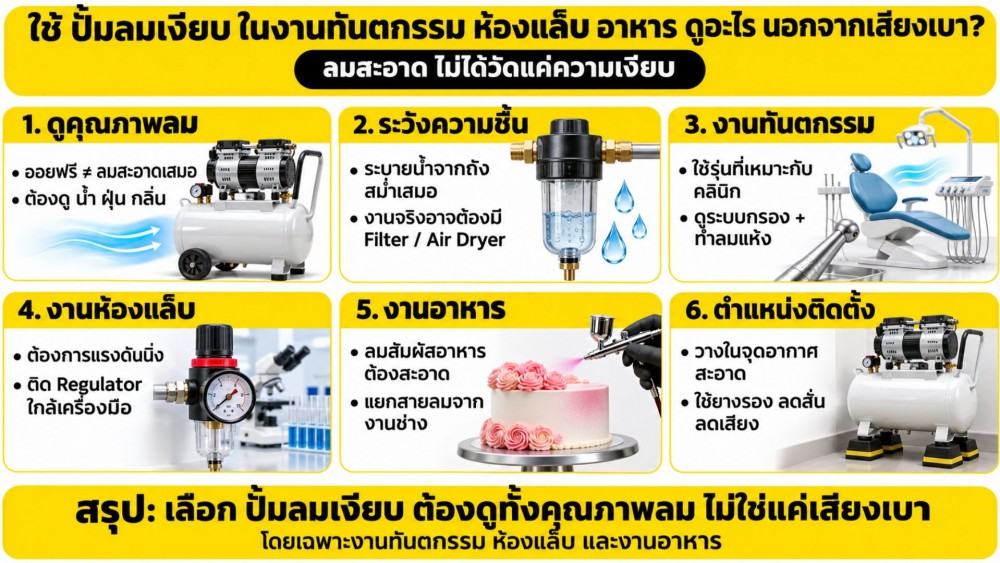
Conclusion: Choosing a quiet air compressor means looking at air quality, not just noise
A quiet and oil-free unit is only the starting point for clean air. What truly determines success is the water, dust, and odor carried by the air to the end of the line—whether it's water mist at a clinic's handpiece, fluctuating pressure in a lab, or oil from an old hose showing up on cake frosting. A quiet air compressor alone cannot solve these problems if the downstream system isn't set up correctly.
What needs to be done is draining water from the tank daily, installing a water separator filter for every application, and adding an air dryer when water mist is still visible. Place the machine away from chemicals and kitchen vapors, install a pressure regulator near the tool set lower than the tank's minimum pressure, dedicate a single air hose for food-grade work, and place the unit on rubber pads while leaving clearance for heat dissipation.
For dental work, use a machine specified by the manufacturer as suitable for clinical use, and consult dental equipment distributors before deciding. As for machines with air smelling burnt, leaking safety valves, or rust-colored tank water, stop using them and send them for inspection.
If you are looking for equipment for a room where people are working, check out various models in the Oil-Free Air Compressor category Silent air compressor and pneumatic equipment on iToolmart right away.


