


 EN
 ไทย


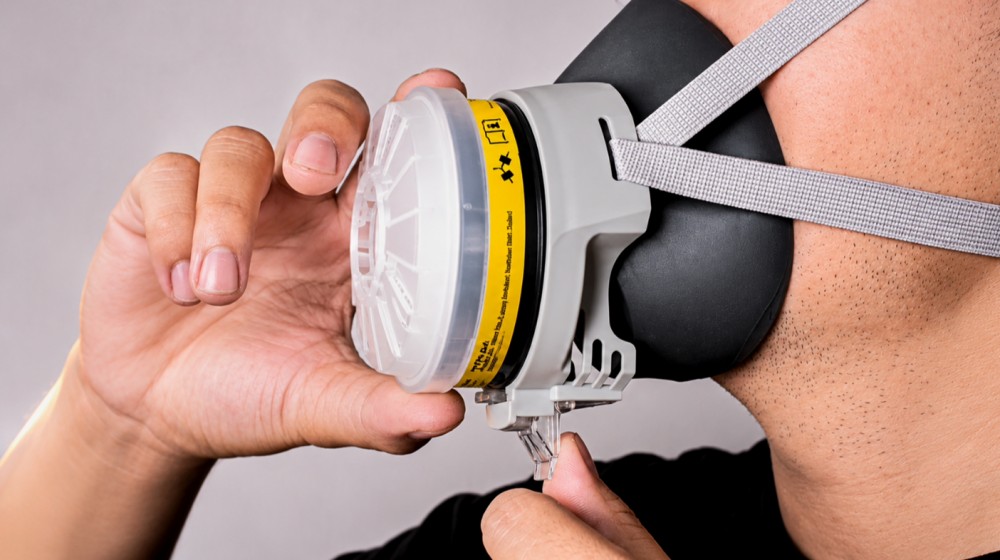
Customers Also Purchased




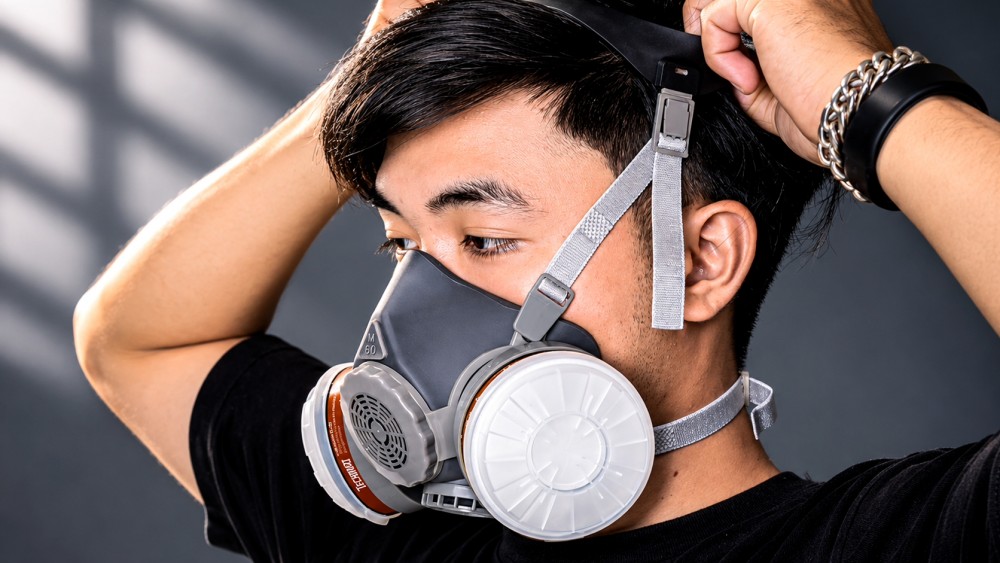
You are spray painting shelves in the garage, wearing your chemical respirator properly, and the cartridges were replaced not long ago. But after spraying for a while, you start to catch a faint smell of paint thinner drifting into your nose inside the mask. You try tightening the straps; the odor seems to diminish slightly, but as soon as you bend down to pick up a tool, the smell returns. You begin to wonder whether the mask is leaking, the cartridges are degraded, or the equipment you purchased simply isn't suitable for the job.
This problem can occur with painters, contractors, and DIYers alike. Many often conclude that smelling chemicals means the filter has expired and must be replaced immediately. In reality, there could be multiple causes—ranging from the mask's seal not fitting the face snugly and using the wrong cartridge type to damaged components. Most importantly, if you smell unusual chemicals while working, stop immediately and leave the contaminated area for fresh air before inspecting. Do not push through the work just to test whether the mask is still protecting you.
Why can you still smell fumes while wearing a chemical respirator?
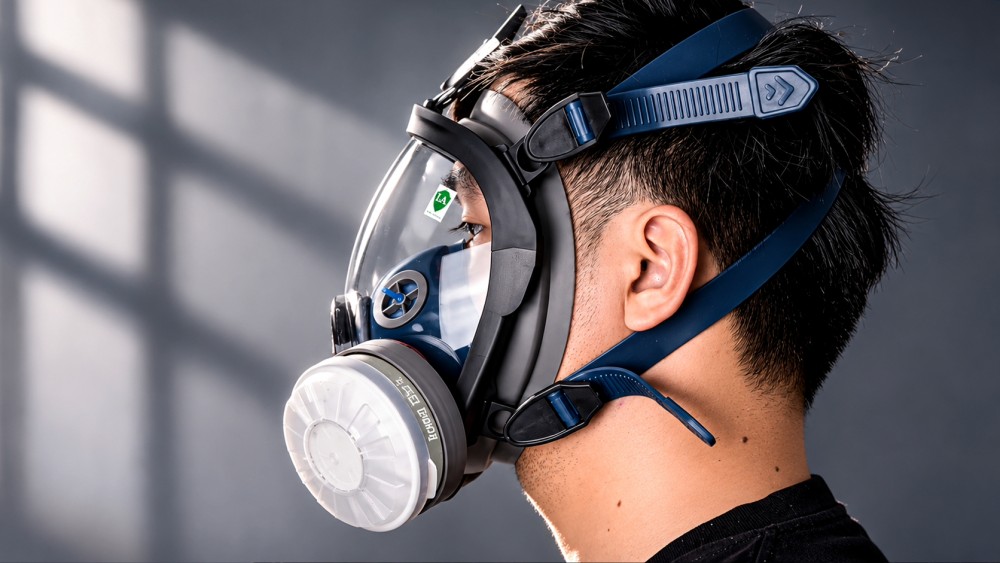
Safety Masks A reusable half-mask relies on the coordinated function of the mask body, valves, facial seal, and cartridges matched to the contaminants. When you inhale, air flows through the filter assembly before entering the mask. However, if there are leaks, some air may enter without passing through the cartridges at all.
In addition, chemical cartridges do not function like standard particulate filters; they typically use adsorbent materials like activated carbon to capture specific gases or vapors within the certified scope of each model. When the adsorbent can no longer accommodate more chemicals, contaminants may penetrate through the cartridge—a phenomenon known as 'breakthrough'—even if the cartridge still looks clean on the outside. Therefore, you must clearly distinguish between mask air leakage and chemical breakthrough across the cartridge, as each requires a different solution.
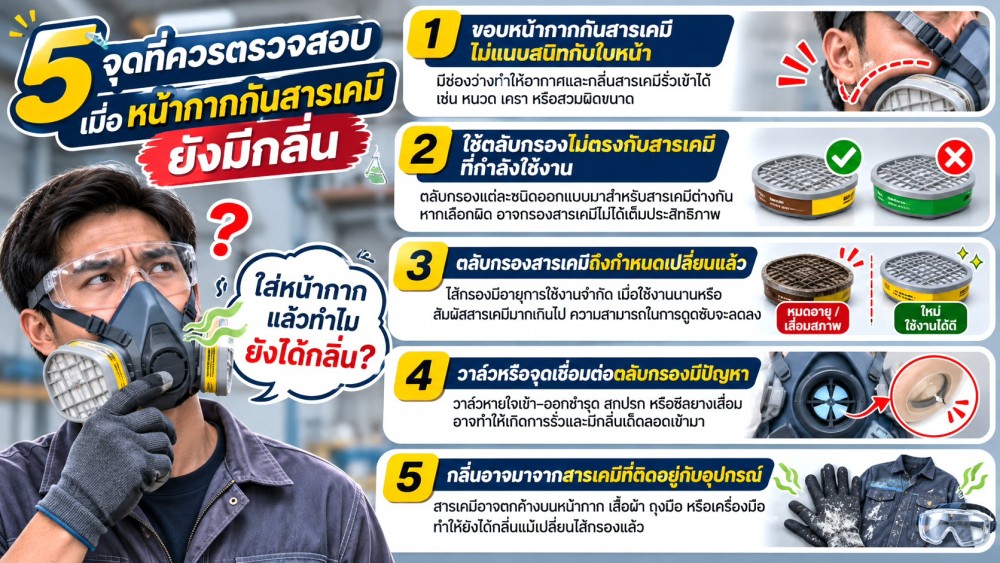
5 Checkpoints to inspect when a chemical respirator still lets odors through
Respirator edges not forming a tight seal with the face
Notice whether the odor occurs when looking down, turning your head, speaking, or moving your jaw. If it only happens during movement, there may be a seal issue between the respirator edge and your skin. Chemical respirators of incorrect size, loose head straps, or deformed sealing material can cause small gaps, even if the wearer feels the mask is tight. Another often overlooked factor is facial hair, especially stubble along the sealing area, which can compromise the seal.
The solution is not always tightening the straps to the limit; instead, check the size and condition of the respirator, adjust the fit according to the manual, and perform a User Seal Check every time it is donned. If a proper seal cannot be achieved, change the size or model of the equipment, and ensure a Fit Test is passed in accordance with workplace regulations.
Using the wrong cartridge for the chemical being handled
A single chemical respirator mask may be suitable for multiple tasks, but that does not mean a single cartridge model will protect against all types of chemicals. For example, sanding wood generates particulate dust, whereas solvent-based painting or spraying produces organic vapors and paint mist, which are entirely different contaminants.
Using only a particulate filter is therefore insufficient against chemical vapors. Conversely, using only a gas or vapor cartridge does not protect against paint mist without the appropriate particulate pre-filter. Before starting work, read the product label and SDS, especially the exposure control and personal protection sections, then select a filter assembly certified for that substance, its concentration, and the work environment. If you see codes on the cartridge and are unsure which one to use, try reading Chemical Respirators: What is the difference between A1, A2, OV, and AG cartridges? before making a purchase.
Chemical cartridge is due for replacement
A cartridge that visually looks new might already have exceeded its service life, as lifespan does not depend solely on the number of days since purchase. According to OSHA guidelines, cartridge service life depends on several factors:
Issues with valves or cartridge connection points
Inside reusable respirators are valves that control the direction of airflow. If a valve is torn, warped, or obstructed by debris, it may cause the respirator to malfunction. For instance, an exhalation valve that fails to seal properly can allow contaminants to enter the mask during inhalation. Likewise, improperly locked cartridges, deteriorated gaskets, or cracked connectors can allow air to bypass the filter media.
Perform an external inspection according to the manufacturer's manual in a clean area. If damaged parts are found, remove the respirator from service and repair or replace them using only manufacturer-approved spare parts for that specific model.
The odor may come from chemicals contaminating the equipment.
Sometimes, the detected odor may stem from chemical residues on the mask's surface, clothing, gloves, or contaminated equipment rather than simply breakthrough across the filter cartridge. However, users cannot directly confirm this cause by smell alone, so one should never assume it is merely lingering odor and resume working.
Upon exiting the hazardous area, inspect and clean the respirator according to the manufacturer's instructions, separate clean gear from contaminated equipment, and verify the filtration system and sealing line before the next use.
How to inspect a chemical respirator before use for safety
Before donning a chemical respirator, inspect the face seal, head straps, valves, and cartridge connection points to ensure they are complete and undamaged. If the rubber is hardened, deformed, or torn, do not reuse it. After putting on the chemical respirator, perform user seal checks as outlined in the manual—typically positive or negative pressure user seal checks—to detect any air leaks around the edges.
However, a user seal check does not replace a qualitative or quantitative Fit Test. OSHA requires that tight-fitting respirators used in workplace operations pass an appropriate Fit Test. Never uncap thinner or chemical bottles to sniff through the mask as a test of its performance, as this does not yield reliable results and needlessly increases chemical exposure risks.
What should you do if you smell fumes while spray painting?
Suppose you are spray-painting a steel door in a work area and begin noticing an unusual solvent odor. The correct procedure is to stop spraying, exit the contaminated area to a place with clean air, and notify safety personnel if in an industrial facility. Then systematically investigate the root cause, checking the chemical respirator's fit, valve condition, connection points, cartridge type, and replacement schedule.
If experiencing dizziness, nausea, eye irritation, or difficulty breathing, seek medical assistance based on the severity of the symptoms, and do not re-enter the area until the risks are assessed and resolved. Crucially, air-purifying respirators do not supply oxygen, making them unsuitable for oxygen-deficient environments or areas with immediately dangerous or unknown contaminant concentrations.
How to choose a chemical respirator and cartridges for easy inspection and maintenance
For professionals who work regularly with chemicals, choosing a reusable chemical respirator with readily available spare parts and cartridges makes maintenance much more systematic. For instance, the 3M 7502 is a half-face dual-cartridge respirator made of silicone with an exhalation valve, allowing you to select compatible cartridges according to the job requirements and inspect or replace spare parts following the manufacturer's manual.
For tasks involving certain organic vapors, you might consider the 3M 6001 cartridge after confirming its suitability against chemical SDS and manufacturer approval data. If paint mist or particulate dust is also present, compatible particulate filters must be added.
You can find 3M respirators and cartridges along with related accessories at iTOOLMART. Be sure to check sizes, compatibility, and availability before purchasing. The key principle is not choosing the most expensive respirator, but choosing gear suited to actual hazards and keeping every component functioning as intended.
Conclusion
Smelling chemicals while wearing a chemical respirator can be caused by face seal leakage, incorrect cartridge selection, expired cartridges, or internal component damage. Addressing the issue requires a full-system approach rather than merely replacing the filter and assuming the problem is solved. Always inspect your respirator before each use, select filters matched to your specific chemicals, replace them at proper intervals, and utilize ventilation controls to reduce exposure at the source. Have you ever smelled paint or chemicals leaking through while wearing a chemical respirator, and what turned out to be the cause?
Select Safety Masks to suit the application