


 EN
 ไทย


Customers Also Purchased

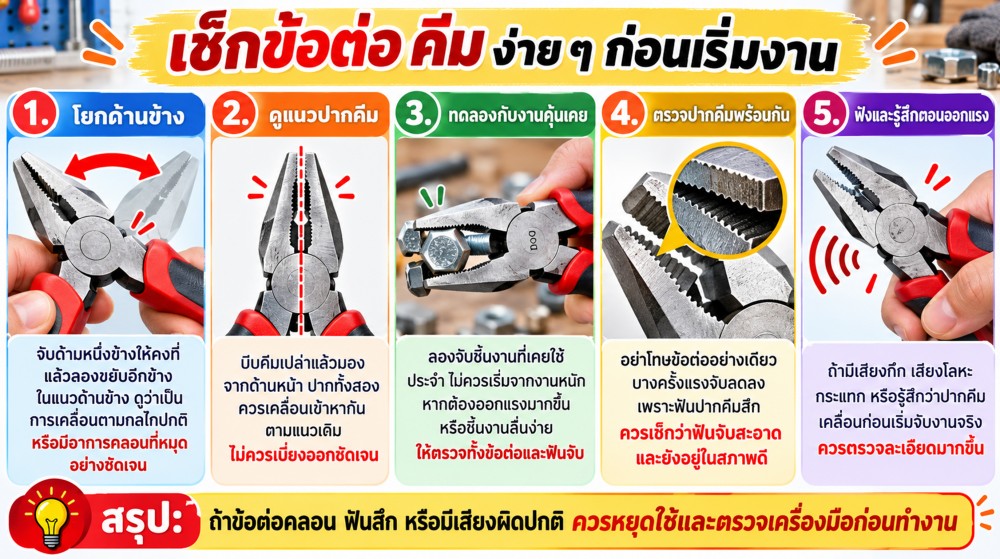
You pick up the same old pliers you've used for years to grip a workpiece. Everything seems normal—the jaws still close, and the handles aren't broken. But when you wiggle them sideways, you notice **the joint of the pliers has started to develop some play**, and gripping a workpiece now requires squeezing slightly harder than before.
The question that follows is, "Can I still use them?" The answer is not that pliers with a little play must be discarded immediately, but it shouldn't be overlooked either. The joint or pivot doesn't just hold the two halves of the pliers together; it is the critical point for transferring force from your hand to the gripping jaws or cutting edges.
Therefore, before deciding whether your old pliers are still good to go or should be replaced, you need to determine just how "loose" they actually are.
Why does a loose plier joint affect gripping force?
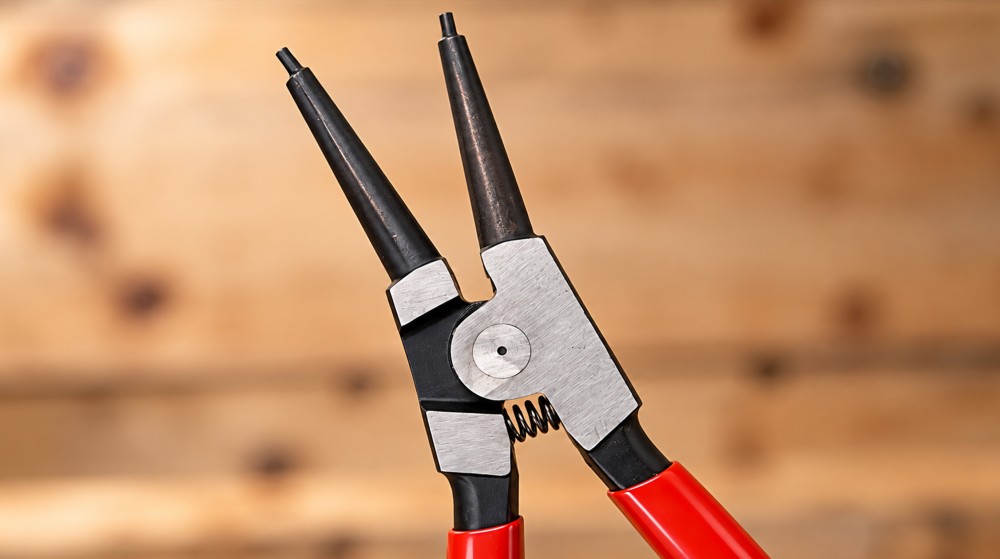
Imagine this: Pliers / Clamp Like two levers connected by a pin in the middle, when you squeeze the handles, the force from your hand is transferred through: Pivot → Plier Body → Gripping Jaws or Cutting Edges. If the pivot is in perfect condition, both jaws move toward each other along their designed path, allowing force to be delivered efficiently to the workpiece. But once the joint starts to wear down and develops lateral play, the resulting problems can include:
- Jaws misaligning under pressure
- Reduced contact area with the workpiece
- Higher chance of the workpiece slipping out of the jaws
- Cutting edges of cutters failing to align properly
- Increased difficulty in controlling small workpieces
This is why pliers that "can still squeeze" don't necessarily mean they are still operating at full efficiency.
By what percentage does a loose joint reduce gripping force?
There is no universal figure like "1 mm of play reduces gripping force by 10%" that applies to all pliers, because the actual gripping force depends on several factors, such as:
- Coupling Type
- Handle length
- Pivot position
- Jaw shape and length
- Condition of the gripping teeth
- Extent of joint wear
- Workpiece characteristics
- Position where the workpiece is gripped on the pliers' jaws
What is easier to notice than percentage figures is **the extra hand effort required to achieve the same result**. CCOHS (Canadian Centre for Occupational Health and Safety) recommends keeping the pliers' jaws as parallel to the workpiece as possible for a secure grip, noting that worn gripping surfaces can cause the user to exert more force, which not only reduces efficiency but also increases the risk of muscle fatigue.
Therefore, if the same pair of pliers that used to grip a workpiece with normal force now requires "squeezing the handles with all your might" just to hold it, that is a sign to inspect both the joint and the gripping jaws.
How loose can a plier joint be and still be usable?
Don't just rely on the feeling that "a little play is probably fine"—also evaluate the impact it has on the task at hand.
Slightly loose, but jaws still align
If you try wiggling the handles sideways and feel slight play, but when squeezing:
- The jaws still meet flush
- There is no abnormal knocking sound
- It grips the workpiece without slipping
- Cutting edges still align properly
- No noticeable increase in hand effort is needed
It may still be usable for general, light-duty tasks, but should be inspected periodically because looseness tends to increase as wear continues.
Loose enough that the plier jaws start to misalign
If wiggling causes the jaws to shift side to side, or when clamping a workpiece the two jaws do not align, this is no longer just a matter of feel—it means the line of force transmission has begun to shift. Especially with wire cutters, if the cutting edges meet improperly, it can lead to incomplete cuts, chipped edges, or requiring the user to squeeze harder.
Loose with a "clunking" sound
If you grip the handles and wiggling them produces a distinct clunking sound, or the pivot pin shows abnormal play, stop using them for heavy-duty tasks immediately. Especially for high-force applications, work at heights, or tasks where a slipping workpiece could cause hazards, it should not be risked further. This principle aligns with OSHA standards, which generally require that hand tools used on the job must be maintained in a safe condition and unsafe tools must not be permitted.
Does applying oil fix a "loose joint"?
Oil helps with stiffness, but it doesn't fix wear that leads to looseness. If the pivot point is stiff, tight, or doesn't open and close smoothly, cleaning and lubricating can help. KNIPEX recommends that for pliers stiffened by old oil or accumulated residue, you can flush the joint area with thin-bodied oil, work the pliers repeatedly, and apply fresh lubricant after cleaning.
However, if the rivet or internal contact surfaces are **worn to the point of creating actual play**, applying oil will not eliminate that gap. Also, you should not hammer the rivet tight yourself without knowing the proper method, as this can make the joint overly tight, misalign the jaws, or cause damage to the tool.
If the pliers feature a screw-type joint and the manufacturer specifies that it is adjustable, you should follow the specific manual for that model.
Preventing pliers joints from loosening prematurely
- Choose the type and size of pliers suitable for the job
- Do not extend the handles to increase leverage
- Do not use pliers as a hammer
- Do not twist workpieces that exceed the pliers' capacity
- Clean dust and metal shavings from the joint area
- Periodically oil the pivot point
- Store tools in a dry area
- Inspect the jaws and pivot point before high-force tasks
You should regularly lubricate the hinge or joint of the pliers and never extend the handle length to gain extra leverage; instead, switch to larger pliers or the proper tool for the job.
Conclusion
The pliers' joint is the critical point for transferring force from your hand to the gripping jaws. Therefore, when this area begins to wear, jaw alignment accuracy and gripping performance can decline accordingly.
If there is only slight play while the jaws remain aligned, grip workpieces securely, and show no abnormalities, they may still be used for general tasks while keeping an eye on their condition. However, if symptoms such as misaligned jaws, slipping grip, requiring excessive hand force, knocking noises, or noticeably loose rivets occur, you should not force their continued heavy use.
Instead of merely asking "Can the pliers still be used?", the more important question is whether the pliers can still transfer force and control workpieces as securely as before. And for the pliers you use every day, have you ever held them by the joint to check if they are starting to become loose and wobbly?
Select Pliers / Clamp to suit the application