


 EN
 ไทย


Customers Also Purchased


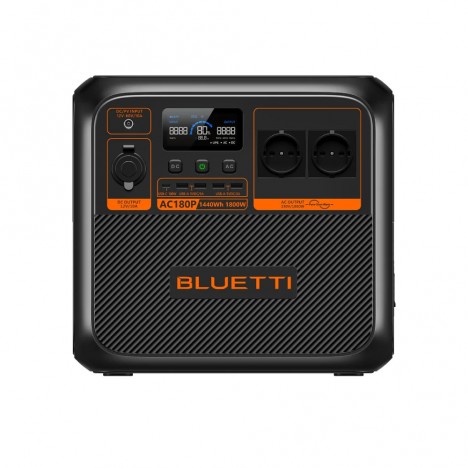
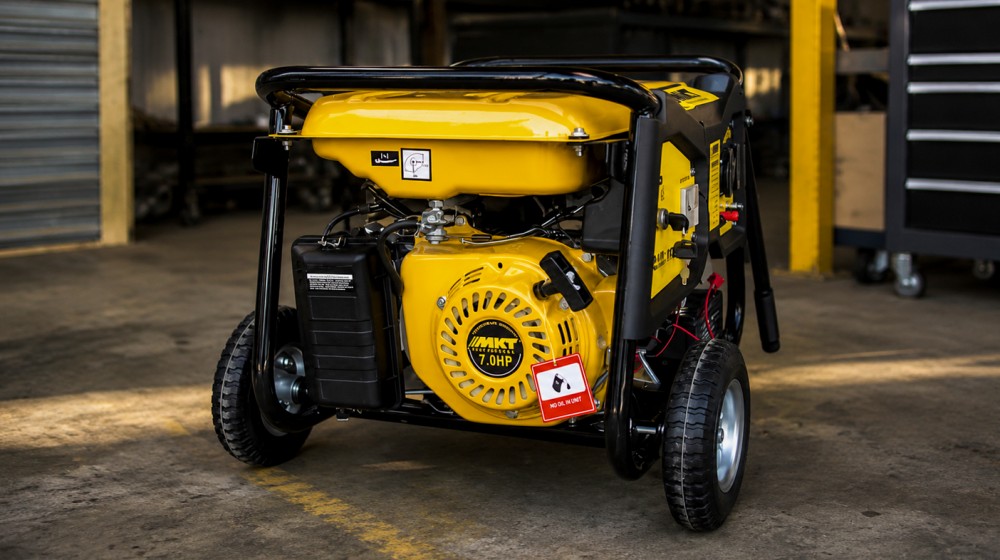
Generators are popular backup power sources, usable in homes, shops, construction sites, and agricultural farms to cope with blackouts, insufficient power, or areas without main grid electricity. A common problem encountered is voltage drop after running for a while—manifesting as dimming lights, weakened motors, or the generator's engine RPM dropping. Many people wonder whether the generator is broken, overloaded, or out of fuel.
In reality, this symptom can stem from several causes, including overloading, inadequate maintenance, or deteriorating internal systems. This article will help you understand the causes, symptoms to watch for, and safe basic troubleshooting steps.
What is a Generator Voltage Drop?
A voltage drop is a condition where the voltage that the Generators outputs falls below the level it should be. For example, a generator should supply around 220 volts, but during actual use, the voltage drops far below that, causing electrical appliances to malfunction.
Common Symptoms
- Dim or flickering lights
- Slow-spinning fans / weak water pumps
- Power tools losing power
- Refrigerators or motors making humming noises
- Generator engine RPM drops under load
- Breakers tripping or the engine shutting down on its own
- Some appliances fail to turn on even though the generator is still running
A brief voltage drop when turning on an appliance is considered normal due to surge loads. However, if the voltage drop is continuous or drops to the point of being unusable, it should be inspected immediately, as it can cause damage to both the generator itself and the connected equipment.
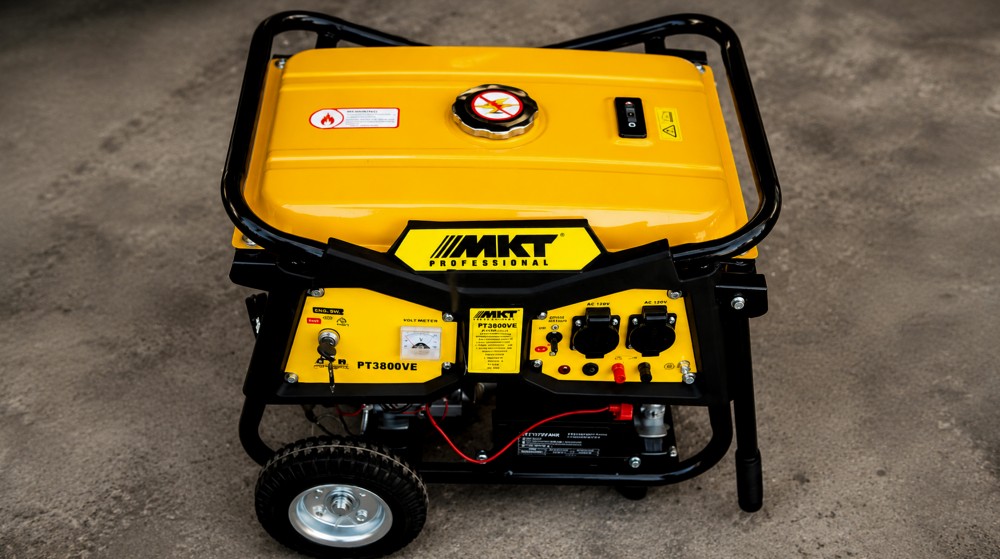
Why Does a Generator Experience Voltage Drops During Continuous Use?
The engine rotates to drive the alternator. When the engine speed is steady, it supplies power according to its design specifications. However, if the RPM drops, power is insufficient, or the voltage regulation system malfunctions, the voltage will drop accordingly. For a generator to supply power efficiently, it relies on 3 main components working together.
- The engine must have sufficient power.
- Fuel and air delivery must be fully adequate.
- The alternator and voltage regulation system must function normally.
If any part encounters an issue, voltage drops will follow—especially when running continuously for a long time, as heat buildup, wear and tear, and accumulated load exacerbate the problem.
Causes of Voltage Drop When Using a Generator
- Overloading the generator: Generators have 2 power ratings: maximum power (tolerable for short periods) and continuous running power (the actual recommended operating load). If operated near maximum capacity all the time, the machine will work heavily, engine RPM will drop, and voltage drops can easily occur. Appliances that often cause unintentional overloads include water pumps, refrigerators, air conditioners, and various power tools.
- Surge load from electric motors: Electric motors require significantly higher current during startup. For example, a 750W water pump may draw several times that amount at startup. If the generator lacks sufficient reserve capacity, RPM and voltage will drop immediately. If this happens momentarily and recovers, it is generally acceptable; however, prolonged or frequent voltage drops indicate the generator cannot handle the load.
- Running near full load for too long: Continuous operation is not an issue by itself, but running near full capacity for extended periods causes heat buildup, reduces efficiency, and leads to unstable power. Always choose a generator with surplus capacity, especially for jobs requiring continuous operation for several hours.
- Insufficient or clogged fuel flow: A clogged fuel filter, kinked fuel line, or dirty carburetor starves the engine of fuel, resulting in dropped RPM and falling voltage. This issue typically appears after running for a while rather than immediately upon startup. Common causes include stale fuel, water contamination, or poor fuel tank venting.
- Clogged air filter: Engines need air for combustion. If the air filter becomes clogged with dust, combustion will be incomplete, causing loss of power and subsequent voltage drops. This is common on construction sites or in dusty environments. Never remove the air filter to bypass the problem, as dust will enter the engine and accelerate wear.
- Low or degraded engine oil: Insufficient or degraded engine oil increases friction, causes overheating, and leads to a drop in engine power. Some models feature an automatic low-oil shutdown system. Always check the oil level before each use and change it according to the schedule specified in the manual.
- Overheating and poor ventilation: Placing the generator in a confined space, near walls, or under direct hot sunlight for long periods causes heat accumulation, power loss, and voltage instability. Always position the unit in an open, well-ventilated area, and never cover the machine while it is running.
- Governor malfunction: If the governor malfunctions, engine RPM drops easily under load, or the engine speed fluctuates erratically without an obvious cause. This issue should be inspected by a technician, as improper RPM adjustment can cause abnormal voltage output and damage connected equipment.
- Faulty AVR or voltage regulation system: The AVR maintains stable voltage output. If it degrades or malfunctions, voltage will drop or fluctuate even under light loads. This can be detected by significant voltage fluctuations when measured with a multimeter. Have a technician inspect it and replace it with genuine spare parts matching the model.
- Worn alternator or carbon brushes: Generators used for a long time may suffer from degraded internal components, such as worn carbon brushes, windings, or capacitors, causing voltage drops under load or as the machine heats up. If all external checks are normal but voltage still drops, have a technician inspect the alternator thoroughly.
- Excessively long or undersized power cords: The voltage drop problem may not originate from the generator itself, but from the extension cord. If the cable is too long or has too small a wire gauge, power loss occurs along the wire, causing voltage to drop at the receiving end. Fix this by using appropriately sized cables, keeping them as short as necessary, and fully uncoiling them before use.
- Loose plugs or connectors: Loose or dirty contact points create high electrical resistance, generating heat and causing voltage drops. Warning signs include hot plugs, burning smells, or dark scorch marks on connectors. If found, stop use immediately due to fire hazard.
- Unbalanced load (certain models): Some generator models with multiple phases or multiple outlets may experience localized voltage drops if heavy loads are connected disproportionately to one side. Balance the load evenly across circuits, or consult an electrician to help design the system properly.
- Abnormal electrical frequency: When engine RPM drops, the electrical frequency drops along with it. Motors and water pumps will spin slower or lose power even if the voltage doesn't seem to drop significantly. A meter capable of measuring both voltage and frequency should be used for an accurate diagnosis.
- Poor fuel quality: Old or contaminated fuel causes incomplete combustion, loss of power, and voltage drops. This is commonly found in machines stored with fuel in the tank for a long time. Always use fresh fuel and regularly test-run the machine even when not in active use.
- Using the wrong type of generator for loads that require stable power: Electronic devices such as computers, measuring instruments, or equipment with circuit boards require more stable power than general appliances. If connected to a standard generator with unstable power, consider choosing an inverter generator or adding a UPS.
- Environmental conditions affect engine performance: High temperatures, excessive dust, or poor ventilation all reduce generator efficiency. The machine should be placed on a stable, open surface away from flammable materials.
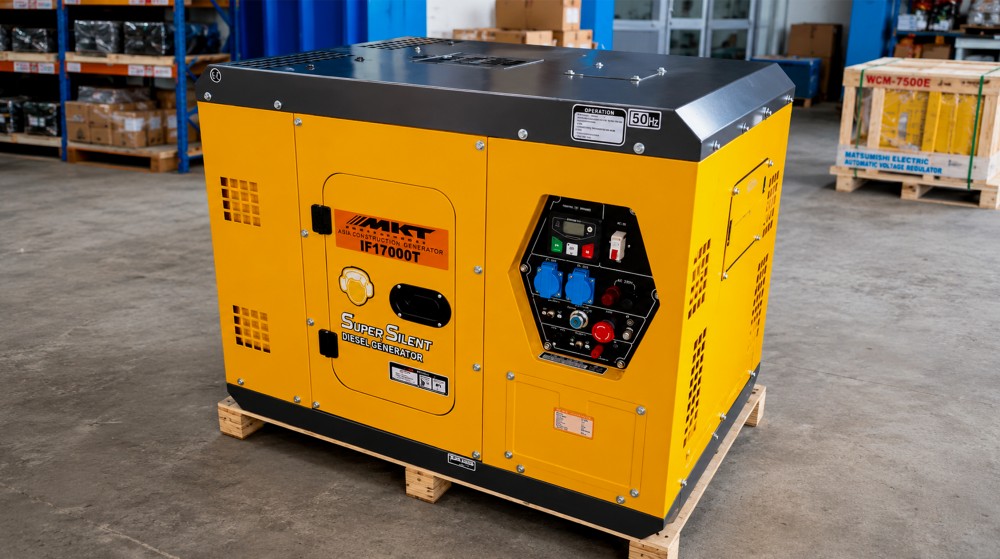
Basic troubleshooting steps when a generator experiences a voltage drop during continuous operation
Step 1: Disconnect loads
Turn off some electrical appliances and see if the power returns to normal. If it improves, it indicates an overload or that certain devices are drawing an unusually high amount of power.
Step 2: Inspect the machine condition
Check 4 points: fuel, engine oil, air filter, and ventilation/cooling. If any abnormalities are found, correct them before continuing use.
Step 3: Check cables and plugs
Check whether the power cords are too long or too small in gauge, and inspect connection points for burn marks or looseness. Often, voltage drops originate from cables and plugs rather than the generator itself.
Step 4: Measure and compare voltage
If measuring tools are available, measure the voltage at the generator and at the end of the cable line.
- Normal at the machine, but drops at the cable end → The problem lies in the cable or connection points.
- Drops right from the machine → The issue lies with the load, the engine, or the voltage regulation system.
Ways to reduce the chance of voltage drops from a generator
Prevention is always better than troubleshooting after a voltage drop occurs. Users can reduce risks through these simple methods:
- Choose a generator sized sufficiently larger than the actual running load. Especially with motors, water pumps, refrigerators, or power tools, allow extra capacity for surge/starting loads.
- Do not plug in all devices at once. Let the generator run smoothly first, then connect loads one by one, starting with high-power-consuming loads before adding other devices in sequence.
- Avoid running near full capacity continuously for long periods, as this causes the engine to overheat and wear out quickly. Allow the machine to operate at a moderate workload.
- Use appropriately sized wiring for the load, avoid using small extension cords with high-power equipment, and avoid running unnecessarily long cables.
- Regularly check engine oil, fuel, and air filter levels, especially before continuous use for several hours.
- Place the generator in a well-ventilated, non-stuffy area, do not cover the unit while running, and do not place it near flammable materials.
- Test run the generator periodically if it is used for backup power; machines left idle for a long time without starting may experience issues on the day they are actually needed.
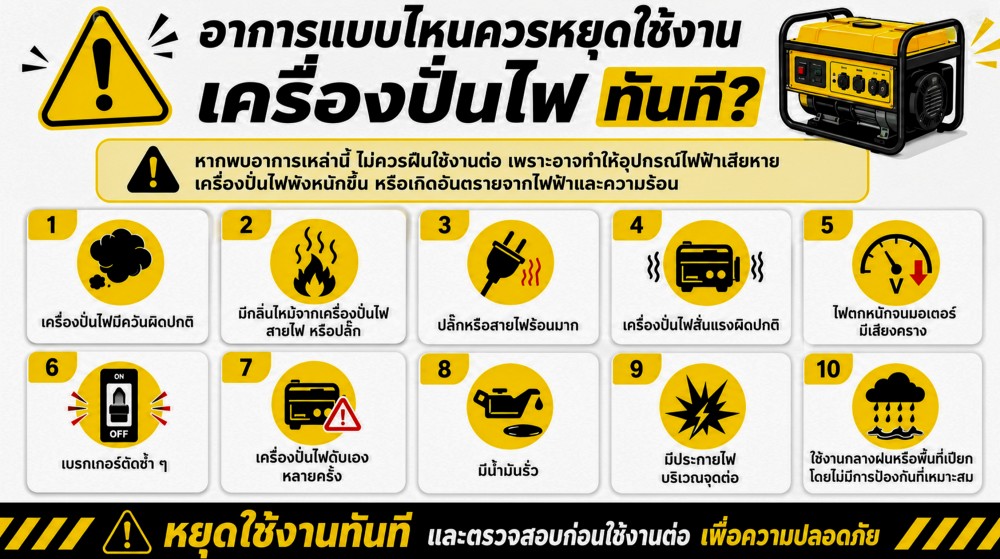
How is a generator voltage drop related to safety?
Voltage drops don't just weaken device performance, but also pose safety hazards. Potential damages include:
- Motors receiving low voltage draw more current, run hotter, and can get damaged.
- Undersized wiring or loose connections can lead to accumulated heat, posing a fire risk.
- An overloaded generator degrades faster and consumes more fuel.
Do not operate in enclosed spaces
Whether in a house, storage room, or garage, engine exhaust fumes are fatal. Always place the unit in an open and well-ventilated area.
Connecting to home electrical systems requires installation by an electrician
Never backfeed power into a house system on your own, as it is dangerous to yourself, utility workers, and the external electrical grid. Always have an electrician properly install a transfer switch.
Conclusion
Voltage drops can stem from many causes, ranging from simple issues like overloading, undersized wiring, stale fuel, or clogged air filters, to internal machine issues such as a degraded AVR or alternator problems. Do not rush to conclude that the machine is broken; troubleshoot each checkpoint in this order first:
Load → Wiring → Fuel → Engine oil → Air filter → Ventilation → Electrical connections
Select Generators here