


 EN
 ไทย


Customers Also Purchased

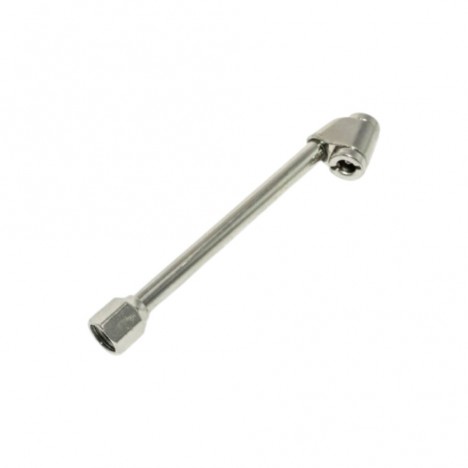


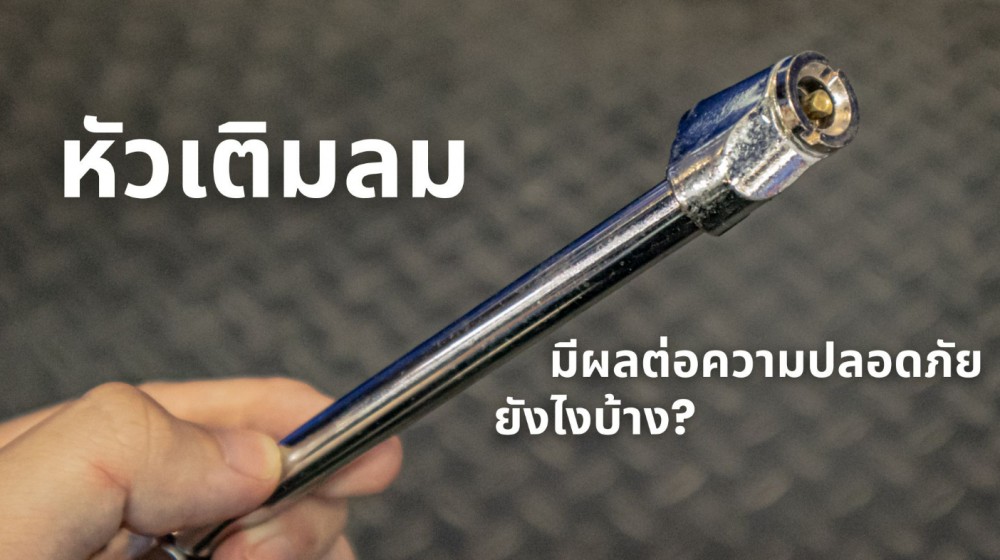
When talking about safety during tire inflation, I think many people immediately imagine air tanks, air compressors, pressure gauges, or the tires themselves, all needing to be in good condition. But there is one part that is so small it is often overlooked. That part is the Air Inflators tire air chuck. It's a tool that seems simple enough—just connect it to the valve and let the air flow in. Some models come with an adjustable gauge, while others don't, relying on adjustments directly from the air compressor.
I believe many have experienced this: while inflating a tire, air starts leaking with a constant hissing sound, forcing you to hold it down until your hand aches. Or sometimes, after finishing and thinking everything is set, checking it again reveals that the pressure is off. Issues like this might sound trivial, but how can we be sure that a slight discrepancy won't turn into a major problem? Especially when it ties into road grip, tire wear, vehicle handling, or even the risk of accidental over-inflation.
So, let's take a closer look at how a tire air chuck—which many dismiss as just a tiny end piece—actually impacts safety. We'll explore what to look for before choosing one, which signs indicate it's time for a replacement, and why picking the right tire air chuck for the job is something you shouldn't overlook if you want tire inflation to be safe, accurate, and trouble-free down the line.
Just a Small Tire Air Chuck: Why Is It a Safety Risk?
Because Tire Air Chucks Are More Complex Than You Think Indeed, it is a component that must withstand hand pressure, system air pressure, valve engagement, and the reactive forces during actual use. If the chuck doesn't grip the valve tightly enough, the pressurized air rushing through will constantly try to push it off. The higher the pressure, the greater the chance of the chuck slipping, popping off, or vibrating. If you have to keep forcing it into place by hand, your control diminishes and mistakes can easily happen.
The first hazard that many people overlook is "Unnoticed Air Leaks" Because when the tire air chuck doesn't seal tightly, some of the air never enters the tire at all, leaking out externally instead. This extends the inflation time, prevents reaching the target pressure, or leads to inaccurate pressure readings. Ultimately, the vehicle is operated with incorrect tire pressure, affecting everything from handling stability and tread wear to braking distance.
Tire Air Chuck Won't Lock Onto the Valve: Why Does It Happen and How to Fix It? The next hazard is "chuck whip or kickback." This occurs especially when using a tire air chuck with fatigued springs, worn locking mechanisms, or flared gripping jaws. When backpressure builds, the chuck may detach and whip violently along with the air hose. If you are standing at an awkward angle with your hands or face too close to the connection point, you could get struck or startled into making a mistake. Even if it doesn't cause a major accident every time, it is an avoidable risk that shouldn't exist in the first place.
How Does a Loose Tire Air Chuck Affect Tire Pressure?
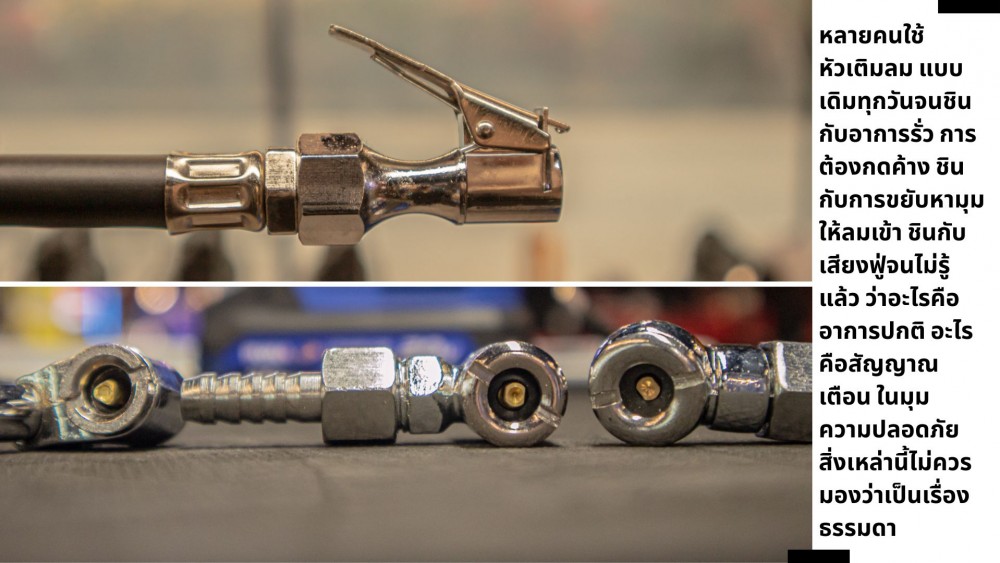
The tire air chuck directly impacts the accuracy of the delivered pressure. If the connection between the chuck and the valve is incomplete, gauge readings may fluctuate or read lower than actual levels. This can lead to continuous overfilling, resulting in incorrect pressure where the tire ends up either under- or over-inflated.
Gauge Accuracy Only Matters When the Tire Air Chuck Seals Tightly
A pressure gauge can only provide accurate readings when the system is completely sealed. If there are air leaks along the line, no matter how good the gauge is, the displayed value may not reflect the actual pressure inside the tire. Therefore, even if you invest in a quality tire inflator gun or high-grade gauge, using a loose, leaking, or worn tire air chuck means you are still allowing a crucial point of failure to compromise the accuracy of the entire system.
An underinflated tire flexes more, has more tread contact with the ground, builds up more heat, and wears unevenly. On the other hand, an overinflated tire reduces road grip, ride comfort, and similarly affects braking and cornering. Therefore, if an air chuck gives you inaccurate readings, even with a good gauge, a good compressor, or brand-new tires, you can still end up with incorrect tire pressure.
In general use, a slight discrepancy might not seem like much, but for daily-driven or load-carrying vehicles, these cumulative errors make a clear impact. Some people wonder why their tires wear out quickly, why fuel consumption increases, or why the steering feels strange. The root cause might simply start from a small tool like an air chuck with a poor seal or poor valve alignment.
Air Chucks: Just a Matter of Convenience, or Do They Affect Safety?
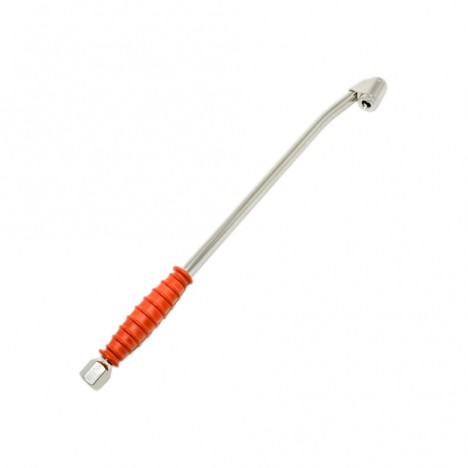
Many people choose an air chuck based on habit, such as clip-on, push-on, locking, or dual-head types for hard-to-reach wheels. But in reality, the design of the chuck affects control, working speed, and the level of risk. Understanding Types of Air Chucks and How to Choose Like a Pro A chuck that locks securely and allows hands-free operation helps reduce fatigue and lowers the chance of slipping off during inflation. Push-on chucks may be easy to use, but if you have to inflate multiple tires or use them for extended periods, there's a higher chance of slipping, tilting, or misaligning them.
Some chuck types are suitable for general use, while others are designed for commercial tasks requiring frequent, fast inflation. Regardless of the type, you shouldn't just ask, "Is it easy to use?" You must also ask, "Does it grip the valve tightly? How good is the seal? Can it be safely controlled during continuous use?" An air chuck that inflates quickly but locks poorly can pose far greater risks than one that looks plain but seals tight and steady.
Clip-on, Locking, or Push-on: Choosing the Wrong One Really Matters
For occasional home use, a basic air chuck should suffice. But for regular inflation tasks, I believe a locking chuck that grips the valve more securely reduces errors significantly. You don't need to apply continuous force, it reduces tilting, prevents hissing leaks, and provides a stable gauge reading. Just make sure to choose one with a genuinely durable locking mechanism, not one that locks well only initially and loosens quickly.
How Much Does the Material of an Air Chuck Affect Durability and Safety?
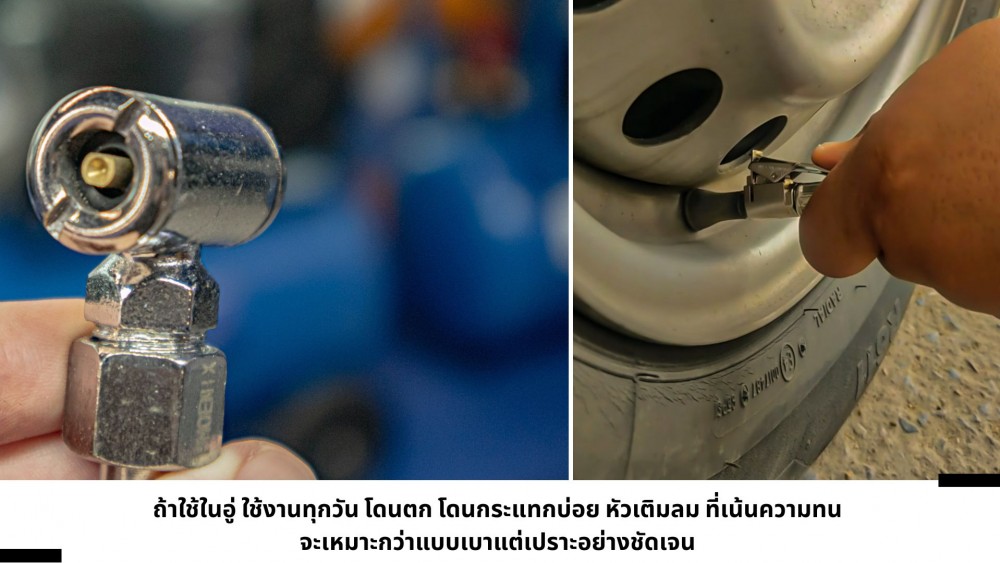
Materials matter more than you think. An air chuck is subjected to pressure, impacts, pulling, twisting, and sometimes dust, moisture, oil, and harsh environments. If made of poor materials, the body can crack easily, the chuck jaws wear out fast, the spring fatigues quickly, or the internal rubber seal hardens and fails to seal properly. Once any part degrades, leaks will gradually develop and ultimately turn into a safety issue.
Air chucks made from high-quality metal offer superior strength and heavy-duty durability, but assembly quality is equally important. Even with good materials, poor internal tolerances or substandard seals will still cause problems. Meanwhile, some models use composite materials for lighter weight and agility—which isn't necessarily a bad thing, but it must suit your actual working conditions.
Don't Just Look at the Body—Check the Internal Seals, Rubber, and Springs
Many people choose an air chuck simply by looking at whether the exterior seems sturdy. However, the small internal parts—like rubber seals, valve depressor pins, and locking springs—are what actually do the work. If these components wear out, the connection becomes loose, which might lead you to believe the compressor has a problem when in fact the air chuck is simply worn out.
What Signs Indicate an Air Chuck Is Becoming Unsafe?
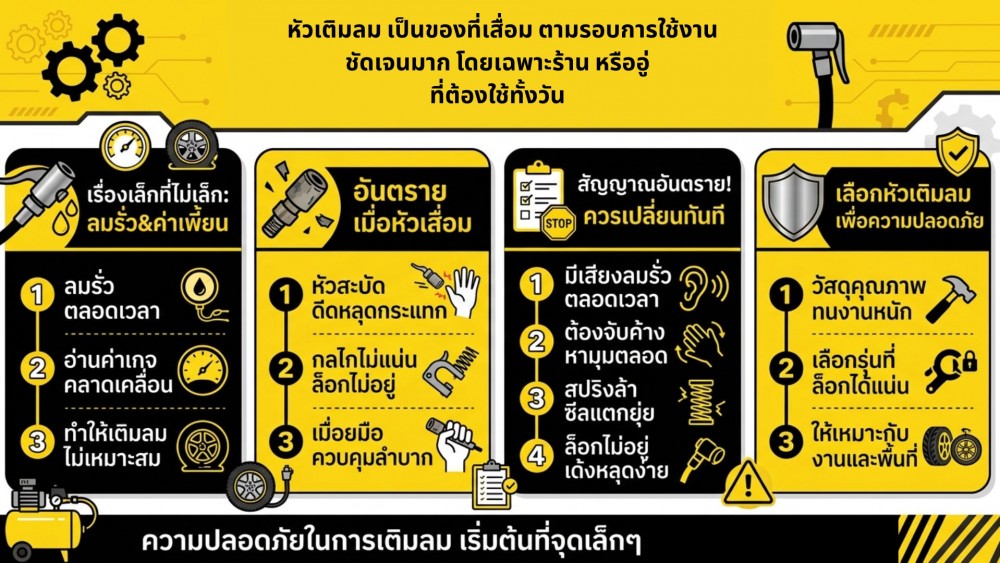
Many people only replace an air chuck when it completely fails. But tools like this almost always give warning signs first, such as having to wiggle it several times to get air in, continuous hissing even when connected firmly, the lock failing to hold, requiring more push force than usual, erratic readings, or noticing marks on the valve stem after removal. None of these are minor symptoms that should be overlooked.
Another warning sign is when connecting the air chuck feels unusually tight or loose. This could mean the jaws are worn, poorly sized, or internal mechanisms have loosened. Especially under high pressure or continuous use, these symptoms should be addressed promptly rather than waiting for failure mid-job.
Checklist: Air Chuck Warning Signs You Shouldn't Overlook
- Continuous air leaking sound even when firmly attached
- Having to hold it down or twist it to find the right angle to get air flowing
- The lock chuck fails to hold or pops off easily
- Pressure reading rises slowly, fluctuates, or is unstable
- Chuck jaws are worn, chipped, or flared out
- Rubber seal is hardened, cracked, or deteriorated
- Feeling unsafe during use, having to stay constantly on guard
If your tire chuck starts showing these symptoms, I recommend not pushing it to continue using it. Compared to the risks of incorrect tire inflation, wasted time, or trouble during use, replacing an inexpensive, small item to ensure readiness and safety is definitely worth it.
Where do many people make a mistake when buying a tire chuck?
The most common mistake is looking only at the price and similar appearance. Seeing that it's just a tire chuck, people assume anything will do. But in actual use, it leaks, slips off, or doesn't suit commonly encountered valves. Some buy ultra-cheap options for daily heavy-duty work, ultimately leading to frequent replacements, wasted time, and greater risks. Meanwhile, others focus on durability without checking whether the angle fits hard-to-reach wheel positions, forcing an awkward connection every time anyway.
Another issue is never inspecting its condition after use. As long as it works, they keep using it. Without any routine checks, the risk of using equipment that has dropped below standards without realizing it is very high.
Conclusion: A tire chuck is small, but safety is no small matter
When you look deeper, you will realize that a tire chuck is not just a tool at the end of a hose meant merely to let air pass through—it is a critical connection point that affects accuracy, agility, and overall tire inflation safety. With a good chuck, inflation tends to be stable, accurate, and easy to control. But if the chuck begins to degrade, fails to seal tightly, or is the wrong type, small issues will accumulate and sometimes escalate into major problems.
Therefore, when choosing or using a tire chuck, consider it as a safety device, not just a trivial spare part where anything goes.
Inflation safety doesn't depend solely on a powerful air compressor or good tires, but on whether every single point in the system operates correctly and reliably.
Air Inflators It truly is one of those small components that impacts far more than many people think.