


 EN
 ไทย


Customers Also Purchased
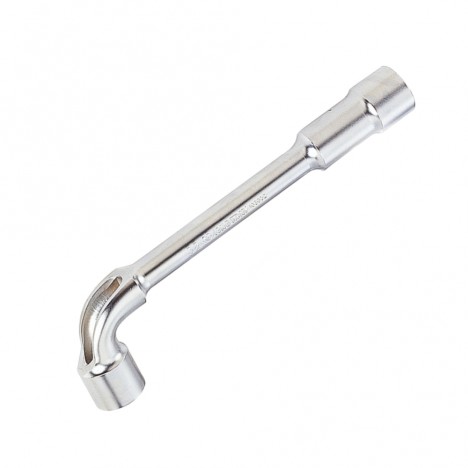
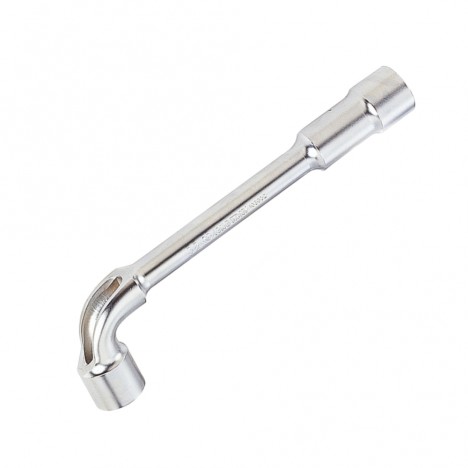
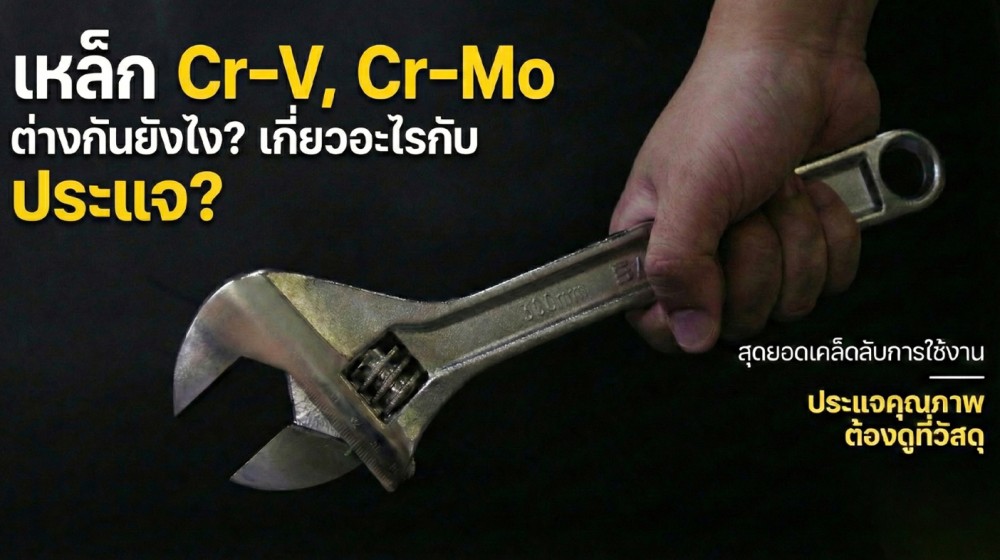
Picture this... you're struggling against a stubborn, seized bolt with your favorite wrench... suddenly, CRACK! In that split second, your heart skips a beat... because you're not sure what made that sound! That's the moment of truth that makes us ask ourselves:
- Is the wrench in our hands made of 'good enough steel'?
- What does the Cr-V code stamped on the wrench actually mean?
- And how is Cr-Mo, renowned for high-performance impact socket work, different?
In this article, we'll dive deep into Wrenches Cr-V vs. Cr-Mo. We guarantee that once you finish reading, you'll pick the right wrench for the job without having to hold your breath on site ever again.
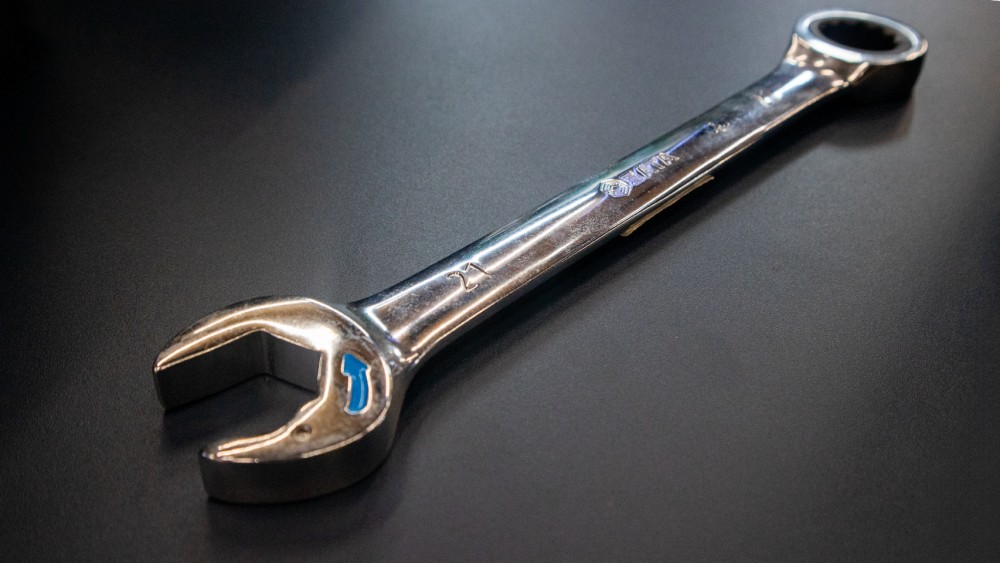
What are Cr-V and Cr-Mo? Why do technicians talk about them so much?
Before we dive in, let's get on the same page and adjust our perspective a bit: Cr-V and Cr-Mo steel are not wrench "model names," nor do they mean one is inherently superior to the other. Instead, they indicate that the piece is an alloy steel with specific elements added to make it more suitable for tool applications.
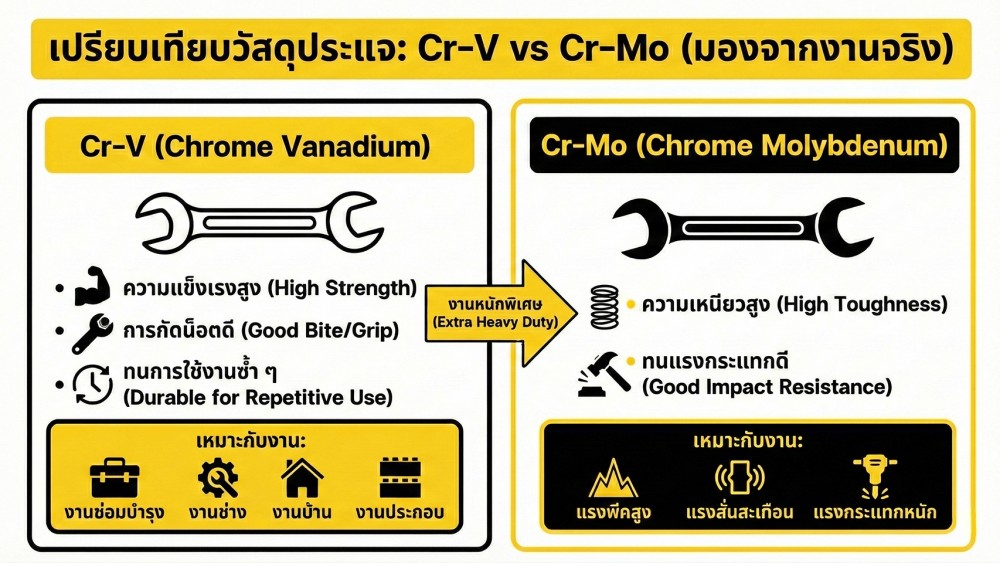
- Cr = Chromium, which helps with wear and corrosion resistance, and helps improve hardenability in many cases.
- V = Vanadium: Helps refine the steel grain structure, increases strength, and provides good resistance to repeated use.
- Mo = Molybdenum: Helps enhance toughness and resistance to impact/peak loads, reducing the risk of brittleness when subjected to sudden heavy loads.
So, "what does this have to do" with wrenches? To put it in the words of someone working on-site, we usually realize whether a wrench is good or not when these 3 situations occur:
- Strength: When applying torque, the wrench body does not easily twist or deform.
- Toughness / Impact resistance: When encountering a stubborn bolt and you have to yank, jerk, or apply sudden peak force, it won't chip or break.
- Fatigue resistance: In maintenance work involving repeated "tightening and loosening" every day, the wrench won't fatigue quickly, and the gripping edges won't flare open easily.
In short, these alloying elements don't just magically make a wrench superior—they directly determine how firmly the wrench grips a bolt, how much force it can withstand, and how long it lasts under repeated use in real life.
Why must a wrench be hard, but also tough?
Many people believe that the harder the steel, the better... but in real-world applications, it doesn't work that way. Hardness and toughness are like two opposing traits, and tools like wrenches require a proper balance of both.
Just imagine: when you apply force to a tight bolt, the force isn't always smooth and steady. Sometimes you have to give it a sudden pull, jerk it slightly, or accidentally apply force at an off-angle, causing the force to fluctuate. That is precisely why certain types of steel "can't handle it."
- Too hard: The surface may grip the bolt well, but when exposed to peak loads, impacts, or over-torquing, the chances of chipping, breaking, or silent cracking become much higher (once it snaps, it's game over).
- Too tough: It absorbs forces well and doesn't break easily, but if it is too soft or ductile, the wrench jaw or ring end can flare open and deform, losing full contact with the bolt head and ultimately causing it to slip and round off the bolt head.
That is why a good wrench requires a balance: hard enough to grip the bolt surface tightly without slipping easily, yet tough enough to withstand peak loads without breaking.
How is Cr‑V suitable for wrenches?
To be completely candid with you, Cr-V is the primary standard most commonly found on general-purpose wrenches. Not because it sounds cool or looks professional on paper, but because it balances strength, repeated-use endurance, and bolt-gripping tactile feel quite well. Speaking from the perspective of real wrench users, a good wrench must achieve 2 things simultaneously:
- Provide full surface contact (prevent easy slipping)
- Withstand repeated torque (won't flare open or fatigue prematurely)
- Chromium (Cr) provides wear resistance/corrosion resistance and helps achieve more consistent heat treatment across various processes (though it still relies on quality plating/surface coating as well).
- Vanadium (V) refines the steel's grain structure, increases strength, and improves fatigue resistance (under repeated torque), preventing the gripping edges from "flaring open quickly" over extended use.
What kind of work is Cr‑V best suited for?
- General mechanical tasks (daily tightening and loosening jobs)
- Maintenance work
- Home DIY tasks where you want durable tools that grip fasteners tightly
- Machinery assembly/installation work without continuous heavy impact loads
- Jobs requiring a solid fastener grip to reduce the risk of rounding off bolt heads
Common Misconception: Cr‑V Doesn't Mean It Can Handle Absolutely Anything!
We'd like to emphasize this point, as it's the trap of the term "good steel." Cr-V is truly great for general wrench work, but once you frequently use it for these 3 things, the risk of damage surges immediately—not because Cr-V is bad, but because we are using it incorrectly or overloading it.
- Forcing an adjustable wrench on stubborn bolts (loose jaws = easy slipping)
- Using a cheater pipe without considering the angle (concentrating stress on the wrench edge or neck)
- Using a wrench as a hammer (impact forces can cause cracking or chipping)
How Does Cr‑Mo (Chrome Molybdenum) Differ from Cr‑V?
Cr‑Mo excels in another area: toughness and impact resistance. Simply put, it doesn't break easily under high stress, especially sudden forces such as repeated hammering, vibration, or torque spikes in a fraction of a second. Molybdenum (Mo) is an alloying element that helps the steel:
- Better withstand heat and structural changes (crucial for jobs generating heat from continuous friction or impacts)
- Increase toughness and impact resistance, allowing it to absorb heavy, repetitive blows
- Reduce brittleness under sudden high stress, minimizing the risk of rapid chipping or cracking when encountering peak forces
Why Impact Applications Prefer Cr‑Mo
Because impact applications don't gradually ramp up force like steady manual wrenching; instead, they deliver torque in waves with frequent, alternating high peaks, such as:
- Pneumatic or cordless impact wrenches delivering rhythmic, high-torque blows
- Loosening heavily rusted bolts where unexpected kickback occurs
- Heavy-duty applications with continuous vibration, requiring the steel to resist fatigue from repeated impacts
This is why you often see Cr‑Mo used in these types of products:
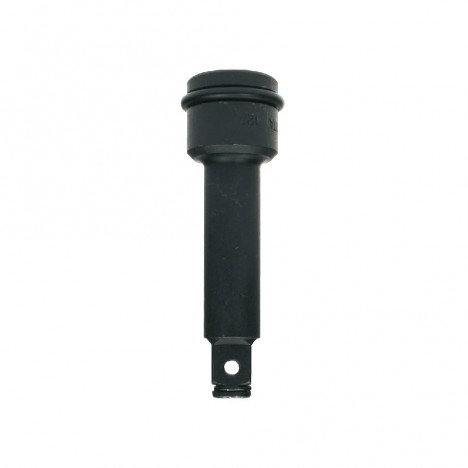
- Impact sockets
- Heavy-duty tools subjected to continuous impact/vibration
- Certain tools that must withstand extremely high stress and frequent peak forces
A common on-site scenario we see is people using standard sockets on impact wrenches, leading to sockets quickly cracking or shattering. That's because standard sockets are designed to be harder and thinner to grip fasteners effectively, but they aren't meant to withstand the frequent, high-impact blows delivered by impact tools.
So, is Cr‑Mo “better” than Cr‑V?
It is better in the context of impact and peak loads, but that doesn't mean it is superior in every way, because each type of tool requires a different balance of properties.
- Some tasks require high fastener bite and surface hardness to prevent slipping/rounding.
- Some tasks require toughness to avoid cracking under peak impact loads.
And this leads to a classic question...
If Cr‑Mo is tougher... why aren't most wrenches made from Cr‑Mo?
That's a great question and a common misconception, because combination/open-end wrenches and impact applications require entirely different key properties.
- Ring/open-end wrenches need to prioritize sharp fastener bite + high surface hardness to provide full engagement without easily slipping (especially on slightly rounded or stripped bolts).
- Impact applications must prioritize toughness to absorb sudden shock loads and resist cracking under repeated hammering blows.
To put it into perspective...
- A wrench is a tool where you control the force steadily, aware of how the load is being applied.
- An impact tool delivers force in sudden bursts, where peak loads can be much higher than we realize.
Therefore, Cr‑Mo is usually chosen primarily for applications where impact force is the dominant factor.
Good steel, but why do wrenches still fail?
This is a point people frequently overlook: “Damn it, Cr-V steel is terrible.” When in fact, the root cause might not be the steel's name, but rather 3 secret factors that buyers rarely know about.
- Even with the exact same grade of steel, different heat treatment yields entirely different results. With proper heat treatment, the steel becomes suitably tough and hard, gripping fastener heads tightly without easily stripping. If heat-treated poorly—too hard and it becomes 'brittle' (chips/breaks easily), or too soft and it will 'flare' (the jaw spreads open). This is why some Chinese wrenches marked Cr-V just like famous brands break right in your hands during actual use.
- Intentional Slimness vs. Cost-Cutting. Design has a massive impact on torque resistance. Professional-grade wrenches are designed to be slim to fit into tight spaces, but feature reinforcement ribs or load-bearing spines at critical stress points. Low-grade wrenches are made slim just to save on steel... so when you apply heavy torque, the wrench twists like a spiraled potato snack.
- Fit is a matter of life and death. No matter how good the steel is, if it fits loosely, it's useless. A good wrench must have high precision and tight tolerances, fitting snugly and perfectly. If it's loose and wiggles even slightly... the torque transfers directly to the corners of the fastener, causing the bolt head to round off and the wrench itself to deform."
Summary: How should you choose a wrench?
- For general tasks / maintenance / home DIY choose a quality Cr-V wrench + snug fit on fasteners + ergonomic shape.
- For extra heavy-duty jobs involving impacts or use with impact tools focus on using “the right tool for the job,” such as impact sockets which are typically made of Cr-Mo.
- Remember one thing: The term Cr-V or Cr-Mo is just a “starting point” that gives you a rough idea of the material properties, but actual quality ultimately depends on heat treatment, design, and real-world application on the job.
Select Wrench to suit the application