


 EN
 ไทย


Customers Also Purchased
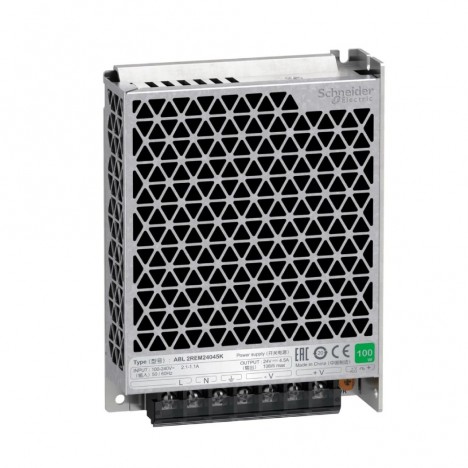
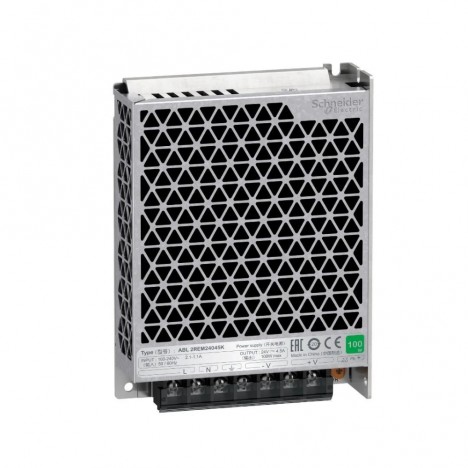
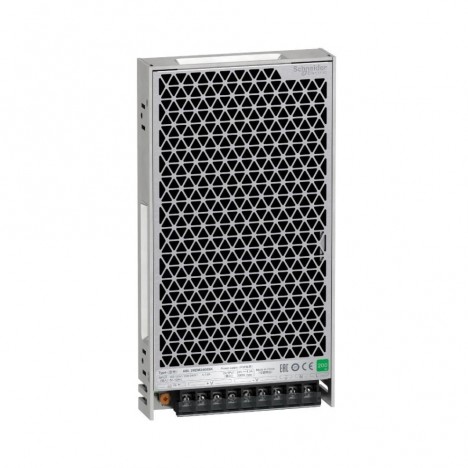
In an era of rapid technological progress, almost every electronic device around us—from the smartphone in your palm and desktop computers to large-scale industrial machinery—requires electrical power to run. But have you ever wondered how these devices draw power from a standard 220V wall outlet without exploding or getting damaged? The answer lies in a compact yet powerful device known as Switching Power Supplies (Switching Power Supply)
This article will take an in-depth look at every aspect of switching power supplies, from basic operating principles and internal construction to buying guides and troubleshooting common issues. It will help you truly understand the "heart" of electrical systems, whether you are a professional electrician, an engineering student, or a DIY enthusiast assembling your own control panel.
What Is a Switching Power Supply?
Definition
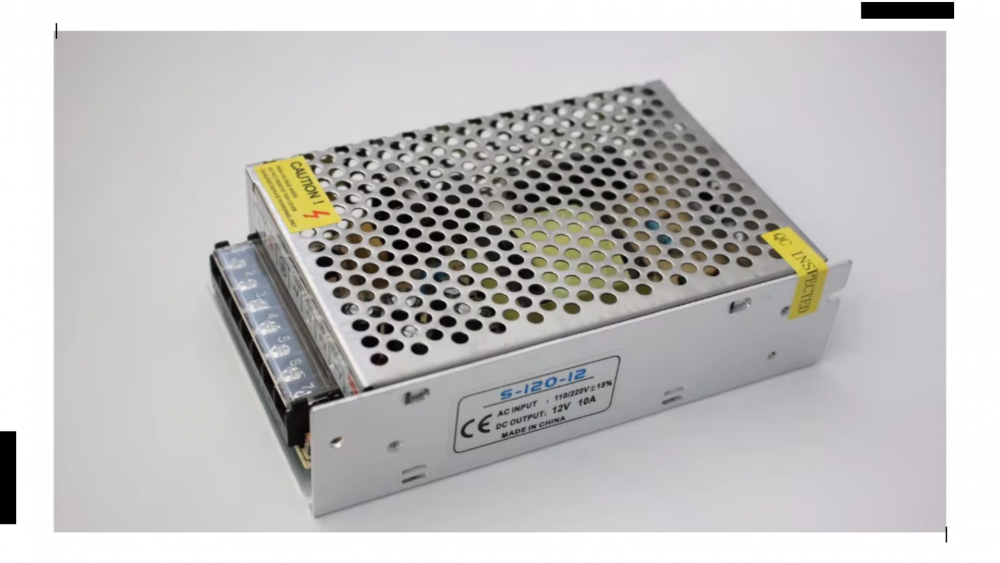
A switching power supply, or in its full English term, Switched-Mode Power Supply (SMPS), is an electronic device that converts electrical energy by changing alternating current (AC) voltage from household power into stable direct current (DC) voltage to power various electronic devices.
Why Did the World Switch to "Switching"? (Linear vs. Switching)
In the past, we used linear power supplies, which relied on large, heavy iron core transformers to step down voltage. Although they provided very smooth output power, they had a serious drawback: extremely high energy loss in the form of heat, as well as a bulky size.
The advent of switching technology revolutionized the industry:
- Size and Weight: Switching power supplies are several times smaller than linear ones because they operate at high frequencies, allowing the use of miniature transformers.
- Efficiency: Switching power supplies offer high efficiency of up to 80-90% or more (whereas linear supplies might achieve only 50-60%), meaning they consume less power while delivering the same output.
- Flexibility: Newer switching models (such as the Schneider ABL2 Series) support a wide input voltage range (Universal Input: 100V-240V AC), allowing worldwide use without needing to toggle a voltage selector switch.
In-Depth Operating Principles
To understand how it works, we need to look inside that perforated metal casing. The operating principle of a switching power supply is like "chopping" electrical energy into tiny pieces and reassembling them to the desired output size, through 4 main stages as follows:
1. Input Rectification & Filtering (Converting household AC into high-voltage DC)
When plugged in, 220V alternating current (AC) passes through a fuse and an electromagnetic interference filter (EMI Filter) before entering a "bridge rectifier" to convert it into direct current (DC).
What to look for: At this point, large capacitors smooth out the power. The voltage here is very high (around 300-340V DC)—anyone disassembling it for repairs must exercise extreme caution at this stage!
2. High-Frequency Switching (The Core: Switching Action)
This is the step that gives it the name "switching." The high-voltage DC is sent to a power transistor (or MOSFET), which acts as a "switch" turning on and off at extremely high speeds (frequencies ranging from 20 kHz up to 1 MHz, or 1 million times per second!).
- This technique is called PWM (Pulse Width Modulation): If high output power is needed, the switch stays on longer; if low power is needed, it stays on only briefly. This timing is controlled with extreme precision by a PWM Controller IC.
3. Power Transformation (Stepping down voltage with a high-frequency transformer)
The pulsed current is sent through a transformer. The advantage of high-frequency switching is that it allows the use of a transformer that is vastly "smaller and lighter" than conventional transformers used with 50Hz mains power (this is why switching power supplies are much lighter than iron-core transformers).
- The transformer provides electrical isolation between the high-voltage mains and the low-voltage output, ensuring user safety against electric shock.
4. Output Rectification & Filtering (Converting back to smooth DC)
The electrical output from the transformer is now at a low voltage (such as 12V or 24V), but it is still high-frequency AC. Therefore, a rectifier diode must be used to convert it back to DC, and capacitors are used to filter the signal until it is ultra-smooth, ready to power various devices.
5. Feedback Loop (Feedback monitoring system)
The brilliance of a switching power supply lies in its "spy" constantly monitoring the output voltage. If the load draws a lot of current causing the voltage to drop (for example, from 24V to 23.5V), the feedback circuit sends a signal back to tell the PWM chip to keep the switch on longer, automatically boosting the voltage back to a steady 24V.
Switching Power Supply Types and Form Factors
In the market, you will encounter various switching power supply designs. Choosing the right type for your application is essential.
1. Mesh / Enclosed Type (Most popular)
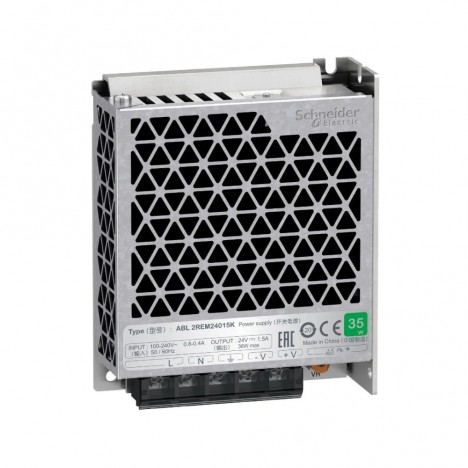
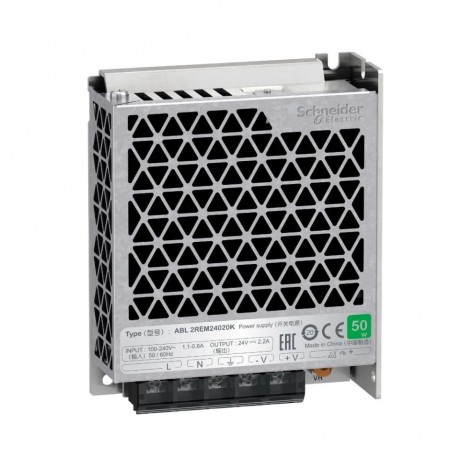
Just like in the product image of the Schneider ABL2REM Series you see
- Features: Features a perforated metal case (honeycomb-like) for heat dissipation enclosing the circuitry
- Pros: Strong, durable, economical, and offers good heat dissipation
- Applications: General applications, control cabinets, 3D printers, LED lights
2. DIN Rail Mount Type
- Features: Designed to snap directly onto a DIN Rail in MDB panels or industrial control cabinets without needing mounting screws
- Pros: Easy wiring, neat appearance, industry-standard design
- Applications: Factories, automation systems, PLCs
3. Adapter Type
- Features: A solid plastic enclosure with protruding power cables (like a laptop charger)
- Pros: Easy to use, no screw terminals required, better dust protection than the open-frame mesh type
- Applications: Individual CCTV cameras, IT equipment, internet routers
In-Depth Specifications – How to Choose for Value and Safety
This topic is what your customers want to know most. Choosing the wrong switching power supply specs can mean a shorter lifespan or equipment damage.
1. Output Voltage (V)
Must match the connected equipment exactly
- 5V: Microcontroller boards, small LED strip lights
- 12V: CCTV cameras, decorative room LED strip lights, car audio systems
- 24V: (Industry Standard) PLCs, sensors, relays, 3D printers, high-power LED strip lights
- 48V: Network equipment (PoE), telecommunication systems
2. Current & Wattage
Golden Rule: "Better to have extra than not enough." The formula is P(Watt) = V(Volt) × I(Amp)
Suppose you use a 24V LED strip consuming 100 watts; you shouldn't buy a 100-watt switching power supply because it will run at 100% capacity all the time, causing overheating and premature failure.
- Technician's Advice: Allow a 20-30% safety factor margin.
Example: For a 100W load, use a power supply rated at 100 + 30% = 130W (on the market, you might choose a 150W model such as the ABL2REM24065K or similar).
3. Protection Features
This is where cheap switching power supplies from China differ from standard brands (such as Schneider, Meanwell).
- Short Circuit Protection: Shuts off immediately when wires short-circuit (prevents fire hazards)
- Overload Protection: Cuts off or reduces voltage when current exceeds the rated limit
- Over Voltage Protection: Protects against excessive voltage that could damage connected downstream equipment
Installation & Maintenance
Installation Precautions
- Heat dissipation: Do not install in an enclosed, unventilated space. For mesh/enclosed models, ensure air can flow through the ventilation holes. Do not place anything on top of it.
- Wiring: Terminals L (Line) and N (Neutral) are the 220V AC input, while V+ and V- are the DC output. Never reverse them! (Connecting 220V AC to the V+ terminal will immediately blow the circuit.)
- Wire sizing: The DC side wires should be thick enough to carry the current (Amps), as low-voltage DC incurs higher line losses than AC household power.
Common Symptoms and Troubleshooting
- LED indicator does not turn on: Check the upstream fuse, or verify whether 220V power reaches the L/N terminals.
- LED is on, but no power output: This may occur because the protection system is activated (short circuit or overload). Try disconnecting the load wires and measure the voltage again.
- Flashing LED (Hiccup Mode): This is a symptom of "insufficient power" or "degraded capacitors". The switching power supply attempts to restart itself repeatedly but fails. Try reducing the load or replacing it with a higher wattage model.

Choose the right one for long-term peace of mind
Switching Power Supplies It is not just a power converter, but the foundation of a stable electrical system. Choosing a quality switching power supply—even if it costs tens or hundreds of THB more than low-grade alternatives—rewards you with "safety" and "work continuity".
Especially in industrial applications or security systems like CCTV, a system downtime of just 1 minute can cause damage far exceeding the cost of the power supply itself.