


 EN
 ไทย


Customers Also Purchased


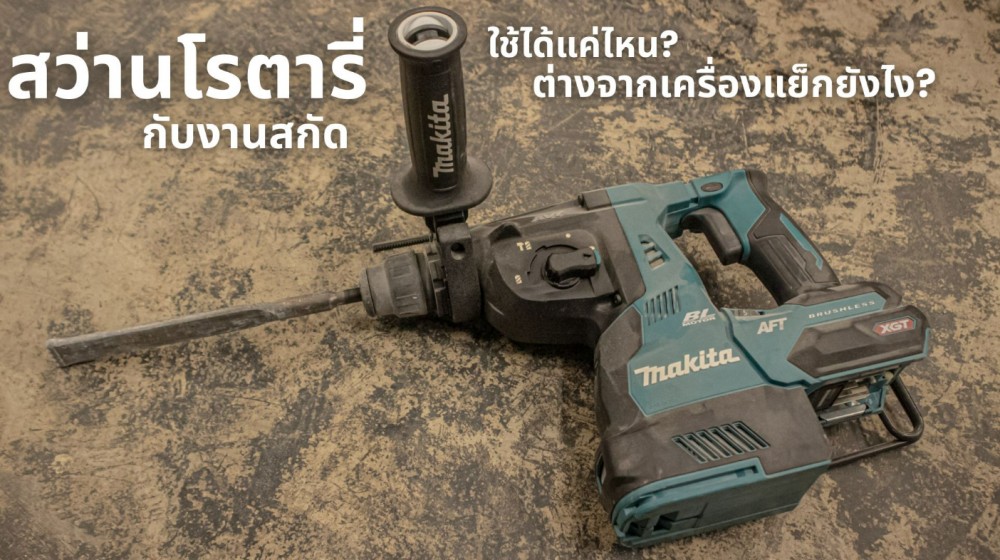
Rotary hammer Can a single tool be used for chiseling concrete instead of a demolition hammer? Because if simply switching to chiseling mode really allows them to be used interchangeably, why do tradesmen still always carry a demolition hammer in their trucks? Or is there something about the capabilities of a rotary hammer that prevents it from completely replacing a demolition hammer?
Many people see that rotary hammers have a chiseling mode similar to demolition hammers or dedicated concrete breakers, and assume they can be used interchangeably. In reality, both rotary hammers and demolition hammers are designed differently: they serve different purposes, have different weights, deliver different impact energies, and have different lifespans when subjected to “actual chiseling”.
Therefore, in this article, we will clear up the doubts regarding the chiseling mode of rotary hammers: what kind of chiseling tasks it is suitable for, how far it can go, what it does well, and where it shouldn't be pushed beyond its limits. This way, when you need to choose tools for chiseling tasks in the future, you can make the right decision, saving effort, time, and the cost of potential damages.
Can a rotary hammer chisel concrete just by turning on the chiseling mode, is that true?
A rotary hammer is a tool specifically designed for masonry and concrete drilling. Its key highlight is the “pneumatic hammering” mechanism that provides much higher impact energy than conventional drills, making drilling through masonry or tough structures like reinforced concrete many times easier. In addition, it features a chiseling mode (Hammer Only), leading many to believe that a rotary hammer can fully replace a demolition hammer.
Besides Choose a rotary hammer suited for the job: do not overlook these 5 points! And the truth is, a rotary hammer is designed so that Can chisel to a certain extent , yes, but it is not a tool built for heavy, continuous chiseling for hours like a demolition hammer (jackhammer). Therefore, the key point is knowing what extent of chiseling is considered appropriate.
Key Strengths of Rotary Hammers for Certain Chiseling Tasks
Rotary hammers have many advantages that make them great for light chiseling tasks, such as being much lighter than demolition hammers, allowing for convenient handheld use on walls or in tight spaces without causing excessive fatigue. They are also easy to control, making them ideal for detailed work requiring precision. With quick-change drill bits and chisels, you can easily switch between tasks using just a single tool.
In addition, the moderate impact energy allows small repair jobs—such as chipping off plaster or chasing grooves for pipes—to be completed neatly without unnecessarily damaging surrounding areas. This makes rotary hammers a versatile, multi-purpose tool that many technicians keep in their toolboxes.
Rotary Hammers and Heavy-Duty Chiseling
Although rotary hammers are versatile, when it comes to serious, heavy-duty chiseling, this tool has limitations that require great caution. By nature, it is not built for "continuous heavy chiseling."
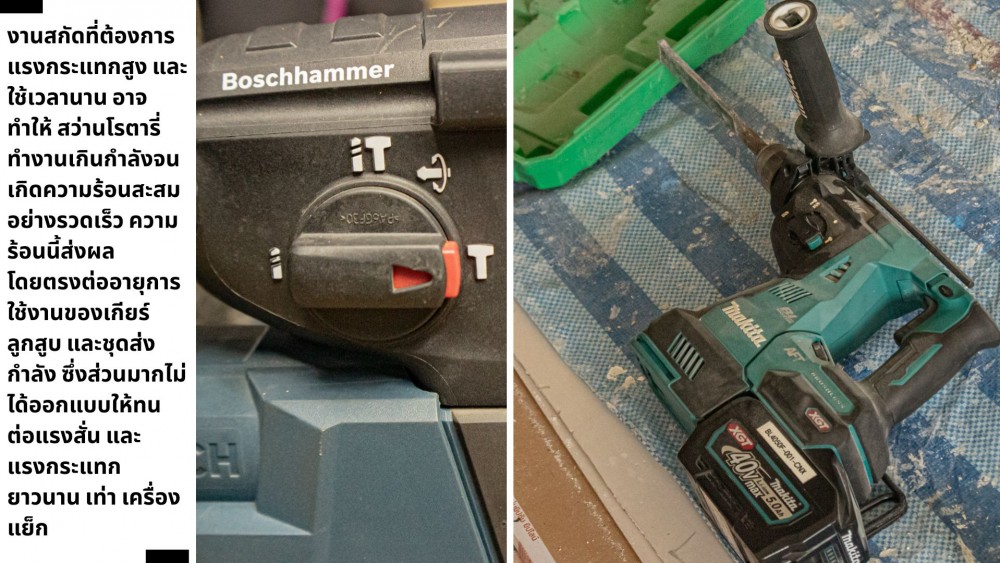
If large chisel bits are used, the rotary hammer may not be able to deliver power at full efficiency, resulting in slow progress, tool overload, and the risk of premature failure. All of these are key reasons why, even though a rotary hammer "can chisel," it should not be pushed beyond its capability limits.
What Can a Rotary Hammer Chisel?
If you ask, "What level of chiseling is a rotary hammer really suitable for?" this is probably the most popular question. Everyone wants to invest in a cost-effective tool that can handle small jobs, repair tasks, and more demanding work without having to buy multiple tools. But looking closely into the actual nature of chiseling tasks, there is a clear distinction in workload intensity—ranging from removing thin tiles to breaking through building floors nearly a meter thick.
Chiseling Tasks That Rotary Hammers Excel At
- Chiseling floor and wall tiles: Rotary hammers are very suitable; prolonged use is still manageable thanks to their light weight.
- Chipping off thin plaster/render: Wall surface preparation, stripping thin plaster from walls.
- Chasing grooves for conduits and wiring: General home repairs requiring shallow wall grooving.
- Chipping localized concrete surfaces: Such as minor floor patch repairs.
- General DIY home repairs: that do not require excessive force
Demolition hammers: Why do they need to be many times more powerful than rotary hammers?
A demolition hammer (jackhammer) is specifically designed for chiseling concrete. The most crucial difference is Demolition hammers do not have a drilling function like rotary hammers, but they deliver several times higher impact force.
Demolition hammers feature a larger piston system, heavier weight, bigger motor, and a mechanism focused solely on delivering "impact energy," resulting in extremely high chiseling power (Impact Energy). Typically, demolition hammers have an impact force ranging from 10–45 J, while rotary hammers usually range from 2–8 J.
To put it simply: a rotary hammer is like a handy, well-sized hammer that is easy to use and control, while a demolition hammer is like a massive sledgehammer designed for relentless bashing.
Rotary Hammer vs. Demolition Hammer: What's the difference?
Picture this: when choosing tools for actual chiseling work, what makes the decision tough isn't just high vs. low impact force, but also tool maneuverability, the workspace, working posture, duty cycle, and long-term durability. All of these are factors where the two tools clearly differ.
1. Impact Energy
- Rotary hammer: 2–8 Joules
- Demolition hammer: 10–45 Joules or more
The biggest difference when comparing a rotary hammer with a demolition hammer is the immense disparity in impact energy. This makes a clear difference in chiseling performance, in terms of speed, fatigue, and the quality of work.
2. Tool Weight
- Rotary hammer: 2–6 kg
- Demolition hammer: 6–25 kg
Heavier weight means greater impact force, but it causes more fatigue during extended use. The heavier the tool, the more effort required by the user to control and stabilize it. This can easily lead to fatigue from the arms and shoulders all the way to the back, especially when working over large areas or holding the tool in the same position for extended periods.
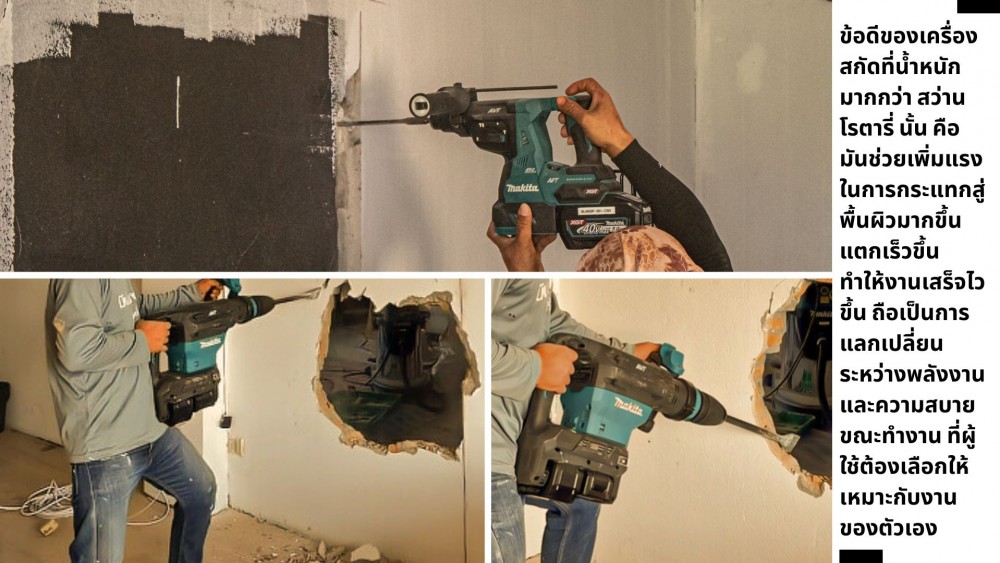
3. Continuous Chiseling Duration
Rotary hammers can chisel, but they heat up quickly and require periodic rest. In contrast, demolition hammers are designed for prolonged continuous use.
4. Lifespan under Heavy-Duty Chiseling
If you force a rotary hammer to perform heavy-duty chiseling frequently, you may encounter problems such as cracked bearings, piston failure, loose chucks, or a burned-out motor from heat buildup.
Using a Rotary Hammer for Chiseling Safely and Extending Tool Life
Even though a rotary hammer is not a heavy-duty chiseling tool, how should we Know Before You Buy! 7 Precautions When Using a Rotary Hammer to Prevent Early Breakdown However, if you really need to use a rotary hammer for chiseling work, there are a few simple tips that can significantly extend the machine's life, such as:
- Do not press too hard on the tool Let the impact mechanism do the work. Applying excessive pressure accelerates wear on the piston and gears, and causes the tool to heat up faster.
- Rest the tool every 10–15 minutes This allows the tool to cool down and reduces the risk of damaging internal components.
- Use the right chisel bit for the job Flat chisel for removing tiles, pointed chisel for breaking concrete cracks, and spade chisel for chipping off plaster.
- Avoid materials thicker than 5–7 cm If the concrete is too thick, the motor will be overworked, potentially damaging internal mechanisms.
- Clean and grease the SDS chuck regularly The SDS chuck needs lubrication to minimize friction and prevent wear on the chuck mechanism.
Which size of rotary hammer is suitable for what type of chiseling work?
Rotary hammers come in various tiers, from compact to heavy-duty models, with 2-mode or 3-mode functions to suit convenience and application. If you ask, What is a 3-mode rotary hammer? Does it need all of them to be considered "pro-grade"? The answer depends on how many tasks you need to handle or how much flexibility you want from the tool. But if you focus on chiseling tasks, choose one with a chiseling mode. Regarding sizes, let me summarize it simply as follows:
Compact models 2–3 J (Weight 2–3 kg)
Great for chiseling tiles and plaster—tasks that don't require high impact energy and focus on precision. You can work for long periods without fatigue due to the lightweight design. Ideal for small home repairs like removing selected tiles, opening small areas for pipe repairs or wiring, and tasks requiring extra maneuverability. Also well-suited for general users who want a versatile tool for home use without doing heavy chiseling on a regular basis.
Medium models 3–5 J (Weight 3–5 kg)
Chisels better, harder, and more durably, handling medium-duty chiseling tasks such as removing slightly thicker plaster or chasing grooves into harder masonry walls well. It provides a good balance between impact energy and tool weight, allowing longer use without quick fatigue.
Heavy-duty class 5–8 J (weight 5–6 kg)
This power is close to that of a small demolition hammer. It handles heavier chiseling work, such as chipping thin floor screed, breaking large openings in walls, or tearing down thicker masonry. You could say this is where you truly enter the professional contractor tool grade.
Summary: How much chiseling can you do with a rotary hammer?
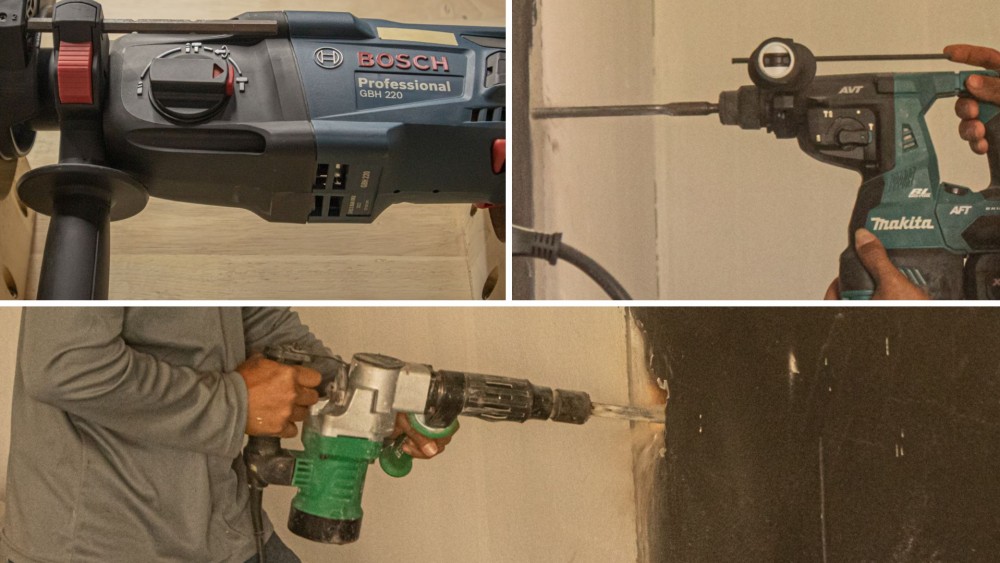
A rotary hammer is a versatile tool that helps immensely, but pushing it beyond its intended design can shorten its lifespan. Straightforwardly summarized for easiest understanding, it comes down to this:
- Rotary hammers can be used for light to medium chiseling tasks. Such as tiles, walls, plaster, chasing grooves, and pipe routing.
- Rotary hammers can chip concrete, but exercise caution if the concrete is 5–7 cm thick.
- Do not use them for heavy demolition work, such as breaking thick floor slabs or large concrete structures.
- Use a demolition hammer instead for heavy-duty work, such as large surface areas, tasks requiring high impact force, or working continuously for more than 20–30 minutes.
Finally, remember that Rotary hammer it can chisel, but it wasn't made for every heavy demolition job.