


 EN
 ไทย


Customers Also Purchased


Has this ever happened to you? Finally, it's the weekend, and you planned to wake up and tidy up your garden, only to end up frustrated first thing in the morning because the hedge trimmer won't start no matter how hard you pull your arm out! Or when you press the switch, the blade ends up chewing the leaves into a shredded mess instead of making clean cuts.
Many of us get attached to our old tools and figure that as long as they still work somewhat, we can just put up with them. But in reality, every machine has its lifespan, and forcing yourself to use degraded equipment not only ruins your garden work but also carries hidden dangers you might not expect.
In this article, we'll walk you through Hedge Trimmer a detailed look at the 5 warning signs that it's time for a replacement, helping you easily decide whether you should keep repairing it or call it quits, ensuring maximum value and safety for you.
Hedge Trimmer Cutting Performance Has Deteriorated
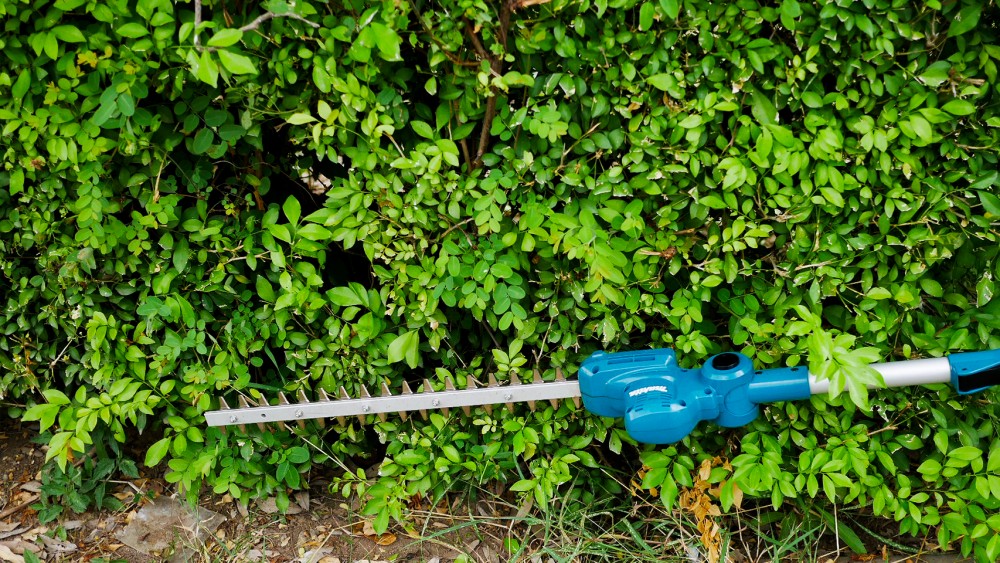
The heart of a hedge trimmer is the blade itself. Its job is to slice clean through branches immediately so that the cuts heal quickly and reduce the chance of mold and fungal infections entering the stem. Let's see the telltale signs that your hedge trimmer just can't keep going.
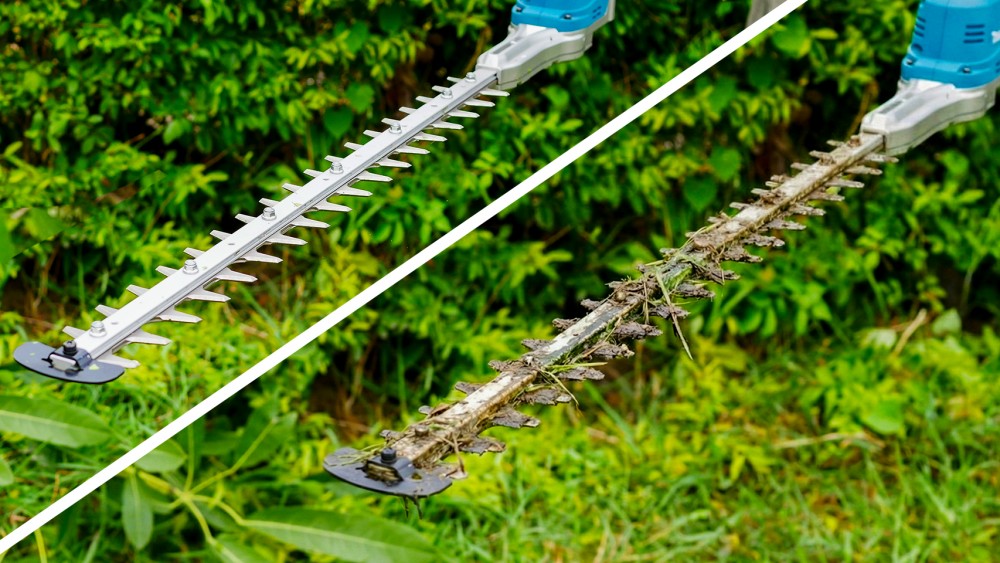
- Bruised and torn leaves: Look at the cut surfaces on the branches. If the cuts appear frayed and fibrous, or if leaves show brown bruising at the tips instead of being cleanly sliced, it indicates that the blades are worn out, or the clearance between the blades has become too wide to re-align.
- Signs of physical damage: Stop the machine and inspect each saw tooth. If you find teeth that are chipped, broken, or bent from striking hard objects (such as wire fences or walls), or deep rust pitting that leaves the metal surface rough, this rust will create immense friction, causing the hedge trimmer to work unnecessarily hard. Polishing the rust off may help temporarily, but the damaged steel cannot be restored.
- Frequent stalling: If you cut regular-sized branches that used to be easy, but the machine hesitates or the blades jam more often, this is a sign of motor power loss or internal gear wear where torque is insufficient to drive the blades. This symptom often occurs alongside a grinding noise from inside the gearbox.
- Takes 2 times longer: The same task that used to be completed in 30 minutes now takes an hour because you have to repeatedly cut over the same spot to cut through. Having to sweep the tool back and forth multiple times just to cut a single branch is the clearest indicator that efficiency has dropped to its limit.
Once blades have been sharpened multiple times, the steel becomes progressively thinner until the "hardened layer" is completely gone, causing them to dull quickly after sharpening. Furthermore, wear on the blade mounting pins creates excessive clearance, preventing the blades from shearing tightly together—just like loose scissors failing to cut paper. At this point... replacing the hedge trimmer is definitely more cost-effective than replacing the blade assembly.
Noise and Vibration Pollution from Hedge Trimmers
Have you ever felt hand numbness or aching radiating up to your shoulders after using a hedge trimmer? If so... don't blame it on getting older, blame your tool. On older hedge trimmers or heavily used units, the anti-vibration rubber mounts often degrade, harden, or tear, allowing vibration from the engine or motor to transfer directly to your hands and arms, which over the long term can negatively affect the nerves and blood vessels in your hands.
Listen to the sounds of failure
- Metal-on-metal clattering, grinding, or rattling noises that sound like loose nuts bouncing around inside are often caused by broken bearings or loose connecting rods.
- A high-pitched squeal is caused by stripped internal gears, misaligned gear teeth, or completely dried-out gearbox grease.
- Sputtering engine noises: On petrol engines, if the engine refuses to rev up or makes popping backfire noises from the exhaust, it indicates a major problem with the ignition system or carburetor.
Vibrations that harm your health
- An invisible danger: Prolonged exposure to continuous vibration increases the risk of HAVS or "vibration white finger," which permanently damages capillaries and sensory nerves in the hands, causing numbness, loss of grip dexterity, and extreme sensitivity to cold.
- A simple test: Place the hedge trimmer on a flat surface and rev the engine. If the machine vibrates so violently that it "walks" across the floor on its own, its balance has reached a critical failure state.
Abnormal heat
- Hazardous touch points: Try lightly touching (careful, it may be hot) around the front gearbox or the motor area after 10–15 minutes of operation. If it is scorching hot to the touch or smells like burning, excessive internal friction is occurring—likely from seized bearings or dried-up lubrication. Repairing this issue is usually not cost-effective compared to buying a new unit.
New hedge trimmer models (especially modern cordless or 4-stroke models) are engineered with advanced ergonomics, delivering smooth anti-vibration systems and remarkably quieter operation. Upgrading in this case isn't just about yard work—it’s an investment in "buying back your health" and preventing future medical expenses.
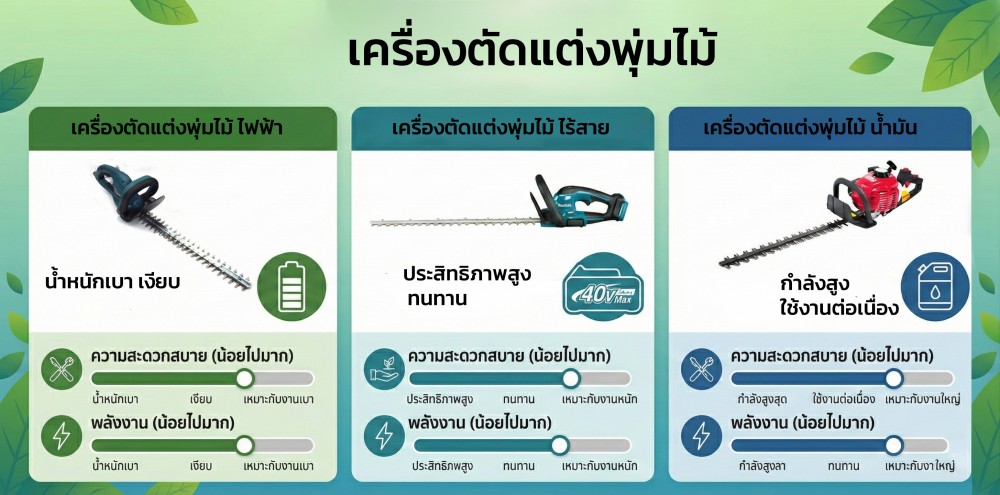
Starting and power source issues of hedge trimmers
Petrol hedge trimmers
- Extremely hard to start: If you have to pull the starter cord more than 5–10 times, adjusted the choke, primed the fuel, and it still stays dead silent, the cause may go deeper than just a fouled spark plug. It could be a hardened carburetor diaphragm failing to pump fuel, or brittle, cracked fuel lines causing air leaks—where the cost of parts plus labor for a carburetor rebuild can be surprisingly high.
- No pull-cord resistance: Pay attention when pulling the starter cord. If it pulls unusually easily with no resistance against your hand, compression is lost due to worn piston rings or a scored cylinder wall. This is "terminal cancer" for a 2-stroke engine—definitely not worth repairing.
- Heavy smoke: White/blue smoke indicates worn piston rings allowing engine oil to enter the combustion chamber (in 4-stroke engines). Black smoke indicates faulty combustion—excessively rich fuel mixture or an irreparably clogged air filter.
Cordless hedge trimmers
- "Ghost charging": The charger displays a solid green light indicating a full charge, but once plugged into the tool, it shuts off after just 2–3 minutes of use. This symptom is known as a degraded battery (voltage drop under load), where the battery cells can no longer deliver high discharge currents.
- Hidden costs of older models: If your machine is an older model running on heavy Ni-Cd batteries that suffer from memory effect (requiring a full drain before recharging), it is highly recommended to upgrade to a modern Li-ion powered trimmer right away. The performance difference is night and day, and older replacement batteries are nearly impossible to find, or prohibitively expensive if available.
- Melted battery terminals: If you remove the battery and notice scorch marks or melted plastic on the contact terminals, severe electrical arcing has occurred, which can spread to damage the control board inside the machine.
Electric hedge trimmers
- Sparks and burning smell: If looking through the ventilation slots reveals crackling blue or orange sparks flashing at the armature along with a pungent burning smell, it indicates that the carbon brushes are completely worn down so the spring is rubbing against the armature, or the armature has short-circuited.
- Internal wire breakage: Have you ever had to wiggle the power cord back and forth or twist the cable relief just to get the machine to start, only for it to shut off as soon as you let go? This "internal wire breakage" symptom is extremely dangerous because electric leakage or a short circuit can occur at any moment, and disassembling the machine to replace the entire cable is a massive headache for the average person.
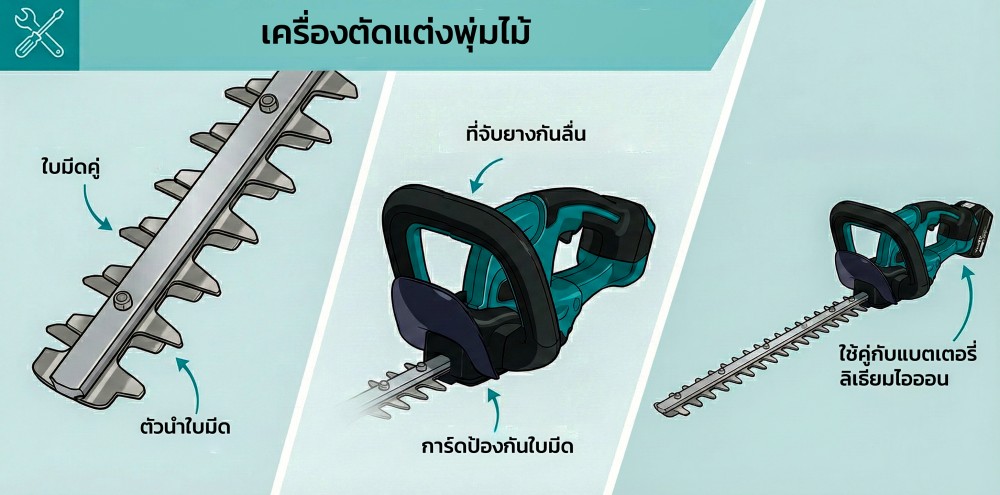
Neglected Safety
This is an absolute "no-go". If your hedge trimmer shows any of these symptoms, please stop using it and consider replacing it immediately. Accidents from high-speed rotating tools are extremely severe, and there is usually no second chance.
Broken safety guard
- Condition: The clear plastic plate or mesh guard in front of the handle is cracked, broken, or completely missing.
- Risk: It is not there just to block flying leaves; it is designed to keep your "fingers" from slipping into the blades during kickback, or to protect against flying stone chips at high velocity. Using the tool without a guard is like facing flying bullets unprotected.
Faulty safety switch
- Condition: A proper hedge trimmer requires a "Two-Handed Operation" safety system, meaning both hands must engage switches simultaneously for the machine to run. If the front handle switch is stuck or taped down for easier pressing,
- Risk: If you trip and your hand accidentally presses the trigger, the machine will start instantly without any safety cutoff. Or, if the machine slips from your hands while running, it won't stop moving and could swing into your legs. This is a critical hazard!
Blade brake failure
- Condition: International safety standards mandate that when the switch is released, the blades must stop completely "immediately" (within 0.5 - 1 second). Observe your tool: if releasing the switch leaves the blades coasting to a stop over 2-3 seconds, the mechanical brake system is broken.
- Risk: That 2-3 second window is long enough for an accident to occur if you lower the tool toward your body or place it on the ground while the blades are still moving.
Cracked housing
- Condition: Cracks on the plastic housing might seem like a minor issue.
- Risk: But under heavy vibration, these cracks can spread, causing the handle to snap off from the body during use, or exposing internal electrical components to moisture, posing a severe risk of electric shock.
Frayed power cord / damaged insulation
- Condition: For electric corded models, if bare copper is visible or the strain relief cord protector entering the housing has degraded and frayed,
- Risk: Severe risk of electric shock during operation, especially when working in damp garden conditions, or if you accidentally cut into the power cord itself.
Hedge Trimmer Repair Cost Traps
Sometimes the tool still turns on and the blades still move, but you are stuck in an endless cycle of minor repairs: replacing spark plugs, changing filters, fixing carburetors, or constantly sharpening the blades.
The Golden Rule of Tool Replacement (The 50% Rule): Machinery experts recommend that "if the repair cost (including spare parts and labor) exceeds 50% of the price of a new tool... it's better to buy a new one."
Leaps in Technology
- Brushless Motor: Newer hedge trimmers in the 3,000–5,000 THB price range often feature brushless motors. Without brush friction, the tool doesn't overheat, lasts longer, and saves 30–40% more battery life than older models.
- Newer hedge trimmers often come with an Anti-Jamming system (a button to reverse the blade when branches get stuck) and a Rotating Handle to let you trim at right angles without twisting your wrist—features you won't find on older models.
Peace of Mind with Warranty
- Repair vs. Buy New: General repair shops usually offer a warranty only for the specific repaired part for just 1 month (e.g., replacing the carburetor only covers the carburetor). But if the ignition coil fails next month, you keep spending repeatedly (Domino Effect).
- Comprehensive Coverage: Hedge trimmers usually come with a full system warranty of 1–3 years (depending on the brand), eliminating hidden costs and giving you a flawless machine from day one.
Hard-to-Find Spare Parts
- Time is Money: If the technician says "you need to wait 2-3 weeks to order spare parts" or "we have to look for compatible parts," that means your garden will stay overgrown for almost another month.
- The Risks of Compatible Parts: Using modified, non-original spare parts (such as connecting rods or blades) can cause abnormal vibrations and lead to severe hazards. Investing in a new tool with long-term spare parts support is much safer.
Conclusion
If your hedge trimmer shows even 1 of these 5 warning signs, it is already a cause for concern. But if it matches 2 or more... it's definitely time to replace it. Don't regret letting go of a broken tool; regret the time and gardening joy you lose to endless repairs instead. Look for a new hedge trimmer suited to your garden size, and you'll find that tiring garden chores can truly become the most relaxing part of your week.
Select Hedge Trimmer More