


 EN
 ไทย


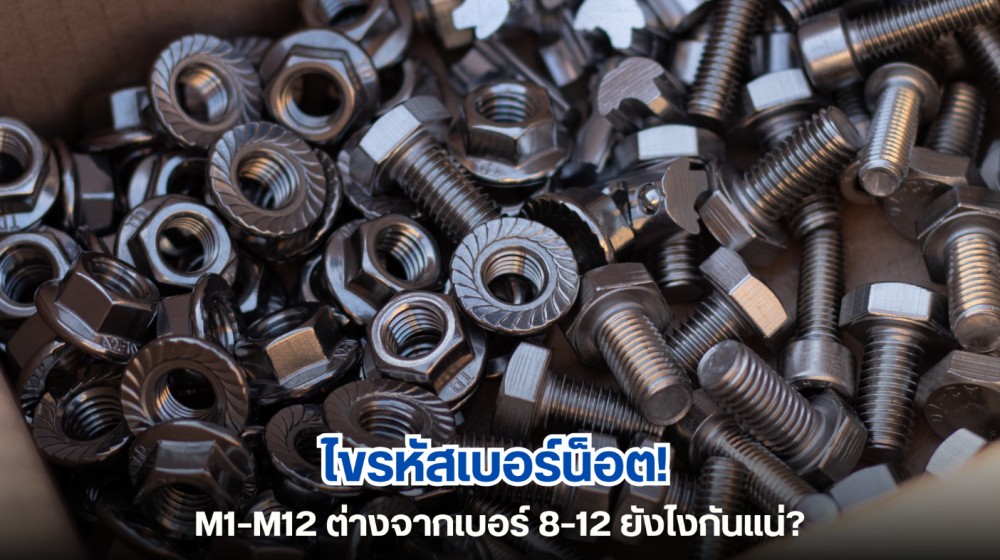

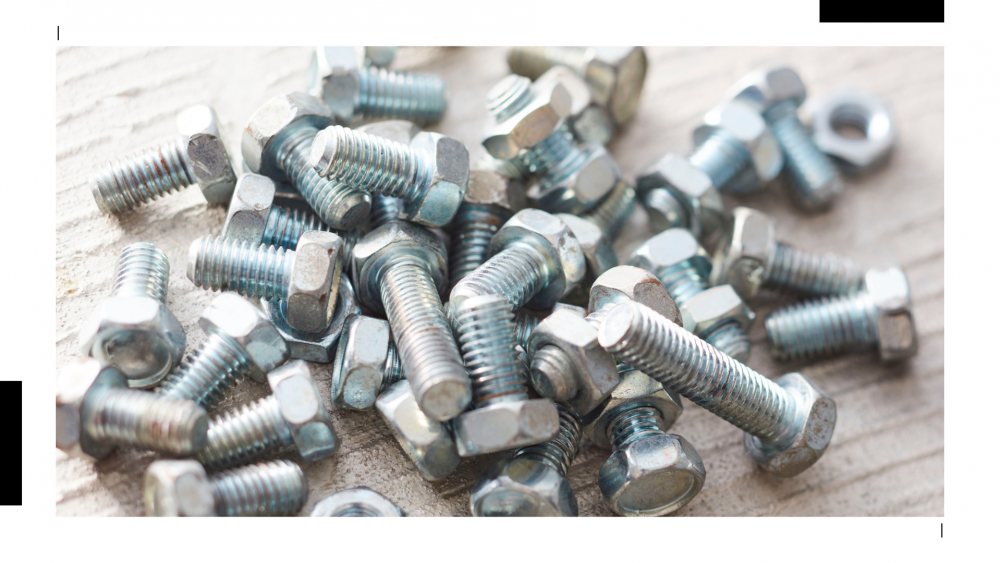
Nuts and bolts are small components that seem straightforward to buy. But once you step inside a hardware store, you might hear terms like M6, M8, size 8, size 10, or a 13 mm wrench, leaving you wondering whether all these numbers refer to the same size.
I've been in that exact situation myself. When I first started out with DIY and repair work, I walked into a store and said, “Can I have a size 10 bolt, please?” But the staff asked back whether I meant an M6 thread, an M8 thread, or a #10 screw. What I thought would be a quick purchase turned into having to relearn what the word “size” actually means.
This matters more than you might think. If you choose the wrong thread size or pitch, never force it even if the parts look very similar. Doing so could strip the threads, weaken the fastening, and in some cases force you to replace the bolt, the nut, or even the threaded component itself.
The numbers might look the same, but they convey entirely different pieces of information. Before buying, always check whether the number refers to the thread diameter, the screw gauge number, or the fastener head size that the tool needs to grip.
First of all, what does “bolt size” really mean?
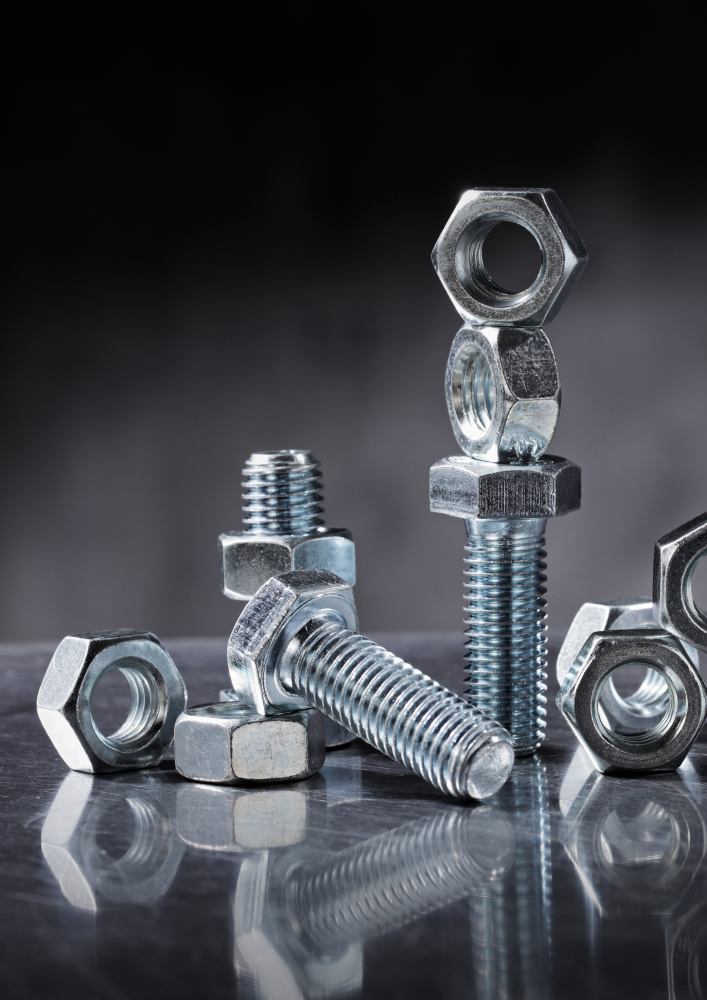
In colloquial speech, the term “nut/bolt size” can be used to refer to several different things interchangeably. Some shops use it to mean the thread size, some refer to the wrench size, while certain small imperial screws use numbers like #8 or #10 as their actual size designations.
Therefore, simply asking for a “size 10 bolt” is not specific enough. The shop may not know whether you need an M10 thread, a fastener that fits a size 10 wrench, or are referring to a #10 imperial screw. Clearly specifying the type of fastener and thread standard will greatly reduce the chance of purchasing the wrong item.
Common Thread Systems
Fasteners such as nuts, bolts, and screws use various thread systems, but general applications most commonly encounter the Metric system, the Unified Inch system, and Whitworth threads in certain machinery or equipment. Each system specifies diameter and pitch differently, so you should never screw them together just because their diameters look similar.
| Thread System | Sample Designation | Pitch Specification Method | Basic Thread Angle | Typical Application |
|---|---|---|---|---|
| ISO Metric | M6, M8 × 1.25 | Pitch in millimeters | 60° | Commonly found in Thailand, Europe, Japan, and general industrial applications |
| Unified Inch | #10-24 UNC, 1/4-20 UNC | Threads per inch (TPI) | 60° | Found in machinery and equipment from the United States |
| Whitworth | 1/4 BSW, 3/8 BSW | Threads per inch | 55° | Found in older British machinery or specific types of equipment |
A key point to note is that while ISO Metric and Unified Inch threads both share a 60-degree basic profile angle, their nominal sizes, pitch designations, profile details, and tolerances do not match; they should never be forced together as substitutes. Whitworth threads use a 55-degree basic angle and feature a distinct thread profile geometry.
Threads from different standards or with different pitches might thread in slightly before binding. If you feel resistance, cross-threading, or see metal shavings, stop immediately and recheck the dimensions.
What Does the Letter “M” on Bolts and Nuts Tell Us?
The letter M indicates a metric thread, and the number following it represents the nominal thread diameter in millimeters. For example, M6 refers to a nominal thread diameter of 6 mm, and M8 refers to a nominal thread diameter of 8 mm.
The number after M does not indicate the width of the bolt head, nor does it directly indicate the wrench size required. Therefore, an M8 bolt does not necessarily take an 8 mm wrench, because the number 8 in M8 specifies the thread shank diameter, not the head size.
For standard hex head bolts, length is typically measured from under the head to the tip of the bolt. Countersunk screws, on the other hand, are usually measured including the head height because the head sits flush with the workpiece surface when installed. When buying replacements, be sure to check the thread designation, length, and head style together.
What is the difference between coarse and fine threads?
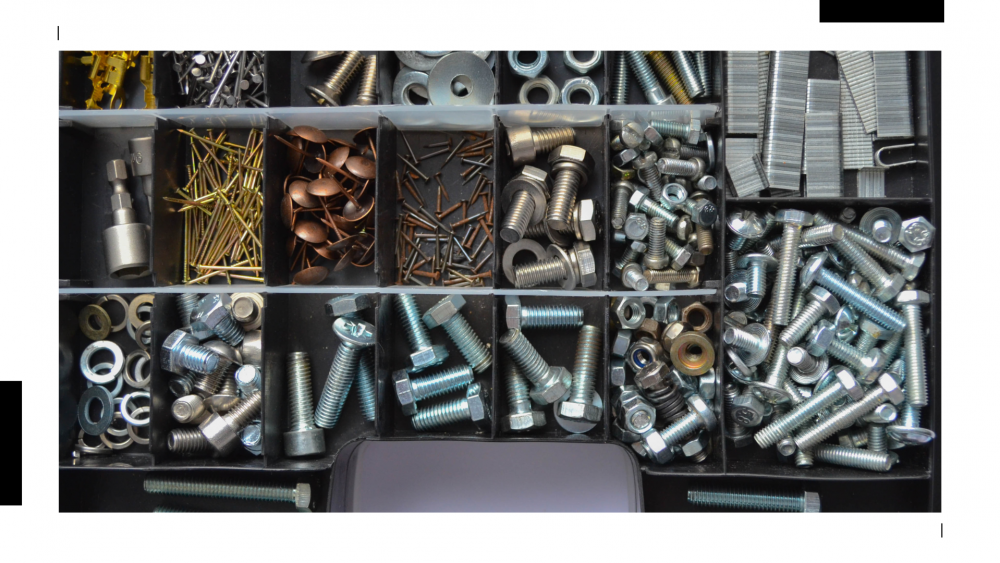
Bolts of the same M size can have different thread pitches. For example, both M8 × 1.25 and M8 × 1.0 have a nominal diameter of 8 mm, but their thread crest spacings differ, so they cannot be used with the same nut.
Coarse thread
Coarse threads have a larger pitch—simply put, a wider distance between thread crests. With each full turn, the bolt advances further along its axis than a fine thread.
- Faster to assemble and disassemble because it requires fewer turns.
- Deeper thread grooves make them more resistant to damage during handling and assembly.
- Handles dust, dirt, and minor thread impacts better in many applications.
- Most commonly available size for general-purpose bolts and nuts.
If a designation simply specifies M8 without stating a pitch, manufacturers and retailers generally mean the standard coarse thread for that size. However, during repair work, always inspect the original part or product specifications first rather than relying on guesswork alone.
Fine Thread
Fine threads have a smaller pitch, so the threads are spaced closer together, and the bolt advances less along its axis per full turn. They are suitable for applications requiring fine adjustment or specific designer requirements.
- Allows finer axial position adjustment.
- Tensile stress area of the shank can be larger than that of a coarse thread of the same nominal size.
- Found in certain machinery and automotive applications according to manufacturer specifications.
- Requires greater care to avoid cross-threading and thread damage during assembly compared to coarse threads.
Do not assume fine threads will never loosen under vibration; loosening also depends on preload, joint stiffness, surface condition, lubrication, and any locking devices used.
M8 × 1.25 is the commonly found standard coarse thread
M8 × 1.0 and M8 × 0.75 are examples of fine threads
M8 × 1.5 is not a standard common coarse pitch for M8, so it should not be used as a matching example.
So what system do size 8, size 10, or size 12 belong to?
This is the most confusing part for beginners, because the word "size/number" can mean different things depending on the product type and how the shop refers to it.
Case 1: Imperial screw gauge sizes
Small Unified Inch screws may use prefix numbers such as #8 or #10. These numbers are size codes; they do not mean a diameter of 8 or 10 millimeters and cannot be converted directly into M8 or M10.
The full code is often written with the number of threads per inch, such as #10-24 UNC, which means a #10 screw with 24 threads per inch in the UNC coarse thread series, whereas #10-32 UNF is the same screw gauge size, but with 32 threads per inch and a finer pitch.
Case 2: Wrench sizes
Wrench sizes 8, 10, 12, or 13 in the metric system refer to the width across flats of the hex head in millimeters; for example, a size 10 wrench is used with a hex head that measures approximately 10 millimeters from flat to flat.
This number is not the thread shank size; therefore, many common standard M6 hex bolts use a size 10 wrench, while many standard M8 bolts use a size 13 wrench—they do not use a wrench with a number matching the M size.
Case 3: Shop colloquial terms
Some shops may call it a "size 10 nut/bolt" based on the head size that fits a size 10 wrench, while another shop might understand it as a #10 imperial screw. This terminology is therefore not clear enough for selecting matching parts.
Even though some pairs of numbers look similar, imperial screw numbers, M threads, and wrench sizes are completely different information. Creating a conversion table without specifying what the number refers to may lead to selecting parts from the wrong system.
Once you know the M size, which wrench size should you use?
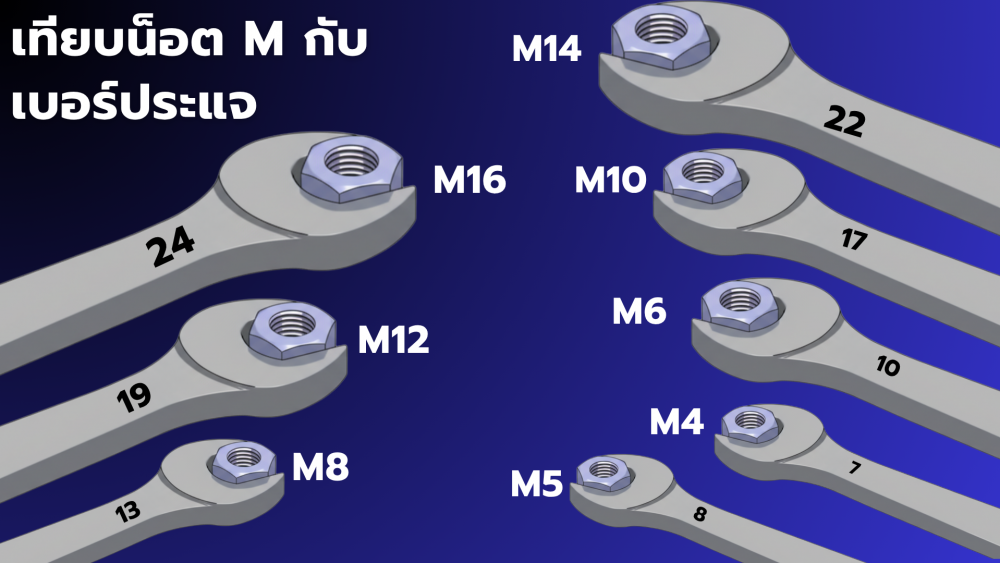
The M code indicates the thread size, but it does not directly indicate the head size that the wrench grips. The hex head size is measured from one flat side to the opposite flat side, commonly known as Width Across Flats or AF.
Head size depends on product standards, head styles, and manufacturer designs. For example, standard hex bolts, flange bolts, and compact head bolts may have different head sizes, even if they share the same M thread size.
| Thread Size | Common Head Sizes | Things to Know |
|---|---|---|
| M3 | 5.5 mm | Found in small parts, but some head styles may use a different size. |
| M4 | 7 mm | A common size found in various types of hex head products. |
| M5 | 8 mm | Usually uses a size 8 wrench or socket |
| M6 | 10 mm | Usually uses a size 10 wrench or socket |
| M8 | 13 mm | Standard hex heads typically use 13 mm, while flange heads and certain automotive parts may use 12 mm, and 14 mm heads can be found in some specialized products. |
| M10 | 16 or 17 mm | Head size depends on the standard and style of the product. |
| M12 | 18 or 19 mm | You should not choose a wrench based solely on the M size without checking the actual head. |
| M14 | 21 or 22 mm | Sizes may vary depending on the standards and styles of the parts. |
| M16 | 24 mm | A common size found in standard hex bolts. |
| M20 | 30 mm | For structural work and machinery, always check the product specifications |
This table serves as a general guide for commonly found hex heads only, not a rule for all types of bolts. The most reliable method is to read the product specifications, measure the actual head, or test-fit the wrench before applying force.
If it wobbles significantly when fitted, try a smaller size first. Box-end wrenches or sockets generally provide better head coverage than open-end wrenches, making them ideal for loosening tight fasteners. However, all tools must match the head size correctly.
How to measure nut and bolt sizes yourself
If you have a vernier caliper and a thread pitch gauge, basic size inspection is not difficult. However, you must measure the thread diameter, pitch, length, and head size separately.
- Measure the major (outer) diameter of the thread across the crests from one side to the other. For example, an M6 bolt should measure close to 6 mm, though it may be slightly below the nominal value due to manufacturing tolerances, surface finish, and wear. It should be compared against the nearest standard size.
- Measure the thread pitch using a thread pitch gauge. If you do not have a gauge, measure across multiple thread pitches and divide by the number of pitches. For instance, measuring from the first crest to the eleventh crest covers ten pitches. This method reduces measurement error compared to measuring a single pitch.
- Measure bolt length: standard hex bolts are measured from under the head to the tip, whereas countersunk screws are typically measured including the total head height.
- Measure the hex head size from one flat side to the opposite flat side (across flats). Never measure from corner to corner, as that value will be larger than the required wrench size.
Comparing a bolt against a drill bit shank can help roughly estimate the diameter, but it cannot determine the pitch or thread system. If you need an exact replacement, take the original sample to a hardware store to match it, or use a caliper together with a thread gauge.
Why bolt heads are usually larger than the threaded shank
When you apply force to turn a wrench, torque is transferred from the head down to the threaded shank, causing the bolt to stretch slightly and create clamping force across the workpieces. At the same time, the bearing area under the bolt head or nut helps distribute the clamping load evenly over the workpiece surface.
The hex head must therefore have a size and bearing area suitable for the thread size, allowing the tool to transmit torque and preventing pressure from concentrating on too small an area. However, this does not mean every threaded fastener must have a head larger than the shank, as set screws, socket countersunk screws, reduced-head bolts, and various specialty fasteners also exist.
Tightening torque cannot be determined by the M-size alone
Knowing that a bolt is M6 or M8 is not enough to determine its tightening torque. Bolts of the exact same size can have different property classes, such as 4.6, 8.8, 10.9, or 12.9, as well as different surface finishes, platings, and lubrication. These factors significantly affect the relationship between torque and clamping force.
The workpiece material is just as important. An M8 bolt tightened into a steel nut does not use the same torque as an M8 tightened into an aluminum threaded hole, plastic, or a thin-walled workpiece. Over-torquing can strip the internal threads of the workpiece even before the bolt breaks.
The method of adding angle after reaching the initial torque value is only applicable when the manufacturer specifically specifies a torque-angle procedure for that fastener. It should not be used as a general rule of thumb, because what feels "snug" varies from person to person, and it can cause bolts to stretch, threads to strip, or workpieces to crack.
For general assembly work where no torque value is specified, tighten appropriately for the material and component size. For automotive work, machinery, pressure systems, and safety-critical fasteners, check the manual and use a torque wrench according to the manufacturer's specified values.
What to tell the store before buying
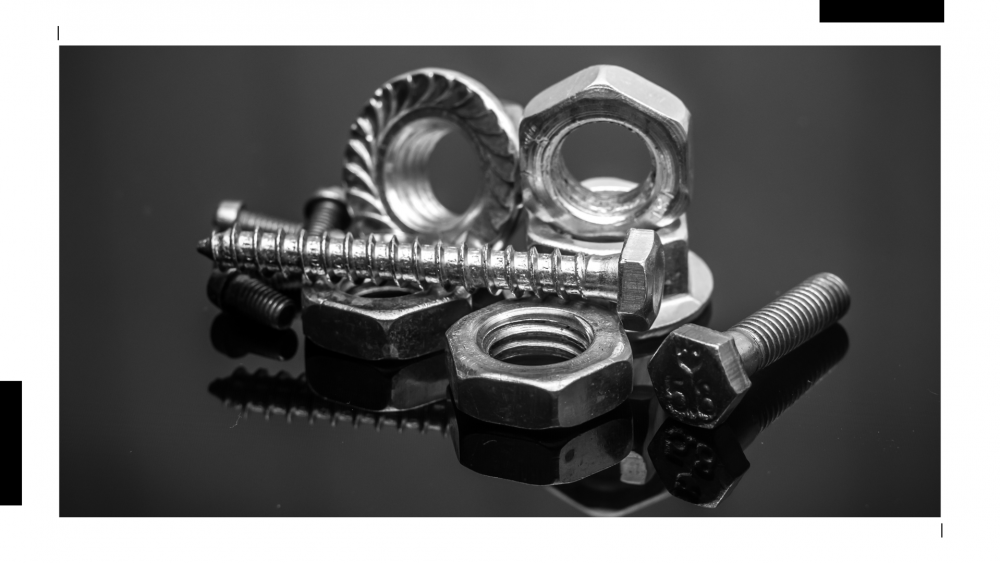
Instead of just asking for a "No. 10 bolt/nut," clearly specify whether it is a bolt, screw, or nut, whether it uses metric or imperial threads, and what size you need. If you know the thread pitch, length, or head style, provide those as well. For example, "I need an M8 × 1.25 hex bolt, 30 mm long" is much clearer than just asking for a No. 8 or No. 10. If you are unsure about the size, the easiest way is to bring the original part to the store for comparison.
M8 indicates the metric thread system and size
M8 × 1.25 indicates the thread size and pitch
#8 or #10 may refer to an imperial screw size number
A 10 mm wrench indicates the head size that the wrench must grip in millimeters
Once you can distinguish between these meanings, choosing nuts, bolts, and tools will be much easier. When test-fitting, always start by threading it in by hand for several turns. If the threads match, it should turn smoothly, straight, and without unusual resistance. If it binds right from the start, do not force it with a wrench.
A small fastener may be just one part of the job, but the safety of the fastening point depends on choosing the right system, size, pitch, material, and tightening torque. Knowing what each number means helps prevent buying the wrong parts, stripping threads, rounding bolt heads, and having parts come loose later on.