


 EN
 ไทย


Customers Also Purchased

When it comes to using Screw In maintenance and industrial work, one of the most common questions is whether to choose "coarse thread screws" or "fine thread screws"—which is better? And do they really affect strength and fastening performance? This article dives deep into the differences between both types of screws and highlights how to select the right one for each application to boost efficiency and prevent long-term operational issues.
Basic Understanding of Screw Threads
Before diving into the comparison, let's first understand screw threads. Generally, a "thread" is a helical ridge wrapped around the screw's cylinder, designed to create a secure clamping force between the screw and the material so it won't easily come loose.
- Pitch: The distance between one thread crest to the next, measured in millimeters or threads per inch.
- Profile (Thread cross-section): Can be triangular, square, or rounded, which affects holding strength and application characteristics.
Coarse and fine threads differ in the number of thread turns per unit length and the nature of the clamping force produced, which we will clearly explain in this article.
Measuring Thread Sizes Across 2 Standard Systems
Globally in industry, screw thread sizing primarily uses 2 systems: the Metric system and the American system (Unified Thread Standard, or UNC/UNF). Both systems have different methods for measuring and specifying sizes, which affects selecting the correct fastener.
1. Metric Thread System
The metric system uses millimeters (mm) as the unit of measurement. Screw sizes are typically specified in the following format:
M6 × 1.0 × 25
Means: 6 mm diameter, 1.0 mm pitch, 25 mm screw length.
- M indicates that it is a metric thread.
- The Pitch value is measured in millimeters per single thread turn; for example, 1.0 means the threads are 1 mm apart.
- Fine threads have a smaller pitch, such as 0.75 or 0.5 mm.
Advantages of the metric system include widespread global use—especially in Asia and Europe—ease of understanding, and standardized international units.
2. American System (Unified Thread Standard - UTS)
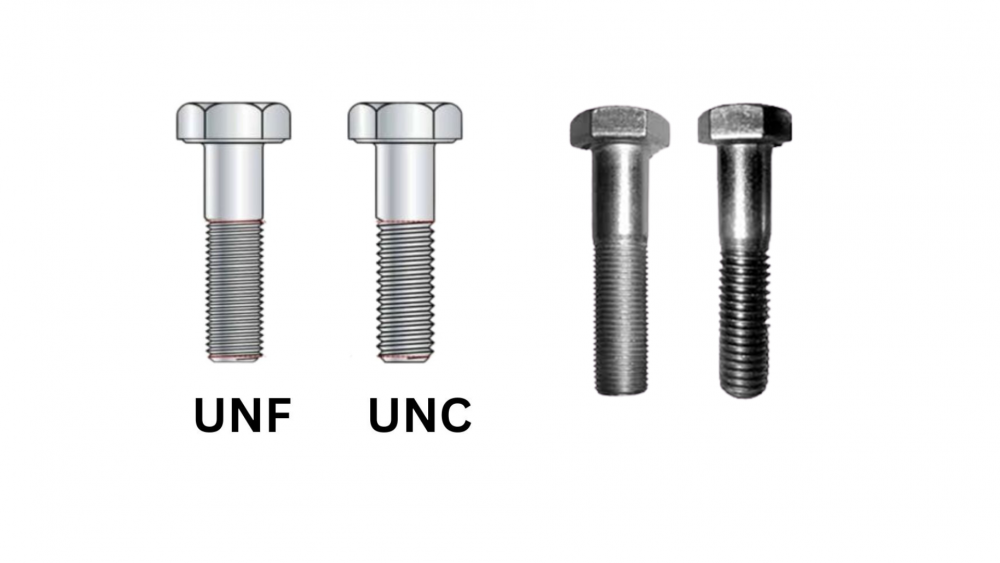
The American system, also known as the UNC (Unified National Coarse) and UNF (Unified National Fine) system, uses inches as units and measures threads per inch (TPI).
1/4-20 UNC × 1"
Means: 1/4 inch diameter, 20 threads per inch, 1 inch length.
- UNC (Coarse): Coarse thread
- UNF (Fine): Fine thread
In some cases, other designations like UNEF (Extra Fine) may be seen for special applications requiring even finer threads.
The advantage is that it is widely used in North America and in certain industries, such as US-developed aerospace and automotive sectors.
Note: Do not confuse or interchange between these 2 systems, as it can cause thread damage or loose fastening.
What is a coarse thread screw?
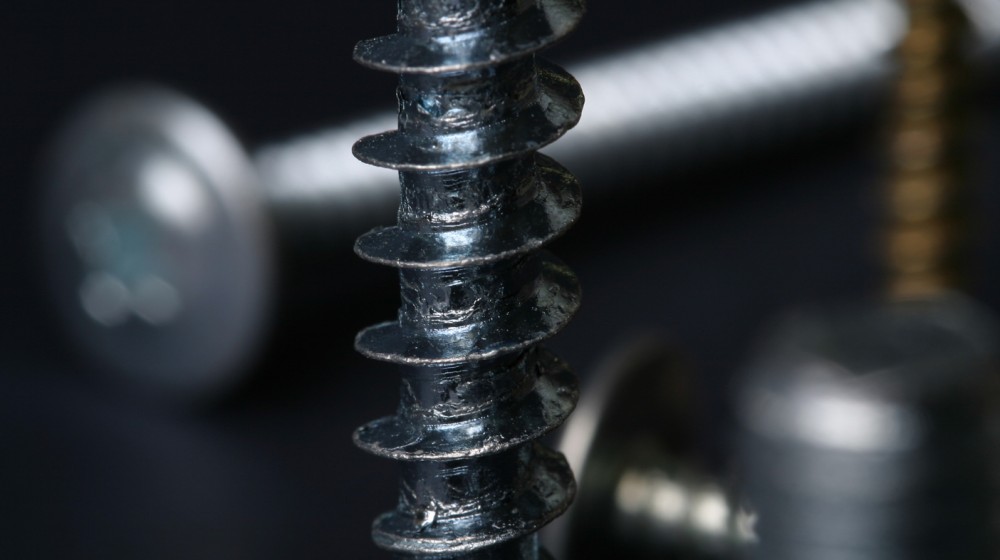
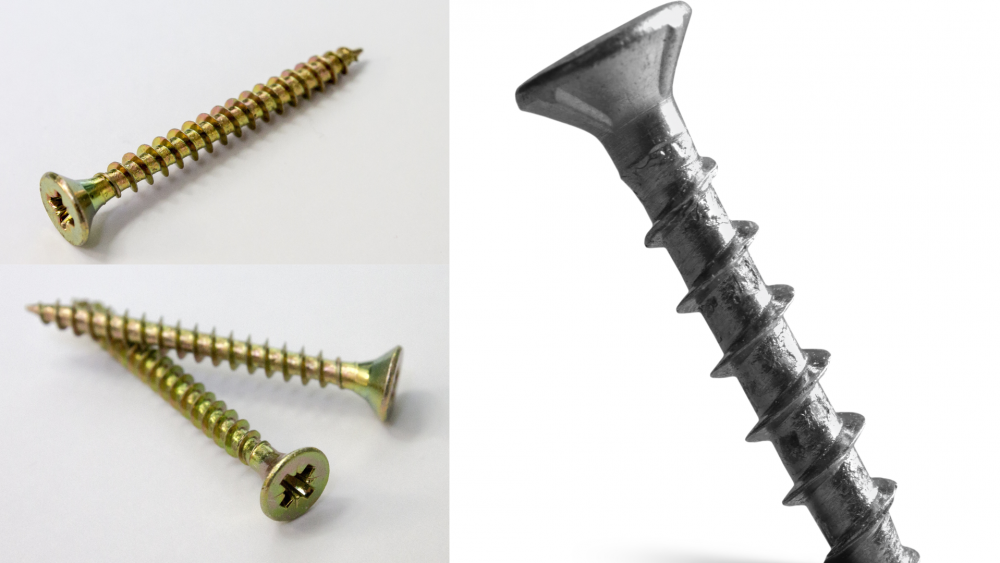
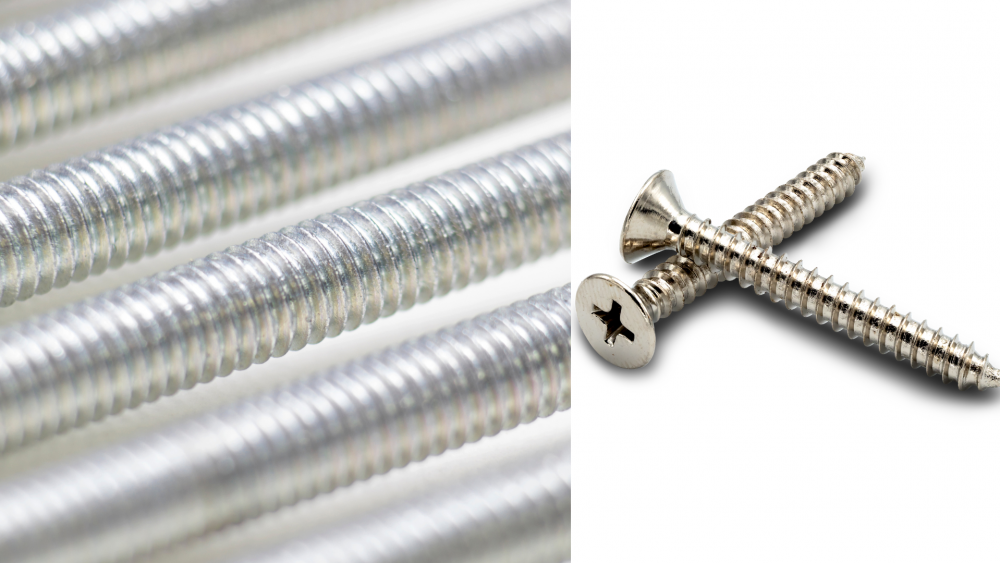
A coarse thread screw is a screw with a wider pitch between threads, resulting in fewer threads per unit length compared to a fine thread screw. This type of screw is commonly found in construction, woodworking, and installation tasks that do not require extremely high precision.
Key features of coarse thread screws
- Fewer thread turns, allowing for faster driving.
- Ideal for soft materials such as wood, PVC, plastic, or drywall.
- Less prone to clogging; debris easily clears out of the thread grooves, reducing jamming issues while driving.
Advantages of coarse thread screws
- Easy and fast to drive: Requires less effort to penetrate, especially when driving by hand or using cordless tools.
- Saves time: Ideal for high-volume tasks such as furniture assembly or timber framing.
- Wear-resistant in soft materials: Threads are less likely to strip or deform when used in wood or plastic.
- Generally cheaper: Due to less complex manufacturing processes.
Disadvantages of coarse thread screws
- Lower holding power in hard materials: Cannot fasten materials like steel or aluminum as securely as needed.
- Prone to loosening under vibration: Such as in motor or machinery installations.
- Requires greater depth: Due to fewer threads, deeper holes must be designed to achieve secure fastening.
What is a fine-thread screw?
A fine-thread screw has more thread turns per unit of length, resulting in narrower and finer thread pitches. It is ideal for applications requiring high precision and holding strength, such as machinery, automotive work, or equipment requiring a secure fit and vibration resistance.
Key Features of Fine-Thread Screws
- More threads within the same distance, generating greater holding power and friction.
- Provides high precision, making it suitable for delicate assembly tasks such as mechanical components or engines.
- Lower loosening force, reducing the chance of loosening under high-vibration conditions.
Advantages of Fine-Thread Screws
- Tighter grip in hard materials: such as steel or alloys, because the fine threads distribute forces evenly.
- Suitable for use under pressure or vibration: such as engine assembly or structures requiring high durability.
- Harder to loosen: reduces the need for frequent retightening.
- Ideal for fine adjustments: applications requiring precise distance or tension settings prefer fine threads.
Disadvantages of Fine-Thread Screws
- Slower to fasten: due to the greater number of thread turns, it requires more rotations to reach the same depth as a coarse thread.
- Risk of thread damage: especially when tightened with excessive force or misaligned (cross-threaded).
- Easily clogged: debris is more likely to get trapped in the thread grooves if not cleaned prior to use.
Conclusion
No matter Screw Both coarse and fine threads have their own advantages and disadvantages suited to specific applications. Choosing the right type not only strengthens the structure, but also helps save costs, time, and long-term damage.
- If you need speed, cost savings, and are working with soft materials — choose coarse threads.
- If you need precision, vibration resistance, and detailed assembly work — choose fine threads.