EN
 ไทย


Customers Also Purchased



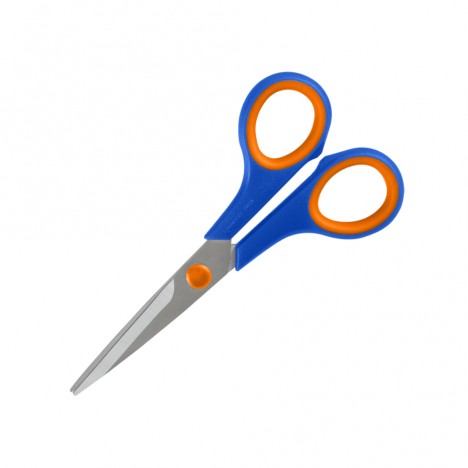
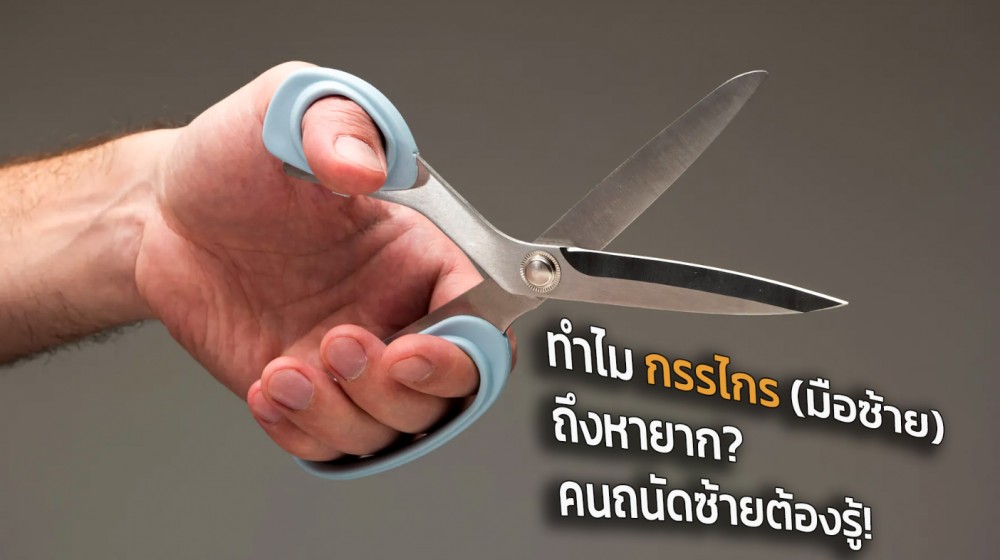
Have you ever noticed that whenever you walk into a stationery store or a hardware store, most of what you find are Scissors scissors designed for right-handed people filling the shelves? If you're left-handed and happen to pick up regular scissors, you'll inevitably run into crooked cut lines, crumpled paper, or blades that just don't seem to meet properly—making cutting frustrating.
The truth is, it's not because you don't know how to cut; it's because "the scissors weren't designed for you in the first place." Most scissors are engineered for right-handers, from the handle shape and blade bevel to the cutting leverage applied. When a left-handed person uses them, they simply don't fit. Imagine playing a video game where everyone else has their buttons on the right side, but you have to cross your fingers to reach the other side. Over time, it gets exhausting and takes all the fun out of it.
Right-Handed Scissors VS Left-Handed Scissors: What's the Difference?
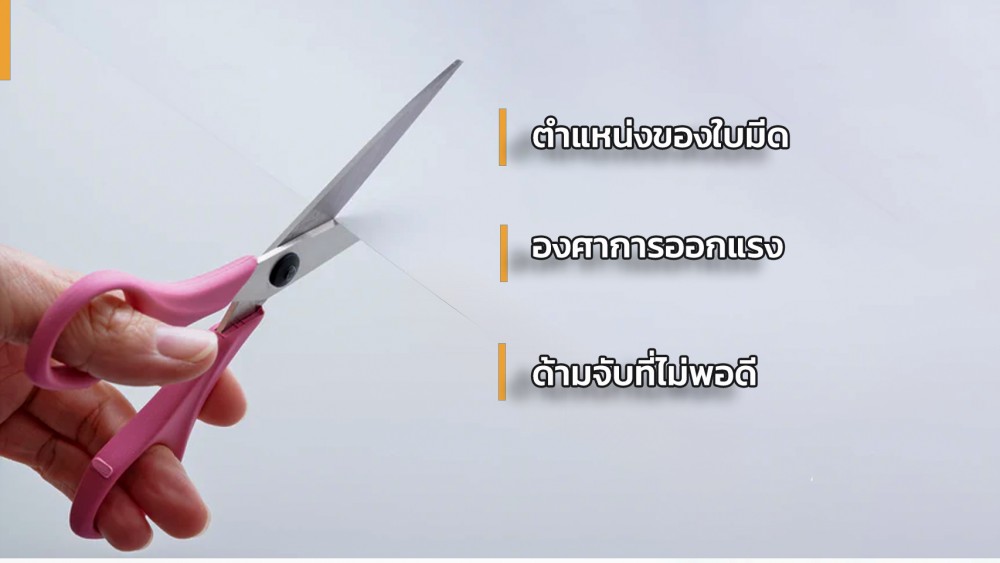
Many people might think, "Wait, scissors just have two handles, how are they different?" But in reality, scissors contain hidden engineering details, especially the blade positioning and the angle of force applied. These are the crucial variables.
Scissors Blade Position
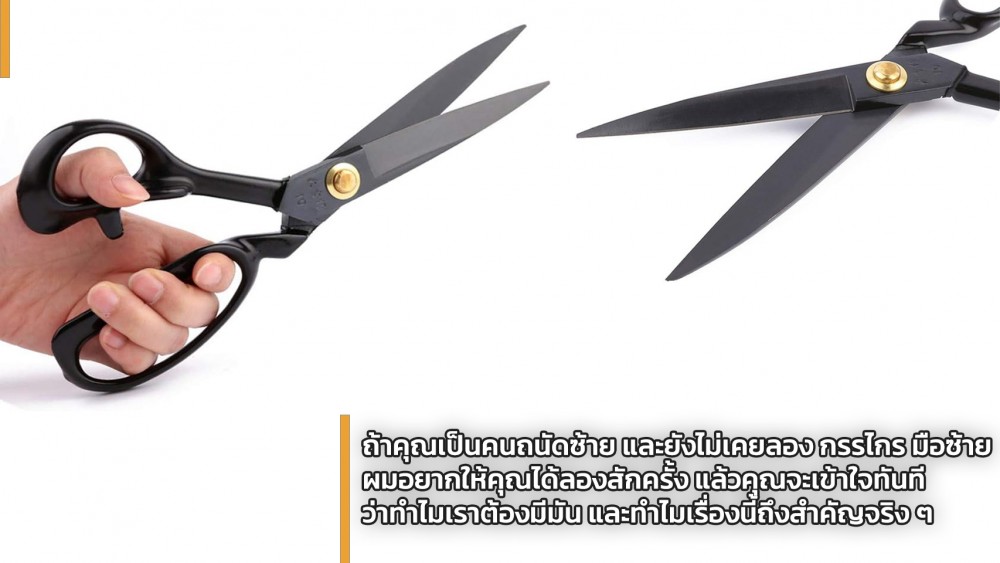
First of all, this is the main point that often makes left-handed people sigh. Right-handed scissors typically place the right blade on top. When cutting, you can see the cutting line clearly, just like having a guideline right in front of you. But if you are left-handed and pick up these scissors, what you see is... "Where did the cutting line go!?" Because the blade blocks your line of sight the entire way, you have to guess, or constantly tilt your head up and down to find the right angle, which honestly isn't fun at all. However, if you use left-handed scissors where the blade position is reversed, the view in front becomes instantly clear. You can look directly at the line just like a right-handed person using normal scissors. The feeling then is, "Ah! All this time, it wasn't that I couldn't cut straight; the tool was just wrong."
Angle of Applied Force
When actually using scissors, it's not just about clamping them together. It's about pressing force from the thumb and index finger toward each other at just the right angle so the sharp edges of the blades meet flush against each other, creating a shearing force that cuts through material smoothly. But when a left-handed person has to use right-handed scissors, that angle is immediately distorted. The thumb pushes in an unbalanced direction, so the cutting edges don't meet properly. The result is that the paper isn't "cut" but rather "crushed" until the edges fray, or sometimes it won't cut through at all. Anyone would get frustrated, right?
Ill-Fitting Scissor Handles
This comes down purely to ergonomics. General scissor handles are mostly designed to contour to the fingers of right-handed users. When left-handed people insert their thumb, it doesn't fit the groove very well. Sometimes it hurts the base of the thumb, or fatigue sets in so much that you have to stop and rest even before finishing the task. It feels like wearing shoes where one side is too loose and the other is too tight—walking hurts either way. The only difference is that scissors hurt your hand.
To put it simply, everything described above is why left-handed scissors are essential for left-handed people. It's not a trivial matter where switching hands solves the problem; it directly impacts efficiency, accuracy, and comfort in use. Furthermore, if we look deeper, we will find that there are also Common mistakes when using scissors, along with basic troubleshooting tips! that many people frequently encounter as well.
Then Why Are Left-Handed Scissors So Hard to Find?
The Proportion of Left-Handed People Is Small
To put it simply, imagine a soccer field filled with 90 right-handed people and only 10 left-handed people in the corner. Naturally, manufacturers will choose to produce goods that sell to the majority first. Scissors are thus designed to serve the "mass market" rather than the "niche group." As a result, left-handed scissors are classified under specialty items, even though 10% of the world is actually not a small number at all.
Production Costs
Many people might think, "Just reverse the blades, what's so hard about that?" But on an actual production line, it's not easy at all. It requires creating new molds, adjusting machinery, and manufacturing blades specifically for that side, which cannot be shared with existing parts. This immediately results in higher costs. Looking at an already smaller market, manufacturers hesitate over whether it's worth producing them in bulk.
Adaptation Habits of Left-Handed People
This point is the most interesting. From childhood, left-handed people are often forced or taught to use right-handed scissors. Many people have become "used to it," even though cutting never really felt comfortable in hand. Because they have used them all along until it became second nature, the demand for left-handed scissors became invisible to sellers and manufacturers. Yet, if they got to try scissors truly designed for left hands, many would exclaim, "This is what I've been looking for all along!"
A Left-Hander's Story: The Scissors That Were Never Ours
It may sound like a lament, but it's true. I have a close friend who has been left-handed since childhood. Every time art class came around, the teacher would place scissors all over the tables, but... every single one was right-handed. She tried her best to cut just like her classmates, but what happened was crooked cut lines, and paper that was either wrinkled or torn. Seeing that, I felt bad for her. She often complained to me, "Why is it so darn hard!? When everyone else makes it look so easy!?"
"But if you're left-handed, you probably understand this feeling well: it's both frustrating and completely ruins the fun of the task."
Actually, it's not our friends' fault at all; it's because most scissors are designed for right-handed people. Just imagine being forced to wear shoes that aren't your size—every step you take keeps hurting your feet. The scissors issue is just like that: it's the start of small daily struggles that left-handed people unconsciously have to face.
So, will left-handed scissors be easier to find in the future?
This is a very interesting question because it reflects that "scissors" aren't just a small tool, but are also tied to major social issues like accessibility.
Looking back 20–30 years ago, left-handed scissors were almost exclusively found in specialty shops or had to be imported from abroad. But nowadays, major brands have begun to listen more to the "small voices" of niche user groups—whether they're left-handed individuals, young children, or even the elderly. Left-handed scissors are becoming easier to find, much like what we've seen with various other products, such as left-handed mice or left-handed versions of guitars that are increasingly available in music stores.