


 EN
 ไทย


Customers Also Purchased


Have you ever... while repairing a wooden table or a dining chair that's been used for years, found nail holes, small cracks, or splits along the edges, and just grabbed... Wood filler spread it on quickly, and instantly it's so smooth it looks like there were never any blemishes before?
I use it quite often myself—it's something I always keep at home because it's like a "painkiller" for minor woodworking repairs: easy to fix, saves time, and makes old furniture look good as new. But! The problem is, once the repair is done, there's usually a lot left in the tub, and you can't help but wonder...
--- "Wait! If there are cracks on a concrete wall, can I use wood filler to patch them?"
--- "Or if there's rust on a steel door, can I spread wood filler over it instead of metal putty?"
This question has tripped up many people, including myself! Because it looks so simple and convenient, but in fact, using the wrong material might ruin your repair job faster than expected. Today, I'd like to share whether "wood filler" can be used on concrete or metal, to what extent it can be used, and if not, what you should use instead.
Getting to know "Wood Filler"
Before we answer the question, we need to get to know our main character first: what wood filler really is, and why it is designed specifically for wood.
Main components of wood filler
1. Binder
- Often uses latex, acrylic, or wood glue.
- Its function is to adhere securely to the wood surface and provide enough flexibility to accommodate some of the wood's expansion and contraction.
2. Mineral powder or ground wood fibers
- Acts as a filler, giving the putty a color and texture similar to real wood
- Once dry and sanded, it blends seamlessly with the wood surface, allowing paint, varnish, or lacquer to be applied beautifully
3. Solvents or water
- Makes the putty easy to spread, quick to smooth out, and convenient to use
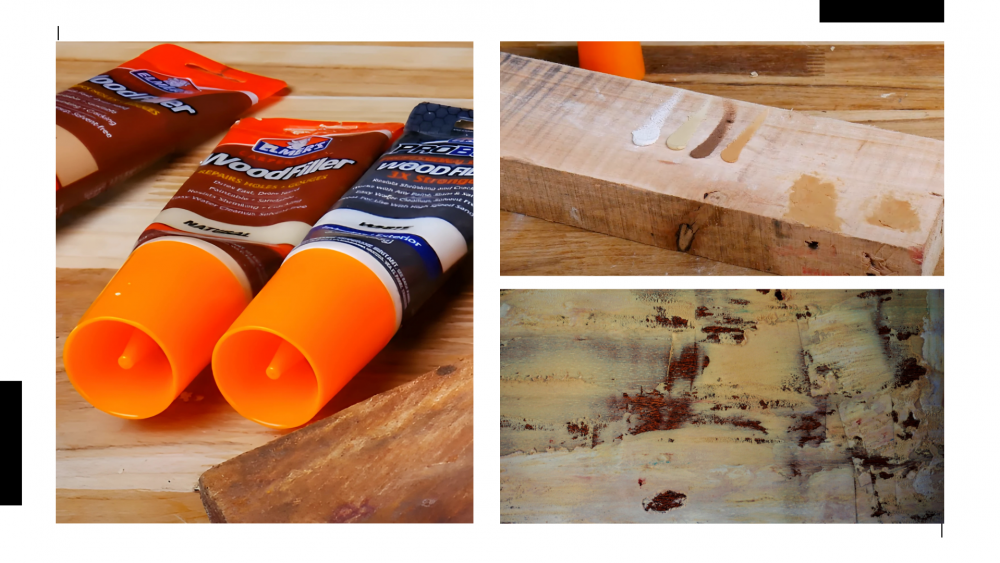
Key Features of Wood Filler
- Excellent adhesion to wood, whether hardwood or softwood
- Easy to sand, fast-drying, and blends seamlessly like new once painted over
- Low shrinkage, reducing the need for multiple coats
However, there are limitations
- Not resistant to high humidity → Frequent exposure to water will cause it to swell, crack, and peel
- Not suitable for materials with different expansion-contraction rates than wood, such as concrete or metal
- Not rust-proof and not waterproof
And this is precisely the reason why Wood filler was made purely for "woodwork"
What happens when "wood filler" meets "concrete"?
Nong Chang believes many people have faced this situation: while doing home repairs, you spot a nail hole or a hairline crack on the wall, but you're too lazy to go out and buy wall putty, so you grab wood filler to use instead. It seems convenient and cost-saving, right?
The truth is… it's not suitable at all
Because concrete and wood are vastly different!
- Concrete → A highly porous material that readily absorbs moisture and expands/contracts with temperature changes
- Wood → Although it expands and contracts, its behavior is vastly different, so wood putty simply "can't keep up"
Common real-world results
- Smooth at first, but cracks within a few months
- In bathrooms or kitchens → moisture causes the putty to swell and peel off in sheets
- Topcoat paint fails to adhere because the putty and concrete are incompatible
So what should you use instead?
- Wall Putty / Acrylic Filler → adheres strongly to concrete, moisture-resistant, and sufficiently flexible
- Crack repair cement → for heavier jobs, such as exterior walls or large cracks
Nong Chang once tried using wood putty to fill nail holes in a bedroom. It did last for almost a year, but as soon as the rainy season came and moisture crept in... it peeled off in sheets. In the end, it had to be redone with wall putty anyway.
What about using "wood putty" on "metal"?
This is another case Nong Chang hears about very often. Some people encounter rust on steel doors, fences, or even cars, and think, "Wood putty should be able to fill it just the same."
Let me tell you... absolutely not recommended.
Because metal behaves completely differently from wood!
- Metal is constantly exposed to sun and rain → expands and contracts rapidly with temperature changes
- There is also "rust", which is a major issue; wood putty offers zero anti-corrosion properties.
Actual results you will see
- Poor adhesion, peeling off in chunks
- If there is rust underneath → it pushes outward, causing the putty to blister
- If used on cars → fails in less than a month, requiring a complete redo
What should you use instead?
- Epoxy Putty → Strong, weather-resistant, suitable for both steel and outdoor applications
- Automotive Putty (Polyester Putty) → Specialized formula, strong adhesion, easy to sand, smooth paintable finish
Our technician once tried wood filler on a home's steel fence, and let me tell you, it was an expensive lesson! In less than 2 months, it peeled off in sheets. We had to waste time re-puttying it with epoxy. In the end, we learned that you really must use the right product for the job.
Cases of "Temporary Substitution"
Some might argue, "But I used wood filler on a wall and it lasted a whole year!" Yes, our technician tried that too, but it was just a specific case.
- If it's a small nail hole in a dry bedroom → It can last for years
- If it's a small scratch on an indoor steel door away from rain → It tolerates it for a bit, but no more than 2–3 months
Simply put, wood filler is like an adhesive bandage. It's a temporary fix, but not a permanent cure. Once it encounters moisture or weather, it will definitely come off.
Why do putties need to be categorized so strictly?
Because each type of material has a completely different nature.
- Wood → Absorbs moisture, expands and contracts constantly
- Concrete/Masonry → Strong, but porous, absorbs water quickly, and can crack
- Metal → Strong, but sensitive to temperature and rusts easily
Therefore, the putty used for each material must be designed to "match" its natural properties. Otherwise, it's like trying to fix a smartphone with a ruler—it just doesn't match!
Your handy technician sums it up clearly:
- Wood filler = for wood projects only
- Concrete/masonry = use wall putty/masonry filler
- Metal = use epoxy putty or automotive body filler
While there may be cases where one can substitute for another, it is only a temporary, unsustainable fix. If you want results that look beautiful, last long, and require no rework, choosing the right filler for the material right from the start is the best choice.
Your handy technician believes home repairs aren't difficult at all if you understand the basics and choose the right material for the job. Even a petite woman like us can certainly achieve professional-looking results.