


 EN
 ไทย



Customers Also Purchased

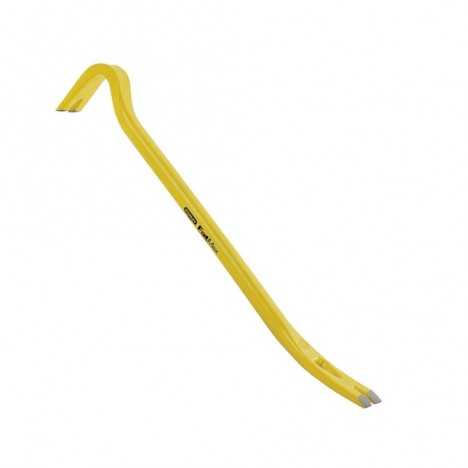


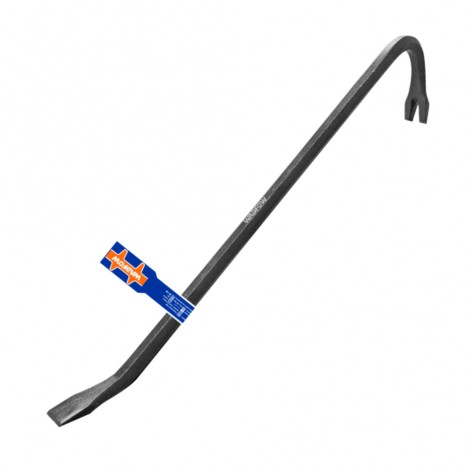

Many people might be used to using a hammer. True, a hammer can pry small things open, but when it comes to high-force jobs, a crowbar is the real hero. That's because crowbars are designed around leverage—the longer it is, the more effort it saves. When you slip the end in and press down, it's simple physics: leverage from a fulcrum lets you apply little force for big results, unlike a hammer which relies entirely on your raw strength.
Put simply, Crow bar It's not just an ordinary "steel bar"—it's science placed right in your hands! Plus, it keeps you safer because you exert less force while having more control. Anyone who has ever pried open cabinets, wooden flooring, or tight drum lids knows that without a crowbar, the job would barely budge!
So can't a hammer be used instead of a crowbar?
It's true that a hammer can be used for prying, but the issue is that it wasn't made for demolition like a crowbar. When many people try to pry up wooden panels or pull things out, it might look doable, but it just doesn't work well. When you exert a lot of force, it feels like wasted effort because by the time it budges even slightly, you're practically exhausted.
Especially when facing tough jobs like prying up floorboards firmly secured with multiple nails, or opening an old tank lid completely seized with rust, a hammer simply won't cut it. Sometimes applying too much force also damages the item being pried—like cracking the wood, scratching the floor, or even risking damage to the hammer itself.
Instead of an easy pry, you end up with an extra repair job! What a hassle! That's why many people, especially professionals, always reach for a crowbar first. It's specifically designed for prying: it requires less effort, offers better control, and most importantly, reduces the risk of ruining what you're working on.
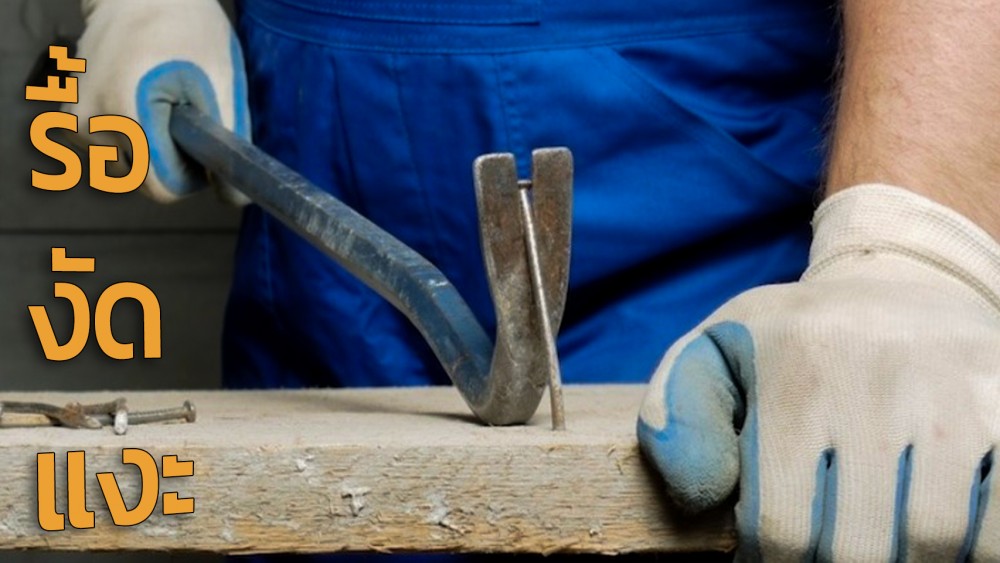
Crowbar: The leverage power designed specifically for "prying"
To put it simply, what makes a crowbar so exceptional at prying is the principle of leverage that we learned back in secondary school. But back then, who would have thought it would actually be so useful for household DIY jobs like this, right?
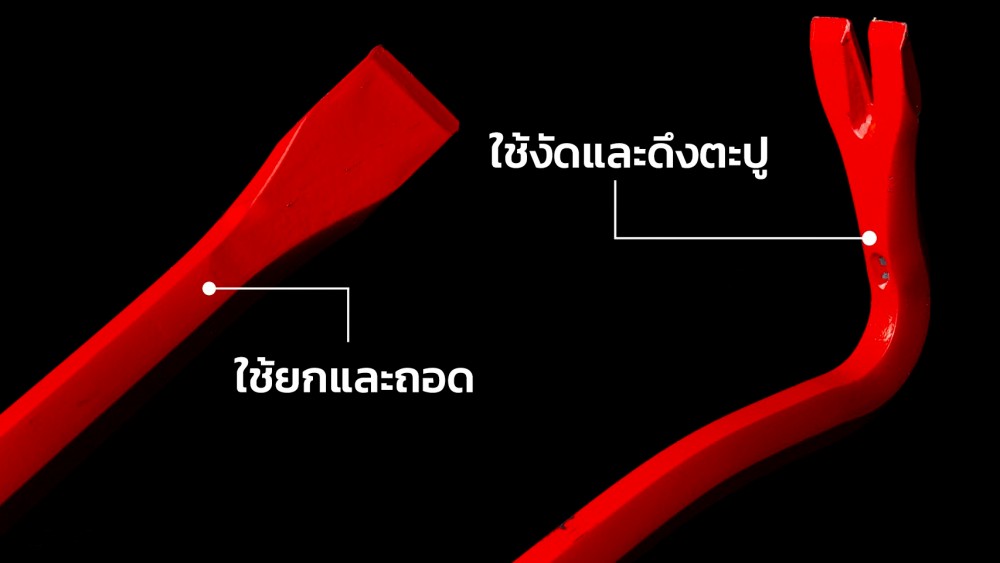
A crowbar is designed with a substantial length, and its tip is curved or flattened to slip into grooves, under wood, or into tight spaces that a hammer can't reach. Once inserted, just pressing down lightly on the other end multiplies your force tenfold, popping stuck items free with ease.
Let me share a firsthand experience: "I experienced this myself when tearing up old wood flooring at home. At first, I went all brute force—grabbed a hammer, banged away, and tried pulling out nails one by one. I was sweating bullets, and the wood splintered so badly it was barely reusable. Eventually I gave up; I just couldn't take it anymore. I grabbed a crowbar, slipped it underneath, and pried once... The entire plank lifted right off with every single nail attached, without having to pry them out one by one. That was the moment I truly understood just how awesome the 'power of leverage' really is!"
Simply put, a crowbar isn't just a piece of iron; it's a tool that applies scientific principles to genuinely make our lives easier. When faced with heavy jobs like tearing down, prying, or unsticking tightly jammed parts, it's the first choice for tradespeople because it's easy to use, requires minimal effort, and delivers exceptional results. And if you want to use it like a pro, check out: 5 Crowbar Prying Techniques Without Relying on a Hammer
Why is a crowbar better than a hammer? Let's take a closer look
Greater prying force
This is undoubtedly the biggest highlight of a crowbar. When talking about "leverage", many people might recall confusing physics lessons, but in reality, it's very practical. Just pick up a crowbar and you'll understand immediately.
I once had to pry open an old wooden cabinet at home. At first, I tried using a hammer for the longest time, straining my arms until they were sore, but the cabinet didn't budge at all. Finally, I grabbed a crowbar, inserted the tip into the gap, and pressed down just once. The cabinet, which seemed practically rooted in place, lifted with absolute ease. That's when I really felt, "Oh... this is the real power of leverage." Simply put, a crowbar essentially multiplies your strength tenfold. You only need moderate force, yet get massive results, turning seemingly brutal jobs into tasks anyone can do without needing brute strength.
A crowbar is specifically designed for prying
This is undeniably where the crowbar completely outperforms the rest. Its tip is specifically designed to wedge into narrow crevices—whether it's tapered, flat, or slightly curved. When dealing with jobs like prying up old wooden floors or opening tightly sealed metal cans, just find a small gap and the tip of the crowbar slips right in.
Unlike a hammer, whose claw is thick and short, every time you try to wedge it in, it catches here and there. Sometimes you have to force it, ending up damaging the workpiece and leaving you exhausted for nothing.
I used it myself when removing old tiles at home. At first, I tried using a hammer, and the tiles shattered into tiny pieces, leaving me sweating just to tear them out. But once I switched to a crowbar, its flat tip fit perfectly and slipped easily between the tile joints. When pried, almost the entire tile came off in one clean piece—saving effort and leaving a much tidier work area.
Prevents damage
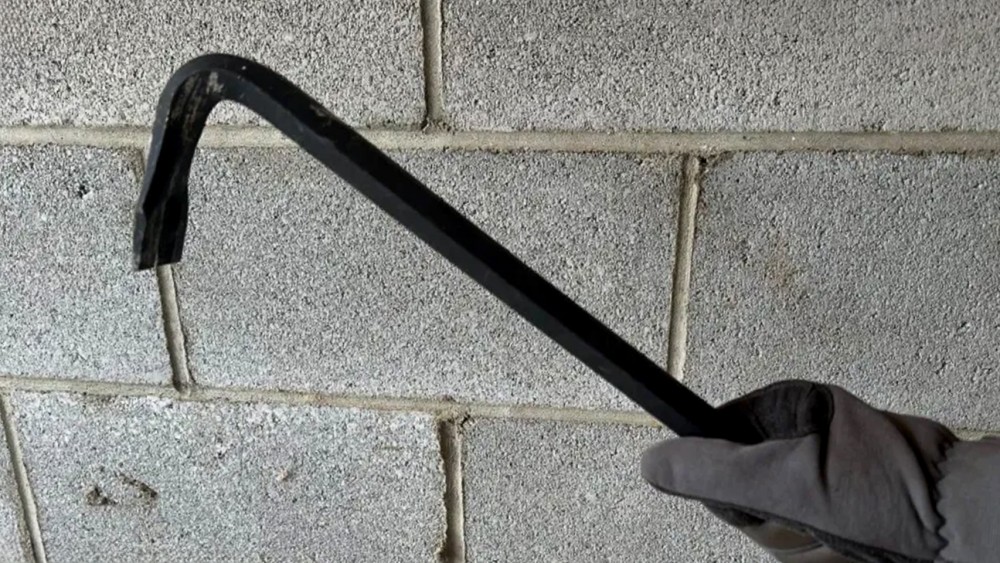
Many of you have probably experienced this: when using a hammer to pry wood or tiles, each pry leaves large cracks or chips. You end up wasting time replacing them, turning a minor repair into a major headache.
A crowbar helps a lot here because it's designed so that the downward force we apply "distributes" along the lever itself, rather than pressing down on a small focal point like a hammer does. When we apply prying force, it allows for much better directional control, and whatever is being pried comes off easily without getting wrecked like it does when using a hammer.
When prying off an old wooden door at home, using a hammer at first immediately cracked the edge of the wood—it was such a waste to see. But once I switched to a crowbar, gently inserted the tip, and pushed down to pry it up, the wood popped open cleanly with hardly a mark. That was when I truly understood why many tradesmen say, "Don't use a hammer for prying if you want a neat finish."
Crowbars Get the Job Done Faster
When prying with a hammer, we often have to sit there pulling nails one by one or repeatedly struggling to pry something loose. Getting it off takes forever, not to mention wasting energy. But switching to a crowbar completely changes the game.
Just find a good angle to insert it—the flat or curved end of the crowbar slips right in easily. Then, once you press down on the lever, the whole piece lifts up in one go, without having to waste time repeatedly prying bit by bit. A simple example is tearing up an old wooden floor: if you use a hammer to pull nails, you have to pull them out one at a time, and sometimes they snap off in your hands. But with a crowbar, you pry once, and the entire board pops up with all the nails intact. It’s vastly faster.
I once tested this myself on a 2–3 square meter wood floor demolition job: using a hammer took nearly an hour, but switching to a crowbar took less than half that time, and the results were much neater too. That's why I truly feel, "Anyone who wants to save effort and time really needs to have a crowbar at home."
Perspectives from Tradesmen with Real-World Experience
We once asked a carpenter friend of ours, and he loved to say:
"A hammer is like a multi-tool knife—it can do many things. But when it comes to prying, nothing beats a crowbar. Just slide it in and rock it; you don't even need much force and everything pops right open."
"If you're tackling an old house demolition, you're out of luck without a crowbar. A hammer definitely won't cut it; some things are held together much tighter than you'd think."
Precautions When Using a Crowbar
Even though a crowbar is an incredibly useful tool, that doesn't mean you can just pick it up and use it carelessly. Misuse can easily lead to accidents. Let's look at some simple safety precautions:
- Beware of the tip slipping off – While exerting force to pry, if the tip suddenly slips, it could strike your leg, body, or foot directly. Therefore, always make sure you have a secure purchase angle before prying.
- Don't yank with excessive force – Many people get impatient and push with all their might in one go, but excessive force can snap or wreck the piece being pried, cracking the wood or gouging the floor. It is better to increase leverage gradually.
- Wear gloves – Because when exerting force, your hands press directly against a solid steel bar. Without gloves, it can easily lead to blisters or cracked skin. The longer you work, the more you'll appreciate how much gloves help.
- When prying rusted or sharp-edged items – Don't forget safety glasses, because rust flakes or metal shards could fly into your eyes. It's simply not worth the risk; you only have one pair of eyes, so protect them first.
To put it simply, using a crowbar is like wielding a power-up: it sounds great, but if you're not careful, you can easily end up hurting yourself.
Conclusion
In a nutshell: Crow bar It is purpose-built directly for "prying," unlike a hammer which is a general-purpose tool. Therefore, when facing heavy prying or demolition work, a crowbar is undoubtedly superior to a hammer. It helps you work faster, requires less effort, reduces damage, and is much safer to boot. So for anyone who doesn't have a crowbar at home yet, I can tell you... it's time to get one!