


 EN
 ไทย


Customers Also Purchased


Have you ever noticed that hoists come in so many varieties? Some jobs use rope hoists, some use chain hoists, and others use steel wire rope hoists. At first, I was confused too, thinking: "How are they different? Isn't a hoist just a hoist?"
But once I got genuinely interested, spoke with technicians, and did some research of my own, I realized that choosing between rope, chain, or wire rope is not something to be done arbitrarily by picking just anything. That's because the material used directly impacts the lifting capacity, safety, and lifespan of the hoist.
Today, I will walk you through how rope hoists, chain hoists, and wire rope hoists differ, which material suits which type of work, and ultimately... what key factors to look for when making your choice.
Rope Hoist – Compact, Lightweight, Agile
Rope hoists are considered the most basic, familiar, and accessible type of hoist. You can find them everywhere from hardware markets to general home improvement stores, and they are hoists that many households keep on hand for emergencies.
- Yes Nylon/Polyester Rope serves as the load-bearing element, renowned for its toughness and flexibility
- Can hold weight around 100–300 kg, depending on the model and rope size
- Simple structure, easy to move, the most affordable among hoists
Pros
- Suitable for light tasks, such as lifting sacks, hoisting items to the second floor, or taking along for camping in the woods
- Easy to use, not complicated; beginners can use it right away without prior skills
- Lightweight, easy to store, and takes up minimal space in the trunk of a car
Limitations
- The rope degrades quickly; prolonged exposure to sunlight or moisture makes it brittle and prone to snapping, requiring regular inspection
- Not suitable for heavy-duty work or sharp-edged objects, as they can sever the rope instantly
- With extended use, the rope may stretch, resulting in inconsistent pulling force

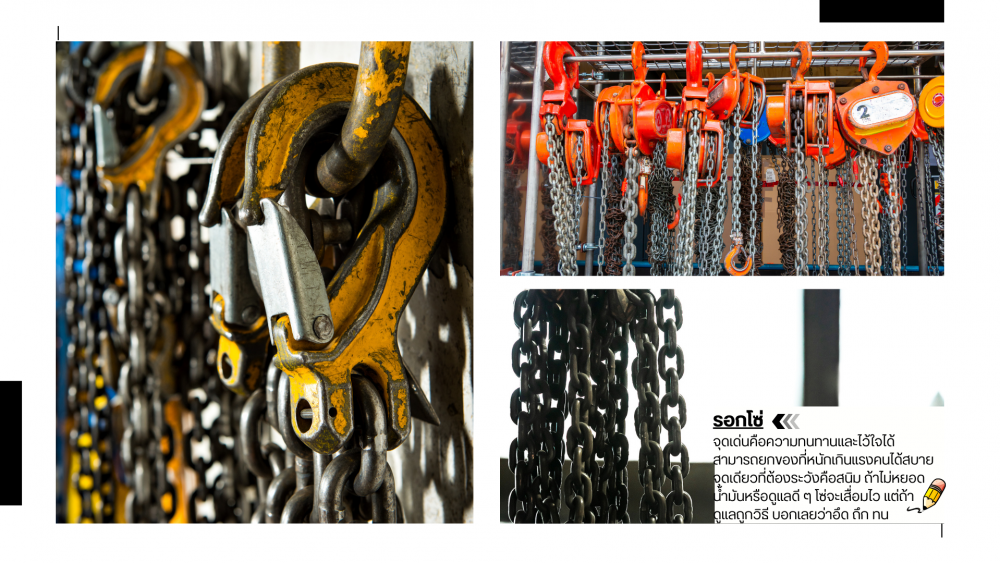
Chain Hoist – Tough, durable, ideal for medium to heavy-duty tasks
When it comes to garage or factory work, chain hoists are mostly used, as steel chains offer strength and reliability far beyond what rope hoists can match
- Yes High-quality steel chain Acts as the load-bearing component, often hardened or anti-rust coated to extend service life
- Load capacity ranges from 500 kg up to several tons Can be considered a versatile middle ground that effortlessly bridges the gap between light and heavy-duty work
- Requires maintenance, such as regular lubrication and inspecting chain links for wear or twisting
Pros
- Extremely strong, well-resistant to friction and shock loads, and does not snap easily
- Ideal for repetitive lifting tasks, such as hoisting engines, steel, or large structures in factories
- Can be used both vertically and sometimes for horizontal pulling
Limitations
- The hoist itself is heavy, making it less convenient to move around compared to a rope hoist.
- Without proper maintenance, chains rust quickly—especially in damp or outdoor environments—leading to risk of breakage or stiff operation.
- Maintenance is more difficult than with rope hoists; the entire chain must be replaced if there is severe damage.
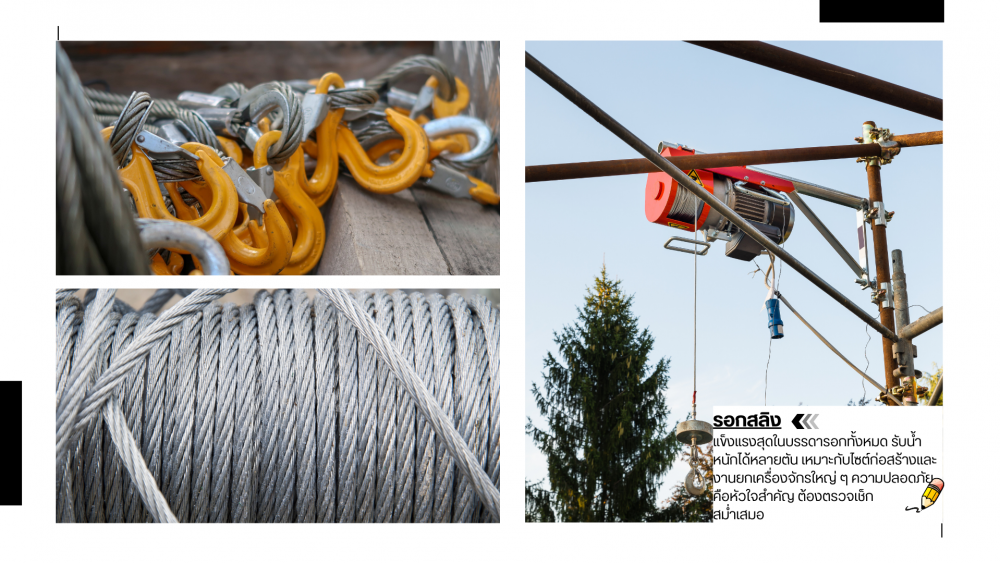
Wire Rope Hoist – When it comes to industrial-scale heavy lifting, this is the undisputed champion.
Wire rope hoists truly are the stars of the heavy-lifting world. Engineered to handle massive loads, they may look large and complex, but behind that is an unmatched level of safety and reliability.
- Yes Twisted steel wire rope Heat-treated and specially engineered to withstand high tensile stress
- Load capacity ranges from Several tons and up Powerful enough that they are even used to lift entire bridge sections.
- Ideal for heavy industries, construction, high-rise buildings, ports, or factories that need to move heavy raw materials daily.
Pros
- The strongest among all three types of hoists, built for zero-risk, high-stakes tasks.
- Supports both vertical lifting and horizontal pulling of massive loads.
- Withstands immense tensile and compressive forces, remaining dependable even during continuous long-term operation.
- When used properly, it significantly reduces manpower requirements while greatly increasing safety.
Limitations
- Requires regular inspections for broken or worn wire strands, as a single faulty strand can compromise the entire operation.
- Demands thorough lubrication and maintenance to prevent rust and extend its service life.
- Higher cost and more difficult to install than other types, making it better suited for major facilities or large-scale projects rather than typical domestic use.
So why are there rope, chain, and wire rope options in the first place?
This is precisely what many people—myself included at first—have always wondered: why are there so many types available? Isn't it redundant? But once you dive deeper, you realize that… Each material has its own distinct strengths and limitations. It's just like a tool designed for a specific task.
- Ropes → Lightweight and easy to move, ideal for light-duty or temporary tasks such as lifting items to the second floor, hauling small gear for camping, or everyday home use.
- Chain → Tough, durable, and handles high loads well. Ideal for medium to heavy-duty tasks in auto garages or factories, such as lifting engines or large steel components.
- Wire Rope → The strongest option, used for critical tasks that leave no room for error, such as industrial applications, construction, or lifting loads of several tons.
To put it into perspective… it's just like choosing shoes. You wouldn't run a marathon in flip-flops, nor would you hike up a mountain in high heels. Likewise, using a rope hoist to lift an engine is a disaster waiting to happen! Choosing the right equipment from the start makes life and work so much easier. Selecting the right hoist material for the job is like choosing a trusted partner—ensuring both safety and effortless work.
Wrong Application = Danger
Just imagine: pairing the wrong gear with a job is just like wearing the wrong type of shoes. The result is not only inconvenient, but also genuinely dangerous.
- Using a Steel Snatch Block Single Sheave to lift loads beyond its rated capacity → Risk of sudden rope snapping; items could fall.
- Using a Chain hoists outdoors without proper maintenance → Chain rusts to the point of failure, risking accidents from snapping or jamming.
- Using a Wire Winch at home → Overkill, wasting money and installation effort, and sometimes cluttering the space and creating hazards instead of safety.
Maintenance for Each Type of Hoist
Each type of hoist is like a person—having different traits and vulnerabilities. Proper care will ensure long-lasting and safe performance.
- Ropes → Always store away from direct sunlight and moisture, as UV rays make the rope brittle and fragile, while dampness invites mold to degrade the fibers. Inspect for tears or fraying before every use, and replace immediately if cracks or fraying appear. Never assume it "can still take it," because a snapping rope during operation is far more dangerous than you think.
- Chain → Must be lubricated regularly to prevent rust, especially when used outdoors or in humid environments. Check every chain link for wear, twisting, or stiffness. If any issue is found, never force it into use, as a chain snapping mid-lift can cause severe accidents.
- Wire Rope → Although it is the strongest, it also requires the most care. Inspect for cracks or protruding broken wires every time. Lubricate regularly to prevent rust and reduce wear. If there are too many broken wire strands, replace it immediately, as ignoring it is a major hazard in heavy-lifting operations.
In short, don't view maintenance as a hassle. Routine daily care is your first line of defense that keeps work running smoothly and everyone safe.
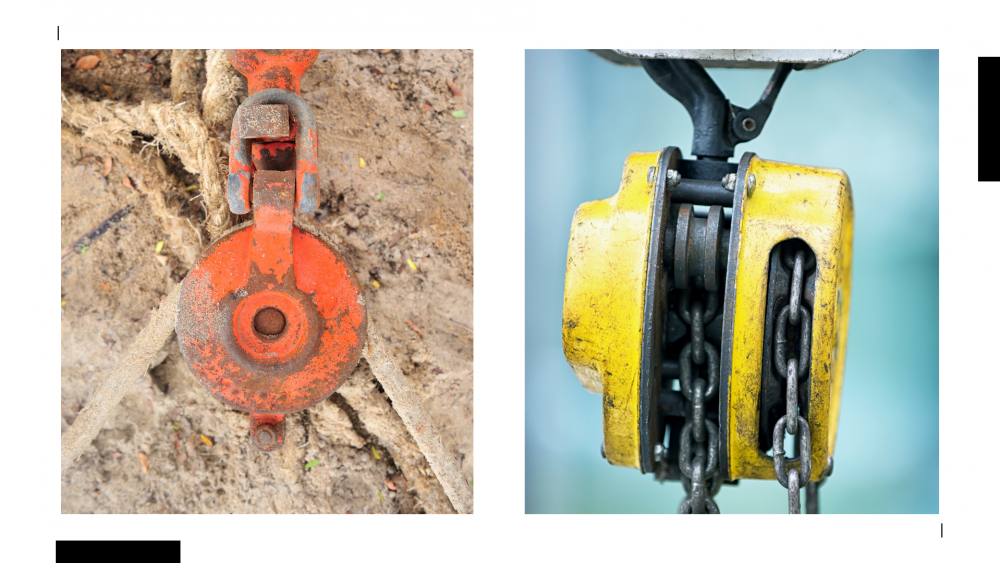
Summary from Nong Chang
In reality, There Is No Single "Best" Hoist for Everything There is only "the right hoist for the job." Think of it simply like choosing kitchen utensils or shoes: you need to match the tool to the situation—one single option cannot do every job.
- Light-duty work around the house → Rope hoist: lightweight, maneuverable, lifts loads under a few hundred kilograms
- Medium-duty work, such as lifting engines in a garage → Chain hoist: strong, durable, effortlessly handles repetitive lifting
- Heavy-duty work in factories or construction sites → Wire rope hoist: designed for lifting massive loads of several tons
Therefore, before buying or using hoists any hoist, try asking yourself: "What are you lifting? How heavy is it? Where will it be used?" These three simple questions serve as a compass to help you choose the right tool for the job.
Nong Chang sums it up simply: Choosing the right hoist from the start = easier work, greater safety, and definitely no wasted effort.