


 EN
 ไทย



No matter how overgrown the grass is, fear not! With the power of 2 Stroke BrushCutter Because word has it that they are renowned for abundant power, capable of tackling even the wildest overgrown grass! Is it really true? In this article, I'll take you to explore just how powerful 2-stroke brush cutters are, what level of overgrown grass they can genuinely cut, and whether they live up to the hype—along with a performance comparison against other types so you can decide which fits your work best. Without further ado, let's dive into the article!
What is a 2-stroke brush cutter?
EWhen it comes to tackling overgrown grass, thick grass, or tough weeds, a 2-stroke brush cutter is often the first choice many people think of, thanks to its outstanding "power" and "light weight" which are the keys to efficient heavy-duty work. A 2-stroke brush cutter uses an engine cycle with only two strokes: "compression + ignition" and "exhaust + intake" in just 1 crankshaft revolution. This differs from a 4-stroke brush cutter, which requires 2 revolutions, giving the 2-stroke machine an advantage in terms of power-to-size and power-to-weight ratio. Because it delivers power on every single rotation, it produces high and continuous torque even in a smaller engine size. Additionally, it responds quickly to changes in resistance, such as when cutting dense grass or thick weeds, making it ideal for applications requiring agility and immediate acceleration.

Now, let's look at the key highlights of the 2-stroke brush cutter to see what it's all about, shall we?
Highlights of 2-Stroke Brush Cutters
- Quick power delivery and rapid throttle response even in dense growth; the engine revs up instantly when hitting thick weeds or damp grass, reducing the sluggishness or stalling often found in lower-RPM machines.
- Lightweight and easy to maneuver, making it ideal for complex terrain like paddy dikes, slopes, or obstacle-filled orchards, allowing operation even in hard-to-reach areas.
- Operates on a pre-mixed fuel blend of gasoline and 2T oil, providing continuous lubrication while reducing the risk of oil starvation when tilting or operating the machine in various orientations, such as when lifted or cutting vertically.
- Easy to repair thanks to an uncomplicated design with fewer parts than a 4-stroke engine, making disassembly, inspection, and spare parts replacement convenient—ideal for users who prefer DIY maintenance.
How Is the Power of a 2-Stroke Brush Cutter Measured?
Next, let's discuss how the power of a 2-stroke brush cutter is measured. It's not determined by a single metric, but by a combination of factors reflecting engine performance, which directly impacts cutting efficiency—especially in overgrown grass or dense weeds. Let's explore what these are.
Horsepower (HP) and Revolutions Per Minute (RPM)
- Typical 2-stroke brush cutters generally range from 1.0–1.5 horsepower (HP) with rotational speeds of 6,000–10,000 RPM, which is higher than 4-stroke machines. This spins the blade fast, provides sharp cutting force, and slices through weeds easily. This high RPM also helps the engine maintain consistent speed when cutting dense or damp grass without losing power or stalling frequently. In addition, the cutting force generated by high RPM cleanly cuts deep-rooted grass or tough, fibrous weeds, cutting down work time and boosting efficiency over large areas.
Consistent Power Delivery
- Because an ignition occurs with every 1 revolution, the power delivery of a 2-stroke engine is smooth with no lag like a 4-stroke engine. As a result, when cutting thick grass or in areas with resistance, the engine will not sputter or bog down. Furthermore, this continuous ignition helps the machine smoothly overcome the friction of the blade striking thick grass without any hesitation while cutting, and it also delivers instant rev response as soon as the user increases the throttle, making it suitable for cutting various types of grass in ever-changing environments.
Power Comparison with Other Types of Machines

What Level of Overgrown Grass Can It Cut?
Short Grass, Soft Grass (Front Lawn)
Let me tell you, a 2-stroke brush cutter handles this with ease. Using a nylon trimmer line or a light cutting head is more than enough. The high RPM delivers a smooth cut in no time and allows the operator to maintain precise cutting lines. It is ideal for trimming small grass along fences, garden edges, or playgrounds. Additionally, it helps save fuel and reduces machine vibration when operating on grass that doesn't require heavy power.
Dense Grass / Reed Grass
Use a steel blade or a multi-tooth disc cutter. The high RPM helps power through dense grass without straining the engine. Whether dealing with jointed grasses, cogon grass, or tough-structured cane grass, a 2-stroke brush cutter cuts through efficiently without excessive vibration or overheating. Choosing the right cutting head paired with high engine RPM also reduces working time and cuts down on fatigue during continuous use.
Weeds and Small Shrubs
A 2-stroke brush cutter with 1.3 HP or more, paired with a thick steel blade or a disc cutter, can efficiently tackle waist-high weeds and small shrubs. Whether it's roadside overgrowth, garden brush, or weeds in abandoned lots, the continuous pulling power of the engine allows the blade to slice through tough, fibrous plants or dense roots without forcing the machine. Moreover, it performs well on slopes or uneven terrain with obstacles thanks to its lightweight, easy-to-control body and high torque.
Damp / Rain-Soaked Grass
High RPM and consistent pulling power make cutting damp grass easy without it tangling around the blade, reducing the chances of the engine stalling or stuttering mid-task. Especially when cutting in the morning or after rain when the ground is still wet and grass tends to be slippery and tough, the continuous cutting force of a 2-stroke brush cutter keeps operation smooth. It minimizes blade slippage or power drops that force frequent stops, and it helps reduce the buildup of wet grass clippings around the cutting head.
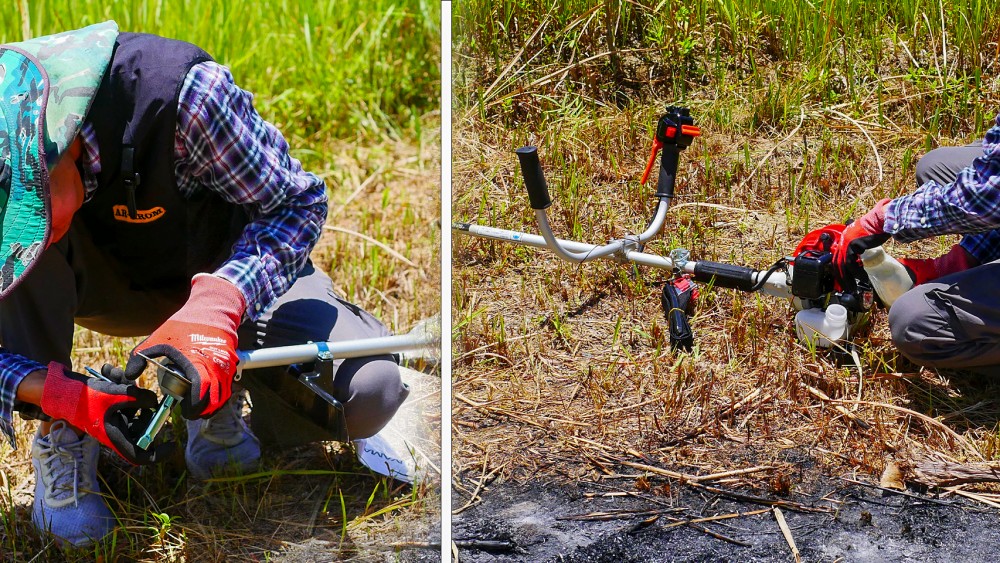
Factors That Improve Cutting Efficiency
Blade Sharpness
Always remember to check the blade before every use. If the blade is dull, sharpen or replace it immediately. A dull blade makes the machine work harder, takes longer to cut, and can cause kickback during operation, which affects your safety. It also results in an uneven finish, tearing the grass blades rather than cutting them cleanly. Therefore, you should clean the blade after each use and check its sharpness regularly.
Proper Fuel Mixing
The gasoline-oil mixture should follow the manufacturer's recommended ratio, such as 25:1 or 50:1, to allow the engine to rev fully. These ratios mean 25 or 50 parts gasoline to 1 part 2T oil. Proper mixing ensures complete combustion, keeps the spark plug clean, and prevents premature engine wear. A mixture that is too rich can cause carbon buildup, while using too little lubricating oil can lead to engine overheating or internal damage.
Holding the Machine Firmly
Wearing the harness properly or holding the machine at the right angle helps reduce vibration and allows the blade to engage the grass with full power. It also enables the operator to control the cutting direction more accurately, preventing kicking or wandering off line when cutting thick grass. Additionally, holding the machine at a proper angle reduces fatigue in the arms and shoulders, allowing for longer operation without excessive strain.
Proper Throttle Control
There is no need to run at full throttle all the time; modulate the throttle according to the grass density to save fuel and prolong engine life. Especially when cutting sparse or light grass, revving more than necessary not only wastes fuel but also increases the risk of overheating and accelerated wear of internal components. Adjusting RPM to match the grass conditions and terrain ensures a smooth, even cut, reduces kickback, and allows continuous work without frequent pauses.
Whether it's maintaining a front yard, an orchard, or an overgrown vacant lot 2 Stroke BrushCutter Ready to meet every demand with dependable power across all yard conditions!