


 EN
 ไทย


Customers Also Purchased


Wheel balancing is an essential part of vehicle maintenance that car owners should not overlook, as unbalanced wheels negatively affect suspension systems, vehicle handling, and driving safety. Automatic wheel balancers operate much faster and more accurately than manual models, minimizing errors and enabling skilled technicians to deliver higher-quality service.
In this article, we'll walk you through how automatic wheel balancers work and explain the operating steps so you can clearly understand their importance and benefits.
What is an automatic wheel balancer?
A wheel balancer is an equipment that detects and corrects wheel imbalance caused by uneven weight distribution. When driving at high speeds, an unbalanced wheel can vibrate, affecting handling, safety, tire wear, and vehicle suspension.
An automatic wheel balancer is an evolution of the manual wheel balancer, using sensors and smart computing systems to analyze data. This allows for fast, precise detection and correction of wheel imbalances. Furthermore, it can balance wheels for various vehicle types, including passenger cars, trucks, and motorcycles.
Working Principle of an Automatic Wheel Balancer
An automatic wheel balancer operates using principles of physics and mechanics combined with digital technology to calculate where weight needs to be added or subtracted on the wheel to achieve balance. The operating steps can be broken down as follows:
1. Mounting the wheel onto the wheel balancer
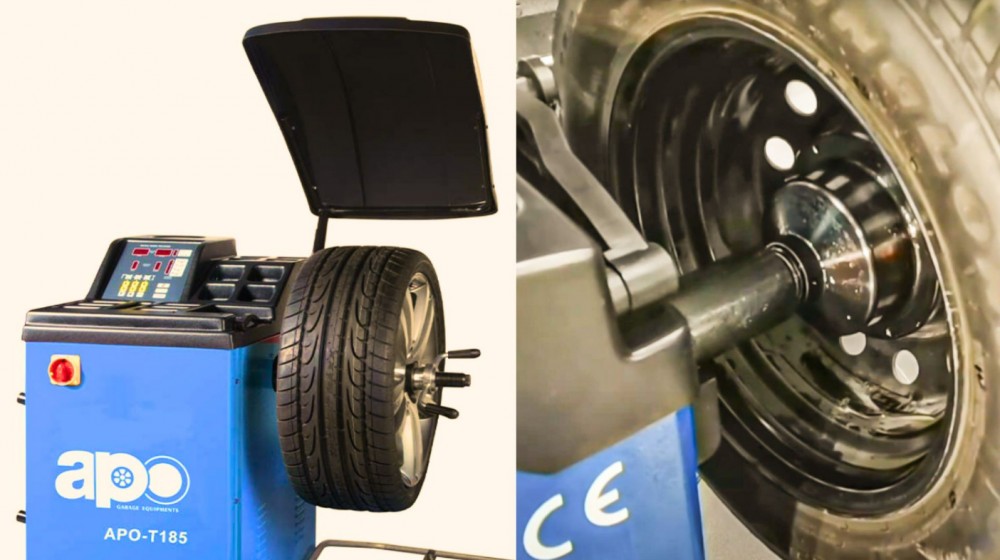
Before beginning the balancing process, a professional technician must remove the wheel from the vehicle and mount it onto the balancer. The wheel is secured onto the machine's rotating spindle so that it can spin freely and remain in the correct position. Improper mounting can cause measurement inaccuracies and lead to imprecise wheel imbalance correction.

2. Setting basic wheel parameters
Once the wheel is properly mounted on the balancer, the technician must input relevant wheel parameters, such as:
- Wheel Diameter
- Wheel Width
- Offset distance from the balancer
This data helps the wheel balancer accurately calculate the wheel's imbalance and precisely pinpoint where corrections are needed.
3. Spinning the wheel to analyze imbalance
After setting up the parameters, the wheel balancer will spin the wheel at high speed using an electric motor to simulate wheel rotation during driving. Built-in sensors measure vibrations generated during rotation and process where and in which position the imbalance exists on the wheel.
4. Calculating the wheel imbalance values
Once the sensors receive the vibration data, the wheel balancer uses a computerized system to calculate the wheel imbalance values and displays the results on a digital screen. The displayed values include:
- Position where weight needs to be added or counterbalanced
- Imbalance value to be corrected (typically displayed in grams)
- Corrective guidelines to reduce vibrations
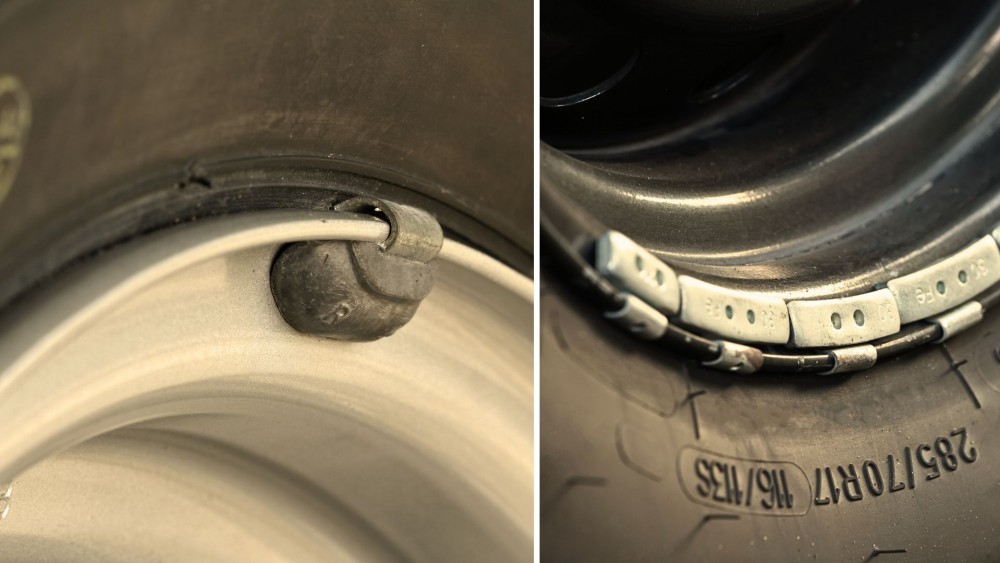
5. Wheel balancing by attaching wheel weights
Once the imbalance value is obtained, the technician must install wheel weights at the rim edge indicated by the machine. Some automatic wheel balancer models feature a laser positioning system for enhanced installation accuracy.
6. Re-testing to confirm results
After installing the wheel weights, the wheel balancer will spin the wheel once more to check whether the imbalance has been corrected. If any imbalance remains, the machine will indicate additional positions to adjust until the wheel is balanced. This process ensures smooth driving, safety, fuel efficiency, and extended service life.
Advantages of automatic wheel balancers
Automatic wheel balancers offer several advantages compared to manual wheel balancers, including:
1. High accuracy
The use of sensor systems and intelligent software enables detailed and highly accurate analysis of wheel imbalance values, allowing rapid identification of points requiring weight addition or counterbalancing, thereby reducing potential errors from manual calculations.
2. Time savings and increased operational efficiency
Automatic wheel balancers calculate and display wheel imbalance values rapidly, allowing the balancing process to be completed in just a few minutes, reducing customer wait times, and boosting the efficiency of service centers or auto repair shops.
3. Easy to use and reduces technician workload
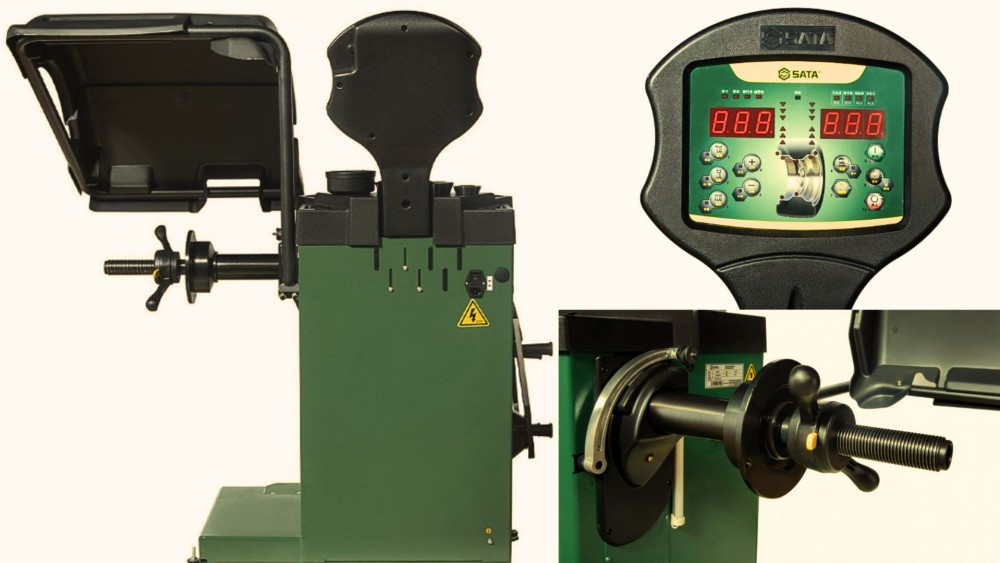
Automatic wheel balancers typically come with a digital display screen and guidance system to accurately indicate weight placement, allowing even novice technicians to operate them without extensive experience.
4. Compatible with various wheel types
Automatic wheel balancers work with various wheel sizes, including passenger cars, light trucks, and even motorcycles. Some models can also accommodate alloy wheels and specially designed steel wheels.
5. Helps reduce tire and suspension wear
Properly balanced wheels reduce vibration and impacts affecting various vehicle systems, resulting in even tire wear and lowering tire replacement and suspension repair costs in the long run.
6. Enhances driving safety
Keeping wheels balanced helps improve vehicle stability, reducing the risk of shaking or drifting at high speeds, giving drivers better vehicle control and increasing confidence on every journey.
7. Reduces vehicle maintenance costs
Although automatic wheel balancers may involve a higher initial cost than manual ones, they help lower vehicle maintenance expenses over the long term thanks to digital precision that reduces damage to tires, suspension systems, and related components.
8. Supports software upgrades
Modern automatic wheel balancers often feature updatable software systems, allowing them to remain compatible with new technologies and continually improve the accuracy of imbalance analysis.
9. Ideal for service centers and large repair shops
With fast and precise operation, automatic wheel balancers allow service centers to handle more customers per day, increasing business revenue and enhancing customer satisfaction.
Conclusion
An automatic wheel balancer is a valuable tool for enhancing driving safety for all types of vehicles, reducing tire wear, and ensuring smoother handling. Balanced wheels help absorb road shocks, minimize vehicle vibration, and deliver a smoother ride. They also relieve stress on the suspension system and vital components such as shock absorbers, ball joints, and bushings, which could otherwise lead to high repair costs over time if not properly maintained.
A service center or repair shop equipped with an automatic wheel balancer is ideal both for business owners who want to service their customers' vehicles with maximum efficiency, and for anyone looking to upgrade vehicle care to ensure their vehicle is always in peak condition.
Wheel balancing is a process that allows wheels to spin evenly and eliminates unnecessary friction, extending tire life and enhancing overall vehicle performance. Ongoing wheel and tire maintenance is essential for every vehicle owner to ensure your vehicle is ready for any road condition.
Select Wheel Balancer here