Customers Also Purchased
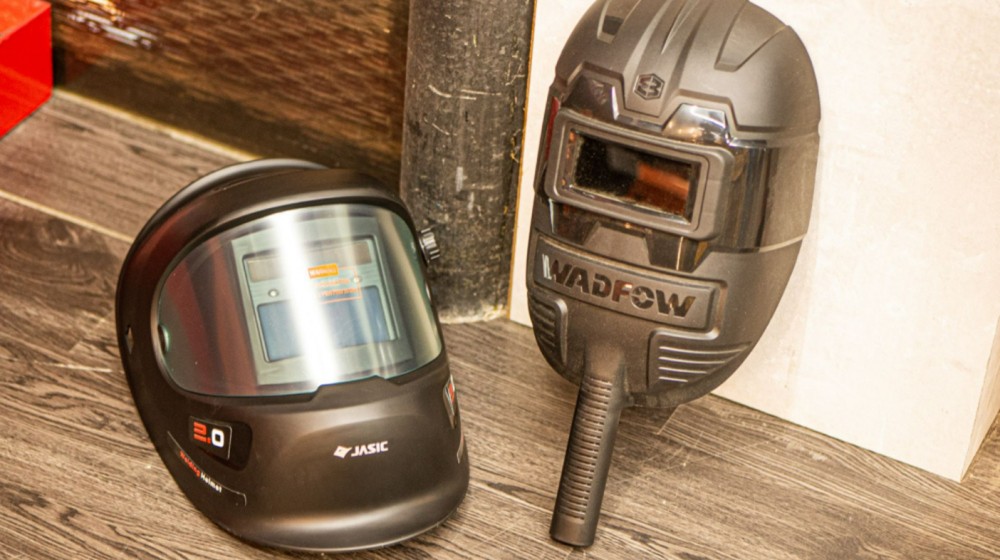
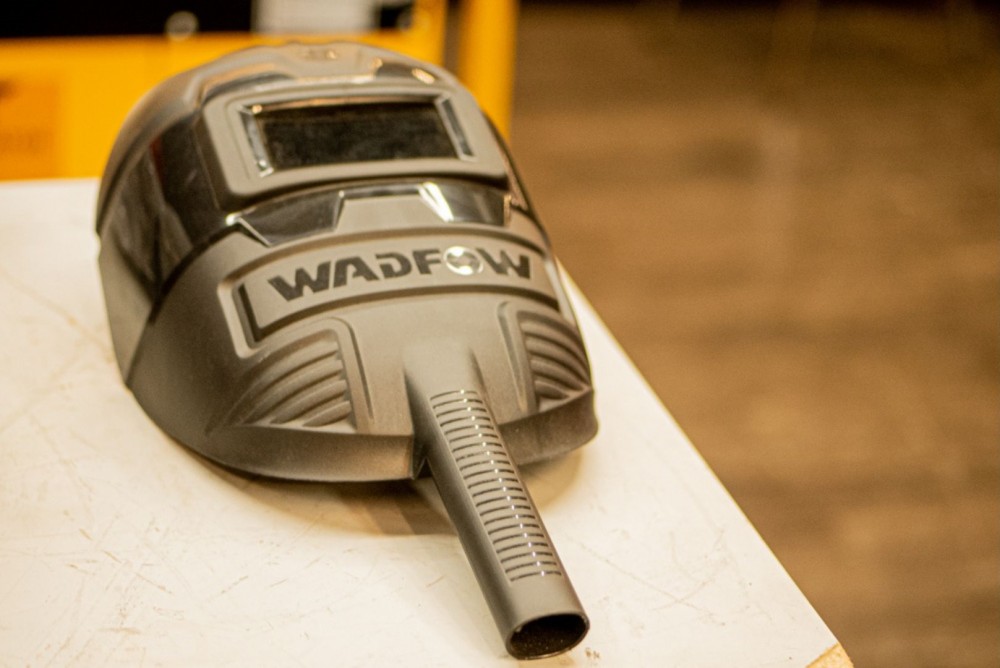
Welding helmet It is regarded as an essential and versatile piece of protective equipment across various trades. Metal welding is extremely common today, as practically every industry involves metal—whether it's reinforcing steel in construction and building expansions, metal in the automotive industry, or various factory machinery that requires metal components. Furthermore, metal welding extends to repair work, most commonly seen in automotive and motorcycle repairs.
Metal welding is a process that requires high caution due to the intense glare, metal spatter, and various fumes that can be hazardous to the eyes and face. This makes welding helmets a vital piece of equipment that protects the user while also enhancing work efficiency, such as visibility.
Key Components of a Welding Helmet
Welding helmets typically consist of essential components such as protective lenses—lenses used to filter light and UV/IR radiation, available in both fixed-shade and auto-darkening types; the helmet shell, which guards against sparks and impact; an adjustable headgear for a secure fit; and radiation-filtering elements for eye safety. Some models also feature sensor systems for auto-darkening, ventilation systems to reduce humidity, and extra-large viewing lenses for greater convenience. These components are designed to protect the user and enhance efficiency during welding operations.
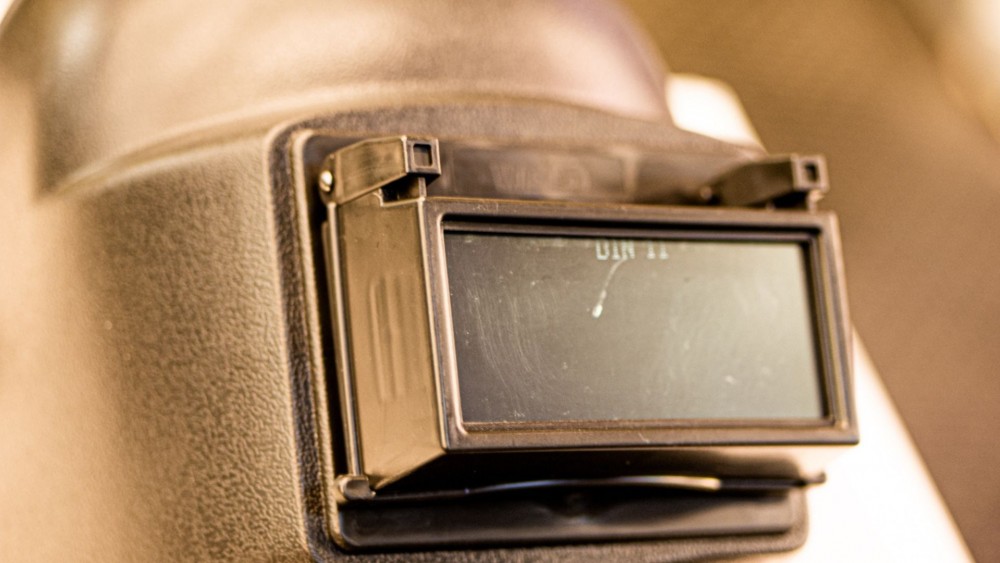
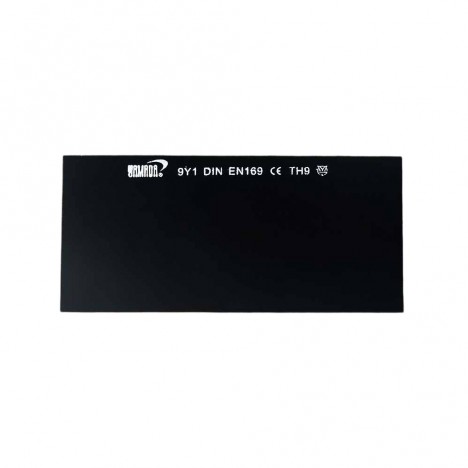
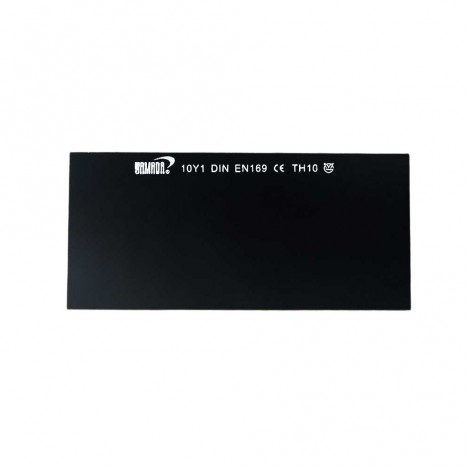
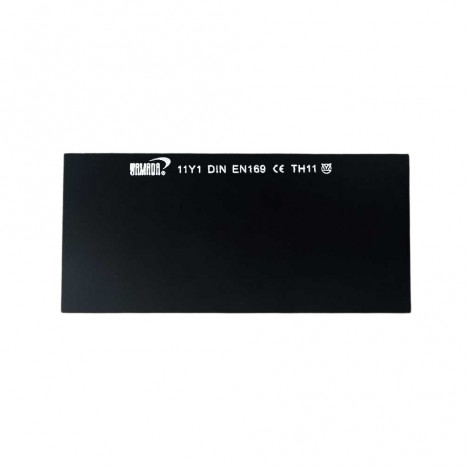
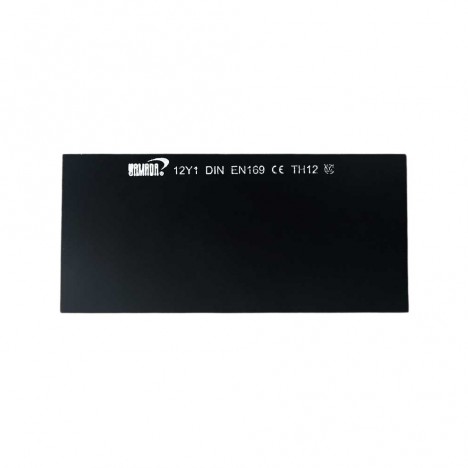
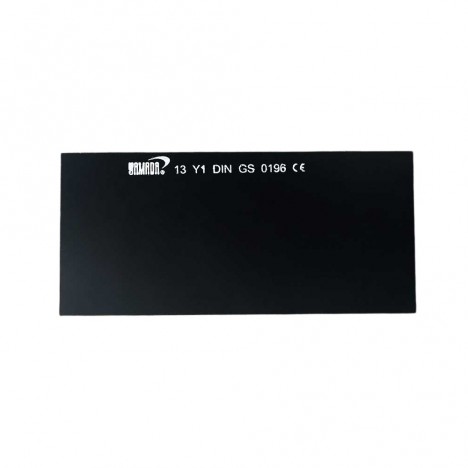
DIN (Deutsches Institut für Normung) is an internationally recognized German industrial standard. In welding helmets, DIN refers to the protective lens shade level used to filter light and protect against UV/IR radiation. DIN ratings range from 5 to 13, where lower levels such as DIN 5-8 are suitable for plasma cutting or tasks with less intense glare, while higher levels such as DIN 9-13 are suitable for general welding work like TIG, MIG, and MMA. Higher DIN levels provide greater darkness to better protect against intense glare.
Passive Welding Helmet
A passive welding helmet features a fixed shade lens, typically in the range of DIN 10-13, which is sufficient to protect against intense welding glare and potentially harmful UV/IR radiation. The user must lift the helmet to inspect the workpiece and nod it down when starting to weld. This makes it ideal for straightforward tasks or novice welders. The advantages of this type of helmet include:
- Budget-friendly: Ideal for those with a limited budget
- Rugged and durable: Simple construction with no electronic components ensures a long service life
- Basic protection: Provides good UV/IR radiation protection and is suitable for general applications
This type of helmet is suitable for:
- Basic welding tasks: Such as MMA welding that does not require high precision or fine detail
- Beginners: Those who are practicing and do not yet require advanced technology
Although passive welding helmets lack modern features, they remain an excellent choice for beginners or for applications where simplicity and cost-effectiveness are paramount.
Auto-Darkening Welding Helmet
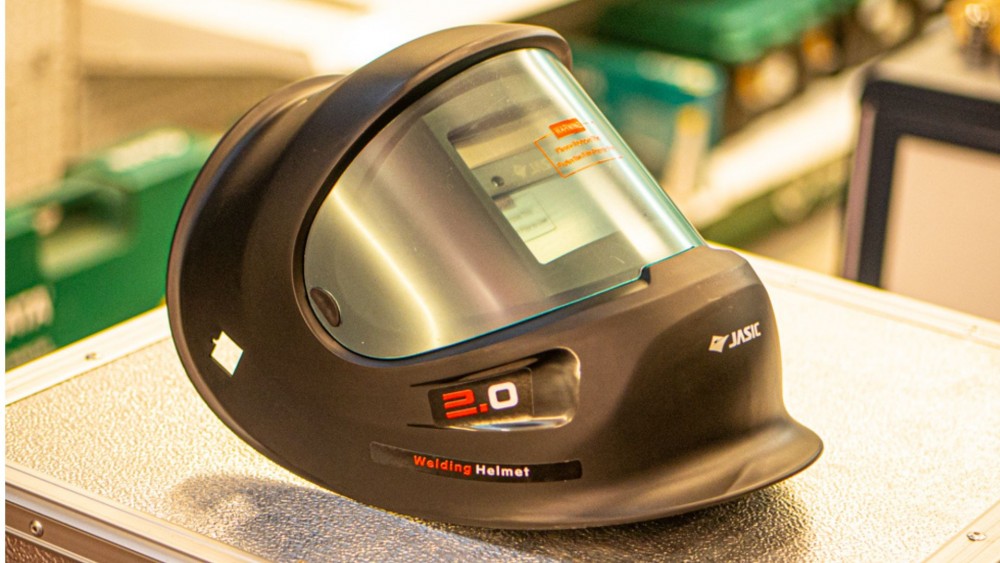
An auto-darkening welding helmet utilizes light-detecting sensor technology from the welding process, allowing the lens to automatically adjust its darkness level according to changing light conditions during operation. This eliminates the need for the user to frequently flip the helmet up and down. Lens shade levels are typically DIN 5-9 for plasma cutting and DIN 9-13 for general welding tasks such as TIG or MIG that require operational precision. Key advantages of this helmet type include:
- Convenience: Auto-darkening lenses eliminate the need to repeatedly flip the helmet up and down, enabling uninterrupted workflow
- Reduced fatigue: Users do not need to constantly nod their heads or lower the helmet manually, reducing physical strain during work
- Ideal for precision work: Welding tasks requiring high control, such as TIG and MIG
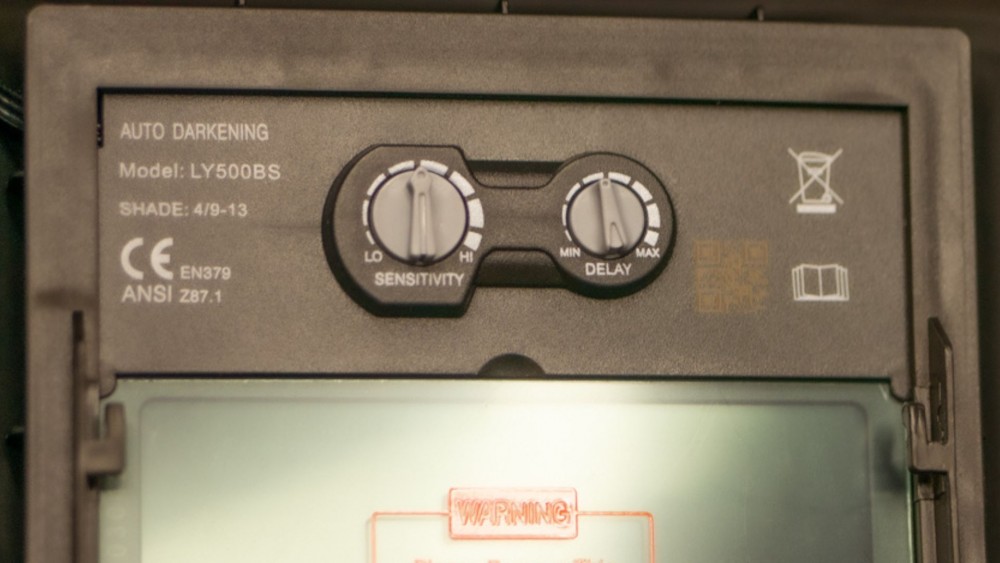
However, auto-darkening welding helmets also come with considerations such as:
- Higher price than passive models: Due to sensor technology and automatic darkening systems
- Requires battery or solar maintenance: The helmet's automated system requires power, necessitating regular battery checks to ensure optimal performance
This type of welding helmet is suitable for:
- High-precision welding tasks such as TIG and MIG, where the operator needs to see fine workpiece details clearly
- Plasma cutting jobs, which require adjusting the lens shade appropriately for the cutting process.
- Professional welders who weld continuously for long periods and require equipment that enhances efficiency, speed, and precision.
With features and functions that enhance comfort and convenience, auto-darkening welding helmets are therefore ideal for professionals or frequent welders who demand maximum safety, accuracy, and ease of use.
Conclusion
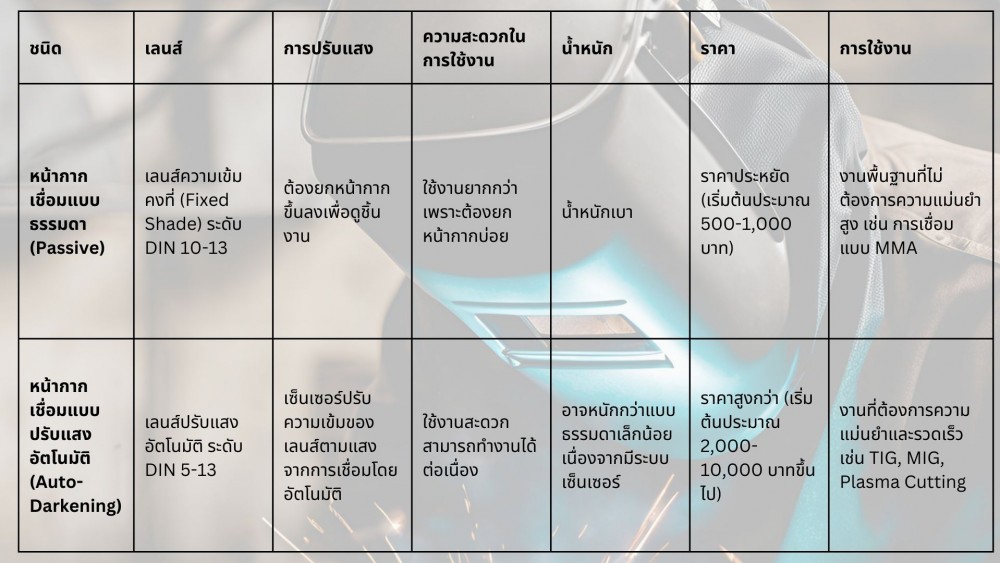
Welding helmet It is an essential piece of equipment that protects users from bright light, UV/IR radiation, and metal spatter. They are available in 2 main types: passive helmets, which are economical, sturdy, durable, and suitable for basic tasks or beginners, but have limitations in convenience and accuracy; and auto-darkening helmets, which utilize sensor technology to automatically adjust the lens shade, making them ideal for tasks requiring high precision.


 EN
 ไทย