


 EN
 ไทย


Customers Also Purchased

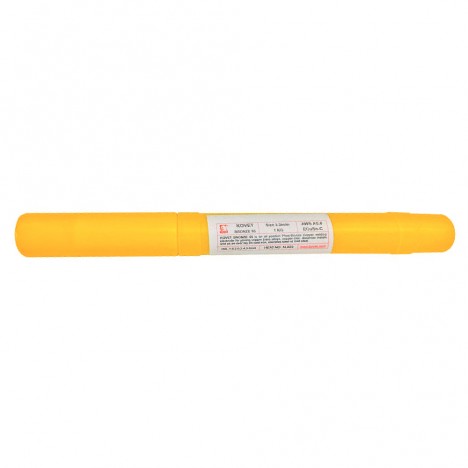

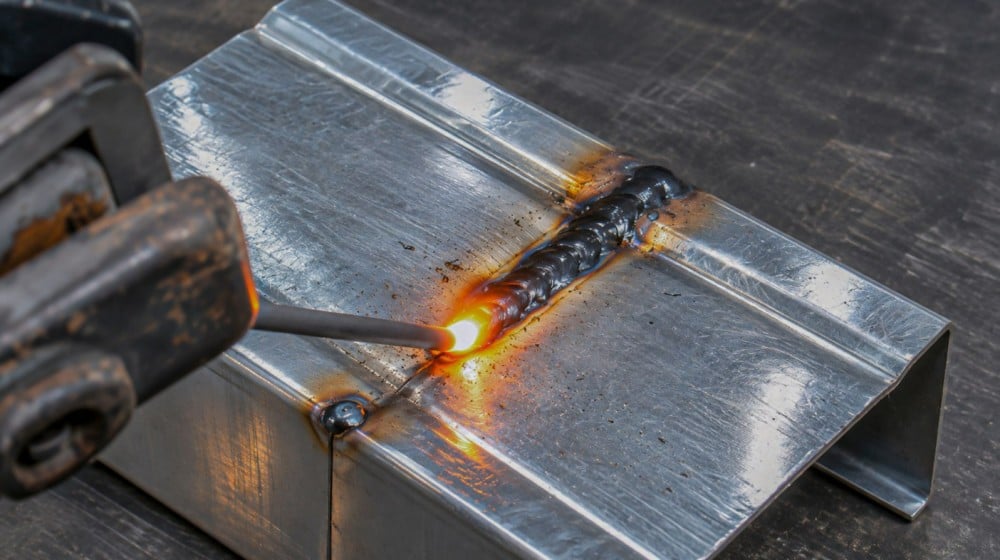
Many people have Welding Wire only one size in their toolbox and use it for every job—from thin sheet metal and hollow square tubes for gates to thick steel for repairing workbench legs. As a result, some jobs burn through into holes that need repeated filling, while on other jobs, the weld bead sits convex on the surface like grains of rice, breaking off with a single tap.
The understanding that "A larger welding rod deposits more filler metal and makes a stronger weld" may not always be true, because the chosen welding rod size must match the thickness of the steel, the current output of the welding machine, and the welding position used. A rod that is too large on thin steel will cause burn-through, while a rod that is too small on thick steel will result in lack of penetration—and both scenarios lead to a weak weld just the same.
Let's take a look at How does rod size relate to current and steel thickness? What happens if you choose too small or too large? What are the limitations of a compact welder on household power, and what symptoms indicate that you need to stop welding because the issue might not be about rod size anymore?
Welding rod size determines how deep the heat penetrates into the steel
Each welding rod size is designed to operate within a specific current range, which is printed on the box. Larger rods require higher current to melt properly, and when the current is high, the heat transferred into the workpiece also increases. The weld pool becomes larger, and more filler metal is deposited per pass.
Smaller welding rods use lower current, produce less heat, and create a smaller, easily controllable weld pool, making them suitable for thin steel that burns through easily. Thick steel, on the other hand, requires enough heat to melt deep into the base metal so the weld bead fuses internally rather than just sitting on the surface.
Just like a soldering iron: a small one is great for small circuits, but cannot be used to solder thick electrical wires because there is not enough heat.
Choose a welding rod with a size and current appropriate for the steel thickness—providing enough heat for deep penetration without being excessive enough to burn through or warp the steel.
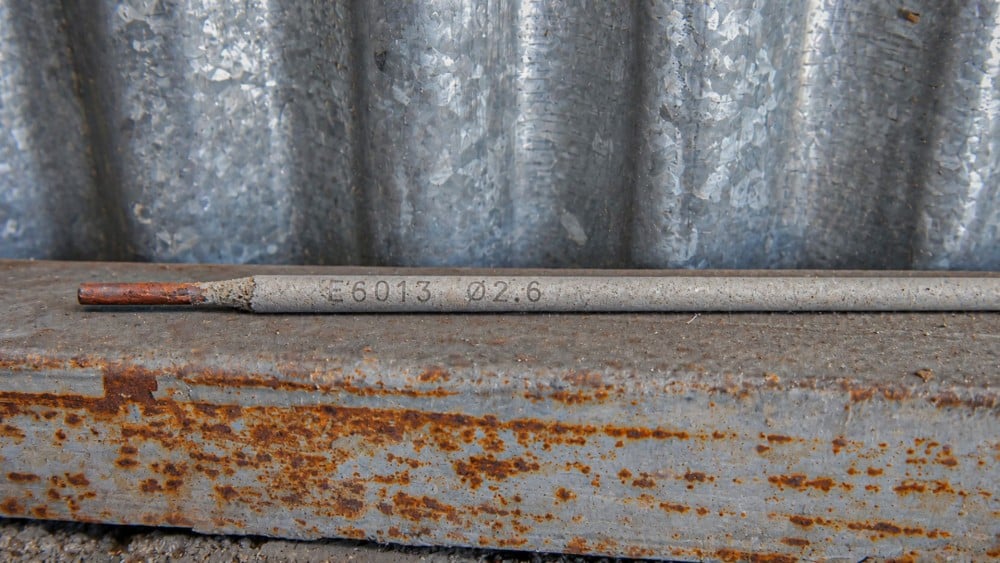
A welding rod that is too large for thin steel causes burn-through, warping, and poor bead control
Thin sheet metal and thin-walled hollow sections can absorb very little heat. If you use a large welding rod that requires high current, the weld pool is often larger than the base metal can support. The result is burn-through holes, melted-away edges, and steel plates warped from excessive heat.
Lowering the current doesn't help
Some people try to fix this by lowering the current below what the large rod requires. However, doing this causes the rod to stick to the workpiece, creates an unstable arc, and leaves lumpy weld beads that do not fuse properly. The correct solution is to switch to a smaller rod that operates stably at lower currents. If the rod still sticks frequently despite using the correct size, it could be due to other causes. For rods that are difficult to strike an arc with, see other troubleshooting methods to make welding easier
Tack/stitch weld instead of running continuous beads
On thin steel, weld in short tack stitches, alternating positions to allow each spot to cool down before welding the next, instead of running a long continuous bead. This prevents heat buildup from warping or burning through the steel.
A welding rod that is too small for thick steel creates a neat bead, but lacks penetration
This issue is more dangerous because the weld bead may look neat, but internally, it has not fully fused with the thick base metal. When subjected to actual loads, the weld bead will peel off like a sheet.
Noticeable symptoms
- Excessively convex, bead-like weld profile
- Toe of the weld does not blend smoothly with the steel surface
- Electrode glows red-hot quickly due to running current beyond its recommended range
- Requires multiple passes to fill the joint
These signs indicate that the welding electrode is too small for that steel thickness.
Solution
Switch to a larger electrode suited to the steel thickness if the welding machine can supply sufficient current, and prepare the joint properly—such as beveling thick plate edges according to drawing specifications and leaving a root gap for penetration to the bottom. For very thick steel, multi-pass welding following proper procedures is better than trying to fill the joint in a single pass.
Welder Output Current: The Practical Ceiling on Usable Electrode Size
Even if you select the electrode size based on steel thickness, poor weld quality can still occur if the welder cannot deliver the current range required by the electrode. Examples include compact welders or units plugged into domestic household power, which often have limitations on maximum output and duty cycle.
Check the Welder's Current Range Against the Electrode Package
Compare the actual maximum current your welder can deliver (from its nameplate or manual) with the recommended current range on the electrode box. If the machine can only reach the lower end of that range, welding will be unstable and the machine will be strained and overheat quickly. Choose an electrode whose recommended current falls around the middle of your welder's operating range.
Sufficient Household Power and Wiring Are Essential
A welder connected to household power via an undersized or overly long extension cord may suffer from voltage drop, causing the machine to deliver less current than set and making the power cord overheat. The solution is to plug the welder into an outlet with adequate current capacity, use an extension cord with the wire gauge specified in the manual, and consult an electrician if unsure.
Welder Duty Cycle
Every welding machine model can only deliver high current continuously for a limited time based on the duty cycle stated in its manual. When using larger electrodes requiring high current, the machine will heat up quickly and thermal cutouts will trip more frequently. The solution is to check the duty cycle at that current in the manual, allow the specified cool-down rest periods, and if your work involves continuous welding of thick steel all day, consider a welder with a higher current rating and duty cycle instead of overtaxing a small machine until it thermal-trips.
Welding Position and Application Change the Ideal Electrode Size
Flat position welding on a workbench allows using larger electrodes to their full potential because the weld pool remains stable. However, in vertical, overhead, or tight-corner welding, an oversized weld pool will sag and drip due to gravity.
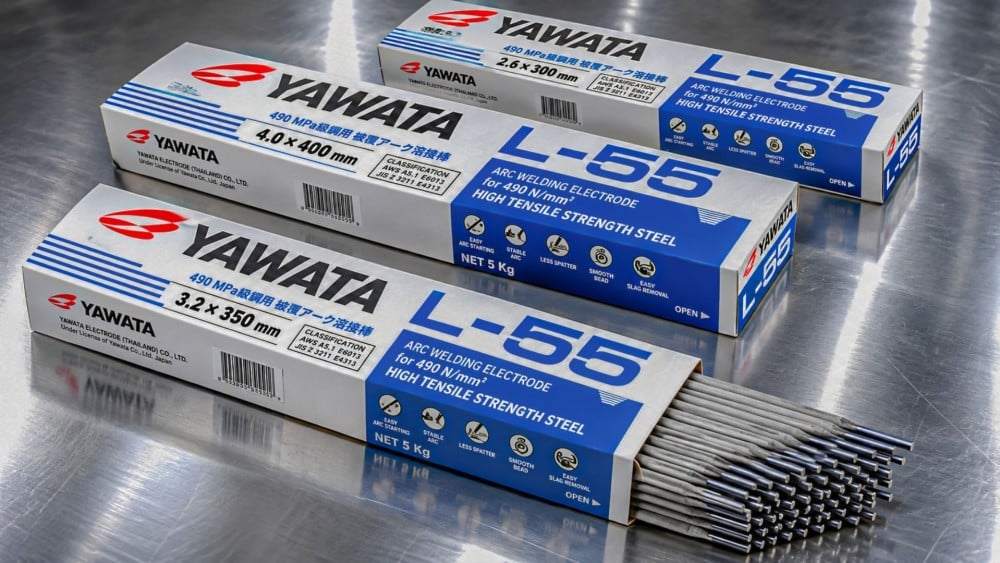
Use an electrode one size smaller and lower the current for vertical and overhead welding so the weld pool remains small enough to control. Choose electrodes whose classification code indicates compatibility with those positions. What Do the Codes on Welding Electrodes Tell Us?
For tack welding to hold workpieces before final welding, a smaller electrode than the one used for the main weld passes can be used to prevent excessive convex tacks from obstructing the final weld bead.
The weld bead can tell you which way the electrode size or current is off
A weld bead with the right size and current will be uniformly wide, with edges blending smoothly into both steel surfaces, free of raised beads, and the backside of thin joints will show proper heat penetration without burn-through.
If the bead is convex and narrow with unblended edges and lots of spatter, it is usually because the current is too low for that electrode or the electrode is too small for the steel. If the bead is wide and flat with undercut edges or burn-through, it is usually due to excessively high current or an oversized electrode.
Fix these symptoms one by one: first adjust the current within the electrode's specified range; if that still doesn't work, change the electrode size. As for porous beads despite having the right size and current, it is usually not a size issue, because defective electrodes can cause porous, punctured weld beads.
Can a single electrode size be used for all jobs?
NYes, when most of the work involves steel of similar thickness, mostly in flat positions, and the electrode size falls comfortably in the middle of what the welder can supply. For example, for welders who primarily work on gates, fences, and general steel frames, a single medium-sized electrode handles most jobs well.
NNot recommended when the work includes both very thin and very thick steel, frequent vertical or overhead welding, or high load-bearing applications. Keeping two or three electrode sizes on hand helps you choose precisely for the job and minimizes rework that wastes both time and electrodes.
Signs you should stop: The problem is no longer the electrode size
If the welder cuts off frequently due to overheating, the house circuit breaker trips, the plug or extension cord becomes too hot to touch, there is a burning smell from the machine or cables, or unusual noises come from the welder: stop welding, turn off the machine, and unplug it.
These symptoms indicate that the electrical system or the machine is overloaded. Changing the electrode size will not solve the root cause. Inspect the receptacle, wiring, and breaker, or send the welder to a service center. Attempting to fix this by upgrading the breaker yourself or taping up a hot plug can pose a fire hazard. In addition, do not connect the welder to an extension cord shared with other electrical appliances at the same time.
Choosing and using electrode sizes safely
Before welding, measure the steel thickness, determine the welding position, check the current range on the electrode box against what the welder can supply, and select a size in the middle range of both. Ensure the electrodes are dry, connect the welder to an adequately rated outlet, and wear a welding helmet, leather gloves, and long sleeves.
During welding, test on scrap metal of the same thickness first, inspect the bead, and adjust the current within the electrode's range. For thin steel, take care by spot-welding at alternating positions, and take breaks when the welder or cables start to get hot.
After welding, chip away the slag and check if the bead blends well with the steel surface. Place hot electrode stubs in a metal container, turn off the machine, and unplug it. Note down the electrode size and current settings that worked well for each job for future reference.
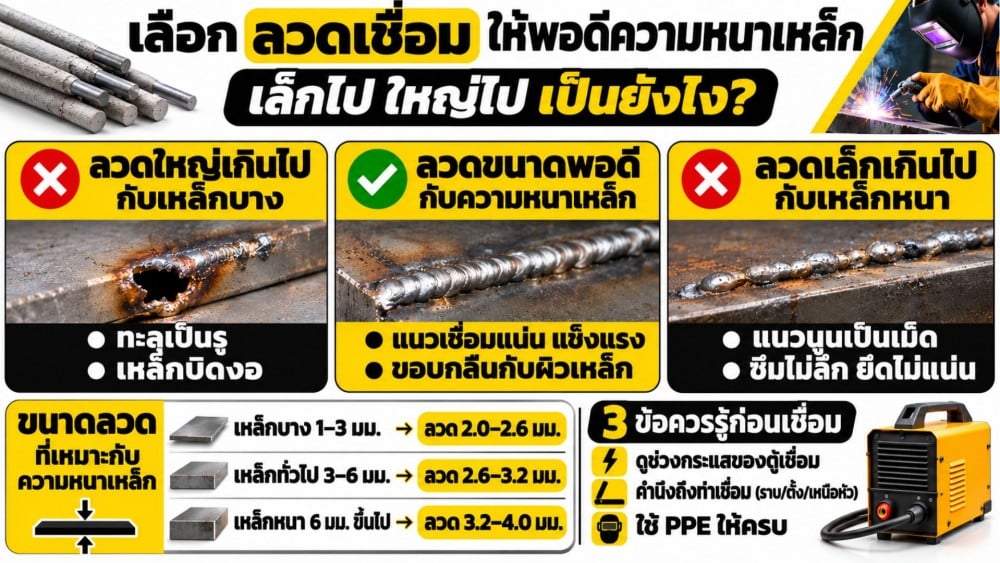
Summary: Electrodes yield strong welds when the size and current are just right
Burned-through thin steel, convex beaded welds, and welds that peel or detach under stress mostly stem from electrode sizes and current settings that do not match the job. Whether it's thin sheet metal, box tubing, or heavy-duty table leg repairs, choosing the right electrode size is the starting point for a good weld.
What you need to do is choose smaller electrodes for thin steel and tack weld, choose larger electrodes for thick steel along with proper joint preparation, match the current range on the box with what the welder can actually deliver, use adequate receptacles and extension cords, reduce electrode size for vertical and overhead positions, read the weld bead to troubleshoot one thing at a time, and keep two or three sizes on hand if your work varies.
Remember: a weld bead that looks pretty but lacks penetration must never be used for load-bearing applications. And if the breaker trips, the plug feels hot, or there's a burning smell, stop immediately and call an electrician without hesitation—never attempt to fix it by swapping out the breaker yourself.
Looking for a full range of electrode sizes for various jobs? Browse our selection in the category Welding Wire at iToolmart