EN
 ไทย


Customers Also Purchased


Bandsaw Sitting on the bench of a small furniture shop, it had been used to rip and curve-cut wood every day. Then one day, the blade started wandering, rhythmically clicking against the guide bearings. Cuts meant to be straight drifted sideways, forcing you to twist the wood to compensate. Sometimes the blade even slipped off the wheels mid-cut with a loud bang that startled everyone in the shop.
If the blade comes off frequently, does it mean the blade is bad or the bandsaw wheels are damaged? In reality, most symptoms of blade slipping off, erratic running, and skewed cuts usually stem from incomplete machine setup—including blade tension, blade tracking on the wheels, and blade guides—which must be readjusted every time you change a blade.
Therefore, let's take a look at setting up a bandsaw step by step, fromtension, tracking, and blade guides, to solving blade drift, as well as recognizing the point where you should stop using it and replace parts instead of forcing continued use until problems escalate.
Why a bandsaw blade can come off track even while running on the wheels
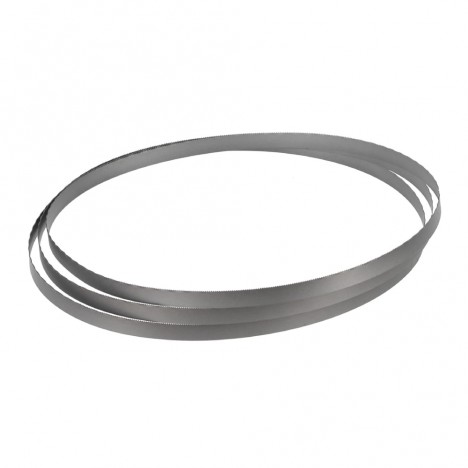
A bandsaw blade is a thin steel strip welded into a continuous loop, running over an upper wheel and a lower wheel. The wheel surface is typically rubber-tired and slightly crowned in the center, so the blade naturally tends to ride on that crowned ridge. The upper wheel can be adjusted in two ways: raised or lowered to set the tension, and tilted forward or backward to set the blade tracking to the desired position on the wheel.
When tension is too low, the blade won't grip the wheel properly; the pressure from feeding wood will push the blade backward until it slips off. When tracking is misaligned, the blade will gradually crawl toward the edge of the wheel with every turn. Meanwhile, side guides and rear thrust bearings set too far away will allow the blade to twist and push backward during cutting.
Think of it like a bicycle chain: if it's too loose or the front and rear sprockets aren't aligned, the chain can slip off even if it's brand new.
A bandsaw will cut straight and keep its blade on track when the blade is adequately tensioned, tracks properly on the wheels, and has guides that prevent it from twisting or pushing backward during cuts.
Set bandsaw blade tension according to blade width, not by guesswork
Insufficient tension causes the bandsaw blade to flutter, deflect backward when feeding wood, and easily slip off. However, excessive tension causes blade fatigue, premature breakage, and puts a heavy load on the wheel bearings.
Use the machine's built-in scale as a starting point
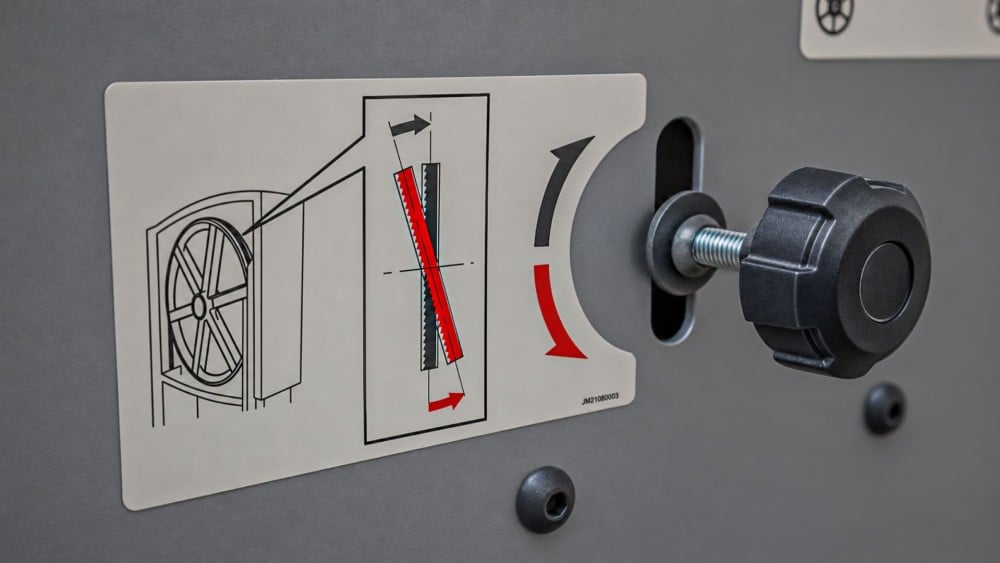
Many bandsaw models have a tension scale based on blade width located under the tension adjustment knob. The basic principle is to unplug the machine first, then turn the knob until the indicator points to the width of the installed blade. The built-in scale is just a starting point; some blade types may require different tension settings, so consult the blade manufacturer's recommendations.
Check tension by pressing the side of the blade
Once set according to the scale, raise the upper blade guide all the way up, then lightly press the side of the blade in the section between the upper wheel and the table. A properly tensioned blade will deflect only slightly and spring back immediately. If the blade deflects excessively or springs back slowly, increase the tension slightly. Always unplug the machine before touching the blade with your hands.
Adjust bandsaw blade tracking on the wheel so the blade runs in the same spot every rotation
After setting the tension, you must adjust the bandsaw blade tracking so that the blade consistently runs in the same position on the wheels without wandering toward the edges.
To do this, unplug the machine, open the wheel covers, back off both the side guides and the rear thrust bearing so they don't touch the blade, and slowly rotate the upper wheel by hand. Observe where the blade rides on the wheel. If the blade crawls toward the edge, turn the upper wheel tilt adjustment knob slightly, then spin the wheel again until the blade stays in the position specified by the manual—typically centered on the crown of the wheel. Once the blade stays in the same place over several rotations, lock the tracking knob.
Close the wheel covers properly before plugging in, then turn on the band saw briefly to check if the blade runs smoothly. If further adjustments are needed, turn off the machine, wait for the wheels to come to a complete stop, and unplug before opening the covers every time. Never adjust while the wheels are still spinning.
If you are not yet familiar with the wheel and axle structure, you can read the basics at Answering the Question: What is a Band Saw and What is it Used For?
Band saw blade guides set too far apart cause the blade to twist and push back while cutting
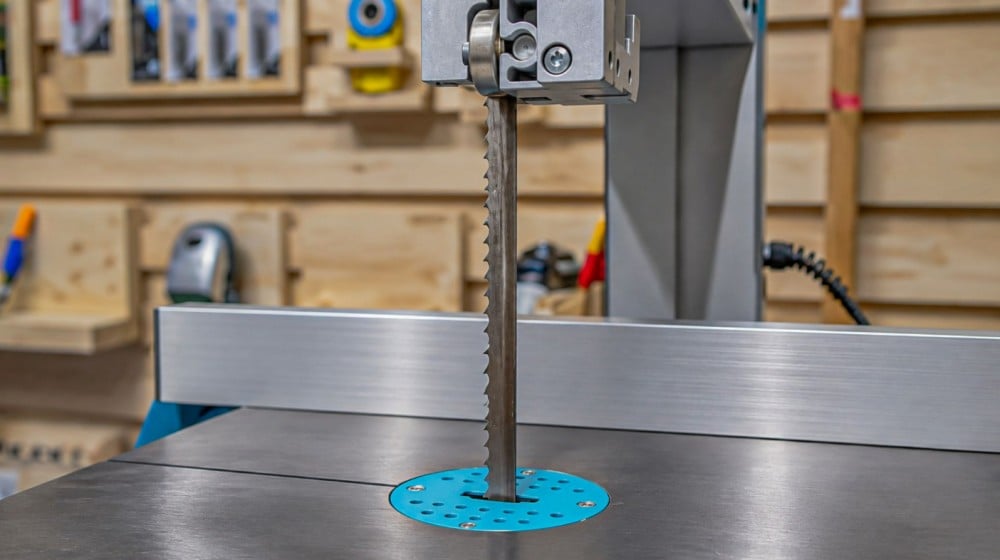
The side blade guides on a band saw prevent the blade from twisting left and right, while the thrust bearing prevents the blade from being pushed backward when wood is fed in. If the guides are too far apart, the blade can twist freely, creating wavy cuts. If the thrust bearing is too far back, the blade can push back far enough to slip off the wheels.
Adjusting the side guides
Unplug the machine first, then slide the side guides toward the blade on both sides, leaving just a tiny gap so the blade can pass through without being pinched. The guides must sit behind the gullet and not touch the blade teeth, as touching will damage the teeth and wear out the guides. Do this for both the upper and lower guide assemblies under the table.
Adjusting the thrust bearing
Move the thrust bearing in until it sits slightly behind the back edge of the blade. When the machine is running without a load, the bearing should not spin continuously, but it should spin once you begin feeding wood. If the bearing spins continuously even without wood, it is too close or the blade tracking is misaligned.
Lowering the upper guide assembly close to the workpiece
The upper guide assembly on a band saw should be lowered to sit just above the wood surface every time you cut. An overly long exposed blade between the guide assembly and the workpiece twists easily and leaves an open blade area that hands could accidentally contact.
Band saw blade drifts during straight cuts: fix the blade first, then adjust the fence
A band saw blade drifting sideways during straight rips forces you to constantly steer the wood, resulting in uneven cuts. The causes can stem from both the blade itself and machine setup.
Dull blade or uneven tooth set
If the teeth on one side are duller than the other, or if the tooth set on one side is damaged from hitting nails or stone debris, the blade will drift toward the sharper side. The solution is to replace the blade or send a repairable blade out for sharpening.
A blade costing only a few hundred THB is not worth ruining entire boards and wasting time steering the cut. But before replacing it, you should also clean Getting to Know Bandsaw Blade Types: How to Choose the Right One?
Adjusting the fence to the blade's actual cut angle
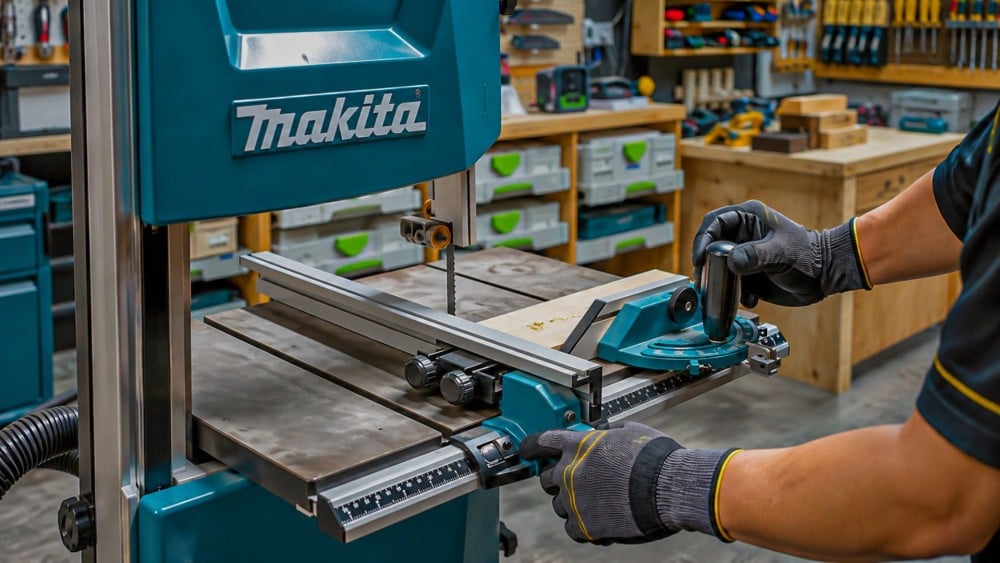
If the blade is sharp and the machine is fully calibrated but still drifts slightly in the same direction, many woodworkers measure the blade's actual drift angle by making a freehand cut along a line to see which way the wood naturally needs to be angled. Then, set the fence to match that angle if your fence model allows angle adjustments. Feeding the wood too fast can also cause the blade to wander, so feed at a pace where the blade cuts naturally without being forced.
Worn wheel tires and bearings make it impossible to keep the band saw running steadily
If you have adjusted tension, tracking, and guides properly but the blade still does not run smoothly, check the band saw's wheels. Tires that are hardened, cracked, peeling, or packed with caked sawdust create an uneven wheel surface, causing the blade to jump or drift back and forth. Worn wheel bearings cause the wheels to wobble, which makes the blade track erratically as well.
To check, unplug the tool, remove the blade, and inspect the tires on both wheels. Use a brush to clear away packed sawdust. If the rubber is cracked or peeling, replace it with the correct model-specific wheel tire. Gently grab the wheel rim and try wiggling it; if the wheel has play or makes a grinding noise when spun, the wheel bearings may be worn—send it to a service center or a technician for replacement.
Steps for setting up a bandsaw safely after changing the blade: before, during, and after adjustment
Before setting up, always unplug the tool. Wear gloves when handling the blade because the teeth are sharp. Install the blade so the teeth point down toward the table on the side facing the operator. Check that the blade is seated on both wheels, and back off all blade guides first.
During setup, set the tension according to the blade width. Rotate the wheels by hand to adjust the blade tracking, then move the side guides and thrust bearings into position. Close all wheel covers before plugging in. Turn on the machine briefly to check it, standing offset from the blade line during the first start.
After setup, lower the upper guide assembly close to the wood surface. Make a test cut on scrap wood before starting the actual work. Wear safety glasses, use a push stick whenever your hands must come close to the blade, and if the manual recommends releasing blade tension during extended non-use, attach a warning tag so the next person remembers to re-tension it before turning the machine on.
If you want to understand how blade speed affects your work, read more at Why is Band Saw Speed Specified in Distance per Minute?
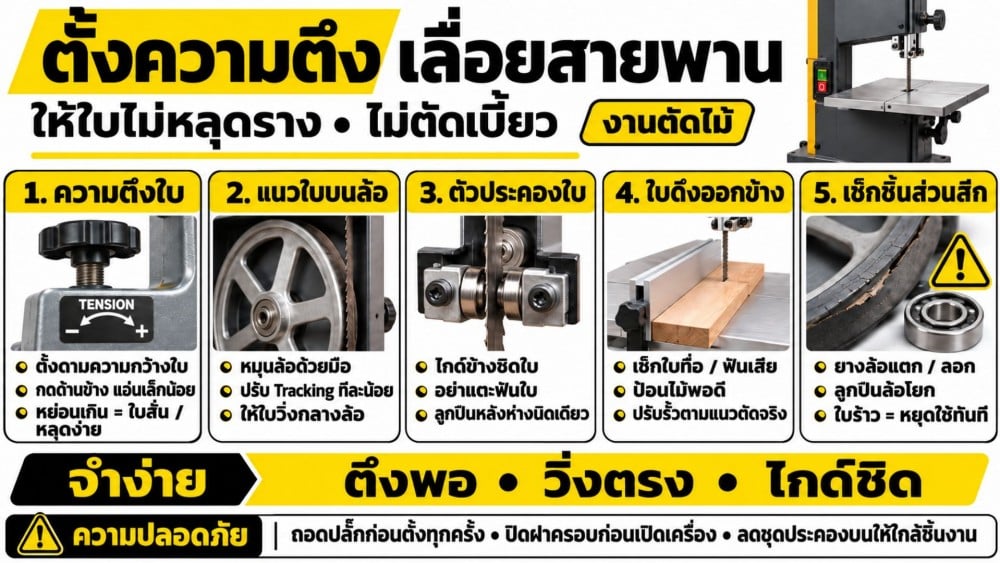
Summary: A bandsaw cuts straight and prevents blade derailment when the blade is properly tensioned, tracks straight, and is supported by guides.
Blade slipping off the wheels, blade wandering, and skewed cuts usually aren't caused by a broken bandsaw, but rather by incomplete machine setup after changing the blade. Whether resawing thick lumber in a furniture shop, cutting intricate curves on small workpieces, or general wood processing, the correct setup sequence helps the blade cut straight and last longer.
What you need to do is set the tension according to the blade width and check it by pressing the side; adjust blade tracking by turning the wheel by hand until the blade tracks consistently; move the side guides close to the blade without touching the teeth; set the rear thrust bearings slightly away from the blade; lower the upper guide assembly close to the wood; replace blades that are dull on one side; adjust the fence to the blade's actual cut line; and inspect the wheel tires and bearings.
Always unplug the machine before touching the blade or making adjustments. Close the wheel covers before turning it on. If you hear a rhythmic clicking sound or see cracks on the blade, stop and replace it immediately.
If you are looking for a machine or blade suited to your work, check out the category Bandsaw at iToolmart