


 EN
 ไทย


Customers Also Purchased


Walk into a tool shop and ask for a carbide bit and the seller will almost always ask what you plan to use it for. That's because this term refers to many different bits with vastly different appearances and applications. Tradesmen who buy the wrong type run into the same issues: an expensive hardened steel drill bit breaks on the very first hole because it was used in an impact drill, or a masonry bit bought for drilling stainless steel won't bite into the material at all.
Carbide bits are the hardest, so they should be able to drill through anything, right? In reality, that is not the case. Carbide (Tungsten Carbide) in this context is much harder than high-speed steel (HSS), but it is also much more brittle. Various bit types are designed to handle different kinds of stress. Using the wrong type might result in failing to penetrate the material and risking bit breakage.
What does the term "carbide bit" refer to? Is it a drill bit? How many types are actually used, what tasks is each suited for, which tools should they be used with, and how do they differ from HSS bits? At what point should you stop using one and replace it?
Why are carbide bits harder than HSS, but more prone to breaking?
Carbide is an extremely hard material, allowing its cutting edge to resist heat and wear much better than high-speed steel. It can cut hard materials like stainless steel or cast iron for extended periods. However, this hardness comes with brittleness—much like a ceramic tile, which is harder than a steel plate but shatters when dropped on the floor, whereas the steel plate simply bends.
HSS bits can flex slightly when encountering vibration or awkward torsional stress. Carbide bits, on the other hand, barely flex at all; if stressed beyond their limit, they chip or snap immediately. Manufacturers therefore produce carbide bits in several forms—some are solid carbide throughout for rigid, smooth rotary cutting, while others feature carbide only at the tip for applications that must withstand impact.
Select a carbide bit matched to the type of force it must endure—whether it is rotary cutting force or impact hammering—and ensure the machine used is stable enough for that specific bit type.
Solid carbide bits for drilling hard steel and stainless steel: use with rigid, stable machines
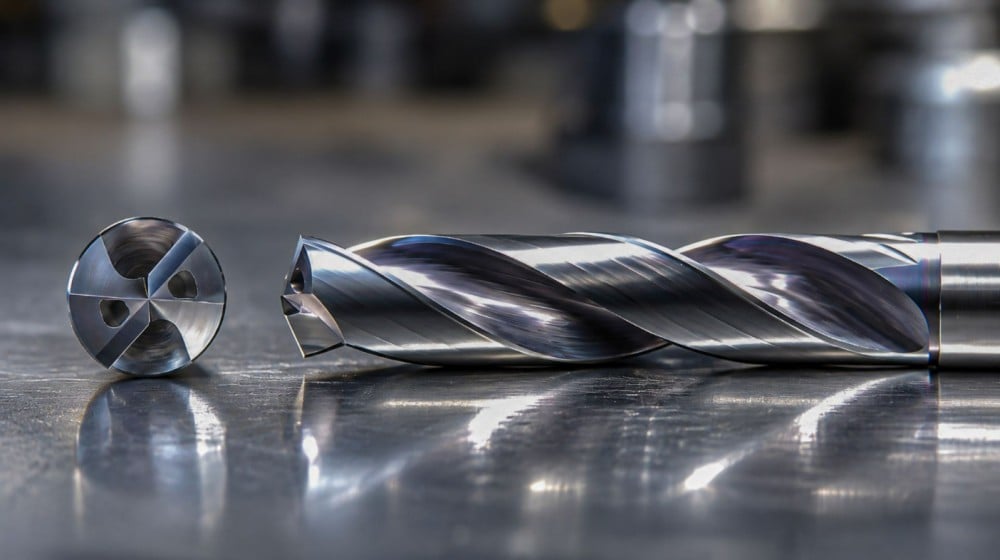
A solid carbide drill bit is a bit made entirely of carbide throughout its body. It is used for drilling hard steel, stainless steel, and cast iron, where HSS bits dull quickly.
Suitable Applications
Ideal for high-volume drilling in hard metals using drill presses, magnetic drills, or machinery that holds the bit securely without runout. These bits produce straight holes and retain a sharp edge for a long time when used in sufficiently rigid machines.
Precautions
Never use solid carbide bits with hammer/impact mode, and avoid using them with handheld drills where your hands may wobble, as vibration and lateral leverage can instantly chip the edge or snap the bit. Secure the workpiece firmly, use the manufacturer-recommended speed and feed rates, and always wear safety glasses, as shattering carbide fragments fly off with significant force.
Braze-tipped carbide bits for masonry drilling: designed to withstand impact
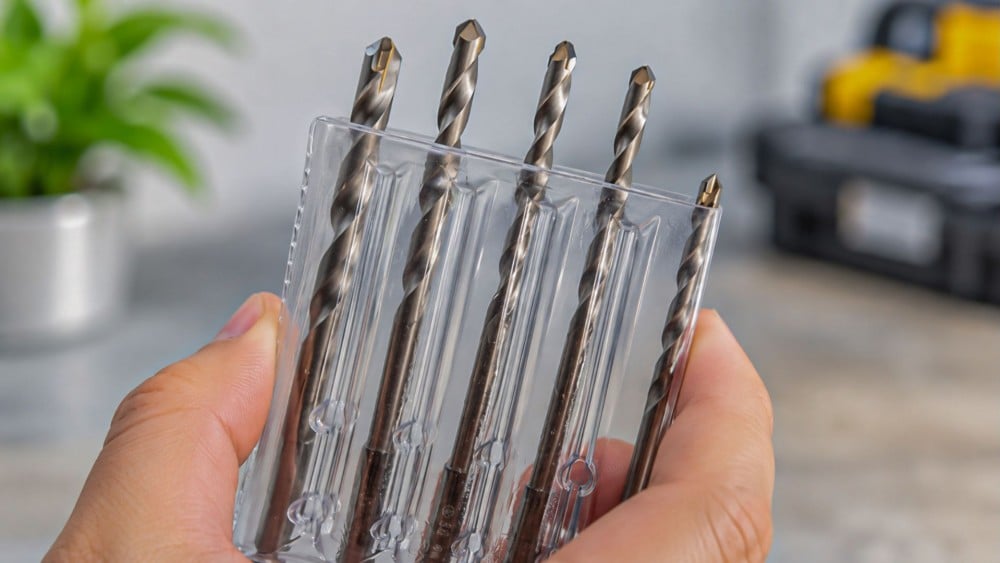
Most masonry bits—such as SDS shank bits for rotary hammers or round-shank masonry bits—are carbide bits featuring a carbide tip brazed onto a tougher, more ductile steel body.
Why can this type be used with hammer/impact mode?
The carbide tip pulverizes the masonry, while the tough steel body absorbs the vibration and torsional forces instead. The bit can thus endure impact, unlike solid carbide bits, which are brittle throughout. Braze-tipped bits are therefore the primary choice for drilling into plaster walls, brick, and concrete.
Use with impact drills or rotary hammers in hammer drilling mode. Do not use for drilling metal, as this tip geometry is not ground to shear through metal. If you hit rebar while drilling concrete, stop and change your approach; do not force it, or the carbide tip will chip.
However, carbide-tipped drill bits for tile and glass must be used without impact
Some drill bits for tile and glass are carbide bits ground with a spear-point tip, designed to gradually scrape away at the hard, slick surface to form a hole.
The key principle is to always turn off the hammer/impact mode, start drilling at low RPM, apply gentle and steady pressure, and drip water onto the bit tip periodically to reduce heat—taking care not to let water enter the power tool.
Exercise extra caution when using corded electric drills. Engaging hammer mode on tiles will crack the entire tile and cause the carbide tip to chip rapidly. For exceptionally hard tiles, such as certain porcelain varieties, you may need to use a different type of bit as recommended by the tile manufacturer.
Carbide rotary burrs are used for milling and dressing metal, not for drilling holes
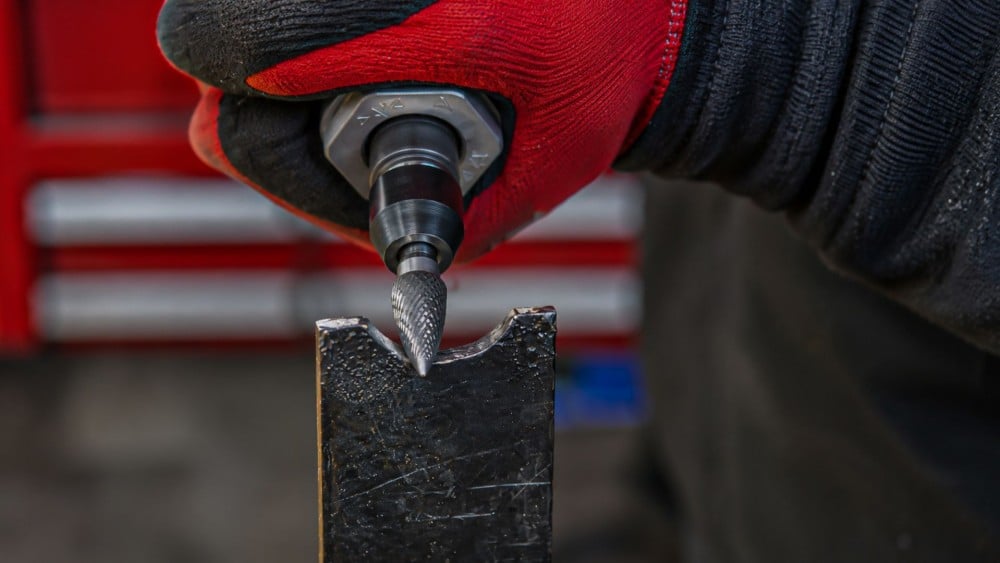
A carbide rotary burr (Carbide Burr) is a carbide bit with cutting flutes all around, used with die grinders or straight grinders Used for deburring, enlarging holes, dressing weld seams, or shaping metal workpieces
Use the speed specified by the manufacturer for the head size and shape, keep the burr moving continuously without dwelling on a single spot, and do not impact or pry the workpiece with the tip, as the cutting flutes can chip.
Always wear safety glasses or a face shield, as metal swarf cut out is sharp and hot. Beginners should read the precautions first. Misusing carbide burrs risks rapid damage: 5 don'ts every beginner should know
Carbide router bits and hole saws use carbide tips to maintain long-lasting sharpness
Besides drill bits and rotary burrs, there are two other cutting tool groups that use carbide at their cutting edges
Carbide-tipped router bits for woodworking
Router bits using carbide at the cutting edge are suitable for hardwoods, plywood, and glue-heavy engineered boards that quickly dull steel bits. The key rules are: run at the RPM specified by the manufacturer for the bit size, feed against the direction of rotation correctly, and avoid deep passes in a single cut, as the carbide edge can chip under sudden kickback.
Carbide-tipped hole saws for sheet metal and stainless steel
Hole saws with carbide teeth (TCT) are carbide bits used for drilling large holes in sheet metal, stainless steel, or electrical enclosures faster and staying sharp longer than standard steel-toothed hole saws. For this type of bit, turn off the impact mode, use low to medium RPM, clamp the workpiece firmly, and hold the tool with both hands, because when the teeth fully engage all around, the rotational kickback torque on your hands can be severe.
Carbide bits vs. HSS bits: which to choose when both can be used
Know Before You Choose: What Is an HSS Drill Bit and What Can It Drill?? For drilling standard, non-thick steel in small hole quantities using a handheld drill, HSS bits remain the more suitable choice because they handle hand-induced vibration better and are more economical.
Carbide bits are better when drilling hard materials that quickly dull HSS bits, drilling in high volumes, or requiring hole accuracy on rigid, stable machinery.
Choose based on the combined factors of material, production volume, and machine rigidity—not solely on the hardness of the bit. Read more at How different are drill bits for wood vs. metal? Can they be used interchangeably?
Can carbide bits be used with handheld cordless drills?
Yes, when using brazed-tip masonry bits, spear-point tile bits, or carbide-tipped hole saws that the manufacturer specifies as compatible with handheld power tools. Set the correct mode for the task, hold the tool steady, use an auxiliary handle if available, and secure the workpiece firmly.
It is not recommended when using solid carbide drill bits for drilling metal, because even a slight wobble of your hand or a sudden jerk when the bit breaks through the workpiece is enough to break the bit. If you must drill hard metal with a handheld tool, use drill bits specifically designed by the manufacturer for handheld tools, or switch to a drill press.
Signs that you must stop using a carbide drill bit and replace it with a new one
If the cutting edge or carbide tip is chipped, visible cracks appear, the brazed tip is loose or wobbly, the drill bit is bent, runs visibly off-center/wobbly, or if there is smoke, high-pitched screeching, and a burning smell despite using normal speed and feed pressure, stop using it immediately.
A cracked or chipped carbide drill bit can shatter mid-operation, and the fragments can fly off with great force. A drill bit worth a few hundred baht is not worth the risk of eye injury. Some dull drill bits that are not yet chipped can be sent to a sharpening shop, but let a carbide sharpening specialist evaluate them.
If smoke comes out while drilling metal with a carbide drill bit and you are unsure what to do next, read more at Drill bit smoking while drilling steel: should you stop drilling or not?
Conclusion: Choose carbide drill bits that match the load they endure, and use them with the right type of machine.
A carbide drill bit is not a single tool that can drill everything, but rather a group of bits utilizing a hard yet brittle material in different forms—whether drilling stainless steel on a drill press, drilling concrete walls with a rotary hammer, or grinding weld beads with a small die grinder. Choosing the wrong type will result in failure to drill or the bit snapping on the very first hole.
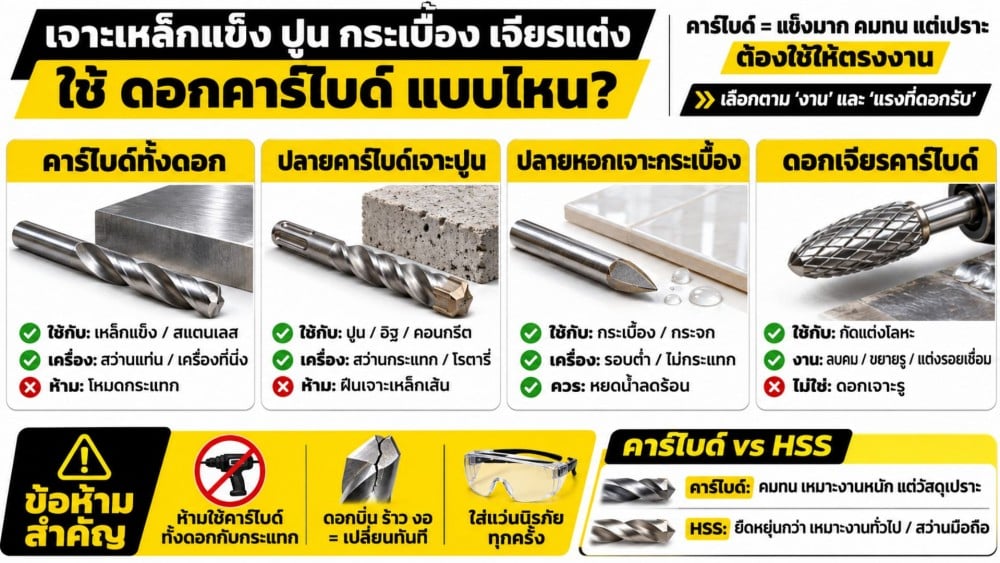
What you need to do is use solid carbide with hard metals on a stable machine without impact mode, use brazed carbide tipped bits for masonry in hammer mode, use spear-point bits for tiles with hammer mode off and at low RPM, use carbide burrs for metal carving and deburring, choose carbide-tipped router bits and hole saws when you need long-lasting sharpness, and switch back to HSS drill bits for lighter tasks using handheld power tools.
The most important rule is never use solid carbide drill bits in impact/hammer mode, always wear safety glasses, and whenever a bit is chipped, cracked, bent, or runs out of true, replace it immediately without hesitation.
Looking for carbide bit drill bits, cutters, and burrs suitable for your specific application? You can check them out right away at iToolmart, starting from the Drill Bits and Hole Saws category, Carbide Burrs category, and Router Bits category.


