


 EN
 ไทย


Customers Also Purchased


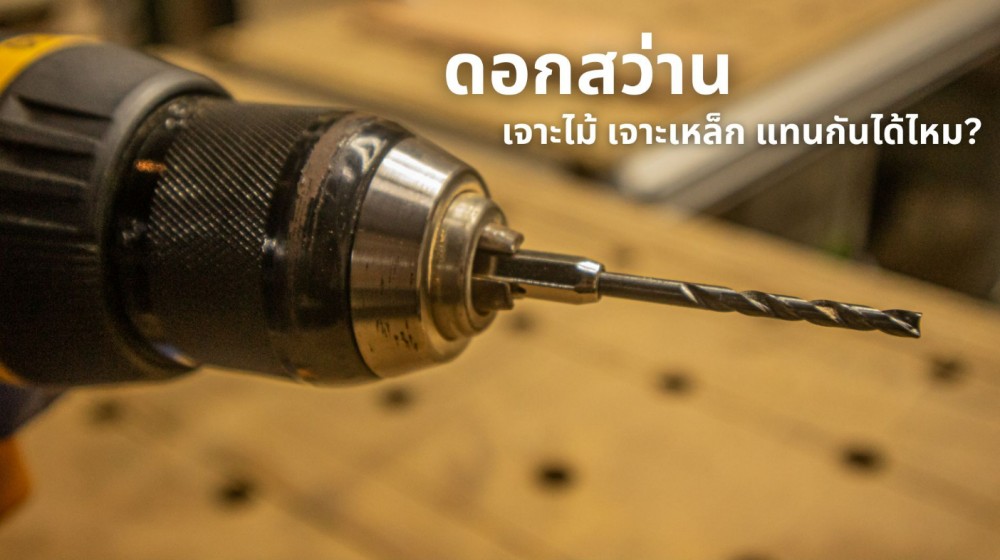
Whenever I pick up a drill to work on wood or metal—which are the most common materials we encounter—the very first question that always pops into my mind is, “Drill Bit Does the drill bit I have really work for this job?” I think quite a few people have probably tried using a metal drill bit on wood, or a wood drill bit on metal. The results vary—sometimes it works, sometimes it doesn't, or sometimes it ruins the drill bit entirely. The question is: how are these drill bits really different, and what happens if you interchange them?
Reading up to this point, many of you probably already have an answer, right? "Drill bits are clearly categorized; swap them, and they'll break!" Or maybe read the specs carefully, because sometimes a single bit can drill both wood and metal? So, what is the real answer?
In this article, we'll demystify these questions. If you're still wondering why drill bits for wood and metal need to be separate types, to what extent they can be used interchangeably (or if at all), or how using the wrong bit affects both work quality and tool lifespan—you're guaranteed to get a clearer answer once you finish reading.
Why Do Drill Bits Need to Be Categorized?
A drill bit is an accessory attached to a drill—whether a cordless drill, electric drill, or drill press—to drill holes into various materials. The size, shape, and material of the drill bit directly affect drilling performance, including speed, smoothness, and service life.
What Do Wood Drill Bits Look Like?
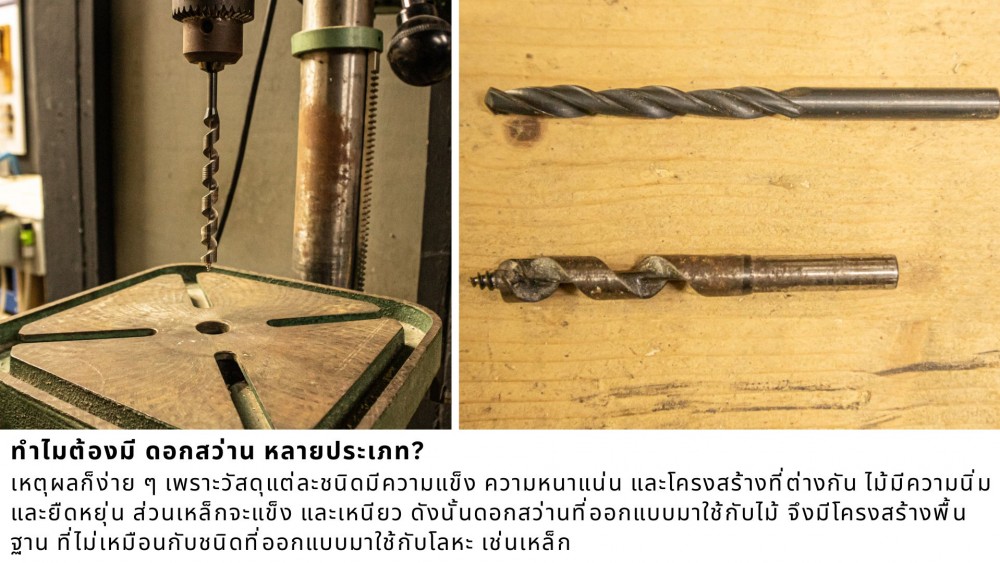
Drill bits for wood are designed to cut through wood fibers quickly and cleanly. They are typically made from carbon steel, which is sufficient for woodworking since wood is not as hard as metal. A distinct feature of a wood drill bit is a sharp center brad point tip to help pinpoint the drilling spot and prevent slipping, along with side cutting spurs that help bore out the wood cleanly.
Some types of wood drill bits, such as Forstner bits, can drill ultra-clean flat-bottomed blind holes, or Auger bits, which feature a screw tip that pulls the bit into the work, making them ideal for thick timber.
Simply put, wood drill bits focus on speed and a clean finish. They don't need high heat resistance because wood doesn't generate as much friction as metal.
What Do Metal Drill Bits Look Like?
Metal drill bits are usually types like HSS (High Speed Steel) which are made of high-grade steel to better withstand heat. A noticeable feature is that the tip does not have a sharp brad point, but rather a cutting edge ground to cut easily into metal. Some models may have special coatings such as Titanium or Cobalt to increase durability. Therefore, metal drill bits are designed to withstand high pressure and heat when drilling into hard materials like metal.
Know before you choose: What is an HSS drill bit and what can it drill? Metal drilling emphasizes durability and requires pressure paired with the proper rotational speed. Using the wrong type of drill bit can cause cutting edge burnout or premature wear.
Can wood and metal drill bits be used interchangeably?
This question is something that confused me for a long time at first as well, and my straightforward answer is: They can be used interchangeably in some cases, but it's not recommended. Because using a drill bit designed for one material on another can result in poor work quality, wasted time, and the risk of wearing out the drill bit faster. Especially for work requiring precision, such as furniture or load-bearing structural work, the negative impact may be greater than expected.
Choosing the wrong type of drill bit affects not only the aesthetics of the work, but also safety. If the drill bit slips, breaks midway through the job, or overheats and burns, it could cause an accident for the user. Therefore, even if they can occasionally substitute for each other, it is a risky choice and not worth trying. Let's take a look at why I don't recommend it.
If you use a metal drill bit to drill wood
most of the time it can drill through, because metal is harder than wood. However, the problem is that the finish will not be as smooth as using a wood drill bit. The lack of a sharp brad point at the tip makes it harder to start drilling, and the resulting hole may not be clean or the surrounding wood may splinter. Especially with furniture or softwood, the results can look unappealing and waste time repairing afterwards.
If you use a wood drill bit to drill steel
I can tell you that it is almost impossible because wood drill bits are not designed to cut through hard steel. The result is that the cutting edge will wear out very quickly, may burn, or even break, plus it won't penetrate at all. Even if it can occasionally scratch the metal surface, it cannot actually drill through and will immediately reduce the drill bit's lifespan.
Can a Multi-Material drill bit be used for both wood and steel?
Besides drill bits specifically separated for wood and steel, there are now multi-material drill bits designed to drill various materials, including wood, plastic, aluminum, and thin steel. This is very convenient for general household tasks where you don't want to keep switching bits back and forth.
Even so, it must be admitted that performance may not be as good as dedicated bits. For example, it can drill wood, but the hole may not be smooth, or it can drill steel, but it will take much longer. Therefore, although it is a versatile option, if you are doing work that truly demands high quality, it is still better to choose a drill bit specifically suited for the material.
In conclusion, You can use a steel drill bit for wood, but never use a wood drill bit for steel And even though it can be substituted, if it's a woodworking job that requires neatness and precision, choosing the right type of drill bit is best
Why must you choose the right type of drill bit?
Lifespan of drill bits
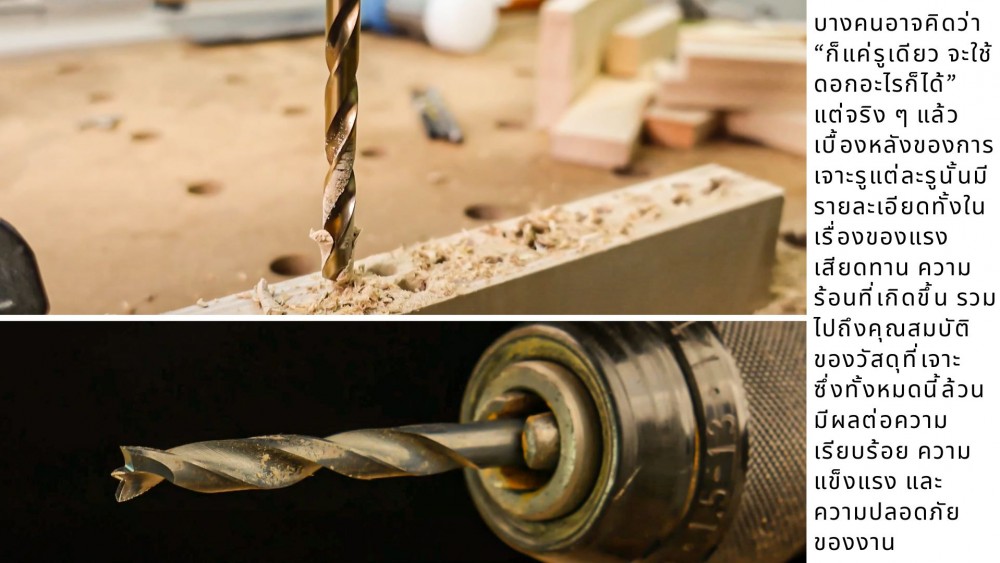
Drilling hard materials with a bit not directly designed for them causes accumulated heat and friction to accelerate dulling and wear much faster than normal. That means you have to spend money on new bits frequently, whereas their lifespan could actually be extended much longer by choosing the right type of bit.
Neatness of installation
Woodwork drilled with a steel bit may also yield poor results, such as wood splintering or loose assemblies. The lack of a sharp centering point often leads to misaligned holes or tear-out at the edges, making furniture or workpieces look messy. It's not just wood, either; even in metalwork, using an unsuitable bit causes rough edges, creates metal burrs, and wastes time on additional deburring and finishing.
Safety
A drill bit unsuitable for the task can kick back, snap, or produce smoke, which poses a direct hazard to the user. If the bit snaps while spinning at high speeds, flying fragments can hit your hands or body. Furthermore, if a bit overheats and smokes, it is a sign of degradation that can cause damage to both the drill and the operator. Therefore, safety is another crucial factor that must never be overlooked.
Choosing the right drill bit for the job
The principles of choosing a drill bit are not complicated. If you understand them properly from the start, your results will noticeably improve. Beginners often use whatever bit they already have without considering the material being drilled, resulting in ruined workpieces and rapidly worn bits. In this section, we will look step-by-step at the factors that will help you make the best choice.
Material being drilled
- Wood: Use wood drill bits with a sharp center point, such as Brad Point or Forstner bits, to help guide and create smooth, neat holes.
- Metal: Use HSS bits or cobalt/titanium-coated bits that offer good resistance to heat and friction.
- Multipurpose bits: Multi-material drill bits can be used on wood, light metals, and other materials. They are suitable for general tasks that require convenience, though their performance might not match dedicated drill bits.
Material thickness
For thick wood, use an auger bit that pulls itself in, allowing you to drill deeply without applying much pressure. It is suitable for structural timber work or drilling through large wooden planks because the spiral flutes guide the bit deeper smoothly without skewing the hole or chipping the edges.
Thick steel may require high heat-resistant cobalt drill bits, which are often used for drilling hard steel or heavy alloy metals. Cobalt bits withstand the friction and heat generated by continuous drilling better than standard bits, reducing the risk of burning the cutting edge or premature wear, while delivering precise holes and long-term durability.
Intended application
- For general DIY work, an HSS drill bit set is sufficient, as it can drill both wood and light metals.
- For wooden furniture work, dedicated wood drill bits should be used to achieve smooth and clean holes.
- For industrial work, choose high-quality bits designed for continuous operation.
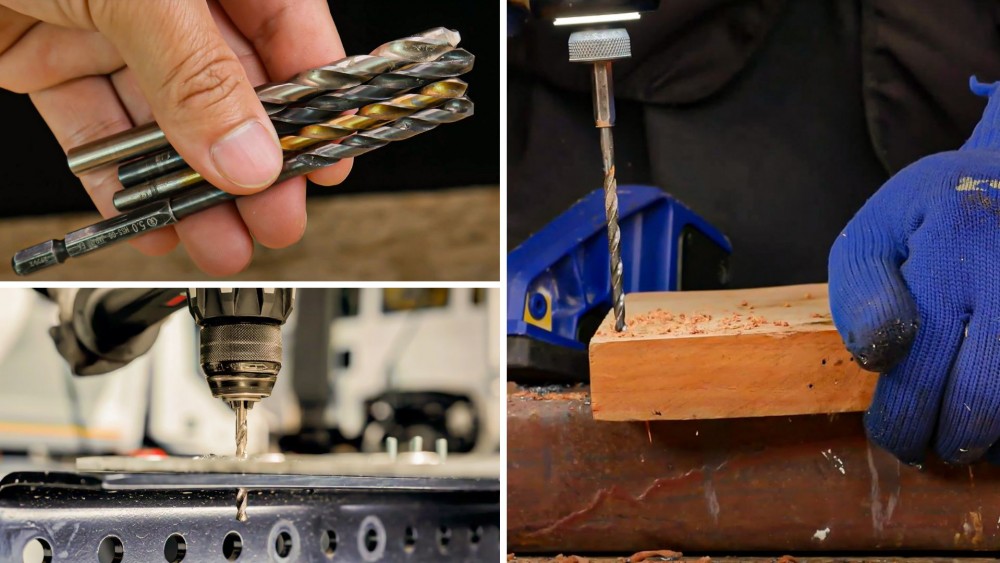
Summary: Wood Drill Bits vs Metal Drill Bits
Now that we have seen how wood drill bits and metal drill bits differ in design, manufacturing materials, and workpiece results, here is a simple summary:
- Wood drill bits: Characterized by a sharp center point, focusing on speed, clean finishes, and drilling wood smoothly.
- Metal drill bits: Non-pointed tips with cutting angle edges, made from HSS or alloys, high heat resistance, focused on strength, used on hard materials; can drill wood but with limitations.
- Interchangeable in some cases: metal bits can drill wood, but it is not recommended. Because the results differ and leave an untidy finish. However, never use wood drill bits on metal, as it will ruin the bit and create safety hazards.
If you want great results, safety, and undamaged equipment, the answer is to always choose Drill Bit the right type for the job.