


 EN
 ไทย


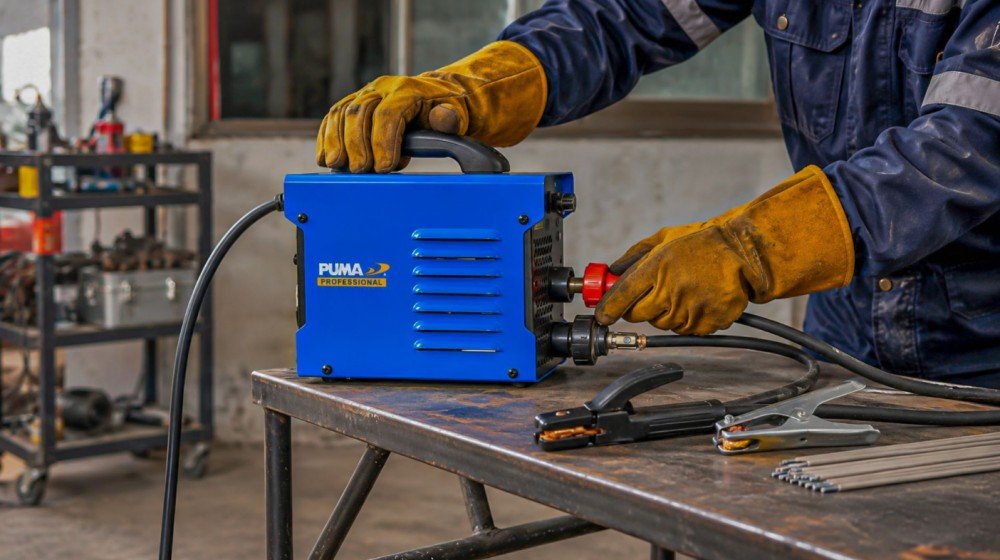
Repairing thin hollow section fence gates, assembling shelving frames, or patching rusted steel mesh are tasks where many people simply grab Welding machine the same welding machine used for thick angle iron, leave the current setting unchanged, and strike the electrode. A few seconds later, instead of a weld seam, you get a gaping hole. When you try to add filler metal to close the hole, it only gets wider, and the workpiece starts to warp until it no longer fits together properly.
When burn-through occurs, the first thing many welders tend to do is turn the current all the way down, only to encounter a new problem: the electrode sticks to the workpiece and the weld lacks proper penetration. Because if you ask whether simply reducing the current is enough, the answer is reducing the current alone is not enough, because burn-through in thin steel is caused by heat accumulating from multiple factors combined: amperage, electrode/wire size, travel speed, joint gap, and the dwell time heat stays at a single spot.
When welding thin steel, consider each factor one by one: from choosing the welding process, electrode/wire size, joint fit-up, travel rhythm, to controlling workpiece distortion, and knowing when to stop instead of forcing the weld.
Why does a welding machine produce beautiful welds on thick steel, but burns through thin steel?
During welding, the arc generates intense heat concentrated at a single point. The metal beneath the arc melts into a weld pool. Thick steel has enough surrounding mass to dissipate heat quickly, allowing the weld pool to maintain its shape. Thin steel, however, lacks mass, so the heat has nowhere to go; the weld pool melts deeper and burns through to the other side within just a few seconds.
Imagine holding a lighter under an aluminum tray: a thick tray merely warms up, while thin foil burns through immediately. Same flame, but the materials have vastly different heat absorption capacities. A welding machine works the same way: a current setting that is perfect for thick steel is far too hot for thin steel.
Therefore, welding thin steel successfully with a welder requires low heat input and fast heat dissipation—not just lowering the current.
Choose the right welding process for thin steel before thinking about current settings
Many welding machines support more than one process, and each process manages heat differently.
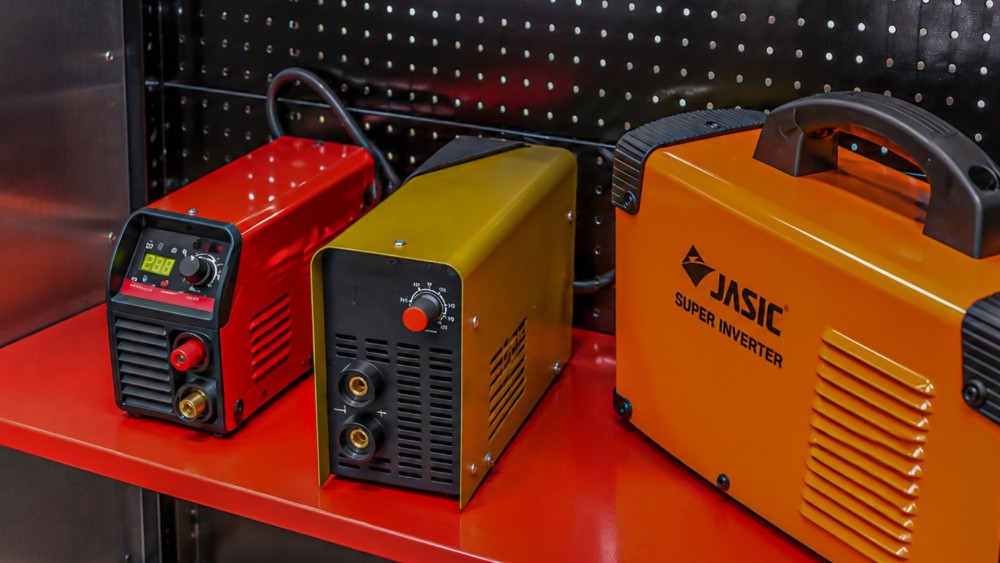
Stick welding works, but requires small electrodes
Shielded metal arc welding or stick welding (MMA/Stick Welding) can weld thin steel, but it is the hardest to control because you must manually maintain the arc length at all times and use very low current, which causes the arc to extinguish easily. Choose a small electrode because it can weld at lower amperage and deposits less filler metal at a time.
If you are still unsure how to set the current for each process, read more at 5 Factors for Selecting Welding Current for Each Type of Welding Machine
MIG and TIG offer easier heat control on thin sheets
MIG welding machines feed a thin wire continuously, allowing for faster travel speeds and lower heat input compared to stick welding for the same job. Meanwhile, TIG welders provide the most precise heat control, but require higher skill. If thin steel work is your routine, a welding machine with MIG capability is the least strenuous choice.
Wide joint gaps cause the welding machine to burn through more easily than high current.
A common symptom is welding well in the middle of the seam, but as soon as the gap widens between the two pieces, a hole immediately appears. The cause is that there is no base metal at the gap for the weld pool to latch onto, so the arc from the welding machine melts both edges and pushes them further apart.
Fit the joints tightly together before striking even a single tack weld.
The solution is to cut and grind the edges to fit as flush as possible, using clamps or a vise to hold them firmly before starting to tack. If the workpiece requires a gap, switch to a lap joint by placing one sheet over the other, as this type of joint provides two layers of metal to handle the heat.
Use a backing plate to help absorb heat.
Placing a thick copper or aluminum plate underneath the weld seam helps draw heat away from the thin sheet and supports the weld pool to prevent burn-through. The molten metal will not stick to this type of backing plate, allowing it to be removed after welding. It is an inexpensive accessory that makes working with thin sheets much easier.
A fast travel speed and short weld intervals are the keys to using a welding machine on thin sheet metal.
Thin sheet metal burns through because heat lingers in one spot for too long. If your travel speed is too slow or you pause to manipulate the weld pool as you would with thick steel, that spot will overheat and blow through.
Tack-weld first, then weld in alternating short intervals.
The principle is to make small tack welds spaced along the entire joint first. Then, weld in short passes, alternating between the start and end of the seam instead of running a single continuous bead from start to finish. This gives freshly welded areas time to cool down while you weld elsewhere. This method simultaneously reduces both burn-through and workpiece distortion.
Angle the electrode toward the thicker workpiece.
If you are welding a thin sheet to a thicker piece of steel, such as attaching a cover plate to an angle iron frame, direct the arc primarily toward the thicker piece and let the weld pool wash over to touch the edge of the thin sheet naturally. The thicker piece absorbs most of the heat, preventing the edge of the thin sheet from melting away prematurely.
Test-set your welding machine on scrap metal of the same type before starting the actual workpiece.
The ideal current setting varies for each piece of thin steel, depending on thickness, joint type, and the welding process used. The most effective approach is to find scrap metal of the exact same thickness to run test beads first. Start at a low current, then gradually increase it until the weld pool penetrates properly without burning through.
Record the obtained settings on the side of the welding machine. The next time you encounter a similar job, you won't have to waste actual workpieces on trial and error.
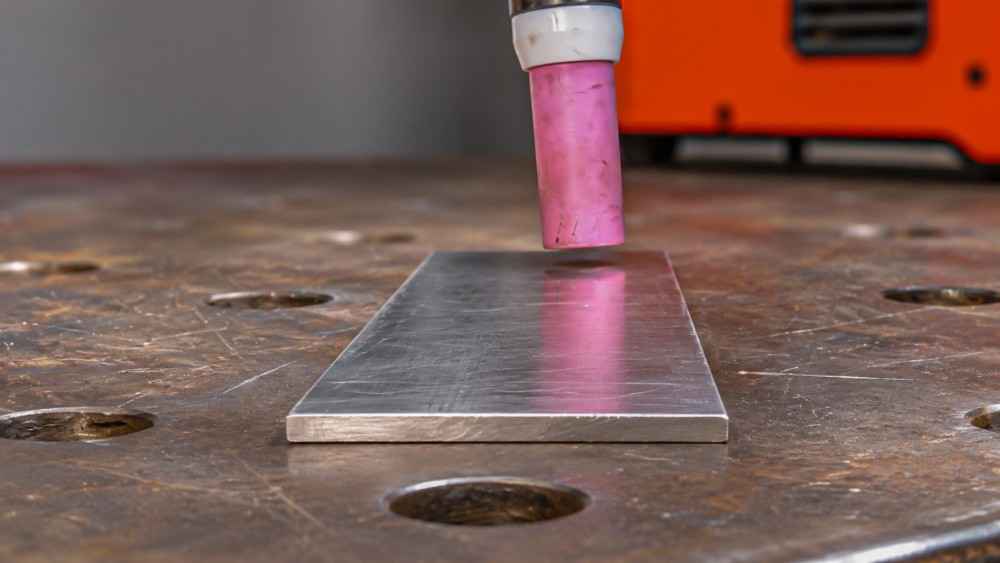
A warped workpiece after welding is the result of excess heat left behind by the welding machine.
Even without burn-through, thin sheets often buckle or warp after welding because the heated metal expands and then contracts unevenly across the sheet as it cools. The solution is to keep the workpiece clamped until it cools, alternate welding locations to distribute the heat, and allow it to cool naturally.
Do not pour water to speed up cooling. Rapid contraction can worsen warping and cause the weld bead to crack. For projects that require flat surfaces, it is better to take the time to weld in small intervals and wait, rather than rushing through the weld and having to straighten it out later.
Bead characteristics tell you whether the welding machine is running too hot or too cold.
If the backside of the sheet shows sagging droplets of metal or the edges of the bead are grooved too deeply (undercut), it means there is excessive heat. Reduce the current on the welding machine, increase travel speed, or switch to a smaller diameter electrode/wire.
If the weld bead sits convex on the surface without penetrating, or if the electrode frequently sticks to the workpiece, it means the heat is too low. Increase the welder current slightly instead of slowing down your travel speed, because moving slower on thin sheets will only lead to burn-through.
If the weld bead has tiny pinholes despite correct settings, check the workpiece surface for rust, paint, or oil stains, and check if the electrode is damp, because this kind of issue does not stem from current and Defective welding electrodes can cause burn-through holes in the weld bead.
How thin is sheet metal that you shouldn't force using an MMA/stick welder on?
It is feasible when it's box tubing or sheet metal that still has enough thickness. A welder who can control the arc length well, uses a small electrode, and welds in tack spots and short intervals can produce workable results.
Do not force it when the sheet is so thin that a single tack weld burns through every time, even when the current is reduced to the point where the arc starts dying; on galvanized sheets or corroded sheets with very little base metal left; and on watertight or cosmetic jobs such as water tanks or vehicle bodies. For these jobs, switch to a MIG or TIG welder, or use alternative fastening methods like rivets or screws. For sheets corroded down to thin metal, cut out the corroded section and patch with new metal rather than trying to build up weld on the remaining thin base metal.
Steps for welding thin metal with a welder safely
Before welding: Clear flammable items from around the area because sparks fly farther than you think. Keep a fire extinguisher close at hand. Grind the surface clean of rust, paint, and oil. Clamp the ground clamp close to the weld seam securely on clean metal. If you haven't noticed how much impact the ground clamp has, read more at Using a Welder: Why You Need a Good Ground Clamp
During welding: Wear a welding helmet suitable for the process used, leather gloves, and non-synthetic long-sleeve clothing. Weld in a well-ventilated area. If it's galvanized or painted steel, grind off the coating first and take extra precautions against fumes.
After welding: Turn off the welder and unplug it when finished. Do not touch the workpiece with bare hands, as thin sheets that look cool may still be hot enough to blister skin. Walk around to inspect the area once more to ensure no embers are smoldering in rags or wood scraps.
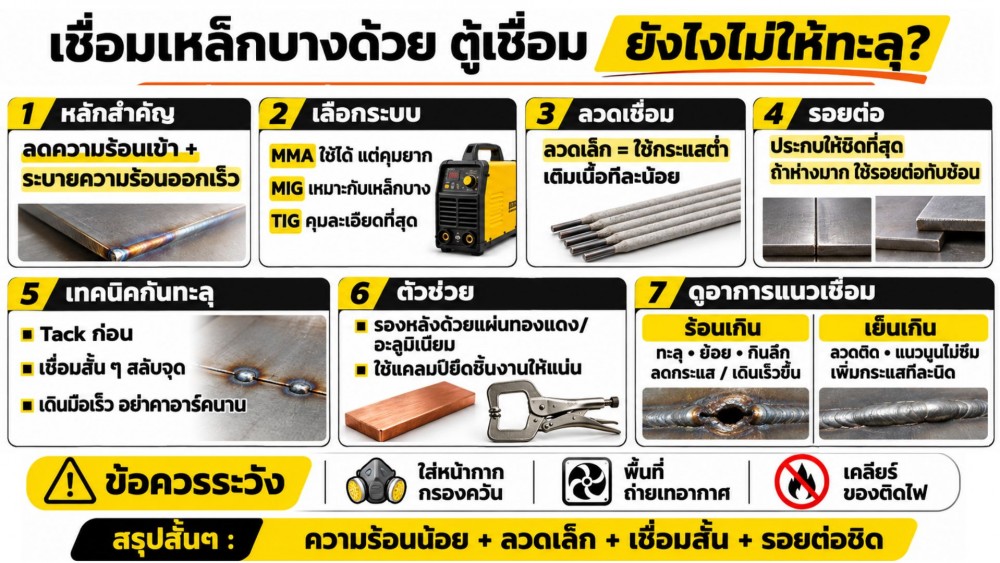
Summary: Use a welder to bring heat in low and dissipate it fast
Thin metal burns through not just because the welder is too powerful, but because heat is introduced faster than the base metal can dissipate it. Whether repairing square tube gate doors, joining shelving frames, or patching corroded mesh, once heat is controlled, welds on thin sheets can turn out solid and smooth.
What you need to do is: choose the right system, use small electrodes when stick welding, fit joints tightly or switch to lap joints, use a copper or aluminum backing plate, tack weld first and then weld in short, alternating intervals, angle the arc toward the thicker piece, clamp the workpiece until cool, and read the weld bead to fine-tune the current gradually.
When the sheet is so thin that even a single tack burns through every time, or for watertight applications, switch the system or change the fastening method. Always clear flammable materials before welding, and grind off surface coatings before welding plated or painted steel.
If you are looking for a welder that makes welding thin metal easier, check out models with MIG capability in the Welding Machines category. Welding machine Inverter welders, along with your choice of welding cables and torch heads suited for the job.