


 EN
 ไทย


Customers Also Purchased
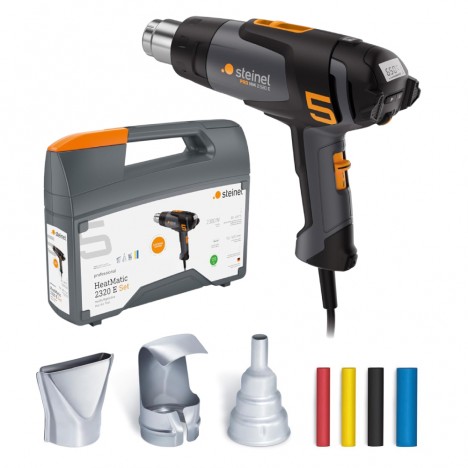
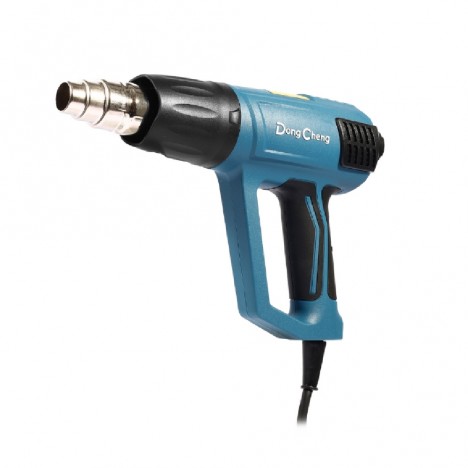
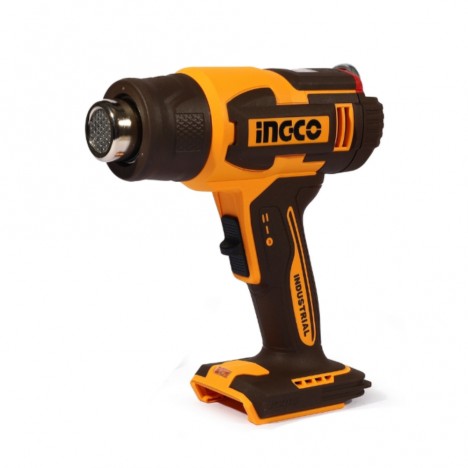
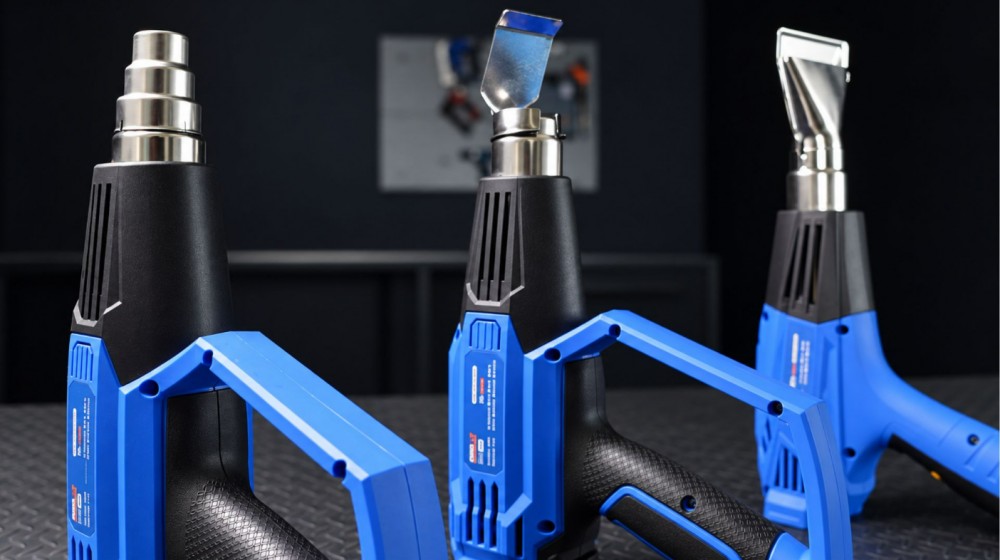
Stripping old paint from a wooden window frame at home, holding Heat Guns Aiming it for a short while, the paint started bubbling nicely, but then a sharp crack came from the edge near the glass. A long fracture ran right through the pane. Turning back to look at the tool case, the 4–5 included nozzles were still sitting in their plastic bags, completely unused!
This situation might stem from a misunderstanding, much like Does the temperature shown on a heat gun equal the actual heat received by the workpiece? Thinking that nozzles are just bonus accessories to make the purchase seem like a good value, and that using the bare nozzle is just as hot anyway, or "Why bother putting one on?" The truth is, while the heat level is indeed the same, the heat lands in entirely different places. A bare nozzle blows hot air in a broad, circular stream that disperses all around. Consequently, areas you don't want heated get blasted as well. Most ruined workpieces are not caused by excessive heat, but by heat applied to the wrong spot.
Therefore, we will explore each type of nozzle that can be attached, removed, and swapped on a heat gun to see where each directs the hot air, what tasks it is suited for, what tasks it is not suited for, including areas where you shouldn't force heat application even if you have every nozzle type on hand.
Why do heat guns need multiple types of nozzles?
Inside a heat gun, there are only two main components working together: a heating element and a fan. The fan draws air in from the rear of the tool, pushes it through the heating element, and expels it through the front barrel. It operates on the same principle as a hair dryer, but a heat gun is many times hotter—hot enough to blister paint, soften plastics, and loosen adhesives in just a few seconds.
The function of a heat gun nozzle is to concentrate, spread, or redirect the airflow—much like a garden hose nozzle where the water comes from the same tap, but you can adjust it to shoot a direct jet or spray a wide fan. The difference is that spraying water in the wrong spot just gets things wet, but directing a heat gun at the wrong spot can cause adjacent objects to burn, melt, or crack instantly.
Nozzles determine exactly where the heat from a heat gun lands. Before choosing which nozzle to attach, ask yourself: which specific area do I want heated, and which areas must not get hot?
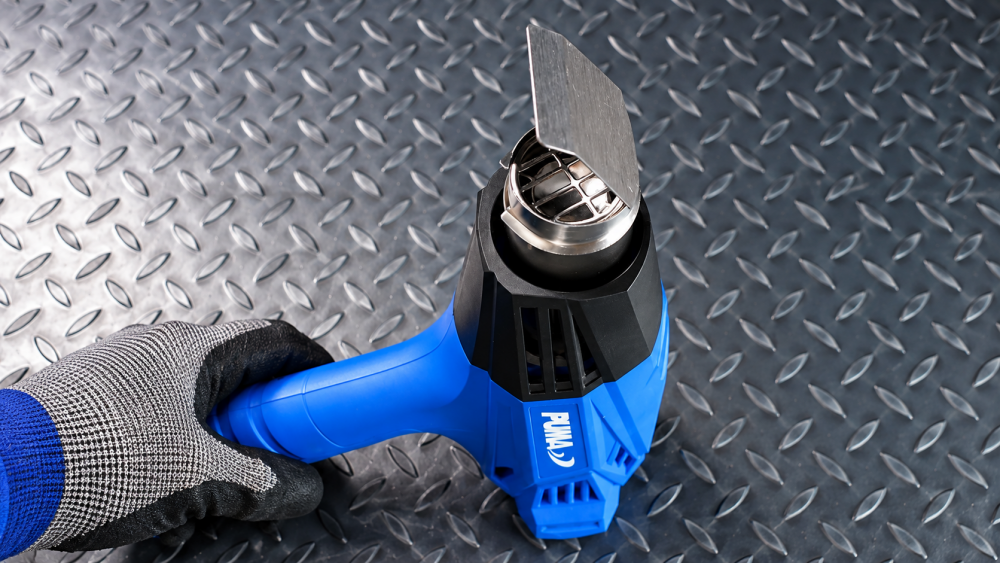
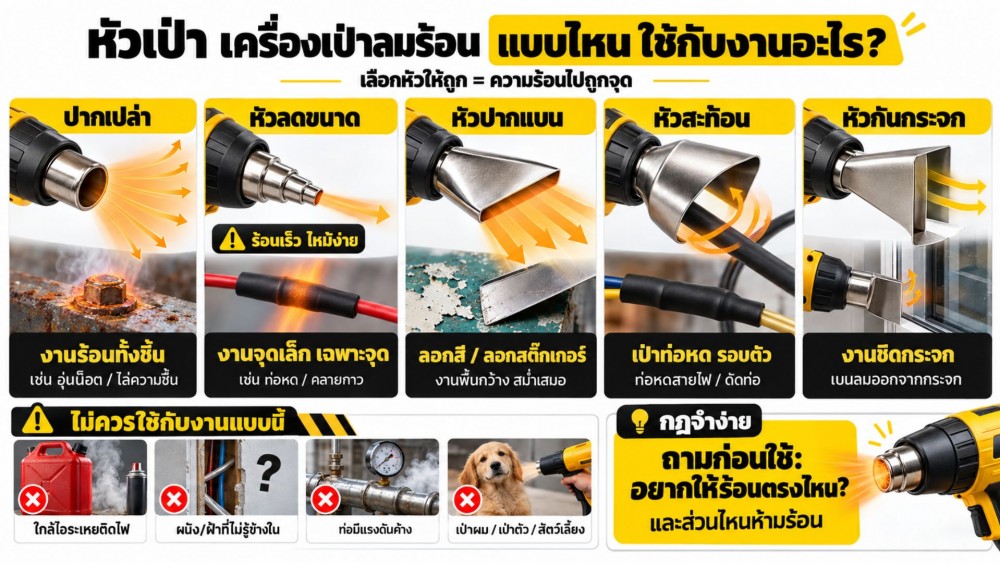
Bare Heat Gun Nozzle: For Entire-Workpiece Heating, Not Near Fragile Objects
Airflow from a bare heat gun nozzle comes out in a circular column—hottest at the center and fanning outward as it gets further from the barrel. This pattern is ideal for jobs where the entire workpiece can tolerate uniform heat, such as removing moisture from wood surfaces before painting, warming up rusted, seized nuts, or accelerating the drying of adhesives and putty.
Problems arise when using a bare nozzle on jobs where heat-sensitive items are nearby. The spreading airflow can easily hit adjacent rubber seals, wiring, plastic, or glass without you noticing, since the hot air from a heat gun is colorless with no visible flame. Read more in the article: Heat guns are easy to use, but require caution? What should you watch out for?
You should only use a bare nozzle when there is nothing that can melt or crack within a handspan of the workpiece. If there is, switch to a directional nozzle instead. Do not try to shield areas using your hands or scrap paper.
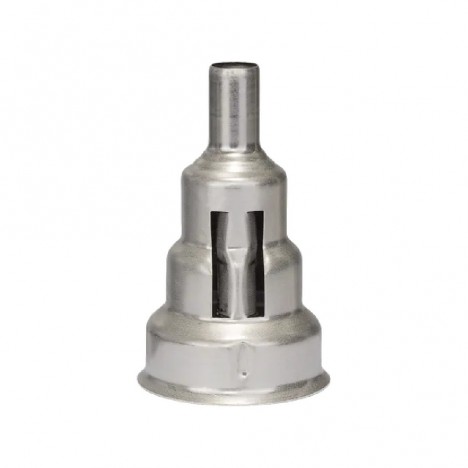
Reduction nozzles let heat guns target pinpoint spots, but burn workpieces the most easily
A reduction nozzle is a conical attachment that narrows the opening. The same volume of hot air is concentrated into a narrow circle, causing that spot to heat up extremely fast. It is designed for tasks requiring pinpoint heat, such as loosening adhesive at workpiece corners, shrinking heat-shrink tubing on a single wire within a tight bundle, or heating stubborn screws.
Heat that once spread broadly is now concentrated on a single point. If you still maintain the same distance and dwell time as you would with a bare nozzle, the surface of the workpiece will burn before the interior can even warm up. The solution is to lower the heat setting by one step first, hold the tool further away than usual, and keep your hand moving continuously—never hold still on a single spot.
Additionally, with a narrower opening, holding the nozzle too close to the surface prevents hot air from escaping, causing back-pressure to blow heat back into the tool. The heating element will accumulate excessive heat until the thermal cut-out triggers, shutting off the tool mid-task. Always maintain adequate clearance so air can escape freely to the sides.
A flat nozzle helps a heat gun strip paint and peel stickers in wide bands without uneven hot spots.
A flat nozzle, also known by some technicians as a fishtail nozzle, flattens the airflow from a circular stream into a thin, blade-like strip. Heat is distributed evenly across the workpiece surface in a consistent band, rather than being intensely hot in the center and cool at the edges like a bare nozzle.
Jobs that clearly benefit from this nozzle include stripping paint from smooth wood surfaces, peeling large stickers or films, and warming plastic or rubber sheets before bending. Move the nozzle slowly ahead and follow behind with a scraper; the paint will blister continuously in rhythm with your hand movement.
A word of caution: when peeling stickers off car paint or plastic surfaces, start at a low heat setting first. The goal is to soften the adhesive, not scorch the sticker. If the surface is too hot to touch with your bare hand, it means it is far too hot, putting the underlying paint at risk.
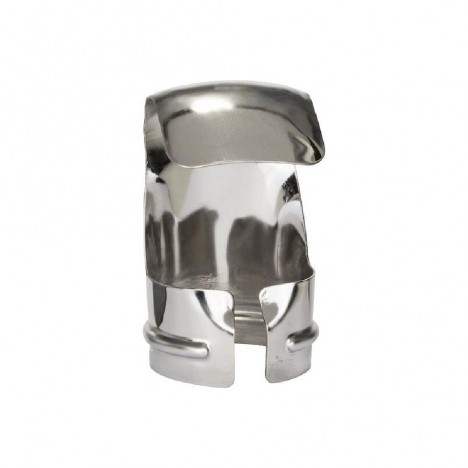
A reflector nozzle lets a heat gun shrink tubing and bend pipes all around without rotating the workpiece.
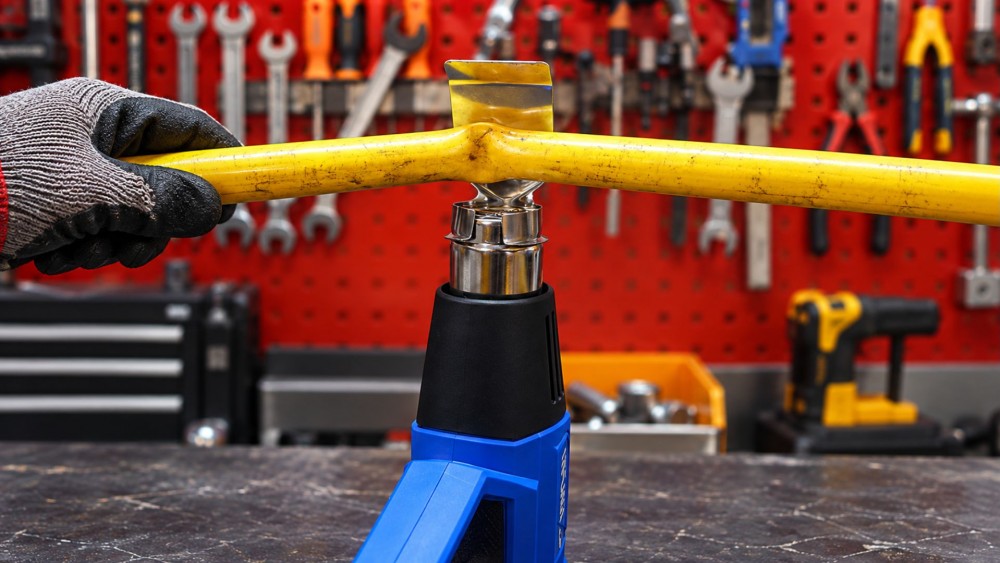
A reflector nozzle features a spoon-curved tip. When a cylindrical workpiece is placed inside the curve, the hot air wraps around the back and curls back inward, heating the workpiece evenly from all sides simultaneously.
The ideal application for this nozzle is shrinking tubing over wire splices. With a bare nozzle, the side facing the tool shrinks first and may scorch while the back remains loose. A reflector nozzle shrinks the tubing evenly all the way around in one pass. The same applies to preheating plastic pipes before bending, which requires uniform softening all around; otherwise, the pipe will kink instead of curving smoothly.
The core rule when using a heat gun on electrical wiring is to always disconnect power to that circuit first. Shrinking tubing on live wires is not dangerous because of the hot air itself, but because the existing insulation may soften and expose bare copper right while your hands are nearby.
As for warming plastic pipes, always work in a well-ventilated area and stop immediately if the pipe begins to discolor or produce smoke.
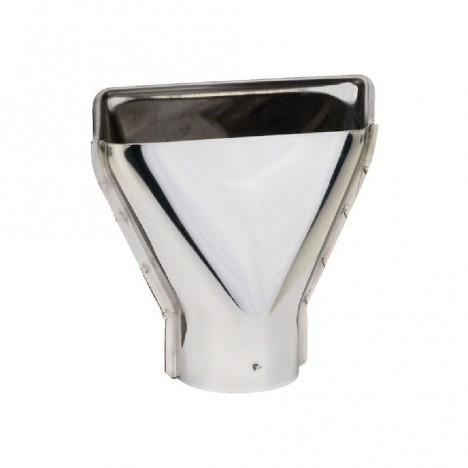
Glass protection nozzle: the nozzle a heat gun must always have fitted when working close to glass.
Glass does not crack solely from high heat, but from uneven heat. The edge of the glass exposed to the hot air expands, while the center remains cool and does not expand with it. The resulting thermal stress between these two zones is what causes the glass to shatter.
A glass protection nozzle features a deflector plate on one side that redirects hot air away from the glass surface, directing it exclusively onto the wooden frame. To use it, face the deflector plate toward the glass and move the nozzle parallel along the frame.
This nozzle reduces risk, but does not eliminate it entirely. Glass with existing chips or cracks can still shatter even with a glass protection nozzle installed. Furthermore, in older homes where the original paint composition is unknown, vintage paints may contain lead. Stripping with heat will release toxic fumes and dust. In such cases, stop and let a professional painter equipped with proper safety gear assess the job; it is not worth risking your health to save on labor costs.
Tasks where a heat gun should never be used, even with a full set of nozzles
Nozzles help direct airflow, but they cannot control what lies behind the workpiece surface. The first category of jobs to avoid is working near flammable vapors, such as rooms freshly wiped with paint thinner, or next to fuel tanks and gas cylinders. While a heat gun produces no open flame, its internal heating elements get hot enough to ignite flammable vapors.
Next is blowing heat onto walls or ceilings when you do not know what lies behind them. Hot air can penetrate gaps and seams to reach insulation, dust, or wiring inside, potentially smoldering for a long time after you have packed up and left.
The final group includes defrosting or loosening pipes that hold residual pressure, as well as using it on your body, drying hair, or drying pets—which should never be done, no matter how low the heat is set. If your task falls into any of these categories, change your method—not your nozzle.
How to change heat gun nozzles without burning yourself or loosening the nozzle fit
The nozzle is thin metal, heats up fast, and cools down slower than it looks. The most common accident with a heat gun isn't a fire, but blistered fingers from grabbing a nozzle that looked like it had already cooled down.
- Before changing it, turn off the tool, unplug it, or remove the battery. Stand the tool upright with the nozzle pointing up on a non-flammable surface.
- Wait for the nozzle to cool down until it can be touched. If the tool has a cool-air mode, run it to blow out the heat before turning it off. If you are really in a hurry, use pliers—do not use a cloth or thin fabric gloves.
- Slide the new nozzle all the way on and push it firmly until it's secure. Try giving it a gentle twist to make sure it doesn't wobble. A loose nozzle can pop off when extremely hot.
- Turn on the tool at its lowest setting first, blow into empty space for a moment, and then increase the level when starting work.
If a nozzle is dented, the opening is warped, or it doesn't fit securely onto the heat gun anymore, stop using that nozzle. Do not try to bend it back or wrap tape around it. A warped nozzle directs hot air the wrong way, defeating the whole purpose of using a nozzle in the first place.
Summary: Choose a heat gun nozzle by asking: "Where is the heat landing?"
Work damaged by a heat gun usually isn't ruined because the tool was too hot, but because heat hit where it shouldn't have. Cracked glass while stripping window frames, neighboring wire insulation melting while shrinking tubing, or discolored car paint while peeling decals—it's all about airflow direction.
Actionable steps you can take right away: use the bare nozzle only for tasks where the surroundings are heat-safe; use a reducer nozzle for pinpoint heat by lowering the heat level and holding it further back; use a flat nozzle for stripping paint and peeling large-area decals; use a reflector nozzle for heat shrink tubing and pipes needing all-around heat; always use a glass protector nozzle next to glass; and only change nozzles when unplugged and cooled down.
Most importantly, nozzles don't make risky jobs safe. Working near flammable vapors, walls with unknown contents behind them, and old paint that may contain lead are jobs where you should put down the heat gun and call a dedicated professional. And dented or loose-fitting nozzles can be thrown away without regret.
If you are looking for a Heat Guns new unit or additional nozzles, compare what kind of nozzles each set includes, and check your existing tool case—if you have one—to see which nozzles you haven't even unboxed yet.