


 EN
 ไทย


Customers Also Purchased
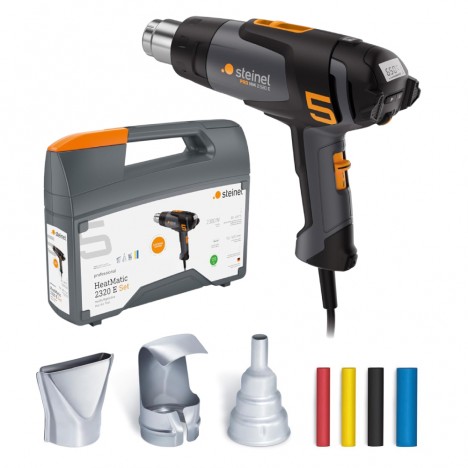
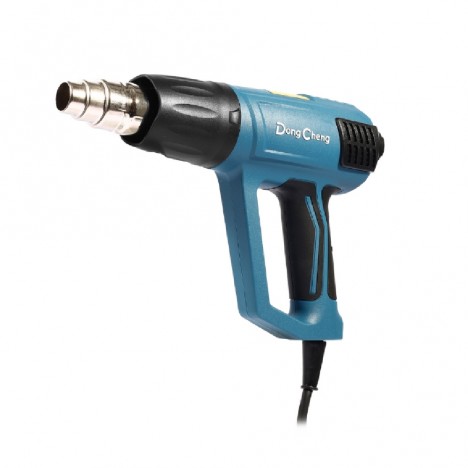
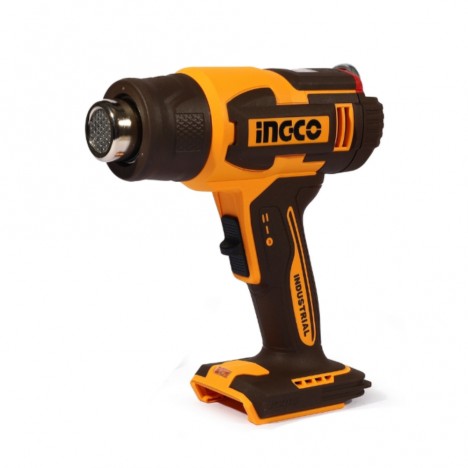
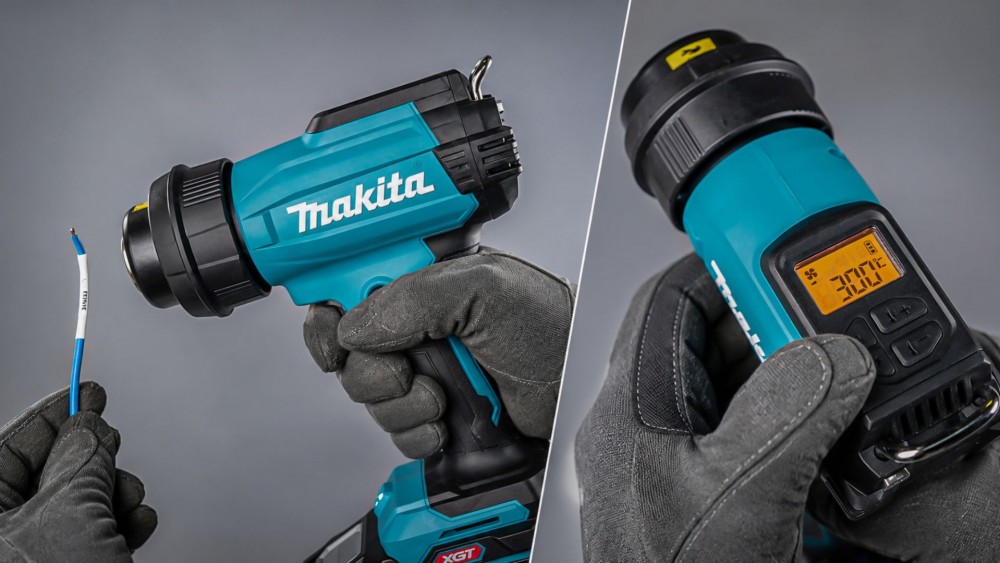
Heat Guns It is a power tool whose key feature is the ability to generate high-temperature air and blow it onto the target area without directly touching the workpiece. Some heat gun models also allow precise numerical temperature settings, such as 200, 350, 500, or 600 degrees Celsius. But looking deeper, what do these numbers really mean?
When seeing the numbers on the tool, it's not surprising that many people immediately understand that if the heat gun is set to 500 degrees Celsius, the workpiece or object being blown should also reach 500 degrees Celsius. In reality, the temperature reading on the heat gun and the temperature received by the workpiece are different values, even though the two are directly related.
Whether a workpiece gets hot or not depends not only on the temperature setting on the heat gun, but also on the airflow volume, distance between the nozzle and the workpiece, dwell time, nozzle shape, surface area, workpiece material, ambient conditions, and the heat dissipation capability of that material. Understanding this difference will help us use heat guns more accurately, reduce damage, and avoid mistakenly thinking that setting the temperature equals direct control over the workpiece temperature.
What is the temperature number on a heat gun?
Beginners must know! Basic heat gun usage Generally, the temperature number we set on a heat gun refers to the temperature of the hot air stream generated by the tool at the nozzle outlet, or it is a control value within the tool's heating system. The position used to detect and control the temperature may vary among different heat gun models.
- Some tools may measure the temperature near the heating element.
- Some models detect the temperature of the air inside the air duct.
- Some models use an electronic power control system to maintain the temperature close to the set value.
When a heat gun is set to a certain temperature, such as 400 degrees Celsius, what is being controlled is the heat of the air coming out of the tool, not the temperature of the workpiece surface. Heat guns do not have automatic workpiece temperature sensors.
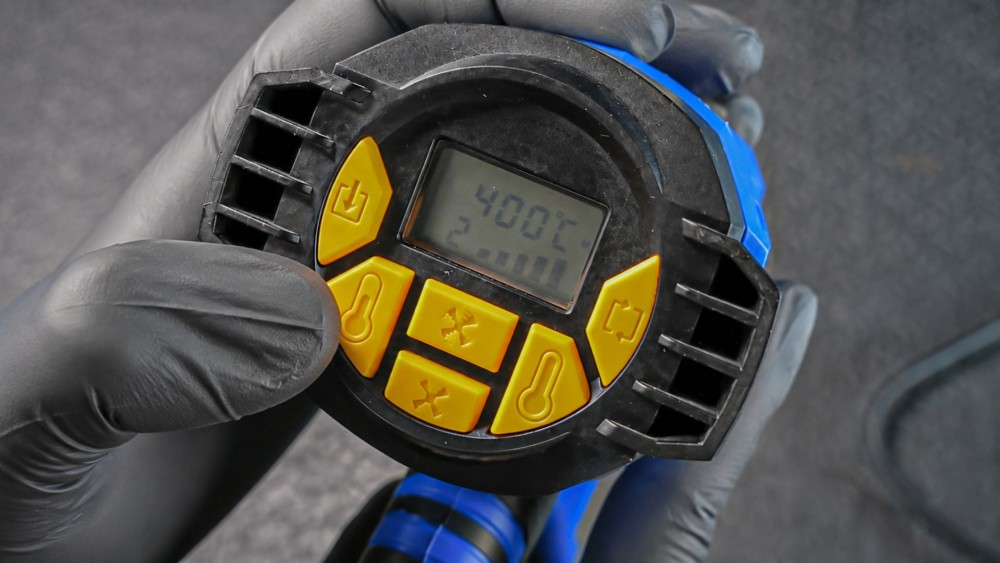
Even the air exiting the nozzle itself may not have the same temperature at every point. The center of the airflow may be hotter than the edges. The hot air begins mixing with the surrounding air immediately upon leaving the nozzle, and the temperature decreases steadily as the distance from the heat gun increases. The displayed number should therefore be viewed as an initial thermal energy setting, not confirmation that every point being blown will reach that temperature.
Why doesn't the workpiece reach the temperature set on the heat gun?
- After the hot air leaves the nozzle, part of the thermal energy is lost to the surrounding air, while another part is transferred to the workpiece surface. Once the workpiece receives heat,
- the energy does not stay solely on the surface, but gradually penetrates into the material and diffuses to adjacent areas.
- The workpiece also loses heat back to the air, worktable, clamps, or other parts in contact with it.
- The actual temperature achieved is the result of the balance between heat input and heat loss. If the workpiece absorbs heat faster than it dissipates it, the temperature will rise. But if the material dissipates heat quickly or has a large mass, the temperature may rise slowly even when using high-temperature hot air.
This is why we should not use the same temperature setting on every material without testing the heat gun first, even if the jobs seem similar.
Distance from the nozzle affects heat more than you think
In addition to Heat guns are easy to use, but caution is required the distance between the nozzle and the workpiece is a crucial factor. As hot air exits the nozzle, the airflow begins to disperse and mix with cooler ambient air. The further the nozzle is from the workpiece, the more heat is lost and the wider the airflow spreads, thereby reducing the heat delivered to a single localized spot.
Conversely, bringing the nozzle closer to the workpiece increases the intensity of the hot air. The area heats up quickly, and the surface temperature can rise suddenly—especially when the heat gun is fitted with a reduction nozzle or a concentrator nozzle that narrows the airflow.
Therefore, setting the temperature to 350°C and blowing from a reasonable distance may produce a gentler effect than setting it to 250°C and holding the nozzle extremely close. What affects the workpiece is not just the air temperature, but also the thermal energy density delivered to that specific area.
For heat-sensitive applications, it is advisable to start from a greater distance and gradually move closer as needed. This approach makes controlling the heat gun much easier than starting from close range, as some materials may warp, discolor, or sustain damage before the user even notices.
Dwell time significantly alters the outcome
The temperature setting does not represent the total amount of heat accumulated by the workpiece. Sweeping high-temperature air quickly over a workpiece may only slightly warm the surface; however, holding it in the same spot for an extended period will cause the workpiece to continuously accumulate energy until it reaches extremely high temperatures, even if the set temperature remains unchanged.
Paint stripping is a clear example: if you move the nozzle too quickly, the paint may not soften; but if you linger too long, the paint can scorch, the wood surface can discolor, or the substrate beneath may be damaged. Heat shrink tubing also requires precise timing control: moving the nozzle continuously ensures uniform shrinkage, whereas lingering in one spot may cause the tubing surface to overheat before other sides fully shrink.
When using a heat gun, the key technique is not just selecting the right temperature, but maintaining consistent nozzle movement and constantly observing changes in the workpiece.
Different materials absorb and dissipate heat at different rates
Workpieces made of steel, aluminum, copper, plastic, rubber, wood, glass, or composite materials react very differently to hot air.
- Many metals are good thermal conductors. When heated at a specific point, heat rapidly dissipates to adjacent areas, causing the target area's temperature to rise more slowly.
- Many plastics do not conduct heat as well as metals, so heat builds up quickly on the surface. They soften sooner, and some may shrink, warp, discolor, or blister.
- Wood contains moisture and has an irregular structure. Applying hot air in one spot for too long can cause the surface to darken, dry out, crack, or scorch.
- Glass can withstand heat to a certain extent, but it does not tolerate rapid and uneven temperature changes. If one section becomes significantly hotter than the rest, internal thermal stress can develop.
Understanding the type of material is more important than memorizing fixed temperature settings for a heat gun, especially when working on expensive components, finished surfaces, or parts that cannot be easily replaced.
Workpiece size and thickness also play a role
Even with the same material, thin sheets and thick pieces do not heat up at the same rate. Thin workpieces have less mass, so their temperature rises faster, but they can also cool down rapidly. In contrast, thick workpieces require more energy to raise their temperature, and their surface temperature may differ significantly from their internal temperature.
Surface temperature and internal temperature can differ greatly
When discussing the temperature of a workpiece, we must also consider which specific area we are referring to. A heat gun heats from the outside in; therefore, surfaces directly exposed to the airflow heat up first, while the inner core heats up more slowly.
If you blow high-temperature air for a short duration, the surface may become extremely hot while heat has not yet penetrated deeply. This is not suitable for applications requiring an even temperature throughout the entire workpiece. Using a moderate temperature and allowing time for heat to gradually dissipate can provide more uniform heating and reduce the risk of surface damage before the core is heated. This technique is crucial for heat-sensitive materials or thicker workpieces.
Different Nozzle Types Change the Temperature Received by the Workpiece
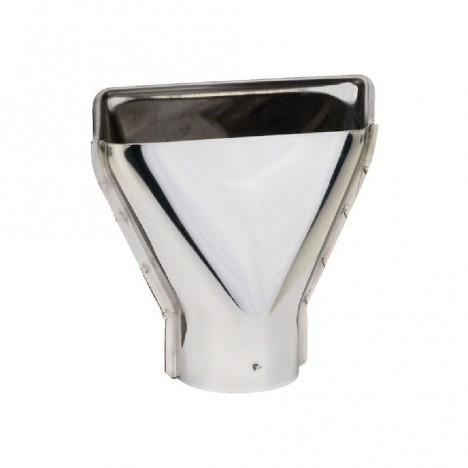
Nozzles or heat gun attachments are not just meant to change airflow direction, but also to alter heat energy distribution. A wide nozzle helps distribute hot air over a large area.
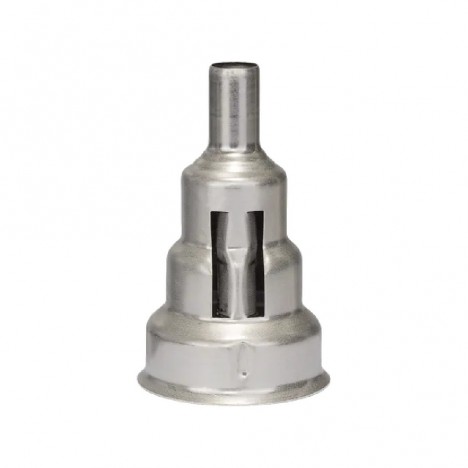
A reducer or concentrator nozzle narrows the airflow, concentrating heat onto a small area and causing the temperature in that zone to rise much faster, even with the same temperature setting.
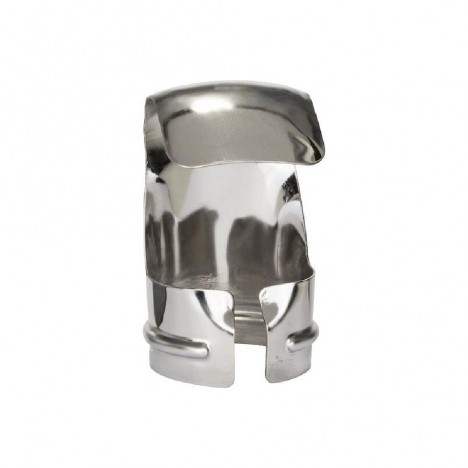
A reflector nozzle can direct hot air around cylindrical workpieces, such as pipes or cables, allowing multiple sides to be heated simultaneously.
How Do You Know How Hot the Workpiece Actually Is?
If your application requires precision, you should not guess the workpiece temperature based solely on the number on the heat gun display. Instead, use an appropriate temperature measuring tool, such as:
- Thermocouple
- Temperature probe
- Infrared thermometer
- Choose according to the surface characteristics and temperature range.
Recording the heat setting, airflow volume, nozzle type, approximate distance, and nozzle movement speed will be more useful than simply memorizing the temperature reading on the heat gun screen.
Conclusion: Is the Heat Gun Temperature the Actual Temperature of the Material?
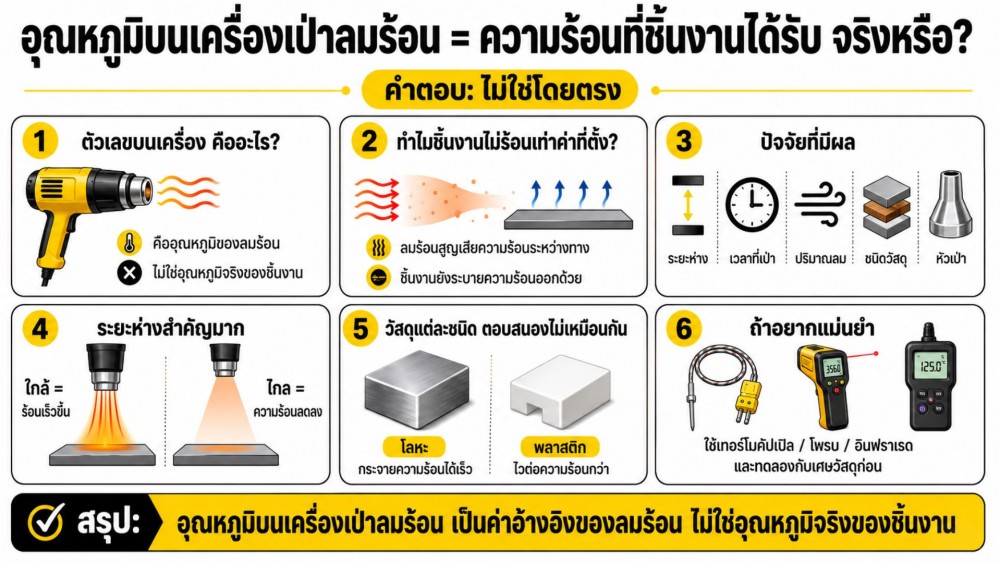
The answer is The temperature reading on a heat gun is a value used to control or reference the temperature of the hot airflow exiting the tool, not the actual temperature of the workpiece. How hot the material gets depends on a combination of factors: working distance, heating duration, airflow volume, nozzle type, material type, workpiece size, thermal conductivity, and ambient conditions.
Therefore, using a heat gun effectively should not rely solely on the screen readout. Treat it as a complete heat control process: select the right temperature for the material, control the distance, move the nozzle steadily, and continuously monitor changes in the workpiece.
For general tasks, starting at a lower heat setting and gradually increasing it is an easier approach to control. Heat Guns For precision work, you should also use a workpiece temperature measuring device.