


 EN
 ไทย


Customers Also Purchased


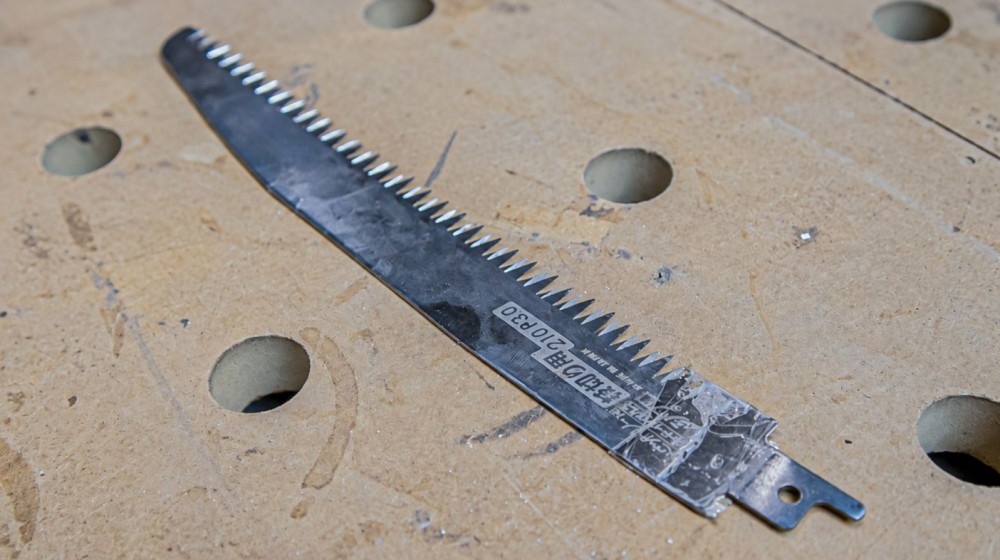
Imagine you are cutting an old steel pipe off a wall with a reciprocating saw. Halfway through the cut, the tool begins kicking violently until your hands go numb. Pulling it out to inspect, Saber saw blade the brand-new blade straight out of the package has bent into an S-shape. You grab another fresh blade, resume cutting, and within a minute, that one bends too.
Your first thought might be: is this blade brand no good, or am I forcing it on the wrong application? But in reality, if two or three blades bend in a row on the same job, the problem rarely lies with the blade itself.
Reciprocating saw blades that bend, break, or slip out of the tool are mostly caused by how you hold the tool, shoe placement, and the workpiece condition—all of which can be resolved without buying anything extra. This article will go through each cause step by step, while also explaining which bent or damaged reciprocating saw blades you should never force yourself to keep using.
Why do reciprocating saw blades bend more easily than other types of saw blades?
Circular saw blades are round discs anchored at the center. Band saw blades are held under tension from both ends. But a reciprocating saw blade is a long, thin steel strip secured at only one end, leaving the other end free-floating while stroking in and out thousands of times per minute. This is also another reason why reciprocating saw blades dull quickly as well.
This design allows reciprocating saw blades to withstand pulling tension well, but they have very little resistance against push force from the tip or lateral twisting force. On the pull stroke toward the tool, the teeth bite into the workpiece and pull the blade straight. But on the push stroke outward, if the blade tip strikes an obstruction, the blade can buckle instantly. Almost every cause traces back to the same issue: something obstructing or twisting the blade during the push stroke.
Not pressing the shoe flat against the workpiece is the primary cause of bent reciprocating saw blades
The shoe, or the steel plate around the blade base, is not meant to guard your fingers. Its real purpose is to act as a brace between the tool and the workpiece. When the shoe is pressed firmly against the work, the reciprocating force of the tool is transferred directly into the cutting teeth.
If the shoe is lifted, all that force turns into violent shaking of the tool and workpiece instead. The reciprocating saw blade will whip around in the kerf and bend within seconds.
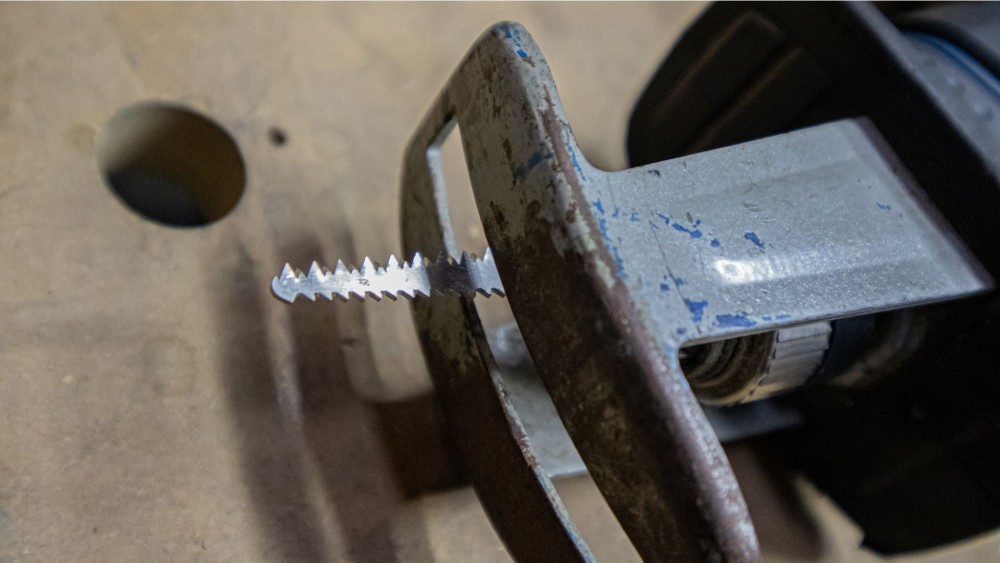
The solution is to hold the shoe firmly against the workpiece before pulling the trigger, and keep it pressed there throughout the entire cut. Do not apply heavy downward pressure on the blade itself; press down on the shoe instead. If cutting round pipes or curved surfaces where the shoe cannot sit completely flat, find an angle that maximizes shoe contact and reduce the speed.
Many reciprocating saws have an adjustable, sliding shoe. This adjustment serves two purposes: adjusting how far the blade tip extends past the workpiece, and shifting fresh, sharp teeth onto the cutting area instead of wearing down the same section of teeth. Another detail regarding the shoe involves starting a cut: never pull the trigger while the blade tip is pressed against the workpiece. Rest the shoe on the workpiece first, let the blade reach speed, and then tilt the blade into the cut.
The tip of the reciprocating saw blade slips out of the kerf and smashes back into the workpiece
This is a common cause that users often don't realize. If the reciprocating saw blade is too short relative to the workpiece thickness, the tip can pull completely out of the kerf during the backstroke. On the following forward push stroke, the blade tip might miss the kerf and slam directly into the surface of the workpiece. All of the tool's forward thrust is concentrated against the jammed blade, causing it to buckle instantly and sometimes snap right at the shank.
The general rule is that the blade tip must extend completely through the other side of the workpiece at all times, even at the deepest point of the backstroke. If you are cutting thick stock and your current blade is too short, stop and change to a longer blade—never try to compensate by rocking the tool.
Conversely, a reciprocating saw blade that is far too long also poses problems. The excess length extending out will whip around and strike objects behind the cut. Therefore, you should not simply use the longest blade available for every job.
Pinching kerfs and unsecured workpieces cause reciprocating saw blades to bind and snap
A long workpiece without proper support will sag once cut halfway through. The kerf will close in, pinching the reciprocating saw blade tightly. While the tool continues to cycle, the blade is trapped; this causes the entire tool to jerk violently and subjects the blade to severe twisting forces until it bends or snaps.
The fix is to position supports so that the kerf opens up rather than closes. Cut on the side where the end of the workpiece hangs free, and secure the workpiece firmly with clamps. A pipe or piece of wood that vibrates with the stroke absorbs almost all the tool's cutting power and makes the blade whip just like an unplanted shoe. Cutting tree branches follows the same rule: branches cut from the top will pinch down on the blade near the end of the cut, so always make a shallow relief cut from the bottom first.
If the blade binds mid-cut, release the trigger immediately. Wait until the blade comes to a complete stop before shifting the workpiece to open the kerf. Do not feather the trigger, and do not twist the tool side-to-side, as that is the quickest way to snap a reciprocating saw blade.
Twisting the tool to steer the cut subjects the reciprocating saw blade to stresses it was never designed to handle
Reciprocating saws can make slight curved cuts when using narrow blades, but they are not tools designed for sharp turns. When the cutting line goes off track and you try to twist the tool to steer it back, the reciprocating saw blade will twist inside the kerf—which is only as wide as the blade's own thickness. The blade will heat up quickly, bind, and bend along the twist.
If the cut deviates, back the blade out and restart from where it was still straight, or open a new kerf from the other side. It takes slightly more time, but it won't ruin the blade.
Excessive speed and pressure cause reciprocating saw blades to overheat, soften, and bend.
Steel that gets extremely hot becomes softer, and reciprocating saw blades are no exception. Cutting metal at maximum speed while applying heavy pressure causes the teeth and blade body to heat up very quickly. An overheated blade loses its hardness and can bend under forces it would normally withstand.
When cutting steel or stainless steel, reduce the speed, let the teeth do the work without forcing pressure, and pause periodically if you notice the blade starting to discolor. For thick steel, apply cutting fluid or coolant. If your tool has an orbital action setting, turn it off when cutting metal, as this feature is designed to speed up wood cutting and will cause the blade to slam into the metal harder than necessary.
The tip of the reciprocating saw blade hits hidden hard objects behind the workpiece.
Demolition work often involves blind cuts into areas where you cannot see what is on the other side, such as walls, wooden floors, or door/window frames. The tip of the blade extending through may strike concrete pillars, steel framing, or concrete slabs. Every forward stroke effectively slams the blade tip directly into a hard surface.
Before cutting, check the other side as much as possible, and size the reciprocating saw blade so it extends just slightly past the workpiece.
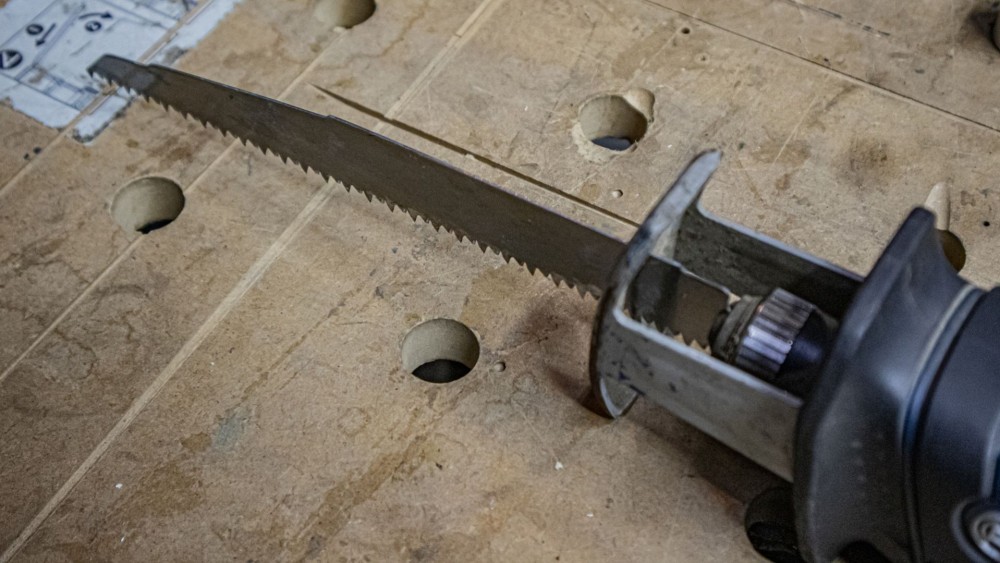
This isn't just about saving the blade; there may be electrical wiring or plumbing pipes hidden behind the wall. If you are unsure of what lies behind, shut off power to that circuit first. For walls containing utility systems, have an electrician or plumber verify the layout before proceeding.
Reciprocating saw blade slips out of the chuck: check the tool before blaming the blade.
A reciprocating saw blade popping out mid-cut usually comes down to three causes:
- Improper insertion: You must push the blade shank all the way into the chuck before releasing the lock mechanism. Then, give the blade a firm tug to test it every time you change blades.
- Wood chips, concrete dust, or metal shavings are packed inside the blade clamp, preventing the pin from fully engaging the hole in the shank. Blow or tap out debris before inserting a new blade.
- The blade shank is worn or its hole has flared out from heavy use. Blades in this condition should be discarded.
If you have followed all these steps and a new blade still pops out, the tool's blade clamp is worn or its spring has fatigued. Do not attempt a makeshift fix by tying it with wire or prying the clamp; send it to a service center. A blade coming loose while reciprocating can shoot out dangerously.
Always unplug the tool or remove the battery before handling the blade, and beware of heat—a blade that has just cut through metal can be hot enough to cause burns.
Reading the symptoms from where the reciprocating saw blade is damaged will help you identify the cause faster.
If only the tip is bent, it is usually from slipping out of the kerf or hitting a hard object behind the cut. If bowed along the entire blade, suspect a lifted shoe or an unstable workpiece. If twisted like a corkscrew, it means the tool was twisted to steer the cut. If snapped near the shank, it is often caused by the blade binding in the kerf while the tool is rocked sideways. If showing blue or purple discoloration, the cause is heat from excessive speed and force. And if the entire blade slipped out without deformation, check the blade clamp.
Inspect damaged blades before throwing them away; it will help you know what adjustments to make on your next job.
Can a bent reciprocating saw blade be straightened and reused?
The answer depends on the nature of the bend. If the reciprocating saw blade is slightly bowed in a long curve without any creases, you can bend it back straight by hand and continue using it for demolition or rough work. Most blades are made to be reasonably flexible anyway, but don't expect the cut line to be as straight as before.
If the blade is bent with a sharp crease, shows wrinkling in the steel, or has been straightened before and bent again at the same spot, do not continue using it. The steel at the crease is fatigued and will usually break there next time. Straightening the blade with a hammer or pliers over the crease will only weaken that spot further. A blade costing just a few tens of THB isn't worth the risk of flying fragments.
Signs that you should immediately stop using that reciprocating saw blade
Discard a reciprocating saw blade when you see cracks no matter how small, especially around the tang and gullets; when multiple teeth are missing or chipped in a row; when the blade turns blue or purple from heat over a long strip; and when the hole or shoulder at the tang is worn so that it still moves even when locked.
As for the user, stop working when the tool kicks back out of control and find the cause before continuing to cut. Always wear safety glasses because broken reciprocating saw blades often shatter into small pieces and fly off at high speed.
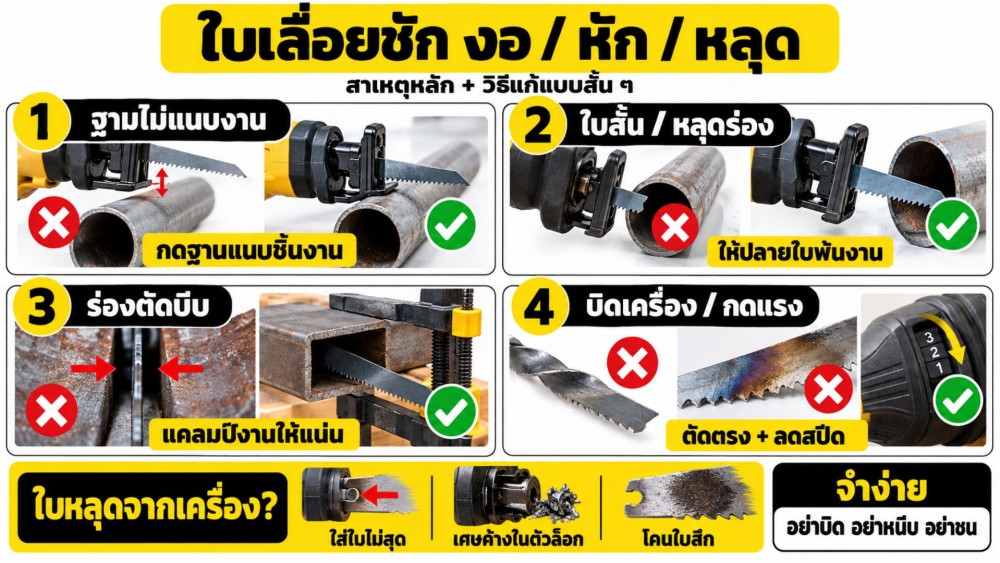
Summary: Reciprocating saw blades will last a long time if nothing obstructs them during the push stroke
Reciprocating saw blades bend and break because they are pushed or twisted in ways they cannot handle. Therefore, press the shoe firmly against the workpiece, ensure the blade tip always clears the other side, secure the workpiece so the kerf stays open, do not twist the tool to steer, and know what lies behind the workpiece. Doing all of this will eliminate most problems. As for cracked or sharply bent blades, discard them without hesitation.
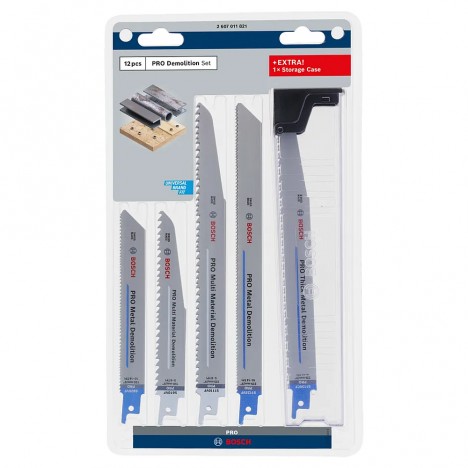
If you are looking for spare blades or want to browse other reciprocating saw accessories, check out the category Saber saw blade right away