


 EN
 ไทย


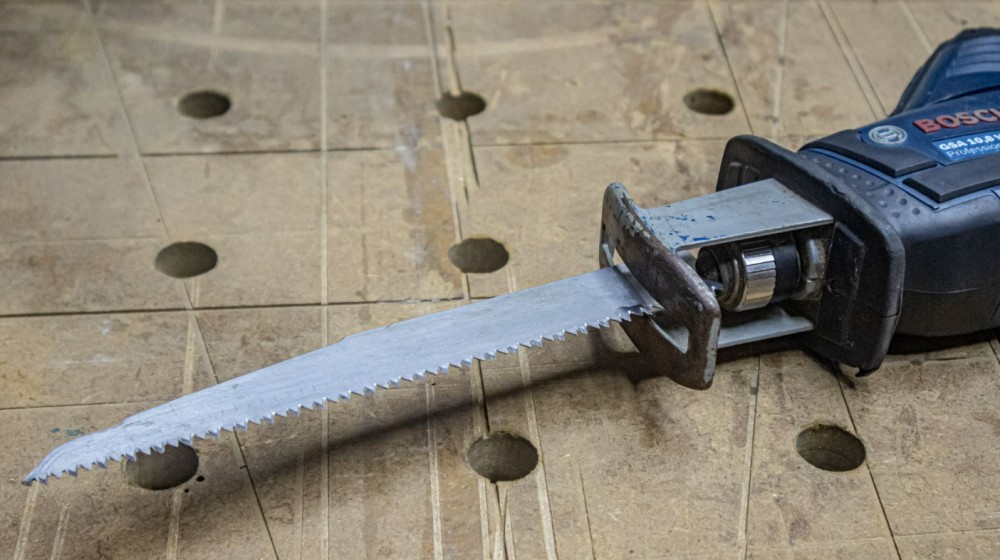
Customers Also Purchased
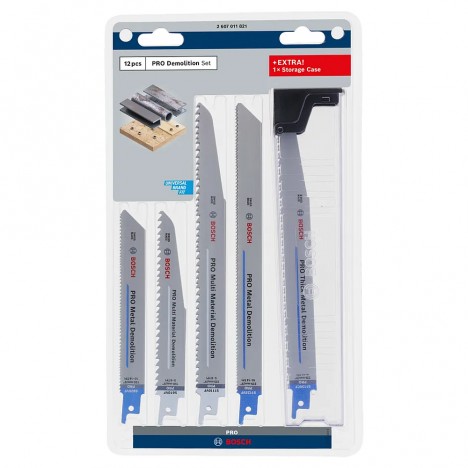


Saber saw blade They are consumable parts that take on a heavy load every time they are used, whether cutting wood, steel pipes, plastic, tree branches, or in demolition work where you need to cut through multiple materials simultaneously.
Reciprocating saw blades may sometimes be made from tough materials and labeled for heavy-duty use. But after using them for a while, you might notice the blade cutting slower, requiring more downward pressure, vibrating excessively, or accumulating heat in the cut groove, raising the question: Why do reciprocating saw blades dull so quickly even though they were just bought recently?
In fact, the lifespan of a reciprocating saw blade does not depend solely on blade quality, but also involves selecting the right blade type, tooth count per inch (TPI), and tool speed. If we understand what accelerates blade dulling and make small adjustments to how we use them, we can help extend blade life for smoother cuts, keep them sharp longer, avoid frequent replacements, and reduce the load on the tool itself. So, let's take a look at Key causes of reciprocating saw blades dulling quickly Along with proper usage and maintenance methods for DIY, installation, and professional trade applications.
Choosing a reciprocating saw blade that does not match the material
Types and applications of reciprocating saw blades This is crucial, because using a wood-cutting reciprocating saw blade to cut steel will cause the large teeth to slam violently against the metal surface, potentially chipping, breaking, or snapping off in no time. Conversely, if you use a fine-toothed metal blade to cut thick wood, the teeth will remove very little material, the gullets are narrow and easily clogged, causing you to increase pressure or speed, which generates heat buildup and dulls the blade teeth even faster.
For certain materials such as stainless steel, cast iron, fiberglass, aerated concrete, or materials containing cement and fibers, which are harder or more abrasive than common materials, using standard metal or general wood reciprocating saw blades may cut initially, but the teeth will wear down quickly.
For specialty materials, choose reciprocating saw blades specifically designated by the manufacturer for that material, such as carbide blades or blades designed for stainless steel and high-hardness metals.
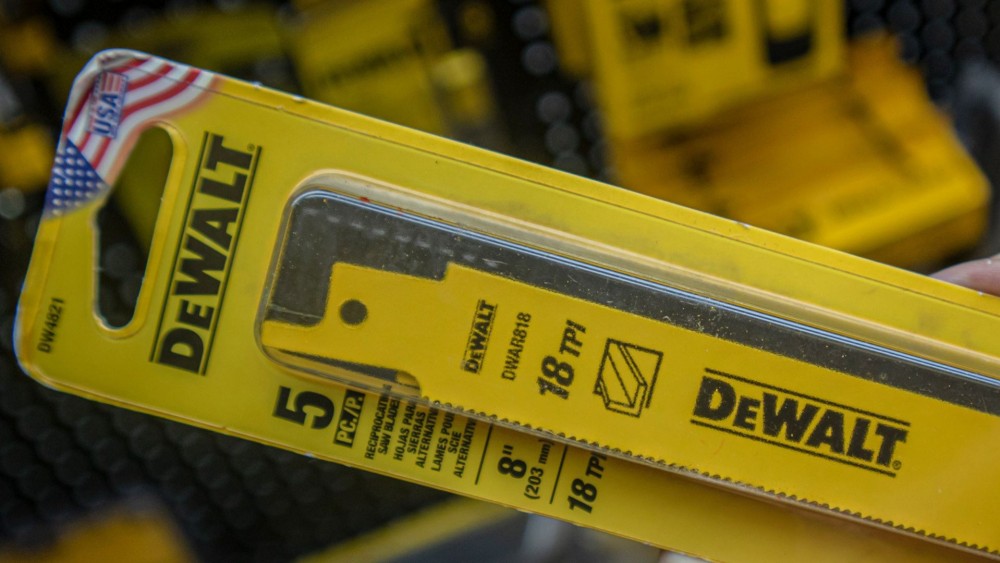
Choose the right reciprocating saw blade material for the job
- HCS (High Carbon Steel) reciprocating saw blades They are flexible and suitable for wood, plastic, and non-hard materials. The highlight is their reasonable flexibility, but they are not suitable for cutting hard metals as the teeth will wear down quickly.
- HSS (High-Speed Steel) reciprocating saw blades Featuring harder teeth and higher heat resistance, they are suitable for certain types of metal. However, the blade body may be more brittle than highly flexible types; if twisted or subjected to heavy impacts, it can break or chip the teeth.
- Bi-Metal reciprocating saw blades A popular choice for tradespeople as it combines the advantages of two materials: hardened, wear-resistant teeth and a flexible blade body that helps reduce breakage. Ideal for metal cutting, demolition, nail-embedded wood, and general applications involving mixed materials.
- For heavy-duty applications or highly abrasive materials Carbide blades often have a longer lifespan, but come with a correspondingly higher price.
Incorrect number of teeth per inch
Teeth per inch, or TPI, is another crucial factor that determines how fast, smooth, and durable a reciprocating saw blade cuts through material. Blades with a low TPI have larger, widely spaced teeth, ideal for wood, branches, and demolition work requiring speed. On the other hand, blades with a high TPI feature small, closely spaced teeth, perfect for metal, thin sheets, and workpieces where reducing tooth impact is necessary.
The general rule is that multiple teeth should be in contact with the workpiece simultaneously, especially in metal cutting. If there are too few teeth, each tooth absorbs excessive force; if they are too densely packed, chip clearance suffers. Choosing TPI must correspond to both the material type and workpiece thickness, rather than simply selecting based on "wood cutting" or "metal cutting" alone.
Running at excessive speed, especially for metal
The idea that "the faster you squeeze the trigger, the faster the reciprocating saw blade cuts" does not apply to every material. General woodwork typically tolerates relatively high stroke speeds because wood easily clears chips and generates less heat than metal. However, when working with steel, stainless steel, or hard metals, excessive speed rapidly causes heat buildup at the teeth.
How should speed be adjusted?
For woodwork, start at a low speed to establish a cut groove, then increase speed once the blade is stably aligned. For metalwork, start at low to medium speed and monitor chip clearance. If the reciprocating saw blade cuts steadily, yields metal shavings, and does not generate excessive heat, the speed is in an optimal range.
Reciprocating saws with variable speed control make work easier to manage, but you still need to listen to the tool and observe the blade's behavior, as optimal settings vary depending on material, thickness, tooth design, and applied pressure.
Not resting the shoe flush against the workpiece
The front shoe of a reciprocating saw serves a far more critical role than merely supporting the tool. The shoe reduces vibration, controls blade travel, and securely transfers power from the tool into the cut. If the tool is held suspended away from the workpiece, the blade will vibrate and wobble more, causing the teeth to slam against the material instead of cutting smoothly.
Excessive vibration causes uneven load on the teeth; some teeth absorb more impact than others, leading to chipping or stripped teeth. Meanwhile, you must exert more effort to control the tool and may unintentionally apply excessive pressure, generating heat and further shortening blade life.
Workpiece is not securely clamped
If the workpiece moves along with the reciprocating saw blade's strokes, the blade teeth cannot fully bite into the material. Part of the cutting force is wasted shaking the workpiece, making the cut feel sluggish and prompting users to push harder or speed up to compensate—causing the blade to overheat and wear out faster.
This issue is common with metal pipes, PVC pipes, rebar, sheet metal, and small pieces of wood. Without using clamps or a vise, the workpiece may vibrate, slam, or twist along with the blade's movement.
Failing to secure the workpiece firmly not only causes the reciprocating saw blade to dull quickly, but also results in crooked cuts and increases risks during operation.
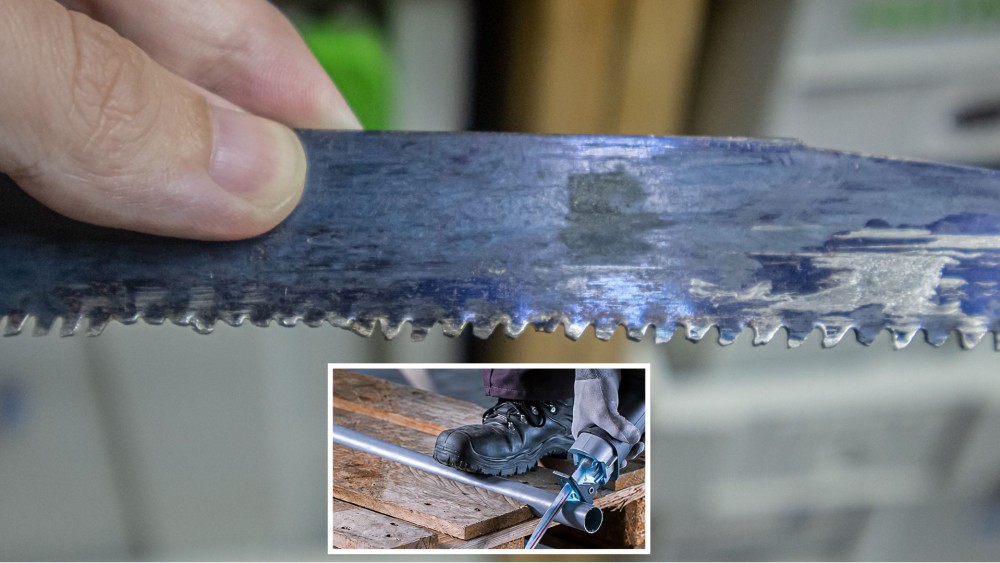
How to Use Reciprocating Saw Blades to Keep Them Sharp Longer
Before starting work, clearly identify the material to be cut, its thickness, and whether any other materials are hidden inside. Then select the appropriate blade type, TPI rating, blade length, and thickness. Do not choose based solely on blade length or price.
Adjust Speed to Match the Material
- General woodworking can be done at high speed, but it is best to start slowly to create a pilot groove first.
- Metalworking requires lower speeds, especially for stainless steel and thick metal. If the blade starts getting hot or changes color, reduce the speed, lighten the pressure, and let it cool down.
- Observe sound, vibration, chip clearance, and temperature altogether.
- The proper speed should allow the teeth to bite consistently into the material without causing the tool's RPM to drop or generating abnormal heat.
Apply Consistent Pressure
Good cutting does not require excessive force. Rest the shoe firmly against the workpiece, hold the tool securely, and apply just enough pressure for the teeth to engage the material steadily. If you feel the reciprocating saw blade or tool slowing down, do not immediately push harder; check first whether:
- Is the blade suitable for the material?
- Are the teeth clogged?
- Is the battery or tool power sufficient?
When the tool is operating at full efficiency, the motor sound will be steady, the reciprocating saw blade will not bend excessively, and debris will clear from the kerf. Therefore, having to constantly push hard may be a sign that the blade is dulling or the wrong blade type was selected.
Clamp the Workpiece Firmly
For small workpieces that move easily, use a vise, clamps, or appropriate supports to prevent the workpiece from vibrating or twisting with the blade. Position supports so the cut piece will not pinch the blade as it finishes, and leave clearance so the blade moves freely without hitting the bench, floor, or objects behind it.
When cutting into walls or materials where the backside is not visible, inspect the area beforehand because the tip of the reciprocating saw blade travels deeper than what is visible from the front. If the blade tip strikes metal, concrete, or hard surfaces, the teeth can be damaged instantly.
Clean the Blade After Use
After use, wait for the reciprocating saw blade to cool, remove the battery or unplug the tool, and inspect the tooth gullets for stuck debris. Clean carefully with a brush, wiping away dust, moisture, or residue that could cause rust.
Do not store reciprocating saw blades wet or with damp wood debris adhering to them for long periods. Rust can form on the blade body and tooth gullets, making the surface rough, increasing friction, and reducing strength.
Separate reciprocating saw blades by application
Putting all blades together without separating them by type may cause the teeth to hit each other and could lead to picking the wrong blade for the job. Clearly separate blades for wood, metal, nail-embedded wood, plastic, and specialty materials, and check the TPI and length every time before use.
Reciprocating saw blades that have been used but are still sharp can be set aside for rough work, while new blades can be kept for tasks requiring speed or neatness. This helps you get more value from each blade and prevents using damaged blades on critical jobs.
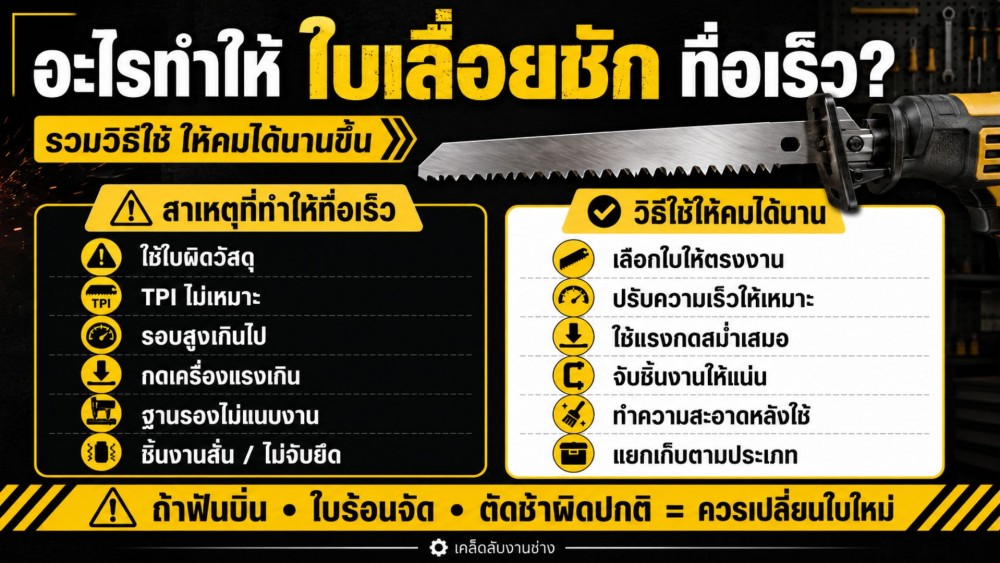
Summary: What makes reciprocating saw blades dull quickly?
Most causes of reciprocating saw blades dulling quickly stem from choosing the wrong blade for the material, using an inappropriate teeth-per-inch count, setting the speed too high, applying excessive downward force, not keeping the shoe pressed firmly against the workpiece, or letting the workpiece vibrate while cutting.
Additionally, heat buildup, clogged debris, cutting into hidden nails or metal, and using a blade that is longer or thinner than necessary can also shorten the lifespan of a reciprocating saw blade.
Extending the sharpness of reciprocating saw blades begins with selecting the right blade type, TPI, length, and thickness for the job, along with controlling the speed and pressure appropriately, firmly resting the shoe, clamping the workpiece securely, and pausing when excessive heat develops.
After use, clean the blade, allow it to dry before storing, and clearly separate blades by application. If the teeth are chipped, the blade is cracked, or it cuts so slowly that excessive force is needed, replace it with a new blade rather than forcing it to work.
Saber saw blade keeping the teeth sharp helps reduce the load on the tool, ensures better cut control, and improves safety throughout the job.