


 EN
 ไทย


Customers Also Purchased


Imagine that you bought Air Pumps a 50-liter air compressor for your workspace, assuming this size could handle any job. On day one, inflating tires and blowing away dust went completely smoothly. But when the day came to hook up an air sander to strip paint from a steel gate, it lost power in less than half a minute. You had to stand around waiting for the tank to rebuild pressure after every short pass. A task you expected to finish in an hour dragged on far longer than planned.
This kind of issue stems from choosing an air compressor based mainly on tank size and horsepower, when the actual deciding factor is something unexpected: the specific air tools you plan to connect. So, let's break it down step by step to see which types of jobs and air tools require which kind of air compressor—and which ones you should avoid, even if they boast a large tank, impressive spec sheet numbers, or an affordable price tag.
Why should choosing an air compressor start with your air tools, not horsepower or tank size?
Every type of air tool requires two things from an air compressor: pressure and airflow volume per minute (CFM/LPM). Pressure is something most compressors can easily deliver. What usually falls short is airflow volume, because certain tools consume air much faster than the pump can compress and replenish it.
What is the difference between a large and small air compressor tank besides storage capacity? An air tank acts like a reserve water cistern. A larger tank lets you work longer before the air runs out, but it doesn't make the pump produce air any faster. If your tool consumes more air than the pump unit can deliver, even the biggest tank will eventually run empty. As for horsepower, it only indicates the motor's size—it doesn't directly tell you how much air output you get. Compressors with the same horsepower can deliver vastly different airflow volumes.
Therefore, you should list the air tools you plan to use first, identify which one consumes the most air, and then find an air compressor whose maximum air delivery exceeds that amount.
Different air tool categories consume different amounts of air: know how to tell them apart
You can check the air consumption rate of each tool on its label or manual. If you haven't bought the tool yet, look at the product page of the model you're eyeing. This figure varies dramatically among different types of tools, so it helps to divide them into three categories based on how the trigger is operated.
Short, intermittent burst category
Tire inflators, blow guns, and air nailers/staplers are used in a squeeze-and-release pattern. While your hands are off the trigger, the machine has time to pump air back into the tank. Even small air compressors can comfortably handle this group, and it's the category home users encounter most often.
Heavy, intermittent burst category
Air impact wrenches and air chisels demand a high volume of air each time the trigger is pulled, but each burst is short. The air tank therefore plays a crucial role because it must provide sufficient air reserve for that initial burst of power. If you only tighten your own car's wheel nuts once in a while, a mid-range air compressor is enough. But for a tire shop that works continuously all day, you should step up to the next level.
Continuous Air Consumption Group
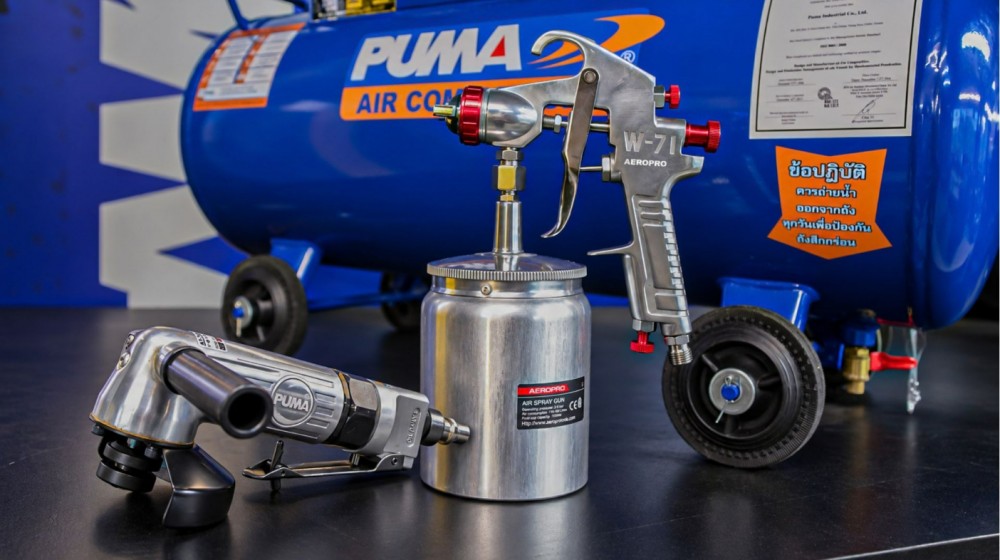
Paint spray guns, air sanders, and air die grinders fall into the group where the trigger is held down continuously. Air flows out constantly without giving the machine any time to catch up. This group is the main reason why people buy an air compressor and then find that the air output is insufficient. If your list includes even a single tool from this group, use that tool as the primary baseline for your selection.
Oil-Free Air Compressors: Quiet and Easy to Maintain
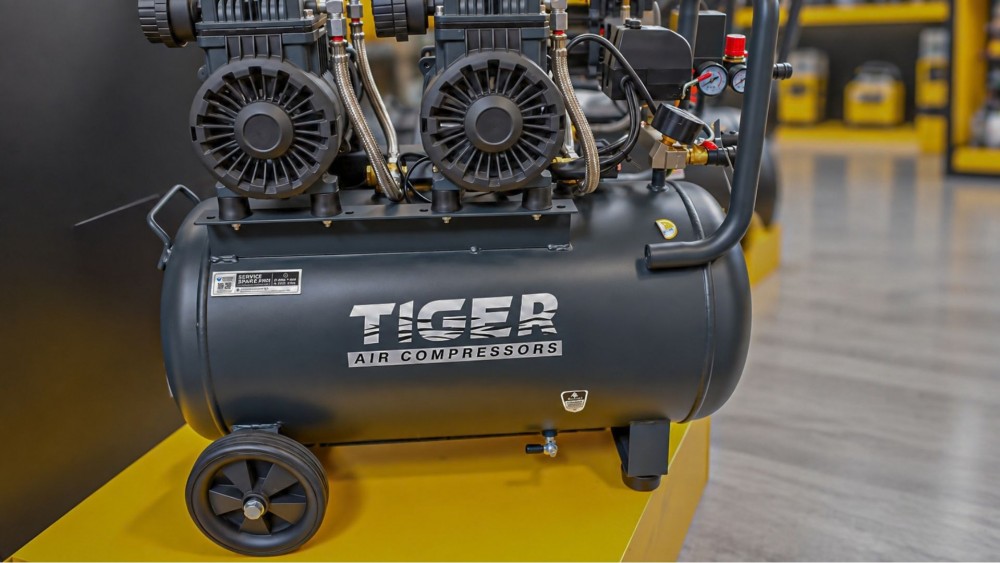
Oil-free air compressors, also known as silent air compressors, eliminate the need to check oil levels, produce air free of oil mist, and are designed to run quieter than oil-lubricated piston types. They are ideal for homes sharing walls with neighbors, indoor workrooms, shops where customers wait, as well as airbrushing and small assembly work. Perfect for home users inflating tires, blowing dust, fastening small woodwork with nailers, and anyone for whom noise is the number one constraint.
For those who intend to use air sanders or spray-paint large workpieces regularly, most household-sized oil-free models cannot produce air fast enough for continuous use. The machine may run almost non-stop and build up heat, which is a misuse of what it was designed for. Which Air Compressor Spare Parts Can Be Damaged by Heat Buildup?
Direct-Drive Rotary Air Compressors: Easy to Move, Ideal for On-Site Contractors Rather Than Fixed Shops
A direct-drive rotary air compressor is a piston-type compressor where the motor is directly coupled to the pump head without belts. As a result, the unit is compact, equipped with wheels and a handle, easy to lift onto the back of a pickup truck for job sites, and comes at an affordable starting price. However, the trade-off you must accept is that the pump head spins at the motor's high RPM, making it noisy and quick to build up heat, requiring periodic rest periods.
This type of compressor works well for carpenters, drywall installers, and contractors who mainly use air nailers and move job sites frequently. It also suits home users who do not mind the noise and want more airflow than an oil-free model within a similar budget. However, shops that need air running all day and homes in residential communities where work is often done in the evening or at night might find it inconvenient due to the loud noise.
Belt-Driven Air Compressors: The Answer for Continuous Air Use, Provided You Have the Space and Power Supply
Belt-driven air compressors use a motor to drive the pump head via belts and pulleys. The pump head spins slower than the motor, generating less heat buildup, allowing longer continuous operation, and typically paired with a large tank. This is the type commonly seen in auto repair shops, tire shops, paint booths, and small factories. It is suitable for applications using continuous-air tools, shops where multiple technicians use air simultaneously, and operations that may add various other air tools in the future.
The limitations of belt-driven air compressors are their heavy weight and large footprint; they require a permanent, well-ventilated location. Some large models run on 3-phase power, which is not available in standard households. Meanwhile, single-phase home models draw high inrush currents upon startup; it is recommended to have an electrician check the wire gauge and circuit breaker before installation. Breaker Tripping When the Air Compressor Starts: Is It a Machine Issue or an Electrical System Problem?
Rotary Screw Air Compressors: Should Be an Option When Using Air Across Full Factory Shifts
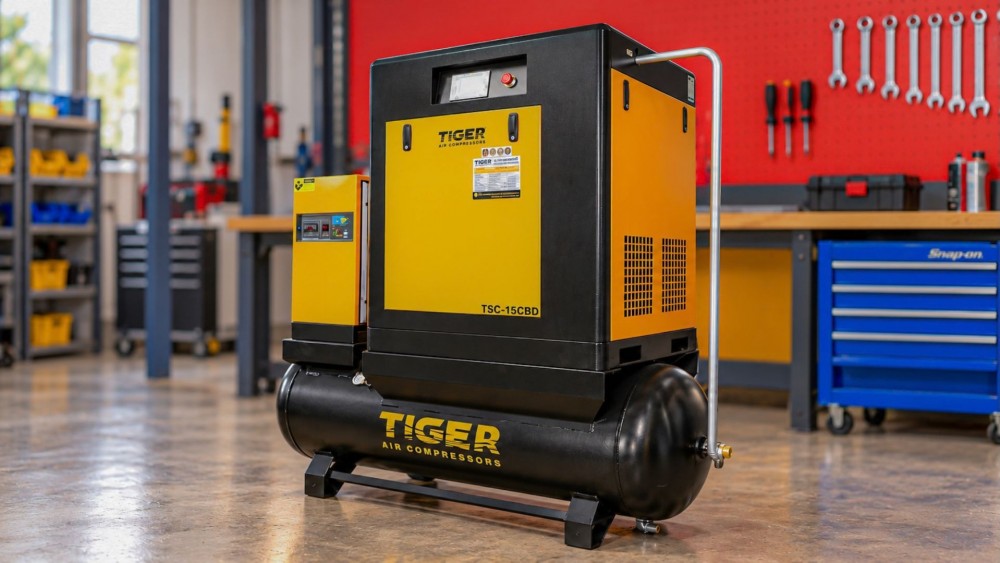
If your primary operation involves running air from morning till evening, with machinery or multiple technicians drawing air at the same time, piston compressors will reach their limits because they require duty-cycle rest periods.
Screw air compressors are machines designed to run continuously all day long, in exchange for significantly higher investment and installation costs. Small shops and home users may not need to go this far, but they are exceptionally well-suited for factories or large auto repair shops.
Comparing Three Scenarios to See Which Air Compressor Fits Best
Imagine the first person living in a condo, using it to inflate bicycle tires and blow dust off computers. They might not need much air volume, but they need a machine that can be turned on indoors without disturbing anyone. The answer is a small oil-free compressor.
Next is a renovation contractor firing air nailers all day but moving to a new customer's house every week. They need a unit that one person can carry alone and plug into any standard household outlet. The answer is a direct-drive rotary model; as for the loud noise, working hours simply need to be coordinated with the homeowner.
The last person is opening an auto body paint shop, equipped with both air sanders and spray guns. They should not start with a small machine and upgrade later, because both tasks require continuous airflow. The answer is a belt-driven compressor with an air output exceeding that of their largest tool, along with properly installed electrical wiring.
Which types of air compressors should be ruled out from your options?
- An air compressor whose output just barely matches the single tool you currently own, because a second pneumatic tool usually follows, and a machine forced to run at full capacity all the time will wear out quickly.
- Too large for the space, such as a large-tank belt-driven compressor in a location with insufficient electrical capacity and neighbors right next door, as it will become equipment you are afraid to turn on.
- A used air compressor with an unknown tank history. An air tank is a pressure vessel; rust from accumulated internal water cannot be seen from the outside.
- An oil-free air compressor chosen solely for its quiet operation, even though the primary job is full-car paint spraying in an auto body shop—quiet operation doesn't help if there isn't enough airflow.
Specifications on the air compressor label you must read thoroughly
- Air delivery rate, usually specified in liters per minute (L/min). Compare this figure against the air consumption rate of your most air-hungry tool. This figure should exceed what the tool uses, with some margin left over.
- Maximum pressure must be higher than the operating pressure of the tools, which can be found in each tool's manual.
- Tank size should only be decided after confirming the airflow rate is adequate. Intermittent tasks benefit greatly from a large tank, whereas for continuous tasks, a large tank merely delays the drop in air pressure.
- The electrical system and the manufacturer's recommended duty cycle, indicating how long it can run before requiring a rest period. If the label or product page does not state the air delivery rate at all, ask first; do not guess based on horsepower.
Warning signs to immediately stop using your air compressor and call a technician
Can an air compressor tank really explode? What causes it? Primary causes and prevention methods Air compressors store energy within the tank, so there are points where you should never push your luck. Discharge the air if you notice tank bulging, deep rust pitting, or leaks along welded seams; when the safety valve fails to operate or is plugged; when the compressor does not shut off despite exceeding the set pressure; or when the circuit breaker repeatedly trips or the wiring heats up with a burning smell. These issues should not be addressed with DIY fixes like welding patches onto the tank or installing a larger breaker. A qualified technician experienced with pressure vessels and electrical systems should inspect it.
A routine task you can and should do yourself is draining water from the air compressor tank after use, as accumulated water is the root cause of rust.
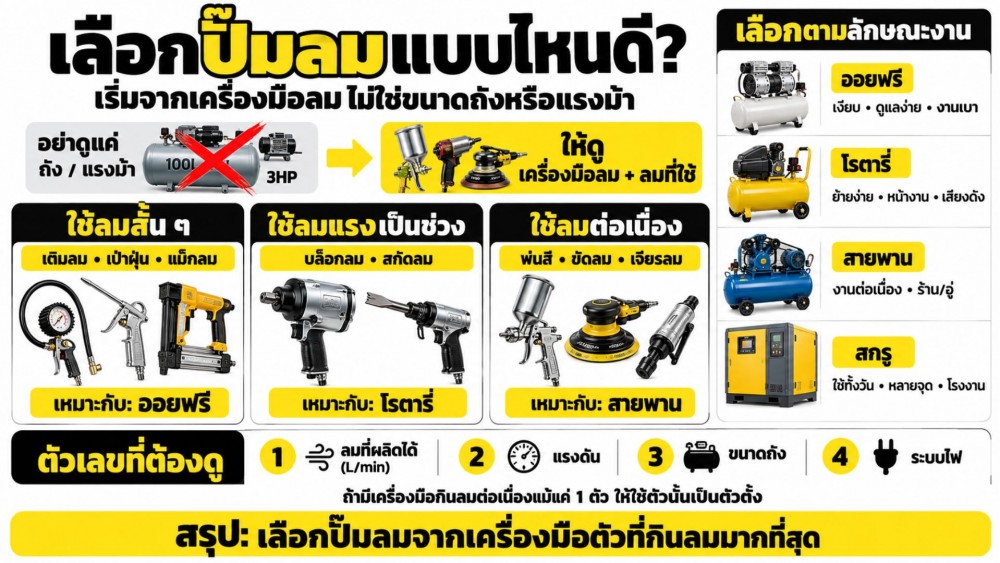
Conclusion: Choose an air compressor that matches your most air-consuming tool
Start with your pneumatic tools, not horsepower or tank size. The airflow output should exceed what the tools consume, with extra headroom, and the maximum pressure should also be higher than the tools' operating pressure.
If used at home for intermittent tasks where low noise is important, choose an oil-free model. For on-site contractors using air nailers as their primary tool, a direct-drive rotary type offers the best value. For paint spraying, sanding, or running a shop, start with a belt-driven compressor to avoid buying twice. And when air is needed around the clock across full factory shifts, then consider a rotary screw compressor.
Before making a decision, try listing the air tools you currently own and those you plan to purchase, then compare each type in the category Air Pumps now