


 EN
 ไทย


Customers Also Purchased


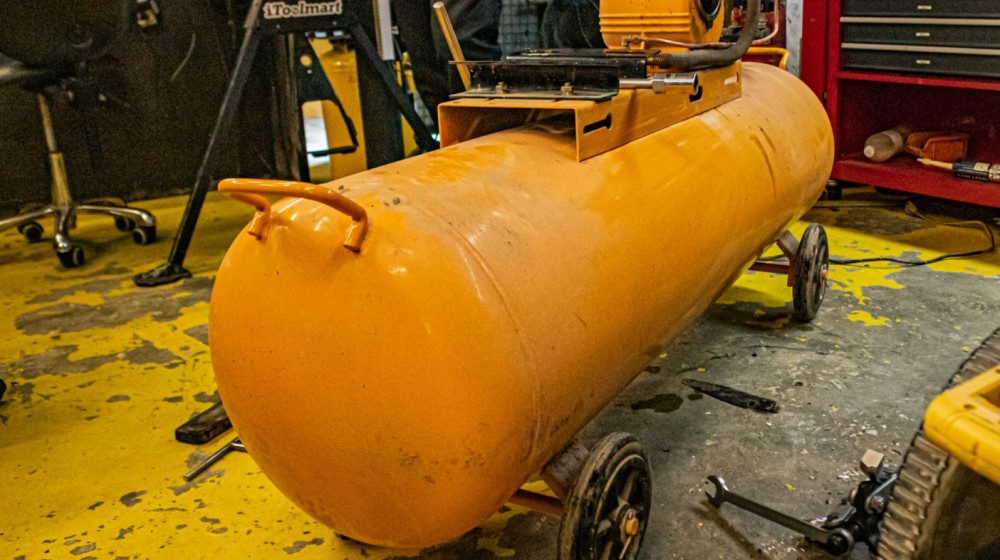
If you ask straightforwardly, " Air Pumps Can it really explode? " Many people, even those familiar with it, might still hesitate. You might have heard about it, but never seen it with your own eyes, thinking it's far-fetched and irrelevant to everyday use. Some might dismiss it as a cautionary tale meant to make people treat the tool with care. But the truth is, air compressors can really explode. More importantly, it's not far-fetched at all, especially with continuous use, heavy operation, or unknowingly improper usage.
"Air compressors" are essential equipment in many facilities, workshops, and factories. They are used for tire inflation, powering pneumatic tools, spray painting, cleaning, and countless other industrial applications. Yet because they seem so familiar, many people overlook the risks—especially the dangers lurking inside the pressure tank that cannot be seen from the outside.
Therefore, let's take a serious look at whether air compressors can really explode, what causes it, and what the primary factors are. We'll also cover professional, practical prevention methods along with technical details to help understand the "root cause" rather than just treating symptoms, ensuring you can operate air compressors safely, confidently, and effectively minimize risks in the long run.
How does an air compressor work? Why is there a risk of explosion?
Before getting to the causes, we need to understand the basics of an air compressor first. For instance, understanding the system lets you know "where the risk points are."
An air compressor compresses air into a storage tank (Air Tank) to increase air pressure, such as 6–10 bar (approximately 90–150 PSI), or up to 12–15 bar in industrial systems. As pressure builds up in the tank, the system uses a Pressure Switch to shut off the motor when reaching the preset level, and restarts it when the tank pressure drops.
The problem is, if the "control system fails" or the "tank cannot withstand the pressure," an overpressure condition occurs—and this is where an explosion begins.
Air compressors are not at risk of exploding like general machine motors, but because they store "high-pressure energy" inside the tank.
How do air compressors explode from a "system failure"?
Imagine you are using an air compressor normally—the motor hums steadily, the airflow is strong, and everything seems completely fine. Meanwhile, inside the tank where you cannot see, pressure is continuously building up without you noticing. If something goes wrong, such as a valve failing to operate or the tank weakening from rust, that pressure can turn into a dangerous hazard.
Most causes of air compressor explosions are not complicated, but rather stem from everyday use.
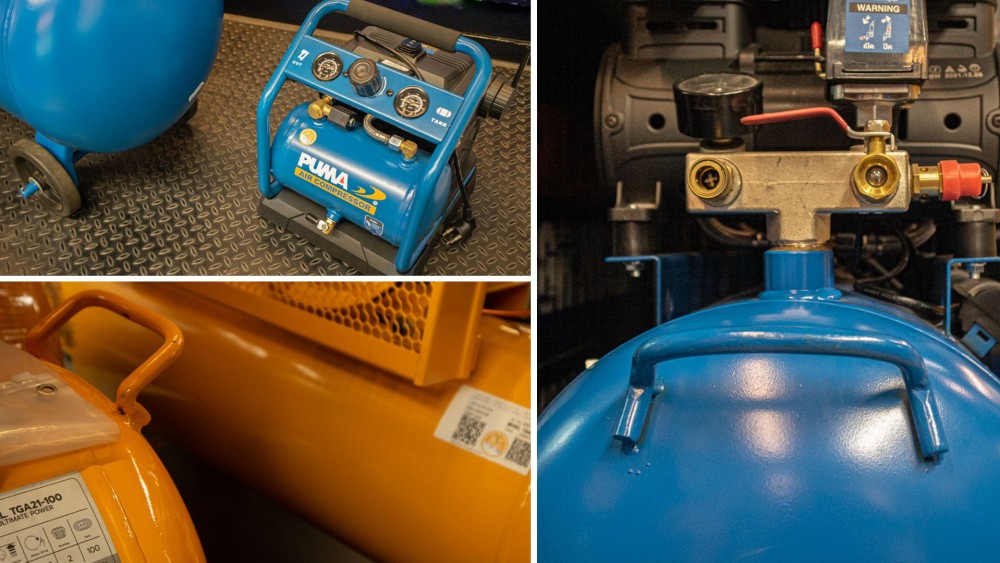
1. Overpressure: The Number One Culprit
The most common cause of air compressor explosions is overpressure, especially when the automatic pressure switch fails or the electrical control switch (relay) sticks, preventing the machine from cutting off.
Imagine an air compressor continuously pumping air into the tank—from 8 bar to 10 bar, then reaching 12 bar—without anything telling it to stop. A tank designed to handle only 10 bar will begin to experience stress in the steel.
At a certain point, the structure will deform and rupture suddenly, which is known as a "pressure explosion."
2. Internal Tank Rust: Another Hidden Risk
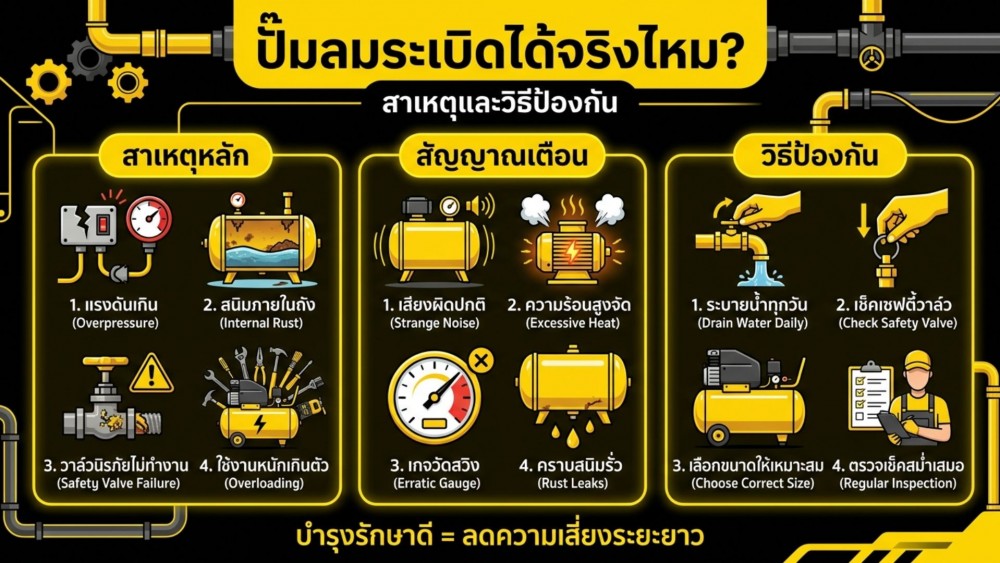
Another very common cause is "internal tank rust," which results from water accumulating inside the air compressor. This answers the crucial question: Why must you drain the water every time you use an air compressor? Is it okay if you don't?
The air drawn in naturally contains moisture. Once compressed and cooled down, it condenses into water inside the tank. If not drained, the water will corrode the steel from the inside. The scary part is that the outside of the tank may still look fine, but the inside wall might have thinned to just a few millimeters, leaving it unable to withstand sustained pressure and liable to burst instantly.
3. Safety Valve Failure
Safety Valve: A Small but Essential Air Compressor Spare Part—What Does It Actually Protect? The safety valve is the air compressor's last line of defense. If overpressure occurs, it should release the air immediately. However, in many cases, this valve is never inspected or gets clogged with grime, preventing it from opening. When a critical point is reached, there is nothing left to relieve the pressure.
4. Misuse
Many people use small air compressors for heavy-duty tasks, such as powering multiple pneumatic tools simultaneously or running them continuously for hours without breaks. As a result, the unit is overworked, heat accumulates, and pressure fluctuates, increasing the risk of system failure and even an explosion.
5. Substandard Modifications or Repairs
Re-welding the tank, replacing parts with substandard valves, or installing accessories not specifically designed for it can cause the air compressor system to become unbalanced. In high-pressure systems, a "small mistake" can turn into a major incident.
6. How do CFM, PSI, and Duty Cycle relate to air compressor safety?
Many people choose an air compressor based on horsepower (HP) or look at What is the difference between a large and small air compressor tank besides storage capacity? However, the more critical metrics are CFM (air volume), PSI (pressure), and Duty Cycle (continuous run time). If you use a machine with insufficient CFM, it will cycle more frequently, build up heat, and cause the system to wear out faster.
Duty Cycle is equally important. For example, if a machine is rated at 50%, it means that for every 5 minutes of operation, it must rest for 5 minutes. Pushing it to run continuously will increase the risk of damage. This is an overlooked factor and a root cause of long-term air compressor issues.
Warning signs before an air compressor explodes (Never overlook these)
Before an air compressor explodes, there are usually warning signs in advance. However, the problem is that many people fail to notice them or dismiss them as normal, minor occurrences for tools. In reality, these signs are "warnings" indicating that the air compressor is starting to malfunction and may unknowingly be approaching a danger zone. The longer you ignore them, the more the risk accumulates until it eventually escalates into a major incident.
Abnormal noises
Vibrating, knocking, or air leakage sounds are not ordinary noises; they signal unstable pressure or internal parts starting to fail, such as a leaking valve, a degraded seal, or loose fittings.
If you hear abnormal sounds or loud noises oft-en, it is a sign that the air compressor system is operating in an unbalanced state and you should stop using it for inspection.
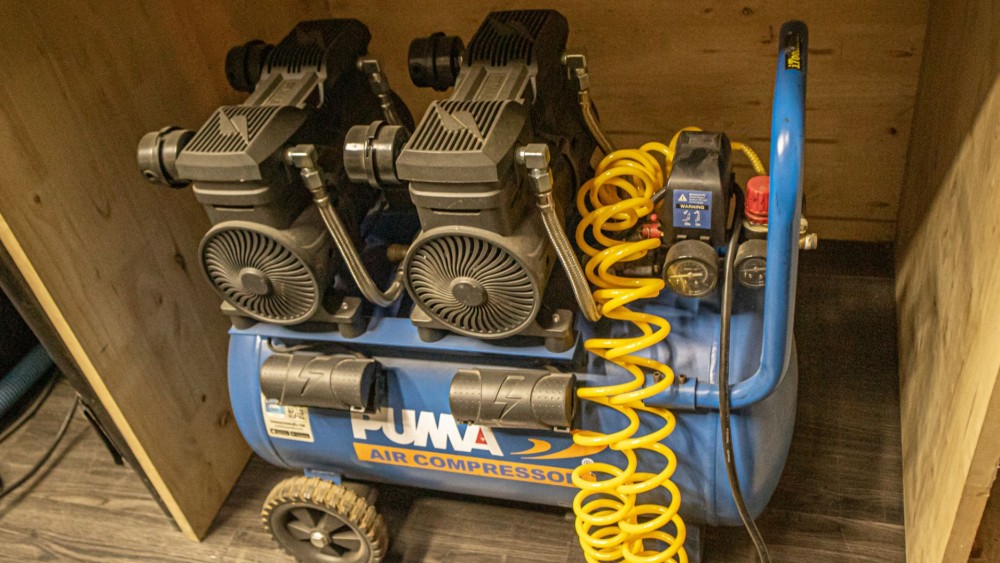
Abnormally high heat
If the pump head or tank feels excessively hot to the touch, it could mean the machine is being overloaded or there is a cooling issue, such as a malfunctioning cooling fan or dust clogging. Allowing heat to build up continuously weakens the metal and reduces the tank's ability to withstand pressure.
Abnormal pressure gauge
If the pressure gauge needle rises abnormally high, fails to stop at the cut-off point, or fluctuates erratically, it indicates that the air compressor's pressure control system is malfunctioning—such as a faulty pressure switch or unintentional over-pressurization—which is one of the main causes of an explosion.
Water or rust leaks
Minor spots like moisture seepage or rust appearing along welds, joints, or the bottom of the tank are signs of internal deterioration that cannot be seen from the outside. Furthermore, excessive moisture accumulation that is not drained regularly directly accelerates tank corrosion, gradually weakening its structure until it can no longer hold pressure.
How to use an air compressor safely in the long run?
Using an air compressor safely requires disciplined maintenance, such as inspecting it before every use, not overloading it, and never ignoring minor warning signs.
In many cases, accidents stem from an "accumulation of risks" that goes unnoticed. It can also generate moisture or rust that damages other equipment—not just causing a tank explosion alone.
Therefore, we should
- Check the pressure gauge
- Listen to the machine sounds
- Look for leaks
- Drain the water from the tank
- Check air hoses and fittings
Professional Ways to Prevent Air Compressor Explosions
- Drain the tank daily The simplest yet most crucial step for air compressors, as it directly reduces internal tank rust
- Inspect the safety valve periodically to ensure it is still functioning properly
- Choose the right machine size for the job Do not use a small air compressor for heavy-duty tasks, as it overworks the machine
- Inspect the air tank regularly Especially for heavy-use units, inspect at least once a year
Avoid modifying the system without proper knowledge, as this can disrupt the pressure balance in the air compressor. Always use standard spare parts from the manufacturer for safety.
Conclusion: Air compressors can indeed explode, but it is preventable
Air compressors can indeed explode, but just as importantly, "it is completely preventable." Every cause mentioned above can be avoided if we understand how the air compressor operates, maintain discipline in its use, and perform regular maintenance without letting small risks accumulate into major problems later on.
Do not view an air compressor as just a machine that runs endlessly without care. In reality, it is a device storing high-pressure energy inside at all times. If any component fails—whether the valve, the tank, or the control system—the accumulated pressure can immediately turn into a hazard, potentially striking without warning.
If using Air Pumps Also, don't forget to inspect the machine from day one, including draining water, listening for unusual sounds, and checking the condition of the tank. True safety means taking preventive measures before unfixable problems occur.