


 EN
 ไทย


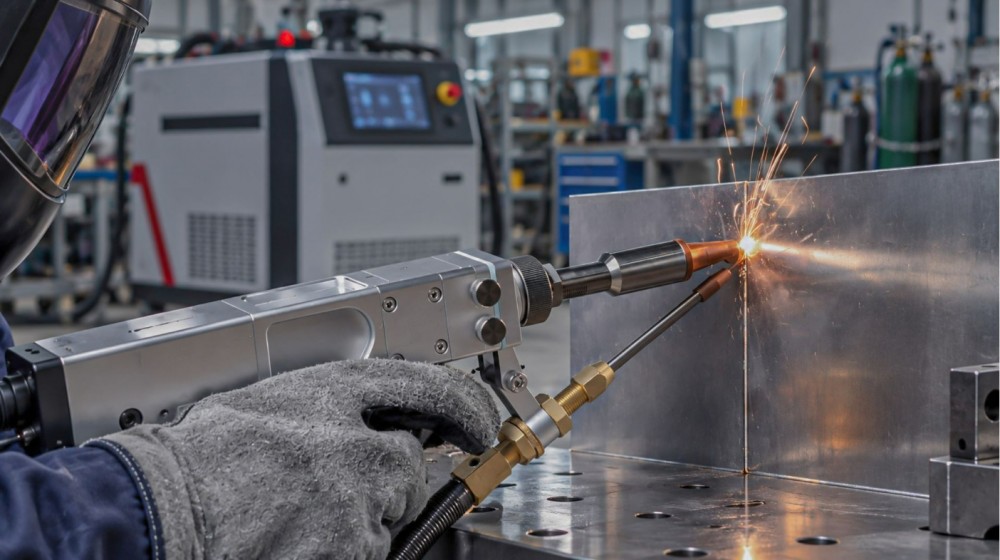
Lately, you may have seen welding videos where the torch glides quickly across seams, leaving a clean, beautiful bead with virtually no spatter. Seeing this, many might wonder what kind of welding machine this is and why the results look so different from standard welds.
That machine is Laser Welding Machines Which was previously found almost exclusively in parts manufacturing plants, but is now increasingly making its way into medium-sized shops. Let's look at how a laser welding machine works, how it differs from familiar equipment like MIG, TIG, or stick welders, and what limitations you should know before considering one.
What's important to understand from the start is that this category of machine isn't meant to replace all electric welders, but rather to fill in where traditional machines struggle—especially on thin sheet metal where heat distortion is a problem.
Laser welders apply heat completely differently from arc welding
All the differences of a laser welding machine stem from the way it applies heat, which is why the results differ right from the very first weld bead. Once you understand this core principle, other aspects like speed, warping, and the amount of post-weld cleanup will make sense naturally without having to memorize each point separately.
Traditional welders and electric welding machines use an electric arc
Commonly used welding machines—whether MMA (stick), MIG, or TIG—all operate by generating an electric current that creates an arc between the wire or electrode and the workpiece. The heat generated spreads over a broad area around the weld pool, something welders are familiar with and can control by adjusting the current and travel speed.
Lasers focus energy onto a tiny point
Laser welding machines emit a beam focused onto an extremely small spot, concentrating high energy specifically at that point with minimal heat dissipation to the sides.
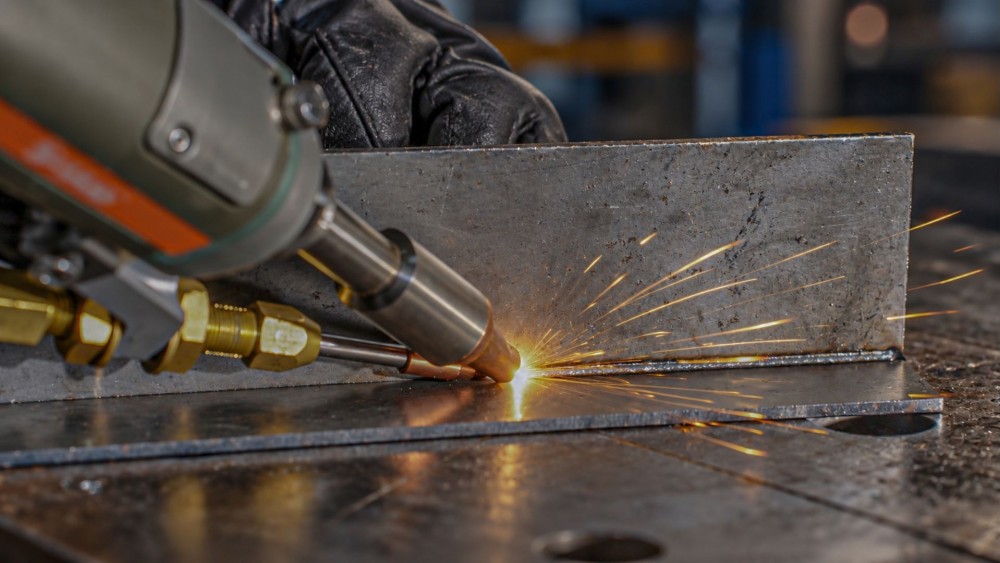
As a result, the total heat input into the workpiece is lower compared to conventional methods for the same task, even though the weld point itself is much hotter.
Real-world results from using a laser welding machine
The lower heat input delivered by a laser welding machine is not just a technical specification; it transforms the nature of the work across the entire process, from welding to post-weld finishing.
Reduced workpiece distortion
The area around the weld seam where the metal's properties are altered by heat—known as the HAZ (Heat Affected Zone)—is much narrower in laser welding. With a narrower HAZ, the thermal stresses from cooling shrinkage are reduced, resulting in significantly less distortion on thin sheet metal than typically experienced.
Narrow weld seams and minimal post-weld cleanup
The resulting seam is narrower and smoother, produces less spatter, and causes less heat tinting around the weld on stainless steel. For fabrication shops that must grind and polish every seam before delivery, the time saved at this step often exceeds the time saved during the actual welding.
Laser welding machines weld faster in suitable applications
On thin sheet metal with well-prepared joints, the travel speed of a laser welder can be significantly higher than arc welding. However, it must be emphasized that this advantage only applies when the workpieces fit together tightly, a condition that is more crucial than many realize.
Limitations of laser welding machines you need to know before use
Because the laser beam concentrates energy into a tiny area, workpiece fit-up errors have a much more noticeable impact than in traditional welding. If the edges are uneven, the gap is inconsistent, or the parts do not fit tightly together, the quality of the weld seam can be immediately compromised at that spot.
This is why many individuals and businesses that invest in a laser welder find it doesn't perform to full expectations—not because of the machine itself, but due to pre-welding steps such as cutting, fit-up, and clamping. If these processes lack consistency, the speed and precision that define laser welding will be compromised.
Joints must fit tightly together
If the parts do not fit tightly and leave a gap, the laser beam can pass right through without fusing both edges. Hand-cut workpieces with inconsistent gaps therefore require more meticulous edge preparation or the use of filler wire.
Thick steel remains the domain of traditional welding machines
Applications requiring deep penetration and high weld metal volume, such as structural steelwork, are still best suited to Stick welding machines or MIG are much more high-powered; purchasing a laser welding machine for this type of work might not be of any help.
Requires a controlled environment
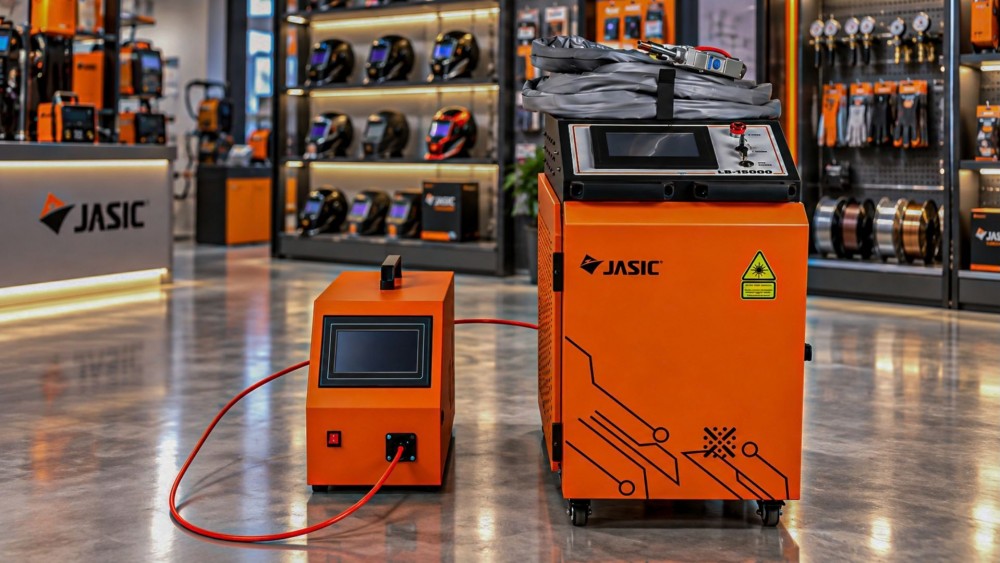
Laser welding machines require a stable power supply, cooling systems, and a workspace with restricted access. Transporting them to off-site jobs is therefore much more troublesome than with conventional welding machines or portable welding units.
Safety for laser welding machines is a completely different matter compared to arc welding
The risks associated with laser welding machines are different from what welders are used to. In arc welding, the main hazards are bright light, sparks, heat, and welding fumes, which users can see relatively clearly and protect against with Welding helmet gloves, protective clothing, and an appropriate ventilation system for the job.
In laser work, an additional hazard from laser welding machines arises, which is the laser beam that may be invisible to the naked eye and beam reflections from metal surfaces.
Many laser welding machine systems use wavelengths invisible to the human eye; therefore, even if operators do not perceive any abnormal brightness, it does not mean the area is safe.
A critical risk is that beam energy can enter the eyes directly or reflect off workpiece surfaces, polished metal, sheet edges, or equipment around the welding table and redirect away from the user's intended point.
Protective glasses must match the machine's wavelength
Welding helmets or goggles used for arc welding are not designed to protect against laser beams. The protective equipment used must specify the wavelength and protection level matching the laser welding machine in use. Moreover, this information should be requested from the seller when purchasing the machine, not looked for afterward.
Reflected light is dangerous to bystanders as well
Polished metal surfaces reflect the beam in unpredictable directions. People in the same room who are not operating the laser welding machine may therefore also be at risk. The workspace must have laser-safe screening partitions and restricted access during operation.
Fumes and metal dust must still be managed as usual
Although fumes are often less than in arc welding in many cases, fine metal dust generated by laser welding machines must still be managed properly just as well. Thinking that less smoke means no ventilation system is needed is a misconception, and it should be prepared prior to machine installation.
Before starting actual use, you should have the seller or installer conduct operation and safety training for everyone in the area, not just the operators of the machine.
What types of work are laser welding machines suitable for?
From everything covered above, it is clear that laser welding machines are not superior in every aspect, but they excel in certain applications and have clear disadvantages in others. In simple terms: consider primarily the workpiece thickness and the importance of surface finish.
Stainless steel tank fabrication, kitchen cabinetry, decorative work, and workpieces where customers see the weld seam are the groups that benefit the most, because the persistent problem with this type of work is heat, which warps sheet metal and leaves heat tint that must be polished off every time.
Meanwhile, thick steel work, jobs with loose-fitting joints, and tasks requiring moving the machine on-site remain the domain of conventional electric welders. This does not mean either machine is inferior, but rather a matter of choosing the right tool for the job.
Laser welders are suitable for stainless steel and thin sheet metal, but are not yet suitable for structural work and off-site jobs.
Conclusion
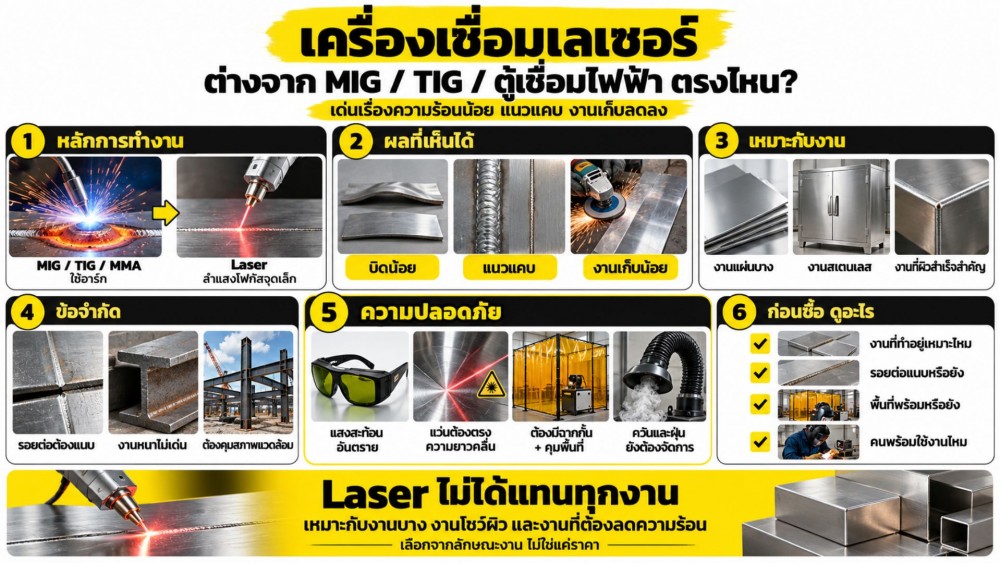
Laser welding machines differ from MIG and TIG starting from the principle of applying heat to the workpiece. This difference affects the behavior of the workpiece throughout the entire process. Generally, lasers focus energy into a narrower area, providing better control over heat effects in certain types of work. Thus, they are often suitable for jobs requiring a clean surface finish, thin sheet metal work, or applications where minimizing workpiece deformation after welding is essential.
However, the advantages of a laser welding machine do not mean that the weld seam will be stronger than with other processes. Strength still depends on multiple factors such as the material, joint design, workpiece preparation, and proper parameter setup for that specific job. Choosing a laser machine should therefore be viewed holistically based on what problems in the existing process need to be solved.
For example, aiming to reduce polishing work, minimize warping, or achieve greater consistency in repetitive tasks, rather than simply looking at it as newer technology.
Another aspect is workspace and safety, which must be viewed as part of the initial investment, not as an afterthought accessory. If the site is not yet suitable for area control, protecting bystanders, or organizing an orderly workflow, these aspects should be properly prepared first.
The cost-effectiveness of Laser Welding Machines is not decided by the figures on the quotation, but depends on how ready your jobs, personnel, and workspace are to support this new method of working.

