


 EN
 ไทย


Customers Also Purchased


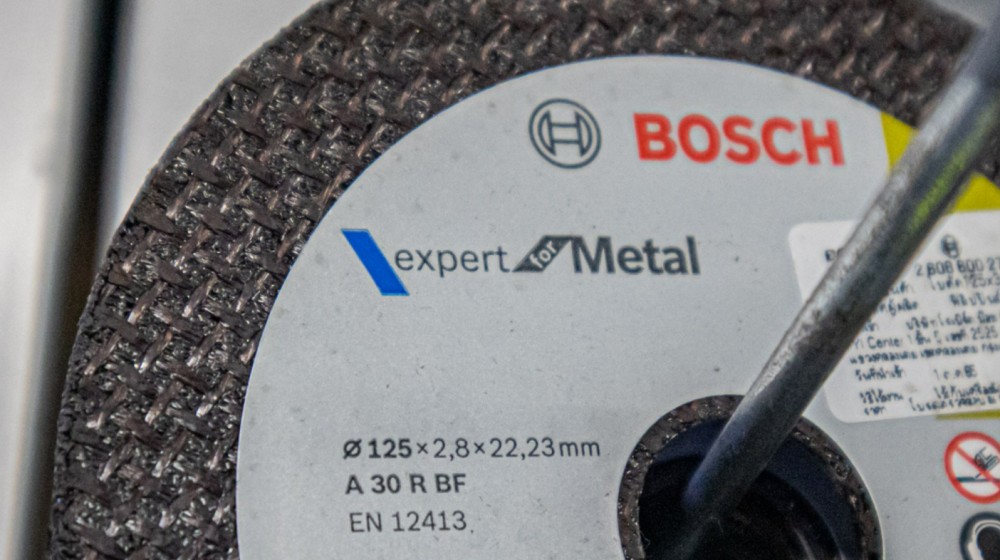
Anyone who has ever picked up a Steel Cutting Disc and examined it closely, besides the brand name, size, thickness, and RPM rating, has likely seen EN 12413 printed on the label. Sometimes the text is so small you hardly notice it, but for those who buy cutting discs frequently, this code might become one of the things to look for before deciding to purchase, under the understanding that it is a mark indicating the cutting disc complies with certain standards.
This understanding is partly on the right track, but what is even more important to know is: EN 12413 does not tell you everything about a cutting disc. It does not instantly tell you if the disc is sharper, cuts faster, lasts longer, works with stainless steel, or fits every angle grinder. Choosing a cutting disc still requires reading many other specifications.
Besides What should a reliable cutting disc have on its label? Let's take another look at cutting discs before actual use: once you see this code on the label, what can you actually know, and what else does EN 12413 not tell you, so that you can choose consumables that better suit your tool, material, and specific job application?
What is EN 12413, and what does it have to do with cutting discs?
EN 12413 is a European standard for Safety requirements for bonded abrasive products or in English, titled Safety requirements for bonded abrasive products
The current edition is EN 12413:2019, which applies to rotary bonded abrasive products such as steel cutting discs, fiber cut-off wheels, and grinding discs.
EN 12413 specifies measures for reducing hazards that may arise from product design and application, including verification methods, testing procedures, and safety information that manufacturers must provide to users.
It is a safety standard, not a grade name for cutting discs.
The first thing to distinguish is that EN 12413 is not a sharpness grade, not a hardness grade, and not an abrasive grain formulation for cutting discs.
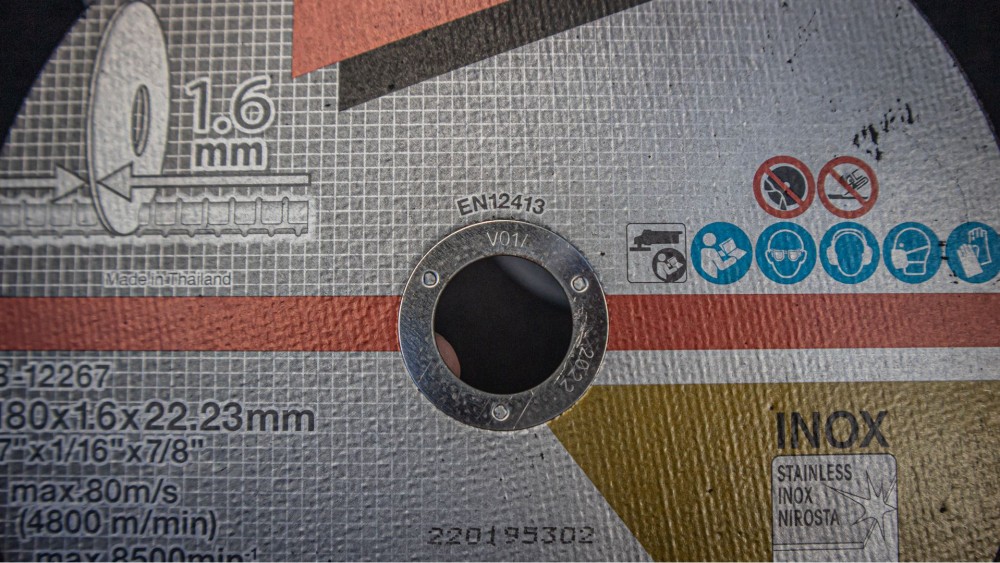
Two cutting discs both bearing EN 12413 does not mean they have identical properties. What they share is that both products fall within the scope of this safety standard and reference the relevant requirements. Cutting performance still depends on the design and formulation of each individual product.
This is a key point to keep in mind, as it prevents the misunderstanding that "if it has EN 12413, any cutting disc is the same"—which in reality is not always the case.
What can you learn from seeing EN 12413 on a cutting disc?
Although EN 12413 does not tell you everything, it does reveal several key pieces of information regarding the product's safety considerations. Displaying EN 12413 means: The manufacturer complies with critical safety requirements for reinforced resin-bonded abrasive cutting-off and grinding wheels within the standard's scope
Supplementary label information also includes usage restrictions, manufacturer, declaration of conformity, expiry date or traceability code, and product specification codes.
When looking at a cutting disc, don't look only at EN 12413; examine the surrounding details together with it, because these details help determine whether the disc is suitable for your machine and application. Check before use! 5 inspection checkpoints for cutting discs before mounting on an angle grinder every time
The maximum RPM of a cutting disc is information that must be read together.
Suppose we have a 4-inch cutting disc; the next thing to look at after the dimensions is the Maximum RPM or the maximum rotational speed specified by the manufacturer for that cutting disc.
The simple rule is that the speed of the tool used must not exceed the maximum RPM specified on the cutting disc. If the disc is rated for a lower speed than the tool, even if the outer diameter and arbor hole fit, it must not be used.
This is critical because the cutting disc constantly withstands centrifugal forces from rotation. The higher the speed, the greater the stress on the disc structure. Choosing a disc simply because it's "also 4 inches" is therefore not enough.
What does the m/s on a cutting disc mean?
While RPM indicates the number of revolutions the disc makes per minute, m/s indicates the peripheral speed of the disc, or Maximum Operating Speed.
The reason both values are needed is that discs with different diameters have different peripheral speeds even when rotating at the same RPM. Larger discs have a greater circumference, so you cannot apply the RPM rating of a smaller disc to a larger one.
General users do not need to calculate this every time, but should understand these figures and always select discs according to the manufacturer's specified ratings.
EN 12413 does not tell you which disc "cuts faster"
If there are two cutting discs on the shelf and both carry EN 12413, you cannot simply pick them up and judge from this standard which one will cut through steel tubing faster. Cutting speed depends on multiple factors such as grain type, grit size, bond structure, wheel hardness, thickness, manufacturer formulation, the metal being cut, tool power, and feed pressure.
A cutting disc designed for rapid material removal may perform quite differently from one engineered for slow wear or extended service life, even though both products reference the EN 12413 standard. Therefore, if your requirement is "fast cutting," you must also look into Performance and Application further; you cannot find the answer from EN 12413 alone.
EN 12413 does not tell you which disc is "more durable"
Whether a cutting disc is durable or not usually relates to its service life—such as how many cuts it can make before its diameter reduces too much to continue using. However, EN 12413 is not a score measuring disc lifespan.
Discs adhering to the same standard can have different wear rates. Even for the exact same disc model, the actual service life can vary depending on the workpiece; cutting thin sheet metal, square tubing, rebar, or solid round bar all place different loads on the cutting disc.
The operating method also has an effect. For instance, applying heavy pressure does not always yield more work, as it can cause the cutting disc to overheat and wear out faster.
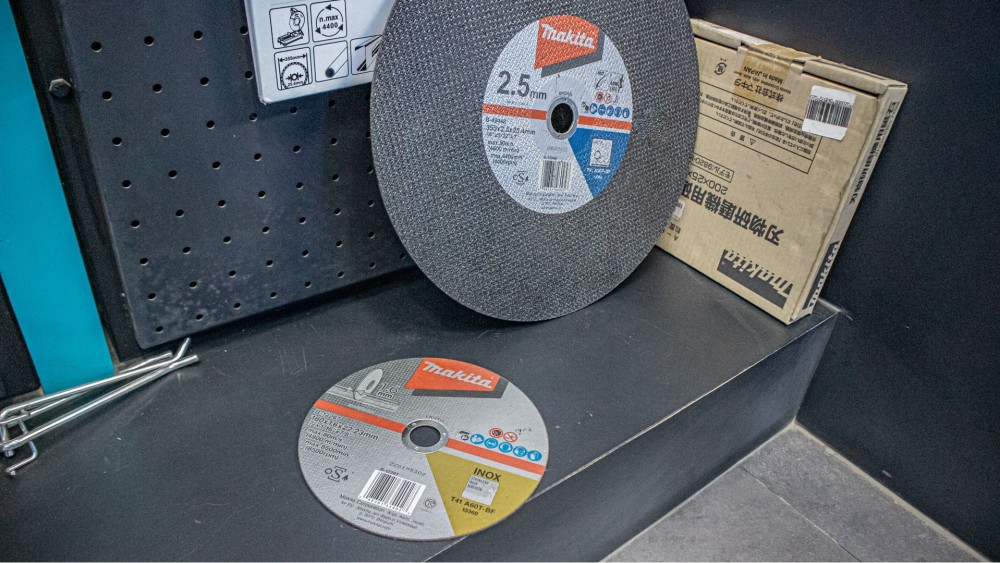
And if you are comparing cost-effectiveness, what is more interesting than the price per disc is: Cost per number of workpieces cut which can only be known by looking at performance data or testing in real-world applications.
EN 12413 does not mean it can be used on steel and stainless steel interchangeably
The term "steel cutting disc" in common language might sound like a single product category, but in actual use, materials must be specified in detail, such as Mild Steel, Carbon Steel, or Stainless Steel.
If you need to cut stainless steel, having EN 12413 on the disc still does not answer whether that disc is suitable for Stainless Steel. You must also check the manufacturer's specified application, such as Stainless, INOX, or other text indicating the target material. The reason is that: Safety standards and material suitability are two different things
Two discs might comply with the same EN 12413 requirements, but one is designed for general steel while the other is specially formulated for stainless steel. Looking only at the standard number therefore cannot answer the question of material compatibility. Steel vs. Stainless Steel Cutting Discs: Which to choose? Can they be used interchangeably?
EN 12413 does not state that a cutting disc can replace a grinding disc
The external appearance of cutting discs and grinding discs may look similar because both are circular abrasive products used with angle grinders, but their functions are completely different.
This difference is easily seen in their construction: cutting discs are usually thin to create a narrow kerf and remove less material, while grinding discs are thicker because they must withstand lateral side-load pressure during grinding.
Therefore, seeing EN 12413 does not turn a cutting disc into a multi-purpose product. If the disc is designed as a Cutting Disc, it should be used for Cutting and should not be used for side grinding. Summary of reasons: Why you must never use a cutting disc for grinding, even for small jobs
EN 12413 does not mean a cutting disc can be fitted onto just any angle grinder
Another misconception to watch out for is that if a disc meets the standard, it can be used on any machine that it physically fits onto, which is incorrect.
At a minimum, you should check the disc's diameter, thickness, arbor hole, maximum RPM, and mounting style to match the tool being used. Even if the arbor hole fits, if the disc's diameter is larger than what the tool was designed for, you should never modify the guard to force the disc to fit, because the mounting method, arbor hole, and guard are integral components of the machine's safety system.
When choosing a cutting disc, what else should you look for besides EN 12413?
Treat EN 12413 as just one of the checkpoints. Start by checking what type of cutting disc it is and what materials the manufacturer specifies it for. Then verify that the diameter, thickness, and arbor hole match your tool. Check that the disc's Maximum RPM is not less than the tool's operating speed, and thoroughly check the Maximum Operating Speed, as well as all limitations or application symbols.
After that, inspect the physical condition of the disc once again to ensure there are no cracks, chips, or damage. Simultaneously check the tool—including the guard, flanges, switch, power cord or battery—and ensure the workpiece is properly clamped.
For those who use large volumes of cutting discs in factories or on job sites, what should be added is performance comparison, such as cutting speed, disc lifespan, output yield, and cost per workpiece.
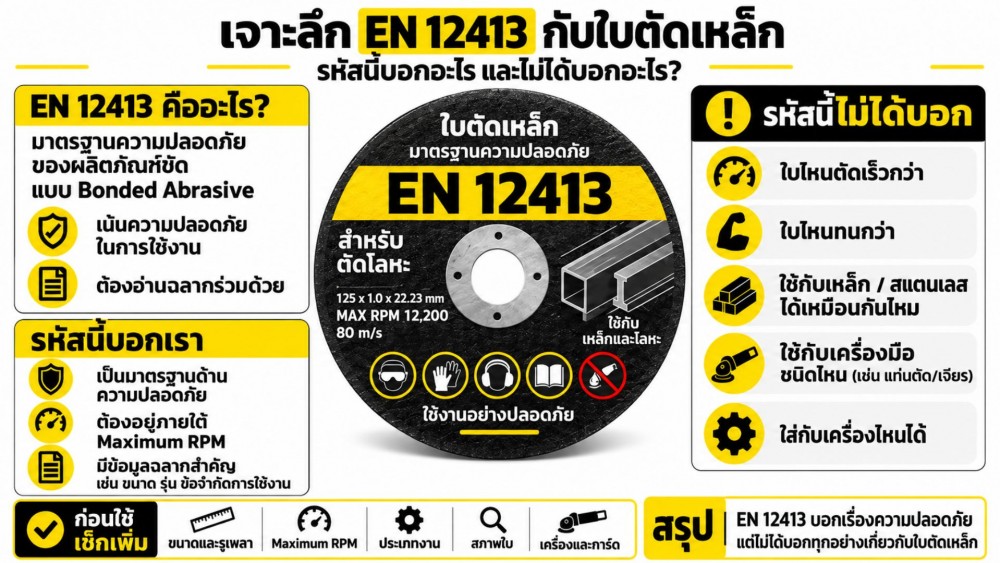
Summary: EN 12413 addresses "safety," but it doesn't answer everything about cutting discs
When you pick up a cutting disc and see EN 12413, what you should understand is that this code relates to safety standards for bonded abrasive products. It is not a mark certifying that the disc is the sharpest, most durable, or suitable for all applications.
What users need to do is not just look for EN 12413 on the label, but read all the information across the entire disc—from the type, compatible materials, dimensions, thickness, arbor hole, usage restrictions, and shelf life, to the actual condition of both the disc and the angle grinder.
EN 12413 becomes far more valuable when we treat it not just as a "certification mark on a label," but as the starting point for reading and selecting Steel Cutting Disc rationally.