


 EN
 ไทย


Customers Also Purchased


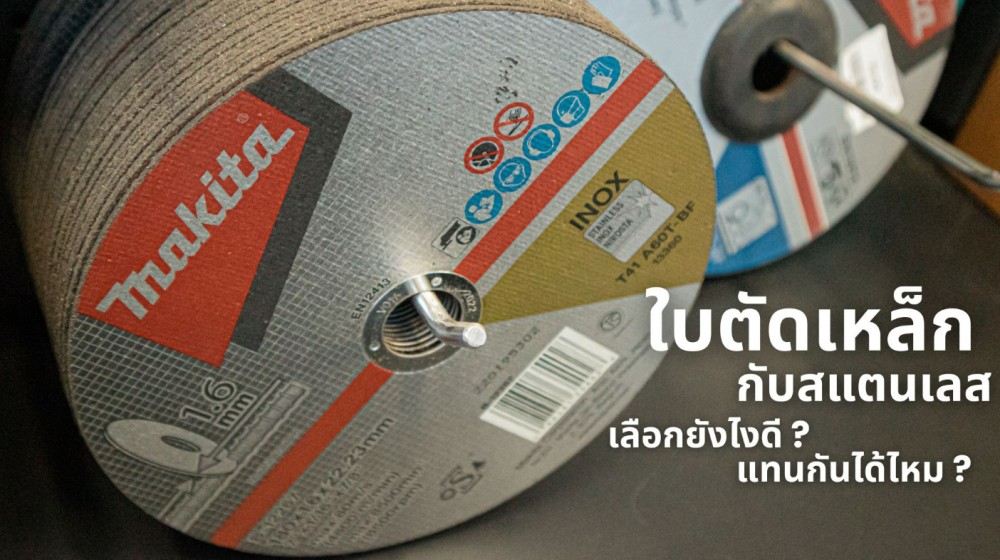
When speaking of classic consumables like Steel Cutting Disc A question that many people have heard over and over until it almost becomes a routine conversation is: "Is a dedicated cutting disc for stainless steel really necessary? And can a stainless steel cutting disc be used to cut general steel?"
It sounds like a simple question, doesn't it? But once you get hands-on with real work, try actual cutting, and use various types of metal cutting discs, I believe many people will start to realize it's not as trivial as it seems. As soon as the cutting disc touches the steel, differences in material, heat, hardness, durability, cutting speed, and the smell of steel fumes will expose everything.
If you're cutting thick steel box tubing and suddenly the cutting disc burns up into thick smoke, or the edge of your stainless steel work turns black and has to be polished all over again, you'll immediately understand that this isn't just theory—it affects work quality, safety, and long-term costs as well.
So, let's unpack this step by step: how do stainless steel and regular metal cutting discs perform differently? Why can some jobs use a standard metal cutting disc while others could be ruined without an INOX disc? To what extent can you use the same disc for steel and stainless steel? What happens if you use the wrong one? And finally, which type should you choose for true cost-effectiveness and professional results?
Cutting discs: Flat and round all the same, but used differently
Many people see cutting discs as just black circular plates—whether 4-inch, 5-inch, or 7-inch—differing only in brand or price per piece. But if you actually hold and compare different discs side by side, you'll feel subtle differences: the surface texture, hardness, flexibility, or the distinct resin scent of each grade. All of these factors have a much greater impact on your work than most people think.
pcsWhat should a reliable metal cutting disc label include? In fact, metal cutting discs consist of several components, such as abrasive grains (A, WA, ZA), toughness, bonding resin, and reinforcing fiberglass mesh. All of these make a disc perform better on one type of material than another, and no single metal cutting disc can be truly universal for everything.
What are general metal cutting discs designed for?
Typically, metal cutting discs for general steel (Metal/Mild Steel), carbon steel, structural steel, steel tubing, and reinforcing rebar use abrasive grains such as Aluminum Oxide (A) Which has good hardness, cuts general steel quickly, removes workpiece surface rapidly, and is reasonably priced.
Key highlights of general steel cutting discs are:
- Cuts quickly, effortless
- Economical price
- Suitable for general steel that is not very hard
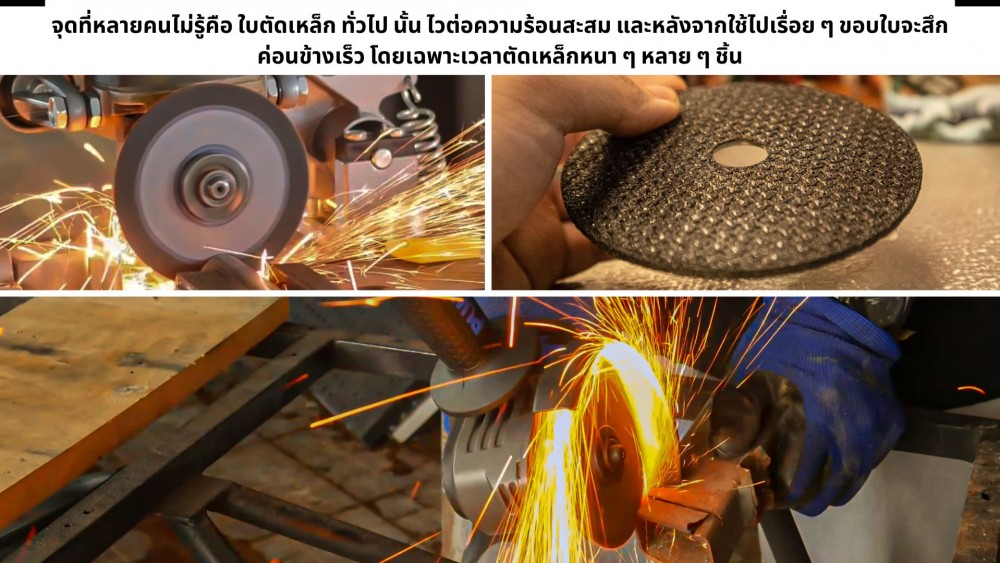
Is a stainless steel disc an upgraded steel cutting disc?
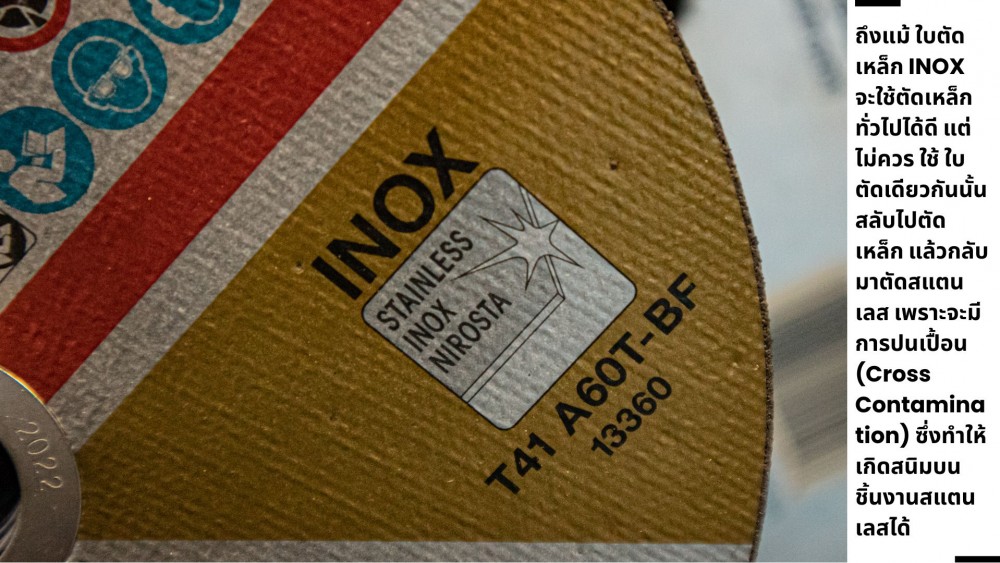
Cutting discs for stainless steel are labeled “INOX”, “Stainless”, or "Nirosta". This group of cutting discs uses a higher grade of Aluminum Oxide abrasive grains; some models or brands may use White Aluminum Oxide (WA) or Zirconia Alumina (ZA) which is harder and more heat-resistant, making it suitable for tough materials that do not dissipate heat well, such as stainless steel.
Advantages of stainless steel cutting discs are:
- Higher heat resistance; handles accumulated heat from cutting stainless steel much better than ordinary steel cutting discs, preventing the disc from warping or bending easily even during continuous long cuts.
- Reduces burns and yellow discoloration on work edges because INOX cutting discs have heat-resistant properties and clear metal debris well, resulting in clean edges without blackening or burn marks that require rework.
- Slower disc wear and sharper cuts; special abrasive grains provide smoother cutting with less effort and better long-term economy, as a single disc lasts much longer.
- Helps prevent latent rust later on, because debris from the disc does not contain carbon or iron contaminants that degrade the stainless steel surface—a problem most frequently encountered in decorative work or stainless steel railings.
When using a cutting disc mismatched with the material, the difference is noticeable immediately—from the moment the disc touches the workpiece to the sound generated during use. Everything tells you that the disc "doesn't fit the job." Sometimes, right from the first cut, you can feel the drag, a spike in heat forcing you to lift the tool to let it rest, abnormal smoke, and rough, uncooperative edges. The more you cut, the rougher it gets; the harder you push, the more it burns; and the more you force it, the greater the risk of the disc shattering.
All of this is not just about the work looking bad, but also directly affects the operator's safety.
Can a general steel cutting disc cut stainless steel? And to what extent?
This is probably the question everyone wants answered most. Standard steel cutting discs are cheaper than INOX. If you want to save money or just cut a little bit of stainless steel, can it be done? To answer directly: Yes, but the results won't be good, and it shouldn't be done frequently. Choosing the right one from the start is much better.
The reason is that stainless steel is much harder and tougher than general steel, causing rapid disc wear. In addition, steel cutting discs build up high heat because stainless steel conducts heat poorly, leading to disc warping, burning, and blackened edges.
Another point, as mentioned earlier, is rust. Debris from standard steel cutting discs contains carbon steel, which can adhere to the stainless steel surface and later develop into "rust spots," causing the stainless steel to degrade quickly. Most importantly, using a standard steel cutting disc to cut stainless steel significantly increases job hazards, as the disc degrades rapidly to the point of shattering and flying off.
If it's just for an emergency 1–2 times, it's not wrong. However, if it's for actual work on dozens of pieces, we strongly recommend not being complacent.
Can a stainless steel cutting disc be used to cut general steel instead?
When we talk about cutting discs, most people might share the same idea: a "standard steel disc" is basic, and a "stainless steel disc" is a specialized tool used only when necessary. But in reality, the matter is much more complex.
Stainless steel discs are designed for higher performance, better heat resistance, and a superior surface finish. This often makes them a 'better' choice for general steel work. It's just that many people haven't tried or thought to try them, leaving them unaware of their true potential.
Therefore, To the question: Can stainless steel discs be used as cutting discs for general steel? The answer is 100% yes, and it is even safer in many cases.
Cutting discs for stainless steel inherently have higher specifications—in terms of abrasive grains, hardness, heat resistance, and being free of rust-causing contaminants. Therefore, when used to cut general steel, the results are:
- Smoother cuts
- Slower disc wear
- Less heat generation
- Virtually no burn marks
The only downside is: More expensive than standard steel cutting discs If you are cutting general steel all day, an INOX disc might feel a bit excessive.
Why do craftsmen still recommend using separate steel cutting discs anyway?
Many metalworkers—whether site technicians, metal fabrication workshops, gate and fence builders, or veterans with over 20–30 years of experience—reach a very similar conclusion: they view steel cutting discs as "consumables" that must be replaced frequently anyway. Thus, they prioritize cost-effectiveness and flexibility over sheer quality alone. Hearing so many professionals agree makes it clear that their choice of cutting discs is tied more to workflow and common job requirements than simply which disc cuts better.
- Most general steel jobs don't require expensive cutting discs, as burning or black edges aren't an issue.
- Steel cutting discs are cheaper and easy to replace once worn out.
- Some tasks require speed; standard discs cut through steel faster due to their coarser grit.
So, it's more a matter of "cost-effectiveness." It's not that INOX cutting discs can't be used or aren't good, but using them like that is an unnecessary waste.
How do you know if the cutting disc you're using is suitable for the job?
Many people buy metal cutting discs based on price or brand without looking at the specifications at all, and end up wondering why the disc wears out so fast or why the workpiece edges burn. Let's see what you should consider when choosing the right metal cutting disc for your job.
Look for the "INOX" symbol
This is very important if you don't want your stainless steel to rust: you must use a cutting disc that is free from carbon steel contaminants, as these substances can deposit onto the stainless steel surface without you realizing it.
Tiny dust particles from the cutting disc can cause rust spots that quickly spread into stains, especially in outdoor or humid environments. Therefore, choosing a cutting disc for stainless steel labeled INOX or "Free From Fe/S/Cl" is the best way to prevent this issue.
Use a reliable brand of metal cutting disc
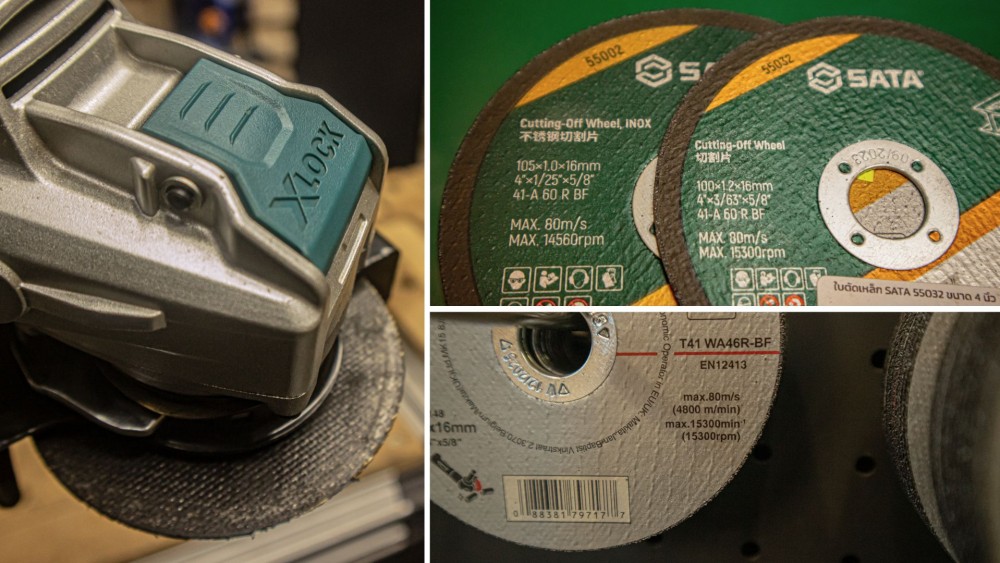
In-depth: Bosch vs Makita Metal Cutting Discs – Are they interchangeable, and which brand should you choose? High-quality cutting discs use a special resin that prevents the disc from easily shattering even under heavy pressure, while also increasing toughness so the disc can withstand torque and vibration better than standard-grade discs. Quality resin is also highly heat-resistant, ensuring it won't easily deform during use.
Conclusion
Let me summarize this in a simple, clear way for you:
- In practice, standard metal cutting discs can be used to cut stainless steel, but it shouldn't be done often, as the disadvantages outweigh the advantages.
- Stainless steel cutting discs cut standard steel very well and are safer.
- For any job involving stainless steel, avoid standard discs if you don't want to risk rust and disc breakage.
- If you want a single disc for both steel and stainless steel, go with an INOX disc, but do not alternate back and forth between cutting steel and stainless steel.
- If you cut regular steel regularly, standard steel cutting discs are still the most cost-effective.
Sometimes standard metal cutting discs are more suitable for demolishing old steel than expensive discs, because the cut doesn't need to look neat at all. But when it comes to stainless steel work, display work, furniture, or anything customers will inspect up close, the smoothness, sharpness, and uniformity of the cut edges are crucial factors that determine the quality of the work.
Remember that consumables like Steel Cutting Disc Don't just look at the price; consider suitability as well, and your work will be smoother, look better, and be much safer.