


 EN
 ไทย


Customers Also Purchased


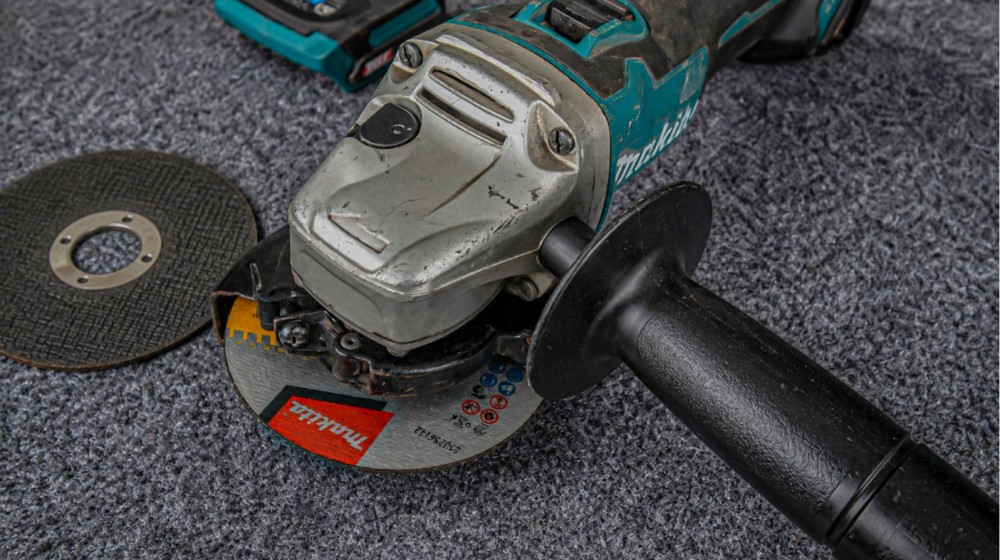
If you pick up Steel Cutting Disc Looking at it with the naked eye, we might all wonder: why does an inexpensive consumable disc—rough-surfaced, round, with no teeth or thin blade-like edge—not even feel "sharp" when running a finger along the rim? Yet when mounted on an angle grinder, switched on, and touched against steel, it gradually cuts straight through the metal until it parts. And it even generates sparks while cutting.
The answer lies in the fact that Metal cutting discs do not cut with a large single sharp edge like a knife, but rather rely on the sharpness of countless tiny abrasive grains that simultaneously grind and shear away the metal. These abrasive grains rotate at extremely high speeds, each acting like a microscopic cutting edge. Combined with rotational speed, downward pressure, and the cutting disc's structure, they continuously remove metal until the workpiece is cut through.
This principle sounds simple, but there is hidden detail behind it. It also explains why some cutting discs cut fast, some bite slowly, some get excessively hot, or why a disc that still looks thick stops cutting as effectively as when it was brand new.
Metal cutting discs do not work on the same principle as knives
How do metal cutting discs and fiber cutting discs differ? Can the terms be used interchangeably? We need to separate the word "cutting" from the familiar image.
- When using a knife to cut paper, rope, or food, we press a very thin and sharp edge onto the material.
- Stress concentrates at the tiny tip of the sharp edge,
- causing the material to separate.
Fiber metal cutting discs or Abrasive Cutting Discs work distinctly differently. The disc does not have a single continuous sharp edge, but rather consists of numerous abrasive grains bonded together with a bonding agent, along with reinforcing materials to help the disc maintain its shape and withstand high-speed rotational forces.
What actually contacts the steel isn't the entire "edge of the cutting disc" like a knife, but the tips of numerous abrasive grains on the disc's surface. A single grain may remove so little metal that it is barely visible to the naked eye; however, when this occurs simultaneously across thousands or tens of thousands of points, repeating thousands of times in just a few seconds, the steel is removed very quickly.
Knives and saws use large, single, or few cutting edges to slice through materials, whereas metal cutting discs use numerous tiny cutting edges to grind, abrade, and shear away the steel bit by bit across multiple points and revolutions simultaneously.
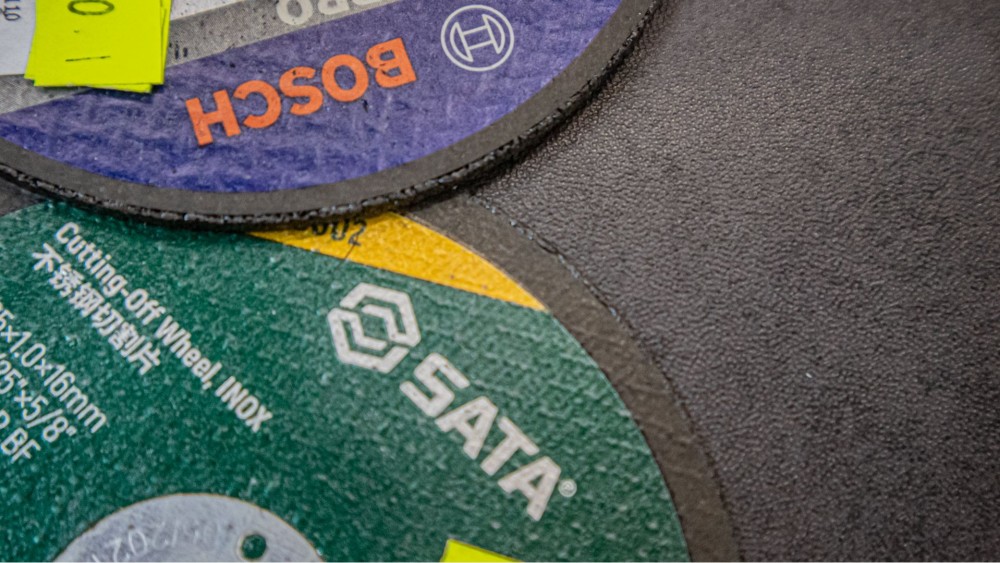
Abrasive grains are the "tiny cutting teeth" hidden inside a metal cutting disc.
One of the most essential components of a metal cutting disc is Abrasive Grain which can be manufactured from various types of materials depending on application requirements, such as Aluminum Oxide, commonly found in general steel cutting discs, or other abrasive grain types selected to suit steel alloys, stainless steel, or specialized materials.
Abrasive grains are not smoothly rounded like beach sand; they have edges, angles, and multiple sharp points. Each grain acts like a miniature cutting tool. As the disc rotates across the steel surface, the sharp tips of the abrasive grains strike and shear through the workpiece surface, removing the metal material.
A single grain doesn't remove much steel, but a single metal cutting disc contains an enormous number of abrasive grains.
This makes it easier to understand how metal cutting discs work. A single cut doesn't result from one sharp edge dragging across the steel until it parts, but rather from a cumulative process.
- The first grain removes a tiny bit;
- the next grain removes a little bit more;
- subsequent grains repeatedly work along the same line;
- the cut groove gradually deepens until it finally penetrates the entire thickness of the steel.
The principle is similar to using a metal grinding disc or even metal sandpaper. If you grind continuously and, especially, at very high speeds, the material will gradually wear away. A metal cutting disc combines the action of numerous abrasive grains onto a narrow edge, allowing it to create deep grooves quickly.
Rotational Speed: Another Reason Why a Blunt-Looking Disc Can Cut Steel
Try taking an unmounted metal cutting disc and rubbing it against steel by hand; no matter how hard you rub, it certainly won't cut through the steel easily. What completely changes the situation is speed. A small angle grinder can spin the disc at thousands to tens of thousands of RPM. In terms of peripheral edge speed, each abrasive grain is moving across the workpiece surface at an extremely high velocity.
Every time an abrasive grain passes across the steel, it impacts, shears, and tears tiny metal chips from the surface. The faster the disc spins within its designed speed range, the higher the number of contacts per second between the grains and the workpiece, allowing metal removal to occur continuously.
However, Each cutting disc model has a Maximum RPM, or maximum supported rotational speed. Exceeding the rated speed increases the risk of damaging the metal cutting disc, such as disc breakage, which is extremely dangerous.
Where Do Sparks Come From When Cutting Steel?
One of the most familiar sights when using a metal cutting disc is the shower of orange sparks. Many people might think the steel is "melting," but in reality, sparks are not caused by melting the entire cut line like thermal cutting processes.
During cutting, abrasive grains strip microscopic metal chips from the workpiece surface. Combined with friction and metal deformation, these chips reach high temperatures. When these tiny, glowing-hot steel chips come into contact with oxygen in the air, they combust and create the light we see as sparks.
Therefore, the abundance of sparks does not mean the disc is melting through the steel bar; rather, it is a byproduct of high-speed metal chip removal and the heat generated at the cutting point.
And because there are hot metal chips, heat, and debris from disc wear, it is essential to use appropriate protective equipment, such as:
- Safety glasses or a face shield
- Work gloves
- Clothing that covers the skin
- Direct sparks away from flammable materials.
Metal cutting discs gradually become thinner and smaller after use.
Why is it normal for a metal cutting disc to "wear away as it cuts"? Anyone who regularly uses fiber cut-off wheels or metal cutting discs will notice that the diameter of the disc keeps decreasing. This is not abnormal; it is directly part of how it works.
The outermost abrasive grains gradually wear down or break off during operation. Once the existing grains become dull or worn out, the bonding material breaks away to expose a fresh layer of abrasive grains underneath to take over. This enables the metal cutting disc to continuously regenerate its cutting surface during use.
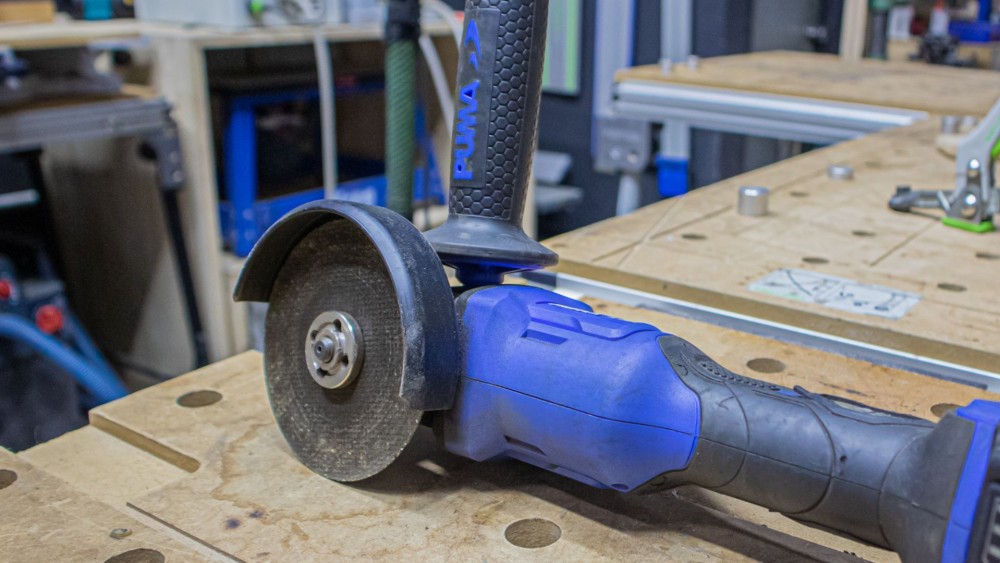
A blade that wears down does not always mean it is poor quality
Some people see a cutting disc shrink in size relatively quickly and immediately think that it isn't durable, but technically, you also have to consider the balance between "cutting speed" and "lifespan."
If the bonding material holds the abrasive grains too tightly, dulled grains may not shed, making the disc surface glazed and cutting slower. On the other hand, if they shed too easily, the disc will wear down faster than necessary. A good steel cutting disc design must carefully balance the grain type, grit size, bond hardness, and disc structure to suit the material being cut.
This is one reason why different models of steel cutting discs—even with the same dimensions—can deliver different cutting feels and lifespans.
Why do thin steel cutting discs usually cut faster than thick ones?
Thin vs. thick steel cutting discs: which is more worthwhile? The answer involves more than just price Another factor directly related to this principle is the disc thickness. Comparing cutting discs intended for the same type of work, a thinner disc has to remove less metal from the cut kerf.
- Imagine having to cut a slot through a steel sheet.
- If the slot is 1 mm wide, the amount of steel the abrasive grains must remove is naturally less than for a 3 mm wide slot.
- Thin cutting discs therefore tend to provide faster cutting, a narrower kerf, and less material loss.
However, this does not mean we should always choose the thinnest disc, as disc thickness also relates to application type, strength, and tool control. What is essential is using a steel cutting disc designed for the specific machine type and size, as well as choosing disc characteristics that suit the actual job rather than merely looking at which disc is thinner or thicker.
Steel cutting discs aren't sharp like knives because they don't need to be
Once you understand all of this, the question "Why does a steel cutting disc cut through steel even though it doesn't look sharp?" becomes easier to answer. That's because the visual "sharpness" of a knife isn't the only way to cut materials.
A steel cutting disc possesses sharpness on a different level—that is, the sharpness of countless tiny abrasive grains that are too small to easily see in detail with the naked eye. When these abrasive grains are combined with high rotational speeds, an optimal disc structure, and the right applied pressure, they rapidly grind and shear away tiny bits of metal bit by bit.
What appears to us as an ordinary black or brown steel cutting disc can therefore be compared to a cutting tool covered with countless microscopic cutting edges constantly spinning across the workpiece.
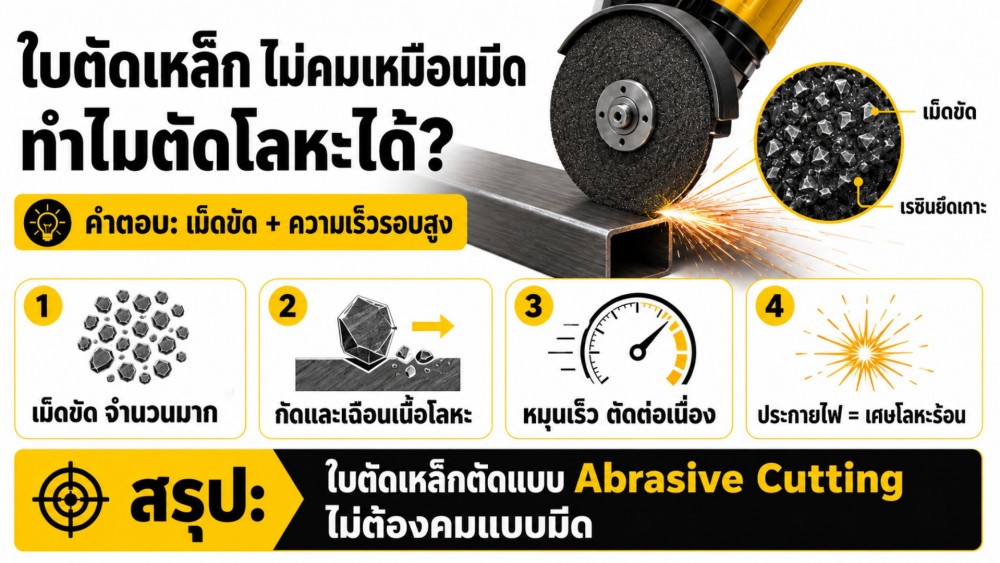
Conclusion: Why can metal cutting discs cut steel even though they don't look sharp?
The answer lies in the term Abrasive Cutting Metal cutting discs don't need a razor-thin edge like a blade because the disc contains numerous hard abrasive grains, each with tiny sharp edges and facets. When the disc spins at high speeds, these abrasive grains pass across the metal surface, continuously grinding and shearing away tiny chips of metal until a deep groove is formed, ultimately cutting the workpiece completely.
The sparks seen during cutting come from microscopic metal particles heating up during the process, while the gradual reduction in disc diameter is caused by the abrasive grains and the bonding matrix wearing down to expose fresh grains to continue cutting.
If you look at a fiber cutting disc for metal and feel like its edge isn't sharp at all, imagine that in that small edge area, an immense number of microscopic cutting edges are waiting to do the work. Once spinning at several thousand RPM, its cutting capability is completely different from what it feels like when holding the disc in your hand.
The principle of Steel Cutting Disc is combining materials science, abrasive grains, speed, and structural disc design so that an ordinary-looking disc just a few millimeters thick can effortlessly bite through hard metal far beyond what our hands could ever manage.