


 EN
 ไทย


Customers Also Purchased


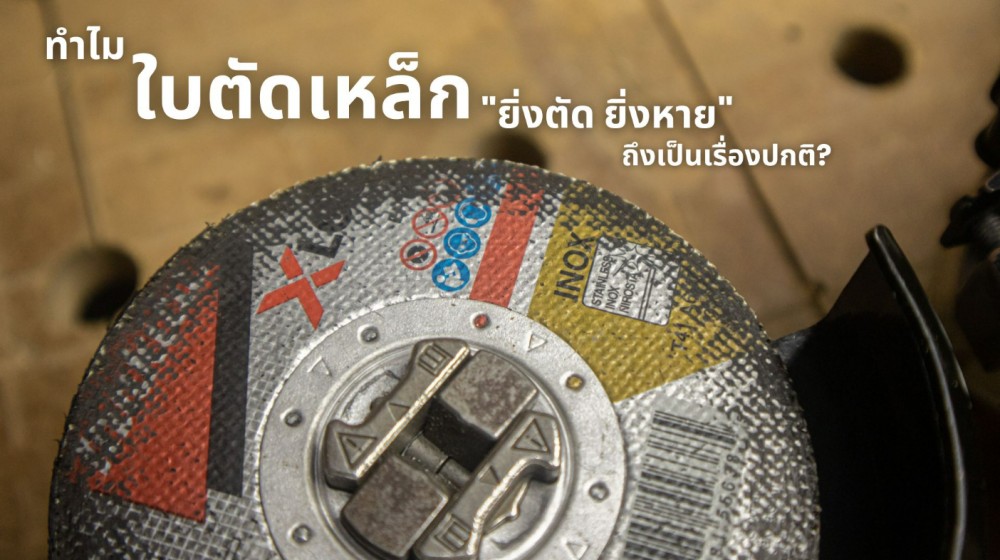
Why Steel Cutting Disc ...that was only used for a few jobs, keep getting smaller? Why do some cutting discs cut very smoothly at first, but after a short while, cut slower and require more effort? And perhaps the most thought-provoking question of all: "The more you cut, the more it disappears—is the metal cutting disc wearing out too fast?"
In reality, the fact that a metal cutting disc "disappears the more you cut" is not abnormal at all. On the contrary, this is the natural working principle of metal cutting discs, which are designed to wear down in exchange for sharp and safe cutting.
However, in real life, hardly anyone explains the wear of metal cutting discs straightforwardly. Most often, it ends with a brief sentence like “It's just meant to wear down” or “That's just how it is,” and that's it.
In this article, I'd like to invite you to unpack the structure and materials of metal cutting discs layer by layer, from the basics up to understanding whether a disc is functioning normally—ensuring it not only cuts, but cuts well and safely.
How Do Metal Cutting Discs Actually Work?
Metal cutting discs do not cut metal using teeth like other cutting blades that bite into the material tooth by tooth. Instead, it operates on an entirely different concept. Metal cutting discs utilize high rotational speeds and a rough edge to work through steel. This means they don't need distinct sharp teeth like other cutting tools.
Metal cutting discs don't bite; they "abrade".
If you ask whether What is the difference between a steel cutting disc and a diamond cutting blade? If you look closely at a metal cutting disc, you'll see it has no teeth and no sharp serrations. Instead, it is filled with a fine, gritty surface—these are abrasive grains embedded throughout the disc body.
When the cutting disc spins at high speed, these abrasive grains rub against the metal surface, generating high heat and gradually grinding away the metal into fine dust and sparks.
Simply put, a metal cutting disc doesn't "cut" by biting through with teeth, but rather gradually abrades the steel apart.
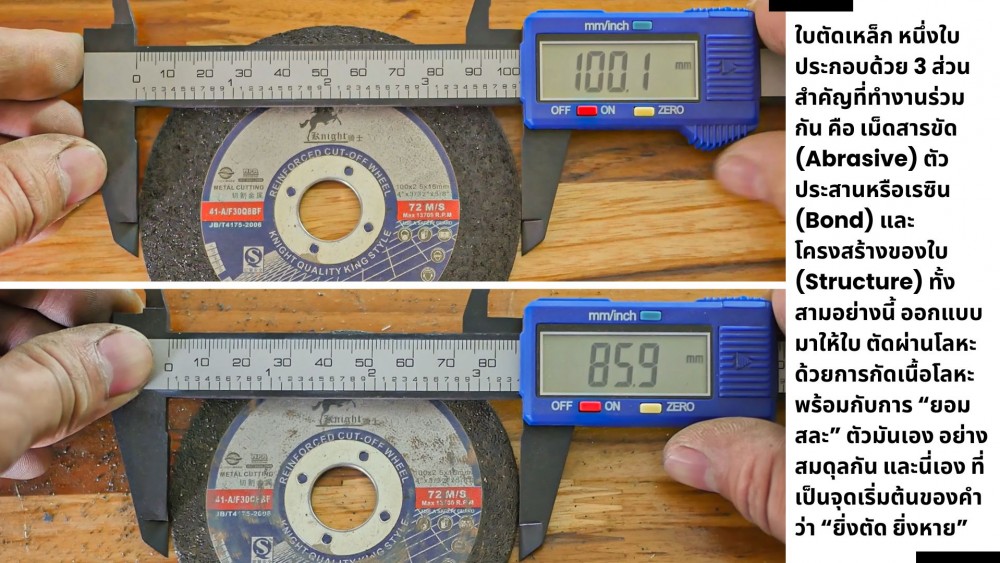
Why Do Metal Cutting Discs Have to Wear Down?
This question is very important, because once you understand this, you will stop worrying about the disc wearing out quickly. You won't have to keep checking how much is left every time you use it, and you'll see metal cutting discs in a new light: wear is neither a problem nor a defect, but part of a properly engineered working mechanism designed to keep cuts smooth, sharp, and safe.
Wear Is the Self-Sharpening Mechanism of a Metal Cutting Disc
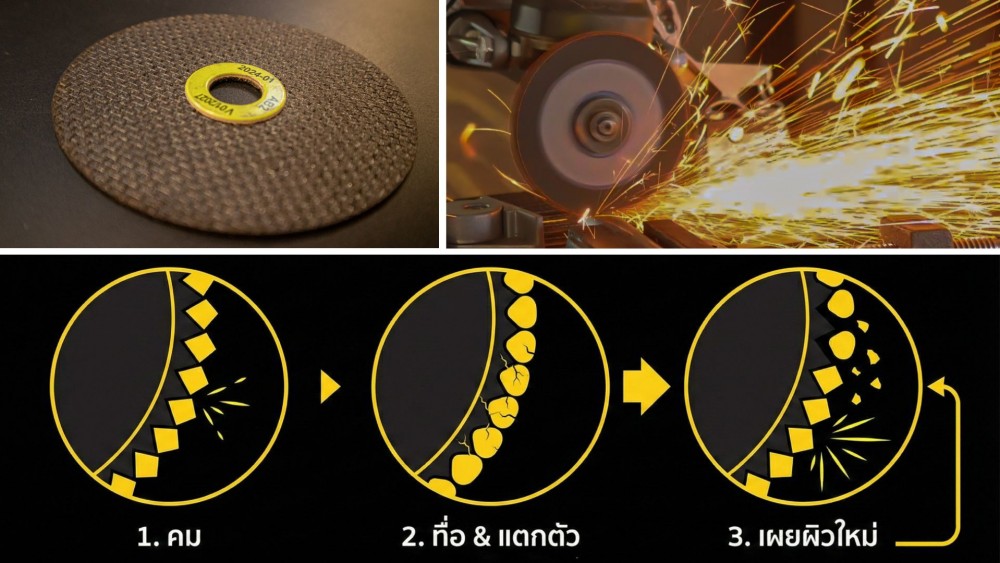
The wear of a metal cutting disc is a self-sharpening mechanism. Yes, this mechanism works much like a grinding disc. When the abrasive grains on the surface become dull or fractured from use, the bonding agent gradually releases the old grains, exposing fresh, sharper grains to take over—just vertically rather than horizontally.
As a result, the cutting disc always stays "sharp", even as its diameter continuously shrinks.
What Would Happen If a Cutting Disc Didn't Wear Down At All?
- The disc surface would glaze over (become glossy) When the abrasive grains on the disc surface become dull but do not shed naturally, the surface becomes smooth and slippery, looking as if it has been polished. This prevents the disc from gripping or abrading the steel effectively.
- Slow cutting When the abrasive grains lose their sharpness, the disc will not bite into the steel, taking significantly longer for the same cut. The user will feel that the "disc is dull", which can lead them to unintentionally apply excessive force.
- High heat generation When the blade fails to cut into the material but continues to rub against the steel, most of the energy is converted into heat. This causes the workpiece to overheat, accelerates blade wear, and deteriorates the resin bonding in the cutting disc.
- Very high risk of kickback or jarring When the blade glazes and fails to bite into the cut, it is prone to slipping out of the kerf, binding, jarring, or kicking back. This is one of the most dangerous and common hazards encountered when using cutting tools, sanders, or angle grinders.
Therefore, a good cutting disc must wear down to maintain consistent cutting performance at all times—in terms of sharpness, smoothness, and safe blade control during actual use.
What type of wear separates a good cutting disc from a bad one?
Whether a metal cutting disc is good or bad doesn't primarily depend on whether it wears away or not. Rather, it depends on *how* it wears—whether the wear pattern is uniform or abnormal, and whether that wear corresponds properly to the application.
So let's compare normal wear versus abnormal wear to see what key characteristics distinguish the two.
Normal Wear
- The disc shrinks evenly in diameter If the disc diameter gradually decreases uniformly around its entire circumference, it indicates that the abrasive grains are wearing down and shedding in a balanced manner without uneven spots or abnormal chipping. This is characteristic of a disc operating at full efficiency.
- The cutting edge remains sharp Even as the disc gets smaller, if the cutting edge continues to bite well and does not slip or glaze, it means fresh abrasive grains are constantly being exposed to do the work.
- No need to apply heavy pressure If the metal cutting disc glides along the cut line under normal hand pressure without having to force it, it means the operating speed and disc wear are properly balanced.
- Consistent cutting sound without vibration If you hear a steady sound while cutting without jerking or binding, it is a sign that the disc is cutting effectively, won't kick back, and remains easy to control.
All of these are considered normal and are positive signs indicating that the metal cutting disc is performing just as it should.
Abnormal Wear
- The disc wears down noticeably fast If the disc diameter decreases rapidly in a short period—shrinking noticeably even with minimal use—it is usually caused by excessive pressure, improper RPM, or selecting the wrong disc type for the job.
- Dull cutting edge while the disc remains thick If the surface of the disc looks smooth, glazed, and fails to cut even though there is still plenty of thickness left, this indicates that the abrasive grains may have dulled without shedding as they normally should, causing the disc to lose its cutting efficiency.
- Excessive pressure is required If, during cutting, you feel that you need significantly more downforce, the disc does not glide along the cut line, and you have to force the tool, this is a sign that the disc is not operating in optimal conditions.
- High heat accumulation occurs If the workpiece becomes extremely hot, the cutting disc discolors, or there is a burning smell, this symptom stems from friction rather than actual cutting. Accumulated heat accelerates disc wear or degradation and increases safety risks for the user as well.
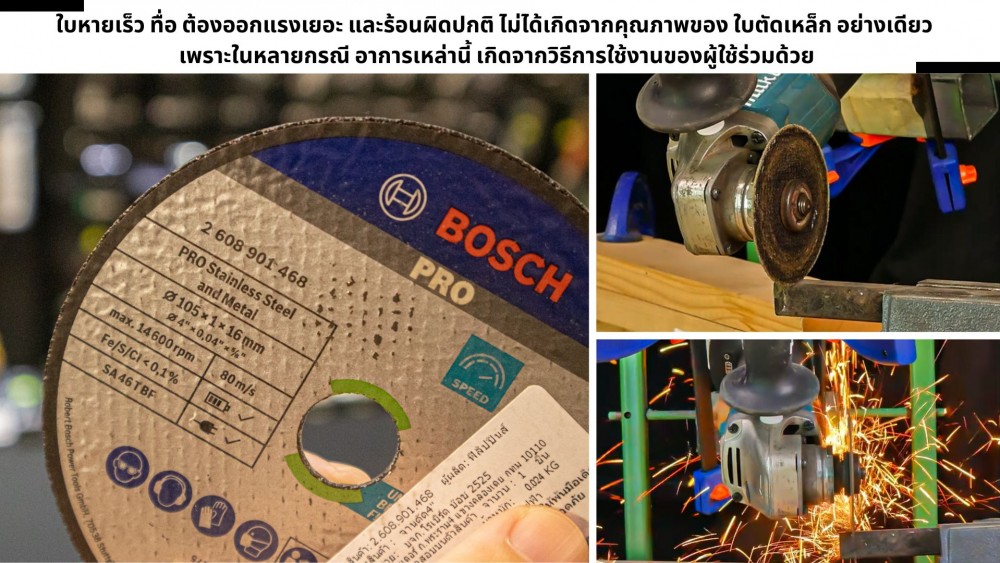
Factors That Determine Fast vs. Slow Cut-Off Disc Wear
If you have ever used cut-off discs of various brands and models—or even the exact same disc—and found that "some days it lasts long, while other days it wears down abnormally fast," you're not just imagining things.
The wear rate of a cut-off disc depends not only on the quality of the disc, but is the result of multiple factors occurring simultaneously. Therefore, we should Check before use! 5 inspection checkpoints for cutting discs before mounting on an angle grinder every time On actual jobsites, these may seem like minor details to many, but they are the deciding factors between a cut-off disc that delivers great, long-lasting value and one that wears out quickly without you realizing it. Let's look at what these factors are.
1. Tool Speed (RPM)
Using a cut-off machine or angle grinder with an RPM that is too low prevents the abrasive grains from working at full efficiency. The disc cannot bite into the steel as it should, leading users to inadvertently apply more pressure to cut, which causes unnecessary premature disc wear.
2. User Applied Pressure
This is a very common issue. Many people assume that "the harder you press, the faster it cuts." In reality, cut-off discs prefer moderate, even pressure rather than being forced. Pressing too hard fractures the abrasive grains prematurely, degrades the bonding resin rapidly, and ultimately causes the disc to wear away faster than normal.
3. Material Being Cut
Thin steel, thick steel, stainless steel, or plated steel all affect the wear rate of a cut-off disc. Each material type has distinctly different hardness, toughness, and heat-generation characteristics during cutting.
As a result, cut-off discs bear different loads. Using a disc that is not designed for that specific material forces the disc to work unnecessarily hard, ultimately leading to faster-than-normal wear.
How to Use Cut-Off Discs Cost-Effectively Without Unnecessary Wear?
Once you understand that cut-off discs are designed to "sacrifice themselves by wearing away," the next question is, How can we use them so they wear down properly, avoid premature wear, and keep ourselves out of harm's way?
The true value of a cut-off disc isn't measured by how many days it lasts or how large its diameter remains, but by how long it continues to cut smoothly, handle easily, and remain safe in actual use. When used correctly, a single cut-off disc can deliver excellent performance from start to near-end of life—without forcing, without taking risks, and without wasting discs.
Therefore, besides 10 safety precautions for using metal cutting discs that beginners must know , let's look at a brief guide on how to use cutting discs properly so they wear down the right way.
- Let the blade do the work Don't force pressure; let the tool run at full speed and guide the disc along the cut line.
- Choose the right disc for the job Don't expect one disc to do everything; each type of cutting disc is designed for a specific purpose.
- Don't forget to let the disc rest For long continuous cutting jobs, take periodic breaks to reduce heat buildup.
Summary: The more you cut, the more it wears down—a normal phenomenon we must understand
In short, a cutting disc that wears down is a disc that is working properly. A shrinking disc doesn't mean you bought a bad product; it means the abrasive grains are self-sacrificing to give you a smooth, safe, and controlled cut. Once you understand this principle, the next time you pick up a cutting disc, you won't just ask "Why does it wear away?" but will instead ask whether it's right for the job, whether you're using it correctly, and when is the safest time to replace it.
This little understanding that disc wear is completely normal will make Steel Cutting Disc not just a consumable item, but something you can use cost-effectively and with confidence.