


 EN
 ไทย


Customers Also Purchased


When using a pneumatic system, air compressors and various spare parts, especially small components like Pneumatic System Fittings may be the root cause of symptoms where the air compressor seems to operate normally, there is no sound of air leaking along the hoses, and no fittings have come loose, yet when actually using the air tools, they feel underpowered.
When continuous air-powered equipment starts stuttering or underperforming, the first thing many people think of is, "Is there an air leak?" But in reality, pneumatic systems can lose pressure even without any leaks at all. This phenomenon is known as pressure drop in compressed air systems, or simply Pressure Drop, and one of the most overlooked spots is the air hose fittings we use in the system every day.
Air hose fittings might seem like minor components meant just to connect hoses to air compressors, pneumatic tools, or various equipment. However, in terms of airflow, any point where the passage narrows, changes direction, or has internal obstructions creates resistance to flow. If the system demands a high volume of air, minor resistance at a single fitting can turn into a significant pressure drop by the time it reaches the end tool.
Before Looking at Air Hose Fittings: Why Does Pressure Differ Between Inlet and Outlet?
Pressure Drop refers to the difference in pressure between two points in a pneumatic system while air is flowing. A simple example:
- The air compressor tank might be at 8 bar;
- when an air tool is operated at the end of the line, the pressure near the tool might drop to only 6.5 or 7 bar.
- The system may have no leaks; the lost pressure did not escape into the atmosphere.
- Pressure is consumed in overcoming the flow resistance of pipes, hoses, valves, filter elements, regulators, elbows, and various air hose fittings along the way.
The key point is that Pressure Drop is most noticeable when there is actual airflow. If the air tool is shut off and the system remains static, the pressure at various points may gradually equalize until the gauges read almost identical values. Many people inspect their systems while the equipment is idle and mistakenly assume there are no pressure issues. But as soon as you pull the trigger on a blow gun or operate an impact wrench, large volumes of air must flow through the system. Flow resistance at various points then begins to take effect, and the pressure at the endpoint drops immediately.
Checking for pressure drop shouldn't just be done by looking at static pressure when the system is idle; you should also observe the pressure while pneumatic tools are running. Air hose fittings are also a factor that can affect this.
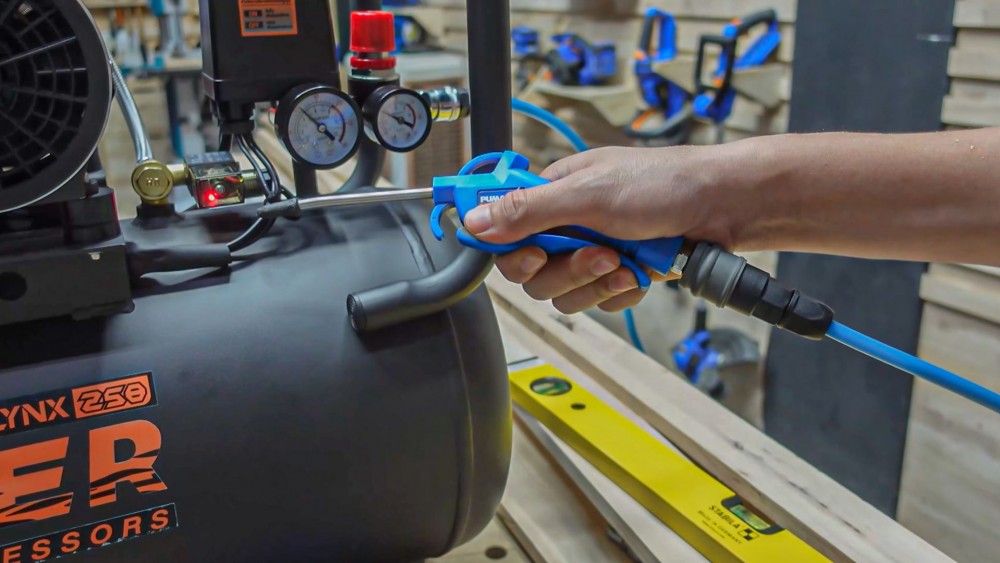
Why can air hose fittings cause a pressure drop?
Why are air hose fittings called "copper/coupler" even though they aren't made of copper? Looking at air hose fittings from the outside, many models may appear large and sturdy. However, what really matters for airflow is the internal passage size, not the fitting's external dimensions. Quick couplers typically have internal valves, springs, seals, or locking mechanisms. These components can make the airflow channel smaller than the connected air hose.
Suppose we use an air hose with a large internal diameter to support a high-air-consumption tool, but in the middle of the system there is a fitting with a small airflow passage. All the air is forced to squeeze through that small opening. The result is similar to partially pinching a water hose: even if there is enough pressure upstream, the flow volume passing that point will be restricted, and downstream pressure will drop during actual operation.
A leak-free air hose fitting doesn't mean full airflow
"Leakage" and "flow resistance" are two completely different things. A leaking air hose fitting means some air escapes from the system. In contrast, a fitting with high flow resistance keeps all the air inside the system, but makes it harder to pass through that point. Therefore, when inspecting a pneumatic system, check whether the size and design of the fittings match the flow rate requirements of the tools in use.
Multiple air hose fittings unknowingly increase pressure drop
Another common practice on the job site is continually adding accessories for convenience, such as: From the air compressor to the regulator Then through a quick coupler into the air hose Through a mid-line connector to add another hose Then into the fitting at the air tool
When looking at each air hose fitting individually, nothing may seem wrong. But across the entire system, the air may have to pass through multiple size transitions and valve mechanisms. A single fitting may only cause a negligible pressure difference, but when several fittings, valves, adapters, and elbows are connected in sequence, the total system resistance can become high enough to noticeably reduce tool power.
Using multiple-stage adapter fittings—such as stepping down from a large thread to a small thread and then sizing back up—may assemble together, but it does not mean the airflow will be efficient.
Large air hose with small fittings can still cause pressure drops
Many people solve the issue of underpowered air tools by upgrading to a larger air hose, which is the right approach in many cases, especially over long distances. However, if you continue using the same air hose fittings with small internal passages, the results might not improve as much as expected.
Therefore, when upsizing the air hose, you should also inspect the sizes of all fittings and inline components. System performance is usually bottlenecked by the narrowest point, not the widest.
What symptoms indicate that air hose fittings might be causing a power drop?
Symptoms of pressure drop caused by fittings often lead people to mistakenly believe the air tool is faulty or the air compressor is undersized. For example:
- The gauge on the air compressor tank shows normal high pressure, but as soon as the tool is used, the power drops immediately.
- The tool works well initially, but the RPM drops with prolonged use.
- Switching to a shorter hose improves tool performance.
When some fittings are removed and the tool is connected closer to the compressor, the tool clearly regains power. This is a sign that the problem may not lie in the compressor's capacity alone, but rather in the air distribution path between the compressor and the tool. Another case is when low-air-consumption tools work normally, but when switching to a tool requiring high CFM, the system loses power.
How to Choose Air Hose Fittings to Reduce Pressure Drop?
To achieve full efficiency in an air delivery system, you should consider the internal passage size, fitting design, and the airflow volume the system must accommodate, especially for applications using high air consumption tools.
Check Flow Rate, Not Just Thread Size
Air fittings with the same thread size do not necessarily provide the same flow rate. Some manufacturers therefore specify the flow capacity of the fittings in their specifications. If the system is for industrial use or requires high efficiency, this data should be considered alongside the tool's air consumption rate.
For general applications, at least choose air hose fittings sized proportionally to the air hose and tools, avoid restricting the internal passage unnecessarily, and avoid using small fittings in high-volume air systems.
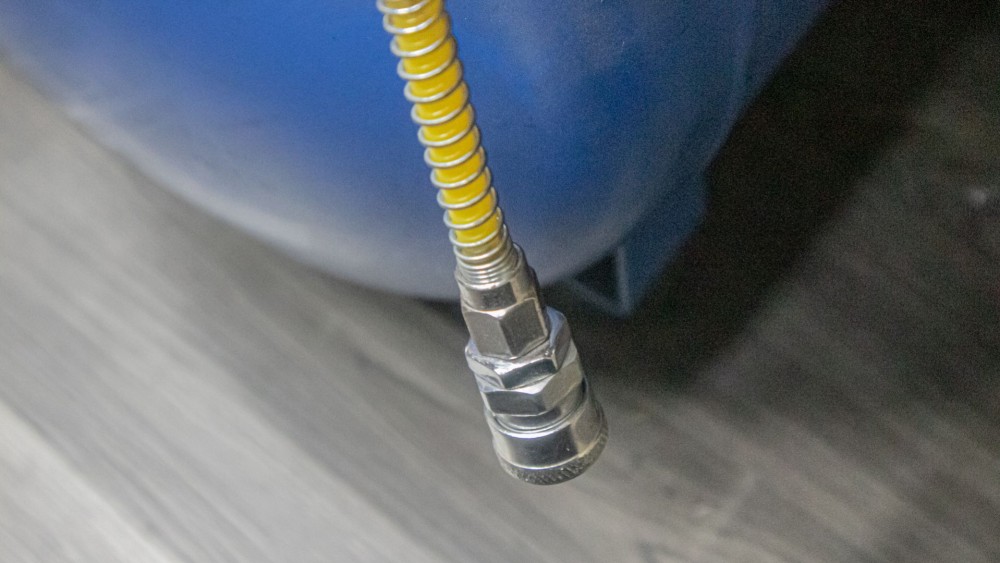
Reduce Unnecessary Connection Points
Pneumatic systems inevitably require connection points, but you should avoid stacking multiple layers without reason, such as connecting adapter to adapter or adding multiple sets of quick couplers over a short distance for temporary convenience and then leaving them in permanent use.
If the system experiences pressure drop issues, checking the number of connection points and eliminating unnecessary components is one of the easiest steps to take before deciding to replace the air compressor.
Use a Consistent Air Fitting Standard Throughout the System
Quick couplers come in various standards and sizes. Even though they can sometimes be adapted to connect with one another, mixing multiple systems may require additional adapters or create unnecessary bottlenecks. Standardizing fittings across the entire system from the start, or Upgrading the air system with high-quality air fittings, makes operation, maintenance, and pressure drop control much easier.
Long Hoses, Elbows, Filters, and Regulators Must Also Be Checked Together
However, in real-world systems, pressure drop is rarely caused by air fittings alone. Other factors can also combine to reduce terminal pressure, such as:
- Excessively long air hoses
- Hoses with small internal diameters
- A large number of elbows
- Valves not fully opened
- Dirty air filter elements
- Regulators with insufficient air delivery capacity
Troubleshooting should therefore involve viewing the system as a path from the air compressor tank to the tool. Start by checking the upstream pressure, hose size, hose length, number of fittings, filters, valves, and finally measure the pressure near the tool during operation. If the pressure drops significantly only when the tool is running, there is a high probability that the system has flow restrictions somewhere.
A slight Pressure Drop is normal, provided it does not affect the work
In a real compressed air system, it is virtually impossible to achieve zero pressure drop because air must flow through hoses, pipes, valves, air fittings, and various equipment. The goal is not to eliminate all pressure drop, but to design the system so that the pressure drop remains at a level that does not impact tool performance.
A system using only a small air blow gun with a short hose may not need to pay much attention to fitting details, but systems using air impact wrenches, pneumatic die grinders, pneumatic sanders, spray guns, or multiple pneumatic tools simultaneously will be much more sensitive to flow restrictions.
Selecting the proper hose and air fitting sizes directly impacts working efficiency
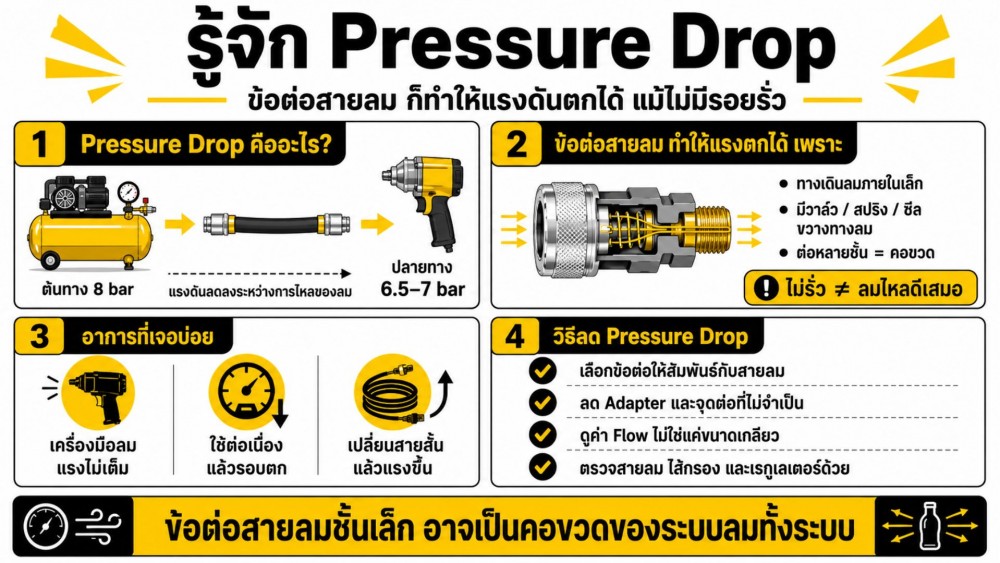
Conclusion: A small air fitting can become a bottleneck for a large system
When an air system experiences a drop in power, do not jump to the conclusion that the air compressor is too small or rush solely to find leaks. The pressure drop can be caused by resistance, and air fittings are one of the points that can create this resistance even without any air leaking out at all.
Fittings with air passages that are too small, multi-stage adapter connections, multiple quick couplers, or reducing passage sizes along the line can all become bottlenecks, especially when using tools that require high airflow volume.
If you find that the air compressor gauge shows normal pressure but the tool at the end of the line does not work at full power, try rechecking the system from upstream to downstream. Examine hose size, length, number of fittings, filter elements, regulators, and the internal passage size of each component, along with checking the pressure while the tool is actually operating.
Restoring your pneumatic tools to full power may not require buying a bigger air compressor; simply using Pneumatic System Fittings Clearing the path for the "existing air" to flow smoothly to the destination might make a bigger difference than you think.