


 EN
 ไทย


Customers Also Purchased


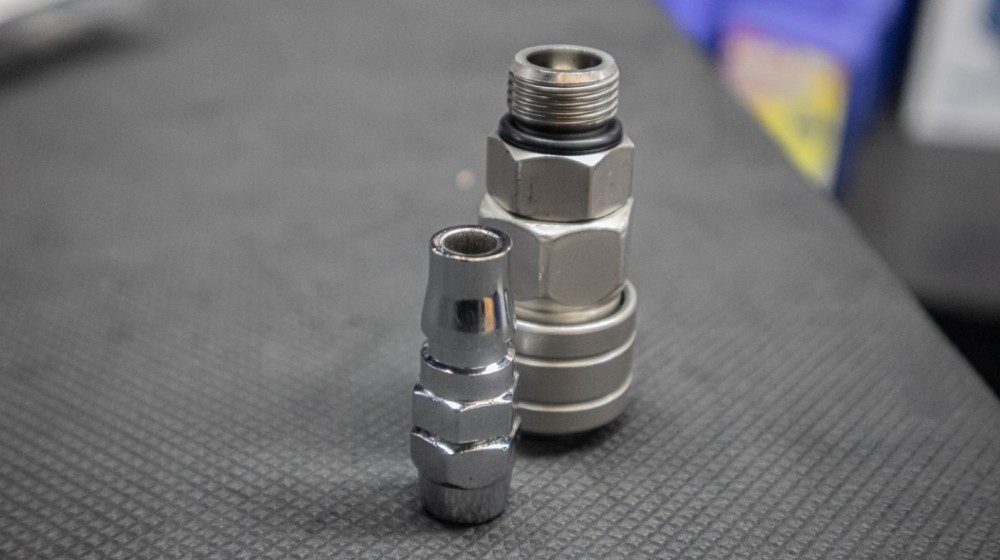
Pneumatic System Fittings It is an essential component for connecting hoses to air compressors, pneumatic tools, or air piping systems. But why is this small piece of equipment commonly and casually called "Copper" in Thai, becoming a widely understood term among tradespeople?
Looking at the actual item, you might wonder: in English, "Copper" refers to the reddish-brown metal, so why are pneumatic fittings made of plated steel, brass, stainless steel, aluminum, or certain plastics called "Copper" even though they contain no copper at all?
The word "Copper" used to refer to air hose fittings in Thailand is generally a mispronounced borrowing derived from the words Coupler or Coupling, which refer to devices used to connect two parts together, and may also be influenced by the name of the CUPLA series by NITTO KOHKI, a brand name widely found in the pneumatic fitting or quick-connect coupler market for air and fluid systems, leading several similar-sounding words to merge into the jobsite slang term "Copper."
"Coupler" does not come from the word Copper meaning the metal copper.
The main point that confuses many people is that the word "copper" sounds very similar to the English word copper, which means copper metal. Looking at it on the surface, one might easily assume that air hose fittings must be related to copper, or at least that the fittings themselves are made of metal containing copper.
In reality, air hose fittings are not required to be made of copper. The materials used vary depending on the type of application, pressure, environment, and properties desired by the manufacturer. For example, air hose fittings used with air compressors in factories may be made of steel and undergo hardening or surface plating processes to resist wear and tear.
Fittings for water or environments requiring corrosion resistance may be made from brass or stainless steel, while fittings designed to reduce weight might use aluminum. Ultimately, it comes down to what fits your needs. Upgrading the air system with high-quality air fittings,
Some models of air hose fittings may be made of brass, an alloy primarily composed of copper, which might lead to the misunderstanding that "Copper" refers to the material copper.
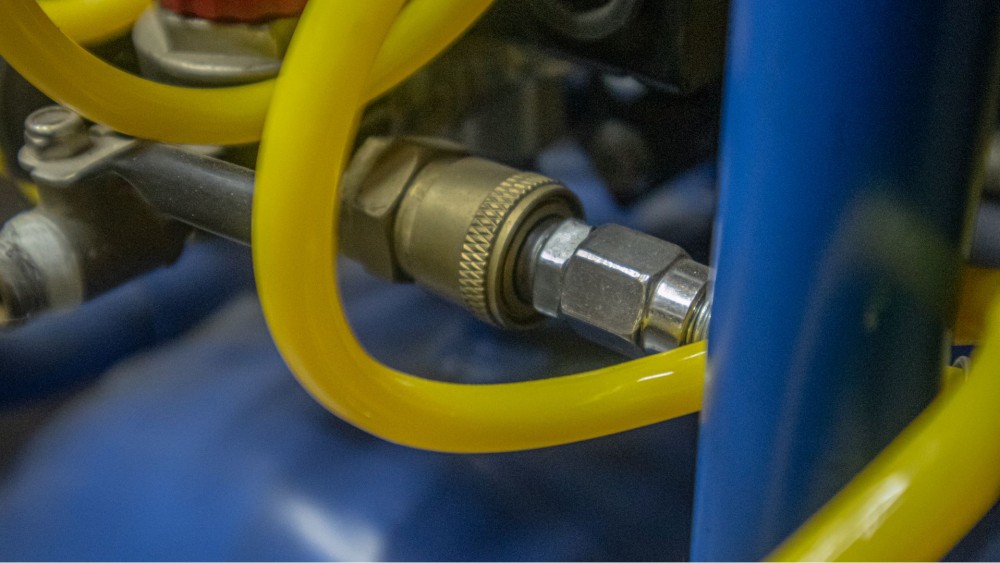
This connection is purely coincidental in terms of material, as many air hose fittings referred to as "copper" are made of steel, stainless steel, aluminum, or other materials, yet they are still called "copper" all the same.
The true origin likely comes from the words "Coupler" and "Coupling"
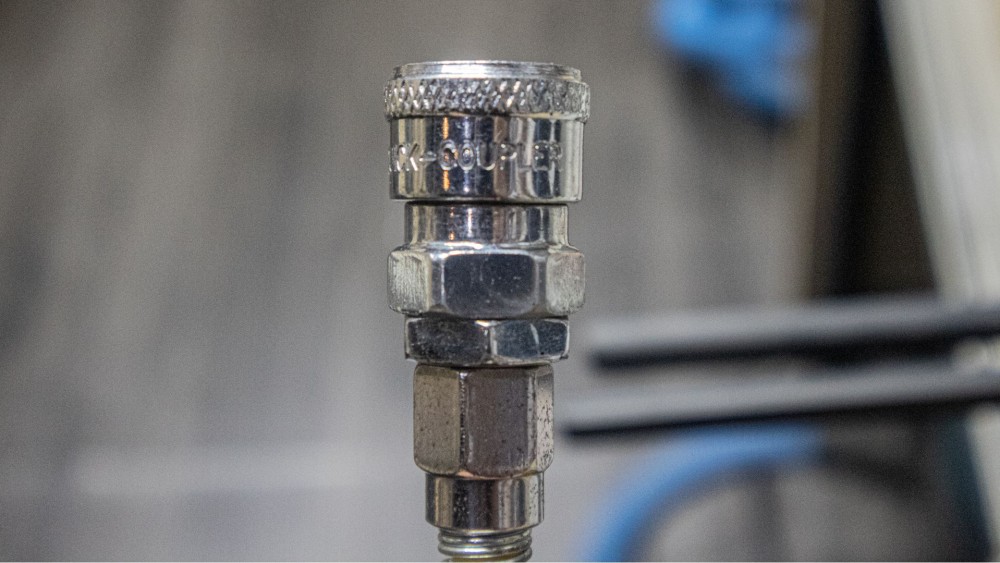
The word that most closely matches the function of an air hose fitting is "Coupler", pronounced approximately as "kup-pler" or "cup-ler". It refers to a device used to connect two parts together. In pneumatic systems, "Coupler" usually refers to the female coupling side that features a sliding sleeve, locking mechanism, locking balls, seals, and an internal valve, which mates with the opposing part known as a "Plug" or "Nipple".
When the word "Coupler" was adopted in Thailand, many users heard it from salespeople, senior technicians, distributors, or factory workers. The pronunciation naturally shifted based on familiarity—from "kup-pler" it evolved into "kup-per", "kop-per", or "copper", which is easier to say and remember than the Thai term for air hose fitting.
A lot of on-site terminology works like this:
- It does not need to follow strict linguistic phonetic rules;
- The emphasis is on clear understanding within the trade regarding which tool or part is being referred to.
- When a technician asks for "one female copper", the pneumatic equipment vendor immediately understands that they need a quick-connect socket, not a copper part.
"Coupling" refers to the connection or the joint assembly
Another term frequently encountered in air fitting product names is "Coupling", which refers to the connection, the connecting mechanism, or the set of components that join two ends together, such as Quick Coupling, Quick-Action Coupling, or Quick-Disconnect Coupling
Some places use "Coupler" to refer to the female/receiving side of the air hose fitting and "Coupling" to refer to the complete assembly, while in some marketing contexts, both terms are used interchangeably.
If you want to use a clear and neutral Thai term, the words "Quick-connect fitting for air hoses" or "Quick-connect air hose coupling" describe the function of the equipment most accurately, conveying that this air hose connector helps users connect and disconnect air lines quickly without having to screw and unscrew threads every time.
The name “CUPLA” may have contributed to the widespread use of the word "copper"
Besides the words "Coupler" and "Coupling", another thought-provoking factor is the name "CUPLA" from NITTO KOHKI, an industrial equipment manufacturer from Japan, which refers to its line of quick-connect air couplings as “Quick Connect Couplings CUPLA”.
The name CUPLA has been used continuously as a product brand and spans several product families, such as
- HI CUPLA
- SUPER CUPLA
- SP CUPLA
- NUT CUPLA
- LINE CUPLA
When these products entered the Thai market, the name CUPLA—sounding quite similar to Coupler—may have been transliterated in various ways, such as "Khu-pla", "Kap-pla", "Kup-per", or "Kop-per" (copper).
There is no definitive evidence proving whether the Thai word "copper" originated from CUPLA. Therefore, the most likely scenario is a combined influence among "Coupler", "Coupling", and the brand name "CUPLA", all sharing similar sounds and meanings. Passed along by word of mouth in the market and on job sites over a long time, it eventually became the term "copper" that Thai technicians are accustomed to using for air fittings today.
From a product brand name to a general term for all air hose fittings
In the case of air couplings, some people may have started by referring to CUPLA products, later extending the term to similar quick-connect couplings from other manufacturers. Meanwhile, another group may have started with the word "Coupler" and pronounced it as "copper". When these two naming paths crossed, it reinforced "copper" as a catchy, widely understood commercial term.
We may encounter a wide variety of product names, such as air copper, air hose copper, copper coupling, quick coupler, air coupler, or Quick Coupler. Although different stores use slightly different terms, they all refer to the same group of air hose fitting equipment.
How does a quick-connect air coupling (Quick Coupler) work?
A quick-connect air coupling generally consists of two main parts: the Socket (female) side and the Plug (male) side, which inserts into the socket. In Thai, these two parts are commonly referred to as "female" and "male" based on how they fit together.
The Socket side features a sliding outer sleeve, an internal locking mechanism, seals, and often a shut-off valve. When the Plug is inserted, the locking mechanism engages the groove on the Plug to prevent it from detaching during use. Simultaneously, the internal valve opens to allow compressed air to flow through to the air hose or pneumatic tool.
When disconnecting, slide the sleeve or engage the release mechanism according to the coupling's design, and the Plug can then be pulled out. Single-shut-off couplings automatically seal the air on the Socket side upon disconnection, minimizing air loss from the system, while the Plug side may still retain residual pressure in the downstream line depending on the coupling structure.
CUPLA allows for faster connection and disconnection of piping systems compared to traditional threaded fittings, and can be designed for air, water, oil, or various other fluids.
Are air couplers and pneumatic fittings the same thing?
The term “air hose fitting” is a broad term covering many types of equipment. A coupler or Quick Coupler is just one of them, as there are also One-Touch push-in fittings, hose barb fittings, threaded fittings, elbow fittings, tee fittings, reducers, and fittings for rigid air pipes.
One-Touch Fittings in machinery pneumatic systems are typically designed for inserting plastic tubing directly and pressing a release ring to disconnect, making them ideal for internal machine tubing or control systems that are not frequently disconnected. Air couplers, on the other hand, are designed for frequent and rapid connections and disconnections, such as switching pneumatic tools at the end of a hose.
Therefore, merely using the term "air hose fitting" may not be sufficient for selecting products. You should additionally specify whether you want to connect it to a rubber hose, plastic air tubing, pneumatic tool, air compressor, or main line, as well as whether you need a quick-connect fitting or a permanent installation fitting.
Is calling a quick-connect air hose fitting "Copper" considered wrong?
Considering the context of Thai technician jargon, the word "Copper" is genuinely used for communication and understood mutually within the industry. However, in technical documents, quotations, product catalogs, or orders that require precision, additional descriptions should be written, such as: Quick Coupler for air hoses, 1/4 inch thread size, matching plug and socket series, such as "Hi Cupla". This helps reduce discrepancies, because the word "Copper" alone does not specify whether you need the socket (female) or plug (male) side, male or female thread, which hose size it connects to, and which profile standard it follows.
In the context of air hose fittings, the important thing is not judging whether the term is right or wrong, but understanding what each term means and knowing when to use on-site vernacular and when to use technical names to prevent errors.
In summary, why are air hose fittings called "Copper"?
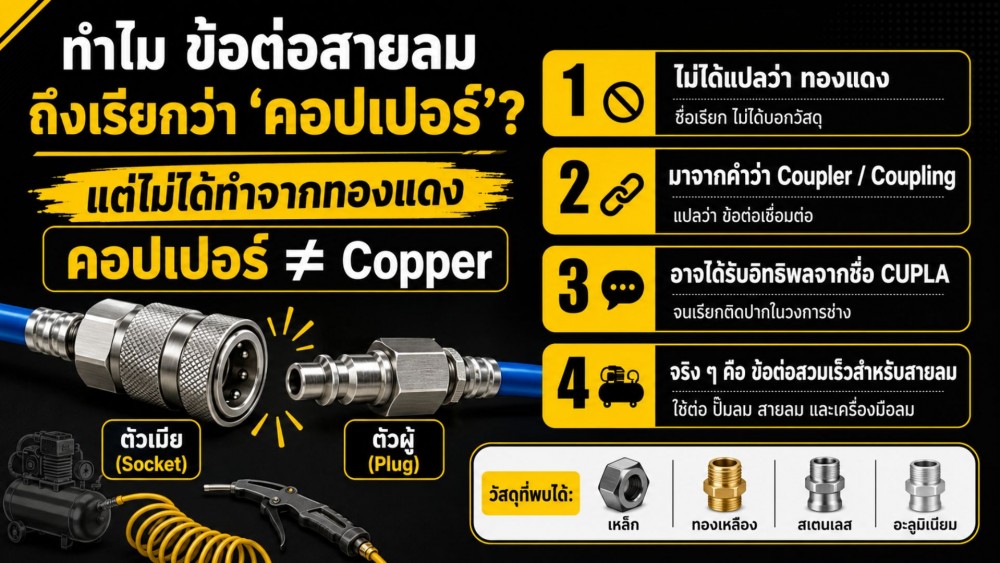
"Copper" does not come from the word copper meaning the metal, but is a phonetic loanword that likely evolved from Coupler and Coupling which refer to devices or mechanisms for connecting two components together. In addition, the quick-connect fitting market features the product brand name CUPLA by NITTO KOHKI, which sounds similar and is well known in the industrial sector.
Air hose fittings colloquially referred to by technicians as "copper" can thus be made of steel, brass, stainless steel, aluminum, or other materials. The name does not indicate that it must be made of copper, nor is it used as a material selection criterion.
When hearing the term "air hose copper," we can understand that it refers to an air hose fitting, which might be a quick connect or quick coupler, rather than talking about a copper fitting.
Before buying, you should check more thoroughly than just the name—inspect both the plug and socket, standard profile, thread size, hose size, flow rate, working pressure, material, and type of seal,
To provide Pneumatic System Fittings to ensure the purchased items connect properly, operate at full efficiency, and are genuinely suited to your pneumatic system.