


 EN
 ไทย


Customers Also Purchased

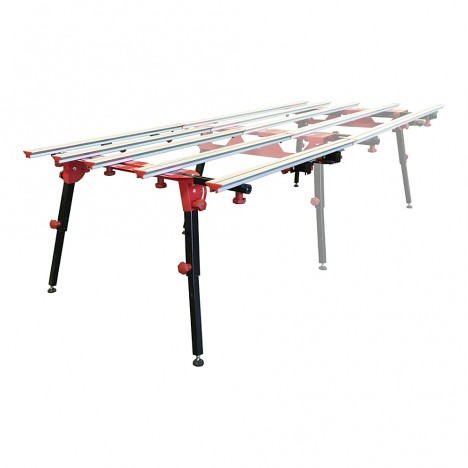

When choosing a workbench, many people primarily look at the material, strength, number of drawers, or weight capacity. But another crucial factor often overlooked is the length of the workbench. The most popular sizes on the market are 120, 150, and 180 cm. So, which size is right for you?
- 120 cm: Compact and space-saving, but limited space for tool placement
- 150 cm: Medium size, versatile in use, but requires checking actual available space first
- 180 cm: wide workspace, holds lots of items, but risks crowding the room or becoming a clutter pile instead of a functional workspace.
The truth is, there is no single size that is "best" for everyone. Choosing Workbenches the right one requires considering multiple factors together, such as the type of work, workpiece size, number of tools, storage methods, room space, and how many people share the workbench.
In this article, we'll compare all 3 workbench sizes to help you choose the one that truly fits your work and space—avoiding buying one that's unnecessarily large or regretting later that it's too small.
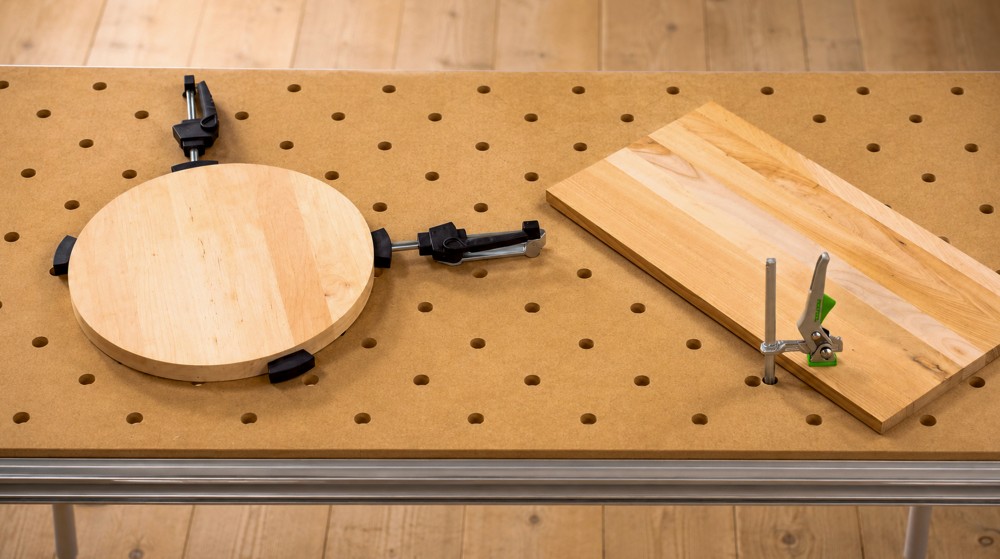
Before choosing a workbench, you must first understand how dimensions are measured.
When manufacturers specify workbench sizes as 120, 150, or 180 cm, this number usually refers to the left-to-right length of the tabletop. However, the actual usable workspace also depends on depth, height, and the equipment installed on the bench.
For example, a 150 cm workbench with tall cabinets or pegboards taking up rear space may leave less actual workspace than a 120 cm workbench with an open top. Similarly, a workbench permanently fitted with a bench vise, grinder, or drill press will also lose some of its usable surface area.
Therefore, we should distinguish between the external dimensions of a workbench and the actual workspace, because a large number on a spec sheet doesn't always translate to that much open surface.
Calculation example: On a 150 cm workbench, if a bench vise is mounted at one corner (taking up ~25–30 cm) and a battery charger is placed on the other side (~30 cm), the remaining middle area for working might be only ~90 cm. If you need a workbench, we have How to Choose a Workbench for DIY & Repair Work!
A larger workbench does not always mean it's more suitable.
Many people think it's better to go big on a workbench right away, assuming having extra space is better than not having enough. This logic isn't entirely wrong, but an oversized workbench comes with drawbacks too.
Workbench is too large:
- Takes up too much room, creates narrow walkways, makes storage cabinets hard to access, or forces you to overreach for tools.
- Without proper organization, the extra space often becomes a dumping ground for boxes, spare parts, and scrap materials, ultimately leaving you with an actual workspace no bigger than a small bench.
Workbench is too small:
- Work gets cramped, requiring you to constantly shift tools around.
- Cannot accommodate long workpieces, offers no space to separate parts before and after assembly, risking parts getting mixed up or lost.
Therefore, the question you should ask is not "how big is the workbench?" but rather "how much actual workspace do we need?" and "what will the bench primarily be used for?"
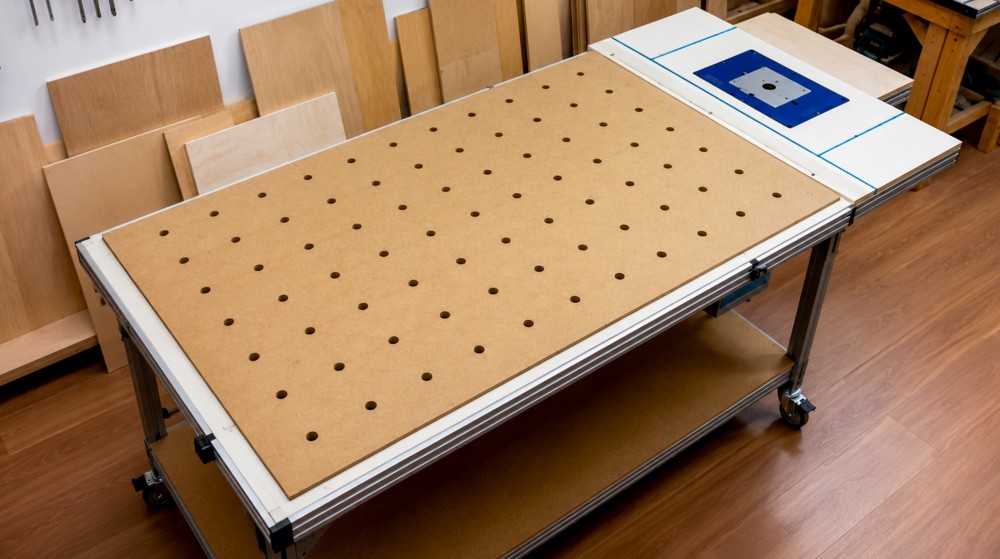
Who is a 120 cm workbench suitable for?
A popular compact size, ideal for houses, condos, storage rooms, or small garages with limited space. Works great for general maintenance, small appliance repair, DIY projects, and electronics work.
Pros
- Ideal for those with fewer tools; convenient access without needing to walk or reach too far.
- Limited surface area makes it easy to stay organized, as you must keep only essentials on the benchtop.
- Lower price compared to 150/180 cm models; great for beginners uncertain about their usage needs.
Limitations
- Mounting multiple benchtop tools (bench vise, bench grinder, etc.) can leave insufficient center space for medium-sized workpieces.
- Not suitable for long workpieces, such as pipes, box tubing, or wooden boards.
- Best suited for small power tool repairs, electronics, sharpening, crafting, or as an auxiliary workbench (battery charging station, inspection table) rather than a primary bench.
150 cm Workbench: The Versatile Middle-Ground Choice
A medium size that balances working area with room space. Handles a wide range of tasks, from DIY, assembly, and light automotive work to maintenance in shops or factories.
Highlights: Easily divides the workbench into 3 zones (left = tools, center = workpiece, right = spare parts/finished parts), helping keep tools and workpieces organized. Perfect for medium-sized garages, home workshops, or small repair shops.
Pros
- Well-balanced—neither too small nor too large. Accommodates 1 mounted bench tool (e.g., a bench vise) while still leaving ample working space.
- Ideal for those unsure which size to choose, offering flexible adaptability for various tasks.
Limitations
- Mounting multiple pieces of equipment simultaneously (bench vise + grinder + drill press) noticeably reduces the center workspace.
- Not suitable for 2 people working simultaneously because each person will only have ~75 cm of space, which is quite cramped.
180 cm Workbench: Built for Heavy-Duty Work and Dedicated Spaces
A full-size workbench ideal for workshops, repair shops, factories, or anyone with dedicated workspaces. Accommodates maintenance, automotive, woodworking, metalworking, and tasks requiring extensive disassembly.
Highlights: Clear zone division (e.g., mount a bench vise on one side, place a grinder/drill press on the other, leaving the center open for assembly). Ideal for multi-step teardowns, allowing parts to be laid out sequentially to prevent misplacement or loss of small components.
Can 2 people work together? It's better than smaller sizes, but if the work requires physical exertion or rotary tools, more separate space is recommended. If regularly used by 2 people, using two separate 120/150 cm workbenches may be more flexible.
Pros
- Generous workspace allows mounting multiple drawer units or large pegboards to create a complete, all-in-one workstation.
Limitations
- Takes up a lot of room space, both front and sides, which may narrow walkways and make opening cabinets difficult.
- Heavy and difficult to move; choose a model with wheels if you need to move it frequently.
- A large surface area often becomes a dumping ground; without a good storage system, it can become just as cluttered as a small workbench.
Common mistakes when choosing workbench sizes
The first mistake is measuring only the workbench footprint without allowing clearance for opening drawers and standing to work, making actual use inconvenient once installed.
Another mistake is choosing a workbench based on all the tools currently on the floor, aiming to place everything on the table. In reality, many tools should be stored in cabinets or hung on walls and don't need to stay on the tabletop all the time.
Another problem is buying a large workbench without planning storage, leaving the surface cluttered with unused items and no space for assembly work. Some choose a small workbench to save space, but later install bench vises, grinders, and chargers until it's full, ultimately having to buy an additional workbench or replace it.
Choosing the right workbench should therefore consider usage patterns over the next two to three years, not just looking at the tools you have today.

Select Workbenches to suit the application