


 EN
 ไทย


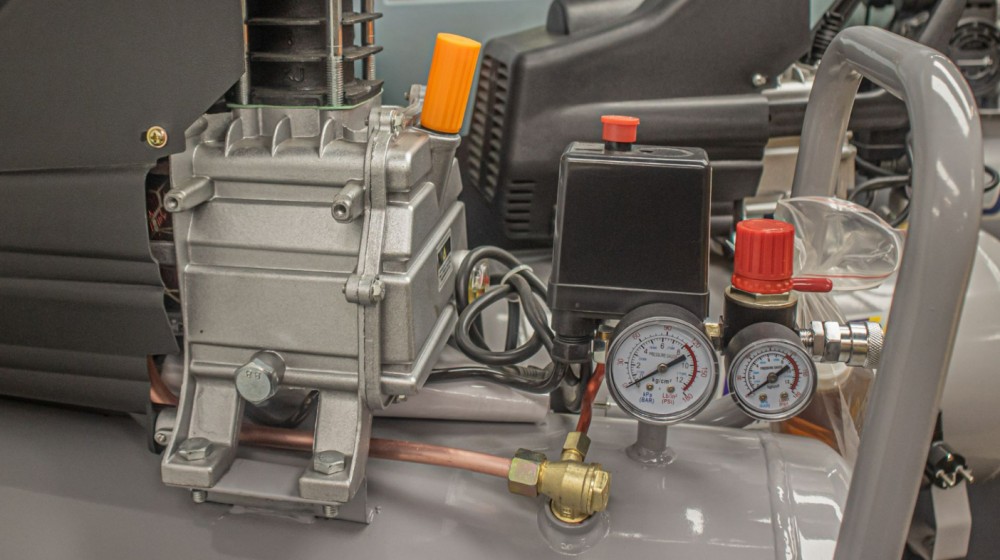
Customers Also Purchased


If you ask whether Air Compressor Spare Parts When should they be replaced? Some people primarily look at operating hours, such as: How many hours of use before changing the oil, replacing the air filter, or inspecting the drive belt? However, even rarely used air compressors can still experience premature spare parts wear, such as hardened rubber, cracked drive belts, clogged air filters, rust on metal components, or leaking air valves. A more compelling question is: does the lifespan of air compressor spare parts really depend more on "operating hours" or the "operating environment"?
The straightforward answer is that both factors are important, but they impact parts differently. Operating hours indicate how heavily the spare parts are utilized, whereas the environment determines the extent of deterioration the parts endure both during operation and while sitting idle.
An air compressor running several hours a day in a clean, well-ventilated area with scheduled maintenance may enjoy longer spare parts life than one used infrequently but situated in a humid, dusty, extremely hot, or chemically corrosive environment. Therefore, prolonging air compressor spare parts life should not rely solely on hour-meter readings, as "actual on-site conditions" are equally vital.
Why do air compressor spare parts have different lifespans?
Air compressors may be the same model, have the same tank size, similar motor power, and use the same type of spare parts, yet have vastly different service lives. This is because air compressors also degrade from: Heat, dust, moisture, vibration, oil quality, installation, and operating habits.
Many air compressor spare parts are components that constantly endure friction, pressure, and heat. These parts degrade quite clearly according to operating hours.
At the same time, many other spare parts are affected by the environment. Even if rarely used, storing them in a damp or dusty area can still cause them to degrade. Therefore, it is not surprising that some people use their air compressor every day and keep it in good condition, while others use it infrequently but find air leaks, machine vibrations, or failure to build pressure normally when turned on.
How do operating hours affect air compressor spare parts?
Operating hours are a fundamental factor used to assess wear and tear on air compressor spare parts. Every time the air compressor runs, the motor rotates, the pump head compresses air, the pistons move, valves open and close, and internal components experience friction.
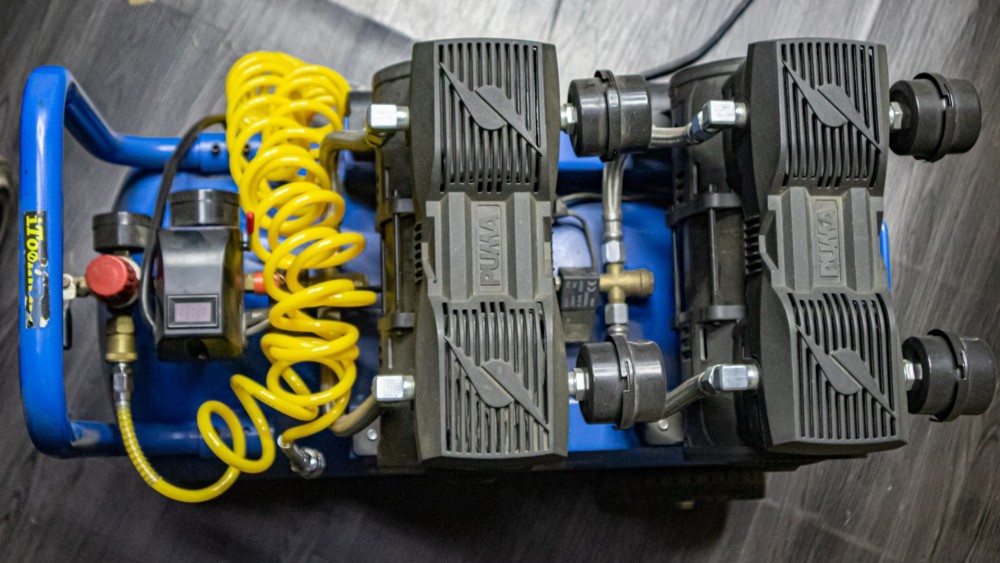
Even if the machine runs normally, cumulative use naturally causes spare parts to gradually deteriorate—just like a car requiring engine oil or belt replacements based on mileage, an air compressor also requires periodic checks based on usage cycles.
Spare parts that clearly degrade with operating hours
Spare parts directly related to operating hours include:
- Air filters
- Belts (for belt-driven air compressors)
- Piston rings
- Bearings
- Valves
- Internal pump head seal sets
These spare parts are directly involved in movement, air compression, and heat dissipation. If used heavily for multiple hours a day, the air filter will trap more dust, belts will stretch and wear faster, and piston rings and valves may lose compression efficiency, causing the machine to build air slower and run longer than usual.
In continuous air demand applications—such as spray painting, pneumatic tools in auto repair shops, factory operations, or high-volume blow cleaning—the air compressor will operate through much higher duty cycles than in general use. If the machine is not given rest periods or is undersized, spare parts will continuously bear heavy loads and wear out faster than normal.
In this case, operating hours are a critical indicator, because the more the machine runs, the greater the accumulated heat and wear.
How does the environment affect air compressor spare parts?
The environment is a key factor that causes air compressor spare parts to "deteriorate sooner than they should," especially for air compressors installed in places with: Heavy dust, high humidity, excessive heat, poor ventilation, or the presence of chemical vapors These factors don't just cause damage while the machine is running; they also take a toll when it is idle, such as:
- Humidity causes rust in the air tank and metal fittings.
- Dust clogs the air filter quickly.
- Heat causes rubber and plastic components to degrade rapidly.
- Poorly ventilated areas prevent the machine from dissipating heat effectively.
Dust: A Major Enemy of Air Compressor spare parts
An air compressor must draw in ambient air to compress inside the pump head. Therefore, in dusty environments, more dust enters the system. Even with an air filter in place, the filter clogs faster, restricting air intake and forcing the machine to work harder. Some fine dust may also slip past into the pump head, accelerating wear on piston rings, cylinders, and valves. This issue is common in woodworking, masonry, grinding, sanding, or factory settings where fine airborne dust is constantly present.
Dust also impacts the exterior of the machine. For instance, dust settling on cooling fins hinders heat dissipation; dust accumulating around the motor increases heat buildup; or dust on drive belts causes slippage and premature wear. Over time, the compressor may become noisier, the motor may run longer cycles, and internal spare parts will deteriorate more rapidly.
Moisture Degrades Air Compressor spare parts Without You Realizing It
Air compressors naturally work with air, and compressed air always contains moisture. As this moisture condenses inside the air tank, water accumulates at the bottom. If not drained regularly, the tank can rust from the inside out, fittings may corrode, and drain valves can stick or leak—potentially compromising the structural safety of the tank over the long term. This is especially true in humid environments, such as near bodies of water, poorly ventilated rooms, or areas frequently exposed to rain and steam. A compilation of simple ways to check for air compressor leaks on your own without hauling it to a service center
Moisture also affects metal and rubber spare parts; for example, bearings can rust, rubber seals can harden or degrade prematurely, fittings can corrode, and electrical components like pressure switches or control boxes face risks from moisture buildup.
Even if the air compressor is rarely used, leaving it in a damp environment for extended periods can cause its spare parts to deteriorate despite low operating hours. Therefore, compressor maintenance shouldn't just be measured by run time, but also by storage conditions and surrounding ambient climate.
Heat and Ventilation Matter More Than You Think
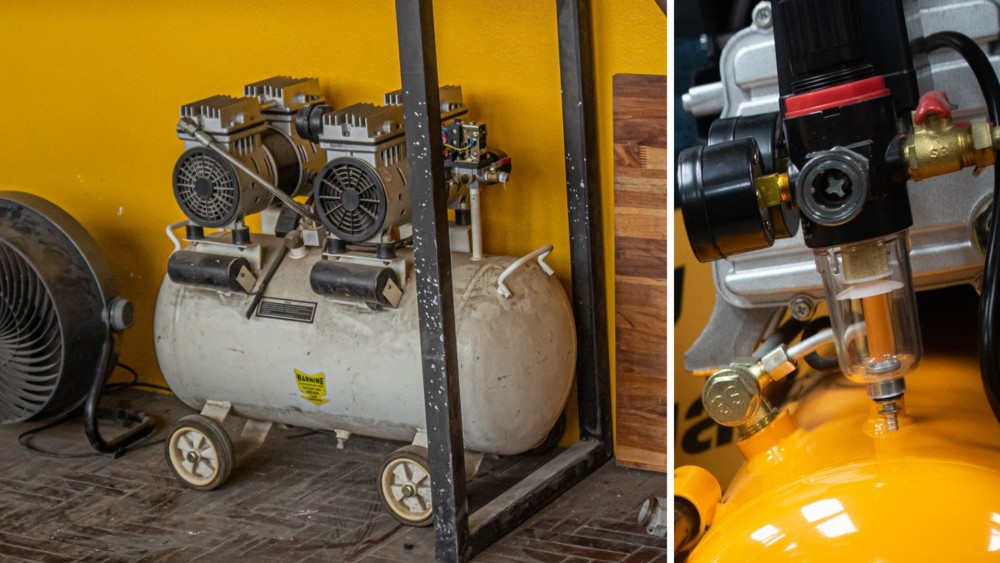
Air compressors naturally generate heat during operation from the motor, air compression, and internal friction. Placing the unit in a hot, enclosed area, or too close to a wall, hinders heat dissipation, leading to high thermal buildup and accelerated degradation of several spare parts, such as:
- Hardened, cracked belts
- Deformed rubber seals
- Brittle gaskets
- High thermal load on the motor
Which Air Compressor Spare Parts Can Be Damaged by Heat Buildup? In many cases, the compressor may not even be heavily used, but installing it in poorly ventilated spots—such as tight corners, under shelves, near heat-emitting machinery, or under direct sunlight—causes it to overheat unnecessarily.
Combined with dust and moisture, the lifespan of air compressor spare parts is shortened. Therefore, choosing a suitable installation location is an easy yet truly effective way to extend the lifespan of spare parts.
Replace air compressor spare parts by operating hours or based on actual condition?
The best approach is to use both together. View operating hours as the "baseline plan" and use the environment as the "maintenance cycle modifier." For example, if the manual recommends checking the air filter at a certain interval, but the air compressor is used in a dusty area, it should be checked more frequently. Or if used in a humid area, drain water from the tank more often, even if the machine hasn't run for many hours. This mindset makes maintenance more accurate than relying rigidly on operating hours alone.
For general users without an hour meter, observing machine behavior can be an alternative, such as taking longer to build up full pressure, getting louder, rapid pressure drops, abnormally frequent motor cycling, excess water in the tank, or air leaks. These symptoms are signs that spare parts should be inspected, even if the scheduled interval hasn't arrived yet.
Which factor should be prioritized for each spare part?
- Air filters are often affected more by the environment than operating hours, because if located in a dusty area, they can clog quickly even after a short period of use.
- Drive belts are affected by both operating hours and the environment; the more they run, the more they wear, but if exposed to hot areas or oil, belts can become brittle or deteriorate faster.
- Piston rings, valves, and bearings are more closely correlated with operating hours, but if dust enters the system or poor-quality lubricant is used, the environment will also accelerate wear.
- For air tanks and metal fittings, moisture is a major factor. Even without heavy use, if water accumulates in the tank or the machine is left in a humid area for a long time, the risk of rust increases significantly.
- Pressure switches and electrical components require caution regarding dust, moisture, and heat, as they involve electrical switching. Any malfunction may cause the motor to cycle too frequently or fail to cut off at the intended pressure.
There is no single rule for every air compressor spare part; you must consider both the function of the part and the operating environment together.
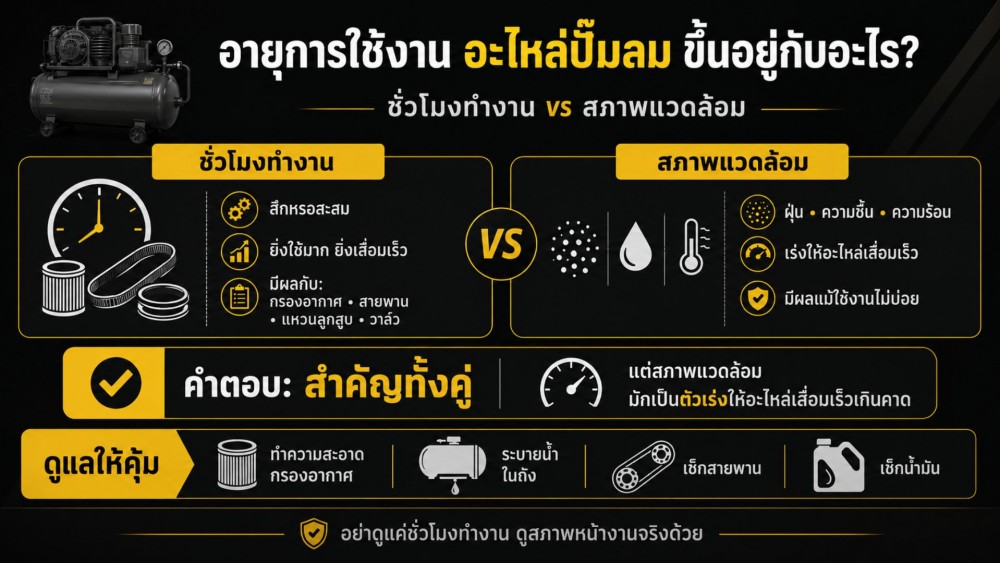
Summary: Do air compressor spare parts deteriorate more from operating hours or the environment?
The lifespan of air compressor spare parts depends on both operating hours and the environment, but the environment is often the variable that causes parts to wear out faster than expected. This is because it is a factor many overlook and is not as clearly defined as operating hours.
An air compressor running in a clean, dry, cool, and well-ventilated area usually has longer-lasting spare parts, even with a considerable number of operating hours. Conversely, an air compressor in a dusty, highly humid, or very hot environment may experience premature wear of parts despite light usage.
To care for air compressor spare parts most cost-effectively, do not wait until running hours elapse before checking. Always observe the environment, machine symptoms, and the actual condition of parts. Placing the machine properly, cleaning the air filter, draining the tank, checking the belt, inspecting oil, and listening to the machine regularly will help prevent premature failures and extend compressor lifespan more than you might think.
Air Compressor Spare Parts It will last longer through a combination of choosing quality components, timely inspections, and operating in an appropriate environment.