


 EN
 ไทย


Customers Also Purchased


When talking about power tools that have recently gained growing interest among DIYers, one of them is definitely the "Multi-tool" also known as a “ Multipurpose tool ” .
Just hearing the name, you can tell that a multi-tool can probably do many things, replace several tools, and is great for anyone who doesn't want to buy too many tools yet. But the key question is: is a multi-tool really suitable for beginners, or is it just a multipurpose tool that in actual use isn't that necessary?
Honestly, multipurpose tools are quite suitable for beginners and DIY work, especially for those wanting to do small home repairs, modify furniture, trim materials, sand tight corners, plunge cut, scrape off adhesive, or fix tight spots larger tools can't reach. In this article, we'll see why.
However, you must understand first that "multipurpose tool" doesn't mean it can completely replace every tool. A multi-tool is great for spot repairs, on-site problem-solving, and tasks requiring precision. But replacing a circular saw, angle grinder, drill, or dedicated sander for heavy-duty work might not be the best solution.
What is a multi-tool, and why is it called a multipurpose tool?
The multipurpose tool we usually talk about in handyman work is a power tool that uses an oscillating system to drive blades or attachments, known as an Oscillating Multi-Tool The operating principle of a multipurpose tool, once understood, feels much more user-friendly than conventional tools because:
- It doesn't rotate like an angle grinder.
- It doesn't cut like a circular saw blade.
- It doesn't drill like a drill.
- It oscillates back and forth at a narrow angle at very high speed.
When a multipurpose tool is fitted with attachments such as cutting blades, sanding pads, plunge blades, or scrapers, it can handle multiple applications in one single tool.
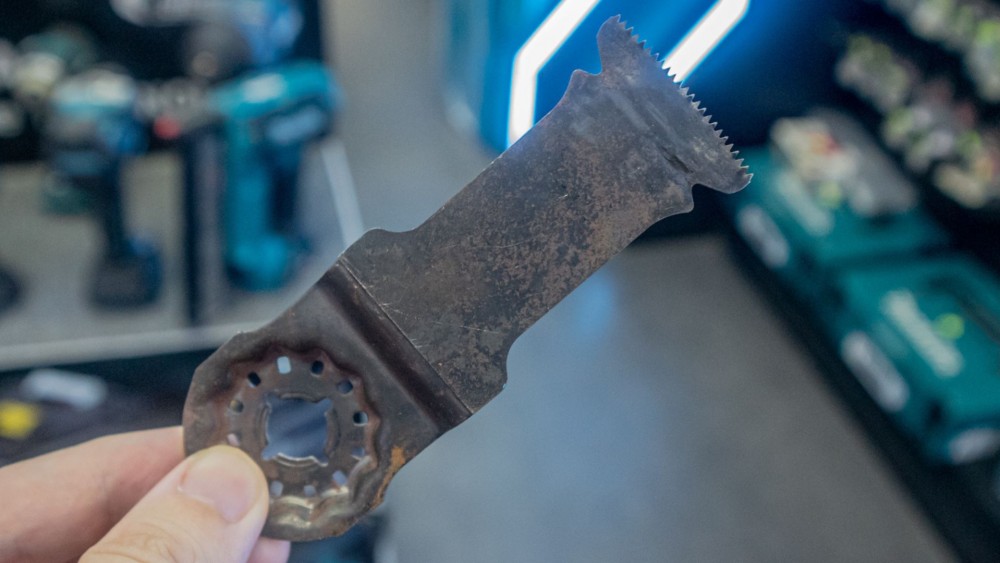
Getting to know multipurpose tools or multi-tools: What kind of jobs are they suitable for? A multipurpose tool isn't just notable for "doing many things"; its real strength lies in working in tight spaces where other tools struggle—such as flush-cutting wood against a wall, trimming door casings on-site, sanding tight corners, removing grout, scraping off old adhesive residue, or cutting pipes.
With conventional tools, these tasks might require disassembling the workpiece, exerting a lot of effort, or risking damage to the surrounding area. A multi-tool allows for precise spot work with much easier control.
The key advantage lies in its maneuverability and versatility.
Multi-tools, or oscillating multi-tools, are not designed to be heavy-duty powerhouses like angle grinders or circular saws. Their strengths lie in their agility, precision, and ability to reach into tight spaces.
To put it simply, if you need to make long rip cuts along a large wooden board, a multi-tool definitely isn't the first choice. For that kind of work, a circular saw, scroll saw, or jigsaw is much more suitable. However, if you need to cut just a small spot, trim a section of baseboard, undercut a door jamb to fit new flooring, or plunge-cut into specific areas, a multi-tool becomes a tool that saves you time and reduces hassle.
Is a multi-tool really suitable for beginners?
Yes, absolutely, because using a multi-tool isn't complicated at all. The tool is easy to grip, direction is simple to control, and the risk of kickback or jarring is much lower than with high-speed rotating cutting tools. However, the blades are still sharp, vibrations can still damage materials, and using the wrong blade type can lead to poor results or premature blade wear.
Its suitability lies in helping you start tackling small repairs without needing a vast collection of tools. For those living in houses, condos, or spaces with limited tool storage, having just this one tool allows you to cut, sand, scrape, and plunge-cut to a reasonable degree—especially for practical jobs you're actually likely to encounter, such as: Repairing furniture, cutting plastic, cutting thin wood, sanding edges, finishing corner details, or fixing spots that larger tools cannot reach.
Another reason multi-tools are great for beginners is that they help you learn how different materials behave. Having a single tool used for cutting wood, cutting plastic, sanding corners, or scraping glue helps you understand how each material responds to vibration, such as:
- How much pressure to apply
- How to guide the tool steadily and gradually
- Which blade type is right for which application
A multi-tool can provide fundamental experience that serves as an excellent foundation for using other power tools in the future.
What kind of jobs is a multi-tool best suited for?
DIY jobs best suited for multi-tools are usually repair, adjustment, and finishing work rather than large-scale fabrication. For general home tasks, a multi-tool can help in many areas, such as:
- Precise plunge cuts into wood
- Cutting plastic, cutting PVC pipes, sanding wood edges
- Sanding old paint in tight corners
- Scraping old silicone, removing carpet adhesive, routing out grout
- Trimming and cleaning up edges of materials
A classic, easy-to-picture example is installing new flooring. If the new floor adds height, the existing door jamb might drag against it. When laying laminate or vinyl tile flooring, you often need to undercut the bottom of the door jamb slightly. A multi-tool excels at this because it can cut flush to the floor, maintain a controlled cut line, and doesn't require removing the entire jamb. This is the kind of job where many beginners wouldn't expect such a small tool to be so helpful.
Small home repairs are where the multi-tool truly shines.
If you ask who multi-tools are best suited for, one clear group is homeowners who do their own repairs. Most home repair jobs aren't complete teardowns; they are localized spot fixes.
For small jobs, without a multi-tool, you might have to do it entirely by hand, which takes time and may not yield neat results. Once a multi-tool is brought in to help, the work gets faster and quality control is improved—especially on spots requiring a smooth finish without causing much collateral damage to the surrounding area.
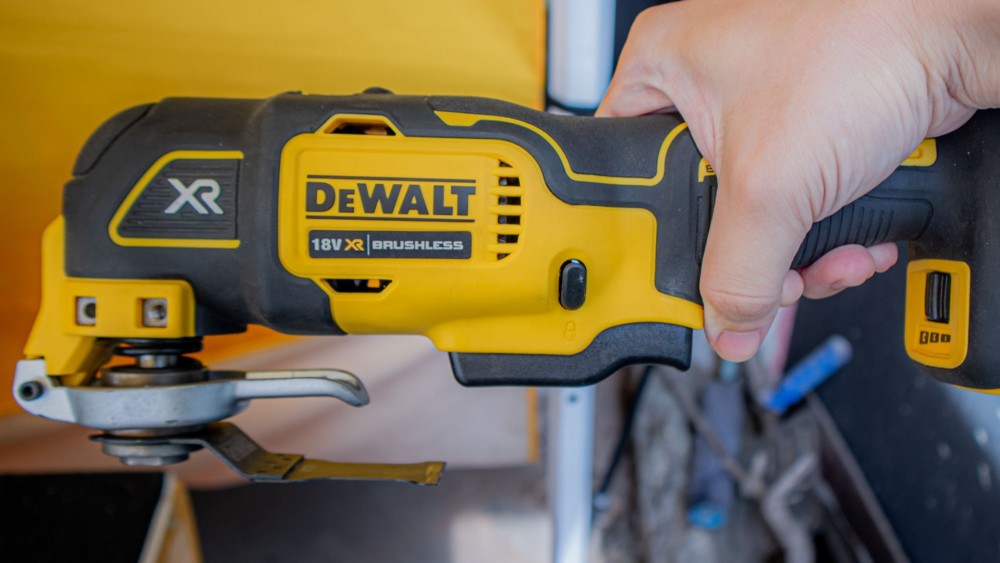
Can a multi-tool replace other tools?
The answer is "it can replace them for some tasks, but not entirely." A multi-tool can perform similarly to a saw in certain spots, like a sander in certain corners, like a scraper in some jobs, and help with plunge cuts, grooving, or trimming materials. However, it is not designed to completely replace specialized tools.
If the job involves making a large volume of wood cuts, cutting large sheets, cutting thick metal, drilling holes, or sanding wide surface areas, a multi-tool is not the suitable primary tool at all. You should use dedicated tools such as drills, circular saws, jigsaws, angle grinders, or orbital/belt sanders.
Don't expect a multi-tool to be a magic wand
The term "multi-tool" might lead us to expect that it can do everything. But looking at it from a practical standpoint, a multi-tool is a genuinely fantastic supplementary tool, not the primary tool for every job. Simply understanding this will help ensure you won't be disappointed after buying one and can use it more purposefully.
Advantages of a multi-tool for modern DIYers
Modern DIY has evolved quite a bit from the past. Many people do not have expansive spaces or a full-fledged workshop. The tools that fit their needs are compact, easy to store, versatile across many situations, and not overly complicated. A multi-tool therefore fits the lifestyle of modern people very well.
In addition, people today prefer to fix things themselves more, whether to save costs, solve small issues immediately, or customize their homes to their own style. Having a multi-tool at home makes it easier to get started without needing to wait for a technician for every small task, and it encourages people to try more DIY projects with an easy-to-use tool.
One tool helps reduce worries when getting started
For beginners, the hardest part of DIY sometimes isn't the task itself, but the lack of confidence about how to start, which tools to use, and what to buy without wasting money. A multi-tool lowers this barrier because:
- It handles multiple applications at an entry level.
- It allows you to gradually experiment with small tasks first, then move on to specialized tools once you have more experience.
- It assists with tasks that primary tools cannot easily access or perform conveniently.
- It serves as a great entry point into the DIY world without requiring a heavy initial investment.
How should beginners choose a multi-tool?
Things to know before choosing: What features should a good multi-tool have? For beginners, choosing a multi-tool doesn't mean starting with the most expensive model. Focus primarily on the nature of the work you will actually be doing. If it's for occasional home use, small jobs, or rare tasks, a corded electric model or an entry-level cordless model may be sufficient.
If you use it frequently, need to move around multiple work areas, or already own batteries from a specific brand, a cordless model that shares batteries with your other tools is an appealing option. An additional feature to look for is a speed control dial; different tasks require different speeds. Cutting wood can sometimes use high RPMs, but sanding or detail work may require lower speeds for better control.
The blade change system of an oscillating multi-tool is also very important. If it is easy to change without needing tools frequently, it will make the workflow much smoother—especially for beginners.
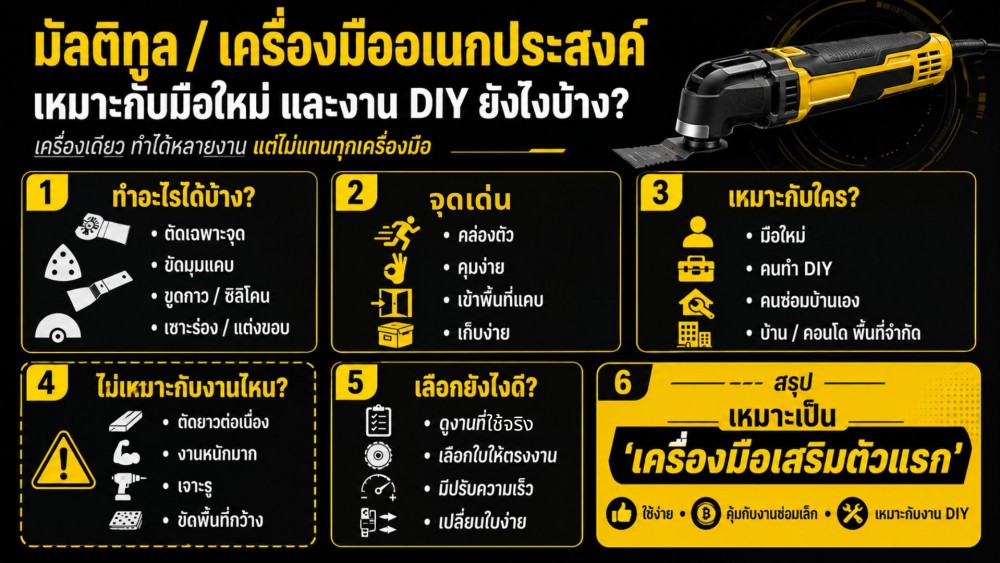
Summary: Multi-tools are ideal for beginners and DIYers
In summary, a multi-tool or oscillating tool is very suitable for beginners and DIY projects, especially for those looking for a versatile tool for small repairs, localized trimming and cutting, scraping, corner sanding, or tasks in spaces larger tools cannot reach. The key highlights of a multi-tool are its maneuverability, versatility across various situations, compact storage, and the ability to help beginners start DIY work without needing a complete set of tools.
However, a multi-tool is not a magic wand that can replace everything. For long cuts, heavy-duty jobs, drilling, fastening, or large-area sanding, dedicated tools still perform better. Therefore, the most accurate answer is that a multi-tool is ideal as one of the "first supplementary tools" for DIYers, and great for anyone wanting a tool to tackle specific spot repairs around the home.
If you want to start repairing things yourself, doing small woodwork, making home improvements, or having a single tool that handles multiple tasks without taking up space, Multipurpose tool it is considered another very worthwhile option. However, before choosing one, make sure you know what tasks it will be used for, select the right type of blade, and understand its limitations thoroughly.