EN
 ไทย


Customers Also Purchased
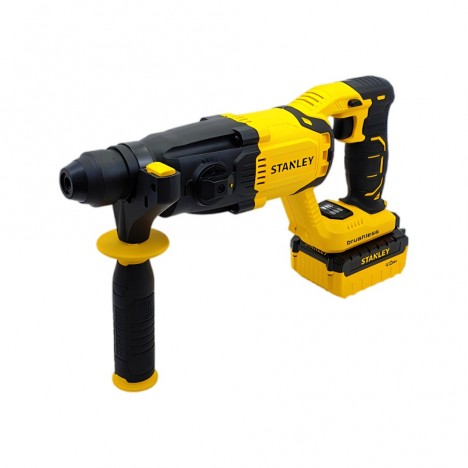
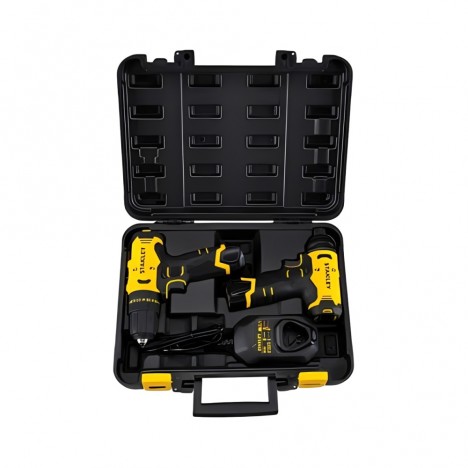
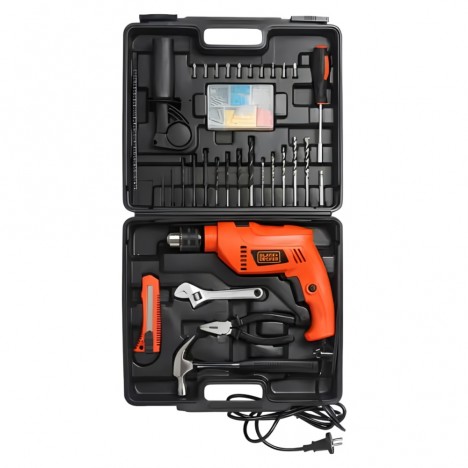


Have you ever wondered? If you already own a rotary hammer, do you still need hammer drill a hammer drill? Many people say that both tools can drill into masonry just the same. And especially for drilling walls, bricks, plaster, or concrete, since a rotary hammer is more powerful, it should be able to replace a hammer drill entirely, right?
In real-world applications, a hammer drill and a rotary hammer differ by more than just having more or less power. The two tools differ in their impact mechanism, tool weight, maneuverability, hole control, drill bit types, and suitable materials.
For certain jobs, a rotary hammer is certainly faster. But for others, using it might be overkill. Moreover, it feels heavy in the hand, is harder to control, or risks blowing out the hole too much, whereas a hammer drill might be a much more well-suited option.
Therefore, in this article, we will make a clear comparison: how necessary a hammer drill really is if you already have a rotary hammer, what kind of work calls for a hammer drill, what kind calls for a rotary hammer, and if you actually have to buy, should you own both or is one enough—so you won't have a headache choosing the right drill next time.
Why Is a Hammer Drill Still Worth Using Even If You Own a Rotary Hammer?
If you ask whether What Exactly Is a Hammer Drill? It is a cordless drill or electric drill that features a rotating mode combined with axial impact. It helps drill hard materials like brick, plaster, cinder blocks, or general walls more easily than a standard drill. Its operating principle generally relies on rapid, high-frequency micro-impacts while the bit rotates, rather than heavy hammering like a rotary hammer, making it suitable for light to medium-duty tasks.
The standout feature of a hammer drill is its versatility with adjustable modes—capable of drilling wood, metal, plastic, and light masonry all in one tool. For general household tasks such as drilling walls to hang picture frames, installing curtain rods, mounting shelves, or drilling small anchor holes, a hammer drill often feels better balanced in the hand than a rotary hammer because it is lighter, more agile, and conveniently uses standard round-shank drill bits.
When drilling thin plastered walls for just 2-3 holes for 6 mm wall plugs, pulling out a rotary hammer might feel too heavy and overpowered for the job. A hammer drill, on the other hand, provides much easier control, especially in areas where you must be careful not to crack the wall or drill completely through.
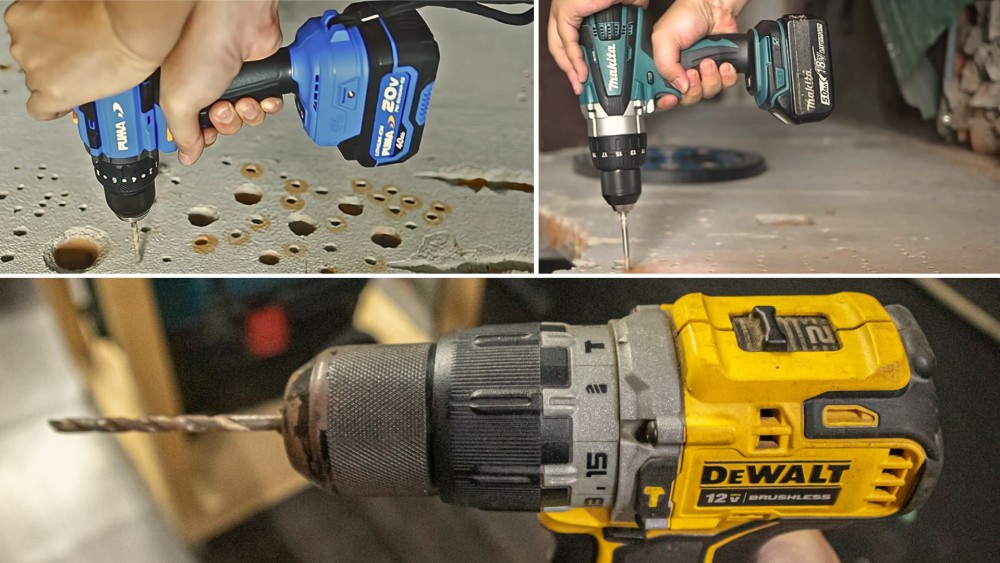
Hammer Drills Aren't Built to Compete in Pure Power with Rotary Hammers
Hammer drills are not designed to go head-to-head with rotary hammers on hard concrete. But when looking at lightweight handling, maneuverability, and multi-material capability, a hammer drill still hits the sweet spot. Simply put, a rotary hammer is meant for "serious masonry drilling," while a hammer drill is for "general drilling that can also handle light masonry."
How Does a Rotary Hammer Differ from a Hammer Drill?
A rotary hammer is designed specifically for drilling masonry, concrete, and heavy-duty impact tasks. Its impact mechanism does not rely on rapid vibration like a hammer drill; instead, it delivers a direct hammering force to the drill bit, drilling through hard materials much faster using SDS-Plus or SDS-Max bits.
Can Different Sized Hammer Drills Drill Masonry the Same Way? If you need to drill concrete frequently, bore large holes, or drill into floors, columns, beams, or hard concrete walls, a rotary hammer surpasses a hammer drill in speed, durability, and required downforce. However, its drawbacks are that the tool is typically bulky, heavy, loud, and vibrates heavily, making small holes harder to control—especially when working close to wall edges or on brittle materials.
When power isn't the only answer when choosing a tool
When choosing a tool, many ask "Which one is more powerful?", but in real-world work, you should really ask "Which one fits the job better?". A rotary hammer wins for heavy masonry, but an impact drill wins in versatility, lightweight handling, and convenience for general household tasks.
If you already have a rotary hammer, do you still need an impact drill?
The answer is It depends on the nature of the work. If you use tools primarily to drill concrete, heavy masonry, large anchor holes, or do structural work, a single rotary hammer can handle it all.
But if you ask, “Are there special precautions when using a rotary hammer on wood?” then if your work involves drilling wood, steel, light walls, or general home maintenance, an impact drill might still be necessary as a more agile, versatile tool that fits multiple job categories, such as: Home installations, drilling small holes, general repairs, DIY projects, and tasks requiring frequent repositioning. Importantly, holding an impact drill for extended periods is much more comfortable than a rotary hammer and helps significantly reduce fatigue during repetitive, detailed tasks.
So, if you already have a rotary hammer but feel that every time you tackle a small task you have to pick up a heavy, overkill machine that lacks precise control, that's a sign an impact drill still has a place in your toolbox.
An impact drill is still very worthwhile for jobs requiring agility, precision, and multi-material versatility:
- Drilling small plastic wall anchors for general home use
- Drilling brick, plaster, or relatively soft walls
- Drilling wood, thin sheet metal, plastics, and general materials
- DIY projects that require frequent use without the hassle of a heavy tool
Cases where you don't need an additional impact drill
If you mainly work on construction sites, constantly drilling concrete, making large holes, installing steel wedge anchors, or regularly needing high impact energy, a rotary hammer is the better primary tool—and an impact drill might end up barely being used.
If you already have a cordless drill/driver or a regular drill for wood, metal, and screw fastening, along with a dedicated rotary hammer for concrete, your tool set is already quite complete. An impact drill may be redundant unless you want an all-in-one intermediary tool.
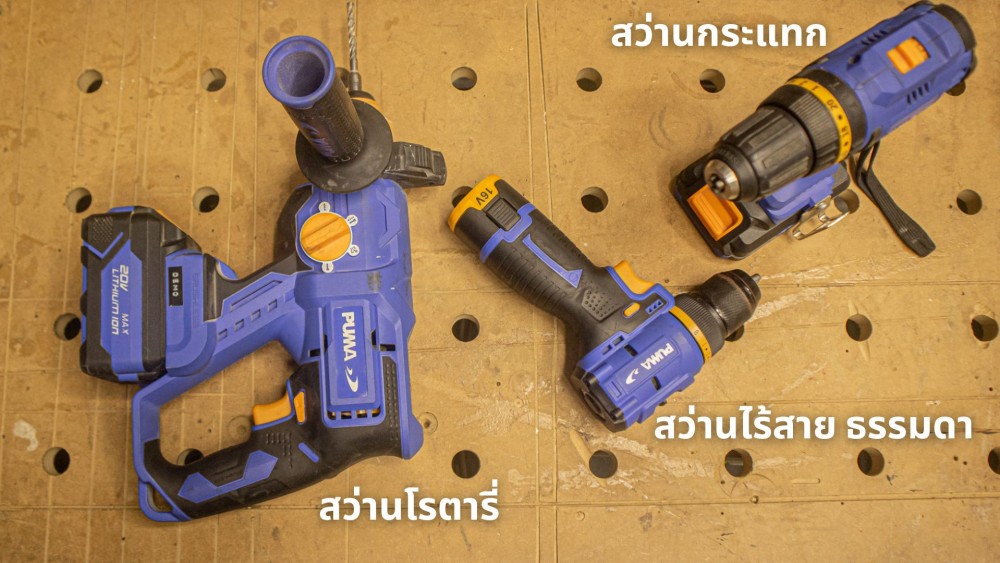
What kind of jobs call for an impact drill, and what jobs should use a rotary hammer?
Masonry drilling isn't just one single level. Thin plaster and reinforced concrete are completely different, so you should consider the material, hole size, depth, and the number of holes needed.
An impact drill is usually sufficient for plastered brick walls to drill 5-6 mm holes for wall plugs to hang lighter items. However, for hard concrete, columns, beams, floors, or large holes, a rotary hammer is more suitable.
Look at the material, not just the word “masonry”
The word “masonry” or “concrete” is very broad. Some people mean plastered walls, while others mean reinforced concrete, even though their hardness is vastly different.
A simple rule of thumb: if the material isn't too hard, the hole isn't large, and there aren't many holes, an impact drill is sufficient. But if the material is hard, the holes are large or deep, or you need to drill multiple holes continuously, a rotary hammer should be the first choice.
Who is an impact drill best suited for?
An impact drill is best suited for those who need a versatile tool for general home use, or those who don't regularly do heavy concrete work, but want a machine that Drills wood, metal, and light masonry walls all in one tool Such as homeowners, condo residents, general repair technicians, furniture assembly teams, or DIYers.
Many people buy a rotary hammer thinking it has great power and can do everything, but in real use, they rarely pick it up because it is large, heavy, and too excessive for small tasks. If you don't drill concrete every day and handle a mix of various jobs, an impact drill might be more worthwhile in terms of usage frequency.
Rotary hammers are suitable for those who drill masonry, concrete, or perform heavy installation work regularly, such as electricians, AC technicians, plumbers, steel framing installers, or those working on structural elements. Rotary hammers are also ideal for large or deep holes, such as installing steel anchors, running conduits, securing equipment bases, or drilling into floors.
If the job is heavy, don't force an impact drill just to save money
We advise that you should not try to force an impact drill into hard concrete just thinking that turning on impact mode will drill through it similarly. The result is that while it might drill a bit, it requires heavy pressure, takes a long time, overheats the bit and the tool, and may leave messy holes. Therefore, if the job genuinely exceeds the limits of an impact drill, you should switch directly to a rotary hammer.
Is owning both an impact drill and a rotary hammer redundant?
Superficially, it might seem redundant because both drills can drill masonry. But looking at their actual roles reveals they are not entirely duplicative. An impact drill is a versatile tool for light to medium tasks, ideal for jobs needing agility, usable on multiple materials, and not requiring heavy impact force. A rotary hammer, on the other hand, should be seen as a specialized tool for heavier masonry work, such as concrete, large holes, or continuous drilling. For anyone handling diverse tasks, having both isn't redundant—it simply divides tool responsibilities more clearly.
The differences that give each tool its own place are:
- hammer drill Suitable for light work, home use, and general installation requiring precision
- Rotary hammer Suitable for heavy masonry, concrete, large holes, and tasks requiring continuous impact force
- Need to drill multiple materials like wood, metal, and light masonry walls hammer drill Easy to grab and use
- Need to drill multiple holes in hard concrete or use large metal anchor bolts Rotary hammer It will make your work much easier
- Having both types Helps reduce strain on the tool, resulting in less damage to drill bits, tools, and workpieces
If you have the budget and do a wide variety of work, owning both is ideal. But if your budget is limited, start with your primary tasks first. If your main jobs are home repairs and DIY, you can start with an impact drill. However, if your main work involves heavy-duty masonry drilling, a rotary hammer should come first.
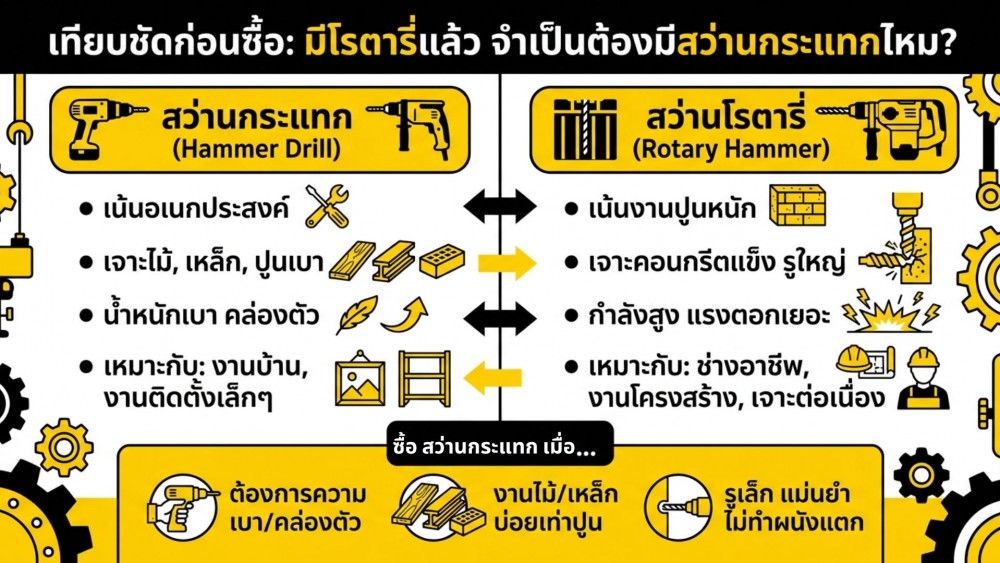
Conclusion: If you already have a rotary hammer, should you buy an impact drill?
In practical terms, an impact drill is still essential for many people even if they already own a rotary hammer—especially if they need a tool that is lightweight, maneuverable, versatile across multiple materials, and ideal for home use or general installation tasks. However, if you use the tool primarily for drilling concrete, doing heavy-duty work, drilling large holes, or rarely working with wood and steel, an impact drill may not be that necessary.
Quick takeaway to remember If your work is "primarily heavy masonry," a rotary hammer is the real deal. But if your work is "general, multi-material tasks with occasional light masonry drilling," an impact drill offers great value.
Ask yourself: How often do you drill hard concrete? How often do you drill wood or steel? Are most of your jobs small holes or structural work? And do you need a lightweight, nimble tool, or is maximum drilling power your main priority?
The answer can clearly tell you whether hammer drill it is still necessary for you or not more than just listening to advertising claims