


 EN
 ไทย


Customers Also Purchased


When choosing a Drill When choosing one to use, we might look at wattage, torque, RPM, battery, or brand first, right? For example, Bosch Drill Technology: What Are the Key Highlights? Worth Buying in 2026? However, there is another very important part that is often overlooked, and that is "The Chuck" or the front tip of the drill used to hold drill bits, screwdriver bits, and various accessories so they rotate together with the tool.
The question is: how important is the drill chuck? Why can some types of drills use round-shank bits while others require SDS bits? Why do impact drivers use a 1/4-inch hex drive? And if you're buying a drill for home use, woodworking, metalworking, masonry, or serious trade work, which type of chuck should you choose?
This is by no means a minor detail, because the chuck directly affects clamping firmness, precision, bit-changing speed, safety, and the drill's overall performance. Often, when bits slip, spin freely, drill off-center, or feel underpowered, the problem might not be the drill itself, but rather choosing a drill with a chuck unsuitable for the job.
Keyed Chuck
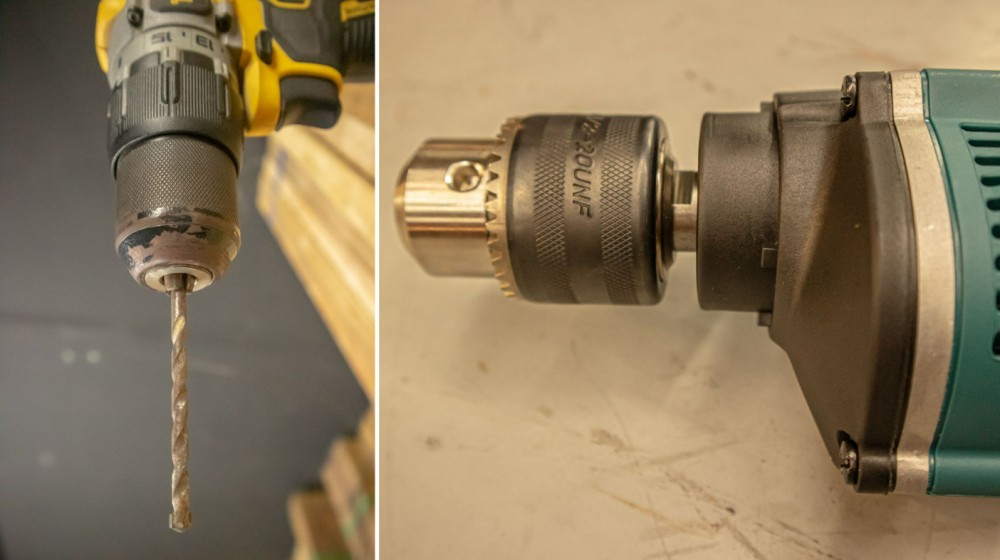
A keyed chuck is a traditional chuck type widely found on corded drills and drill presses. It features 3 internal clamping jaws, commonly called a 3-jaw chuck, and requires a chuck key to tighten firmly onto the bit. Its key advantage is holding bits very securely, and it works with round-shank bits used for drilling wood, metal, or general masonry.
The advantage of this chuck is its gripping tightness. If tightened properly, the bit is unlikely to slip or spin freely, making it ideal for tasks requiring high torque and stability. However, its limitation is that bit changes are slower than with other chuck types, and you must be careful not to lose the chuck key.
Keyed chucks are suitable for those who use drills for heavy-duty work, don't change bits frequently, and prioritize gripping tightness, such as metal drilling, maintenance, general mechanical work, or on drill presses requiring high stability. Although it may not look as modern as a keyless chuck, it remains a highly dependable choice.
Keyless Drill Chuck
A quick hand-tightened (keyless) chuck is commonly found on cordless drills and newer models. It also has 3 jaws, but its key feature is requiring no key—simply rotate the chuck collar by hand to change bits.
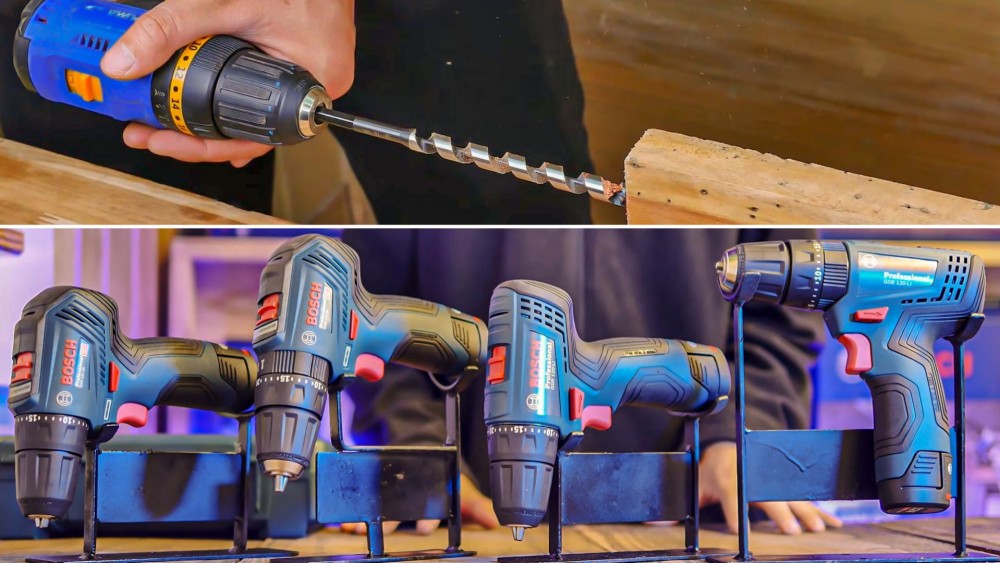
This type of chuck is very convenient to use, eliminating the need to carry a chuck key, and is ideal for using a single drill for multiple tasks or switching between different bit sizes during the same job. How Many Jobs Can 1 Drill Do? A Guide to Maximizing Value Like a Pro
That said, you still need to choose good quality, as budget keyless chucks on some drill models may loosen easily under heavy loads or high vibration.
Plastic Sleeve vs. Metal Sleeve: What's the Difference?
- Keyless chucks with plastic sleeves are typically found on general-purpose drills; they are lightweight and can be easier to twist by hand, making them ideal for household or DIY tasks.
- A metal sleeve offers greater durability, making it suitable for tradespeople who use it frequently or for serious on-site work.
Rotary Hammer Drill Chuck (SDS)
The highlight of a rotary hammer's SDS chuck is that it no longer uses the 3 jaws found on standard chucks, but instead uses grooves on the bit shank to lock and transmit power. This allows the bit to take the tool's full impact force, making it clearly superior to standard impact drills for drilling masonry, brick, and concrete.
How to Insert a Rotary Hammer Bit: Is It Really Easy? How Do You Know It's Tight Enough for Use? Standard chucks focus on clamping the bit tightly and primarily transmitting rotational force, whereas SDS is designed to allow the bit to move slightly along its axis to absorb impact forces—ideal for installing anchors, drilling walls, drilling concrete, and construction tasks that regularly involve drilling into hard materials.
What is the difference between SDS-Plus and SDS-Max?
SDS-Plus is commonly found on small to medium rotary hammers, suitable for general installation work, anchor drilling, pipe routing, or moderate-sized concrete drilling. SDS-Max is a heavy-duty system used with larger machines, ideal for large-hole drilling, chiseling, wall demolition, or construction site work requiring high power.
What kind of work is a 1/4-inch hex chuck used for?
A 1/4-inch hex chuck (or 1/4 Hex) is typically found on impact drivers and electric screwdrivers. Its key highlight is much faster bit changes—simply insert or pull the sleeve to lock it instantly. It is ideal for screw driving, assembly, installation, and tasks that require frequent bit changes.
Can an impact driver use any bit as long as it has a hex shank, is that true? Even though it can be used with hex-shank drill bits, a 1/4 Hex chuck cannot replace a drill chuck for every task. While it handles torque and impacts well, if you need to drill holes requiring high precision—such as drilling steel or drilling very straight holes in wood—a standard three-jaw chuck still offers better control.
Can you use hex-shank drill bits instead of regular bits?
They can be used for light to general tasks, such as wood drill bits, pilot drill bits, or certain thin-metal drill bits with an impact driver, which makes bit changes quick and convenient. However, if you need to drill hard materials, drill continuously, or require high precision, it is still recommended to use a drill with a three-jaw chuck (which can also accept hex-shank bits).
Magnetic Chucks and Extension Chucks
A magnetic chuck or bit holder is an accessory used to hold screwdriver bits, commonly paired with cordless drills, electric screwdrivers, or impact drivers. Its purpose is to facilitate easier bit changes and keep the screwdriver bit securely attached to the holder, especially when driving screws in tight corners or confined spaces.
However, an extension holder should not be used in place of the primary chuck all the time; the longer the extension, the greater the chance of wobble/play. If the task requires precision, such as drilling pilot holes or drilling perpendicular to the workpiece surface, using the drill's main chuck directly provides better control.
What is the difference between 10 mm and 13 mm 3-jaw chucks?
The 10 mm and 13 mm chuck specifications indicate the approximate maximum bit shank size the chuck can accommodate. A 10 mm chuck is suitable for household tasks, DIY projects, and light-to-medium work such as drilling wood, thin sheet metal, or small masonry holes. A 13 mm chuck accommodates larger bits, making it suitable for trade work that requires various bit sizes or accessories like hole saws.
A bigger chuck doesn't always mean better
Many people see a 13 mm chuck and assume it must be better than a 10 mm in every case, but it really depends on the application. For general home use, a 10 mm chuck is maneuverable and sufficient. However, if you do diverse jobs, drill larger holes, or frequently do professional work, a 13 mm chuck offers more versatility.
A larger chuck does not necessarily mean the drill can handle heavier drilling; you must also consider the machine itself, its torque, and the type of work. If a small tool is fitted with a bit that exceeds its capacity, the motor may overheat, drain the battery quickly, or fail to operate at its full potential.
So, which chuck type is the best?
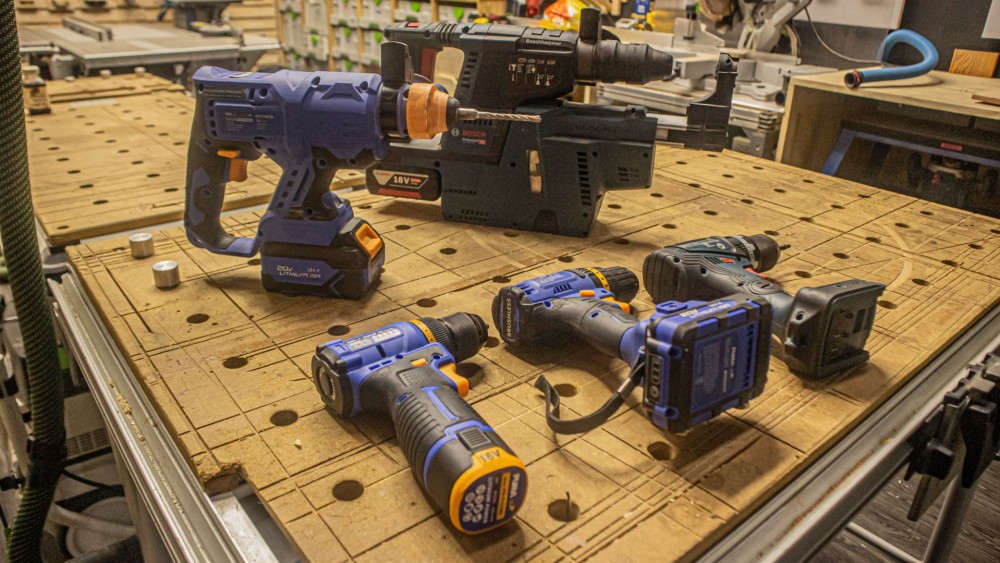
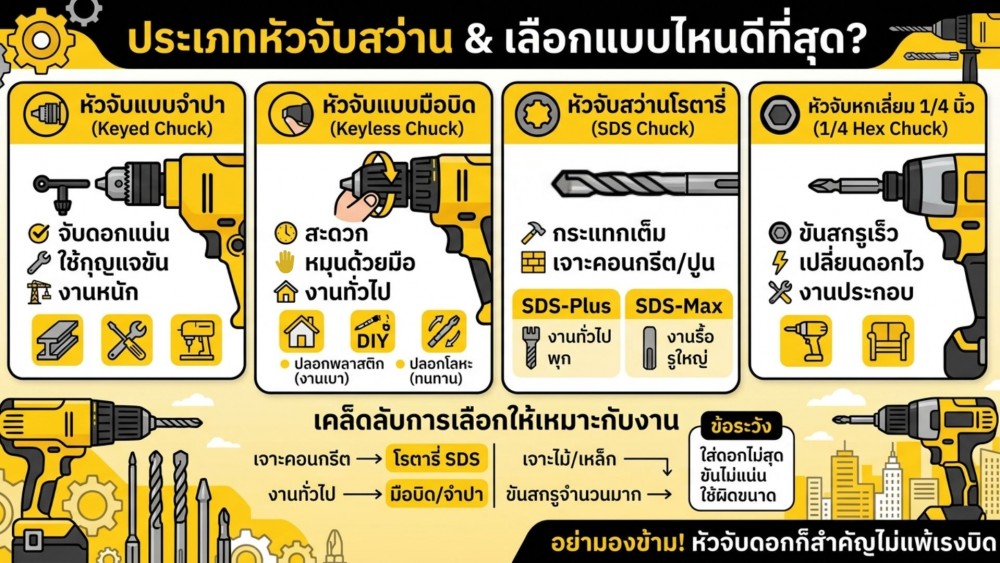
There is no single "best" answer when it comes to drill chucks, because it depends on your specific work. For home use, drilling wood, thin metal, and occasional screw driving, a keyless chuck is the most convenient. If you need maximum clamping tightness and do not change bits often, a keyed chuck is still a great choice. If your focus is serious masonry or concrete drilling, choose a rotary hammer with an SDS chuck. And if you mainly drive large volumes of screws, a 1/4 Hex chuck on an impact driver will be much more agile.
- Household work, DIY projects, furniture assembly: choose Keyless chuck
- Steel drilling, maintenance work, tasks requiring high gripping force: choose keyed chuck
- Masonry and concrete drilling, installing numerous wall plugs: choose a rotary hammer SDS-Plus
- Heavy-duty drilling, chiseling, demolition, or large-hole drilling: choose a rotary hammer SDS-Max
- Heavy screw fastening: use a chuck 1/4 Hex with an impact driver
Common mistakes that cause drill chucks to wear out quickly
A drill chuck constantly endures rotational force, torque, and vibration. If used incorrectly, even the best chuck can deteriorate quickly. Common mistakes include not inserting the bit all the way, not tightening the chuck securely, using the wrong bit size, continuing to force a bent bit, or using the wrong type of drill—such as using a regular drill for continuous heavy concrete drilling.
Another factor is concrete dust, metal shavings, and moisture, which can make the chuck stiff, reduce clamping grip, or cause rust. After use, you should always blow away dust, wipe it clean, and store the drill in a dry place.
Do not force using the wrong bit system
SDS bits should be used with SDS chucks, round shank bits should be used with 3-jaw chucks, and hex bits should be used with 1/4" hex chucks or 3-jaw chucks. Using cross-system adapters is possible in some cases, but be aware that wobble may increase, and it may not be suitable for heavy-duty tasks.
What should you look for in a drill chuck before choosing a drill?
Before selecting or deciding to buy a drill, consider the drill chuck along with your actual applications. For general home use, a 10 mm or 13 mm keyless chuck is well-suited. But if you frequently drill into concrete, consider upgrading to an SDS-Plus rotary hammer drill, as it is designed for the task and won't strain the tool.
For tradespeople handling diverse tasks, you might need more than one tool: for example, a cordless drill with a keyless chuck for general drilling and driving, an impact driver for heavy-duty screw fastening, and a rotary hammer for concrete drilling. This approach speeds up work, prevents using the wrong drill, and reduces the likelihood of long-term damage.
Ask yourself a few quick questions: What materials will you use the drill on? How often will you need to change bits? What is the maximum bit diameter in millimeters? Do you prioritize precision or speed? Will it be used occasionally or every day?
Conclusion: The drill chuck impacts your work more than you think
The drill chuck might seem like a small part that many overlook, but it directly takes on rotational force, torque, vibration, and impact. Choosing the right chuck for the job improves drilling accuracy, prevents slipping or loose bits, minimizes chuck wobble, and extends the lifespan of both the tool and the drill bits.
Don't just look at torque, battery, brushless motor, or price, because this small part at the tip Drill is what can make your work easier, smoother, and result in a much better finish.