


 EN
 ไทย


Customers Also Purchased


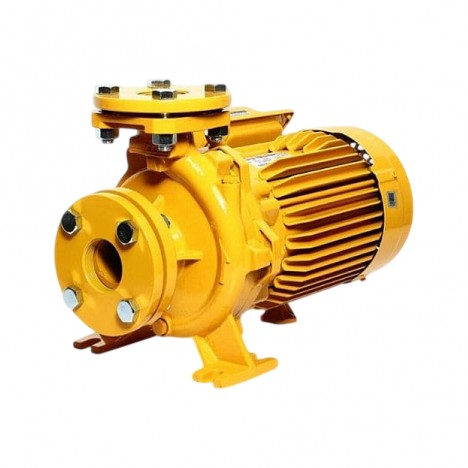


Centrifugal pumps are popular water pumps that meet various needs ranging from residential and agricultural uses to industrial plants. However... there is a classic, frustrating problem that many people encounter: when first turned on, the water shoots out with great power, but after running for a while... the flow starts to dwindle, the outlet barely trickles, and sprinklers refuse to rotate altogether!
When encountering this symptom, many people rush to conclude that the centrifugal pump is broken and prepare to spend money on a replacement. But wait! A sudden drop in pressure mid-operation does not always originate from the motor itself. It often stems from other components in the system, whether it is a leaking foot valve, air entering the suction pipe, debris clogging the impeller, or even piping that has exceeded the capacity of the centrifugal pump from the very start.
In this article, we will take an in-depth look at this "strong start, weak finish" problem of Electric Centrifugal Pumps centrifugal pumps to see what really causes it, along with basic troubleshooting steps so you can solve the issue right at the source and save your money without having to buy a new centrifugal pump!
First, understand that a pressure drop does not always mean the centrifugal pump is broken.
Make it clear: pressure drop or flow loss? The problem might not be with the centrifugal pump itself! When we see water barely trickling at the end of the line, we usually complain that the centrifugal pump has a pressure drop. But technically speaking, this symptom can be divided into 2 distinct cases that need to be differentiated.
- Pressure is the force used to "push" water to spray far away or climb to high elevations.
- Flow Rate is the "volume of water" flowing out of the pipe.
Many times, the centrifugal pump motor is still humming along normally, but the water at the outlet is weak because the flow rate has decreased—such as when the flow path is restricted or air enters the suction pipe. When less water comes through, we mistakenly assume that the pressure has dropped as well.
Don't be too quick to blame the centrifugal pump, because it doesn't work alone. It operates as a system consisting of: Water source > Suction pipe > Foot valve > Pump body > Discharge pipe > Terminal valves.
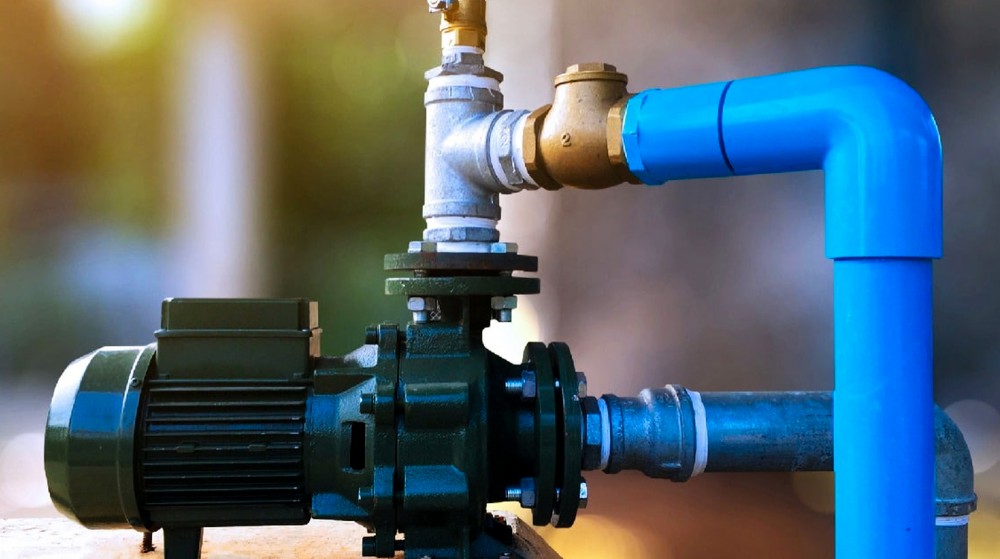
The root causes! Why does a centrifugal pump start strong and fade out, or is the system broken?
Don't blame the motor just yet! If your centrifugal pump starts strong but weakens after running for a while, 90% of the problems are hidden in the "surrounding system." Try checking through these critical zones:
Zone 1: Suction Side (Inlet) - The Most Common Culprit
- Air leaks: Loose joints, deteriorated seals—even if no water leaks out, air gets sucked in and mixes with the water, causing intermittent flow.
- Foot valve issues: Debris clogging or a valve flap that does not close completely, preventing water from feeding fast enough or allowing water to drain back into the sump/well.
- Suction pipe is too small, long, or has too many bends: A flow path that is too narrow or convoluted prevents water from reaching the pump in time.
- Clogged strainer: Mud buildup or leaves blocking the water inlet, causing the flow to gradually weaken unnoticed.
- Dry water source: Pumping continuously until the water level in the sump drops, causing the foot valve to suck in air instead.
Zone 2: Centrifugal Pump Body and Mechanics
- Air churning inside the pump (Cavitation): Water cannot enter fast enough, creating air bubbles that strike the impeller (producing a sound like gravel rattling inside the pump).
- Worn impeller: Frequently pumping water mixed with sand wears the impeller thin, chips it, or entangles it with debris, causing a loss of centrifugal force.
- Leaking shaft seal: Water seeps under the motor shaft, allowing air in and causing pressure to drop.
Zone 3: Electrical system - Unstable power
- Voltage drop / Overheating motor: Running power cords that are too long or too thin causes the motor to overheat and its RPM to drop during continuous use.
Zone 4: Delivery side and system design - Overburdened use
- Multiple outlets open simultaneously: Water demand exceeds the pump's capacity. (Try closing some valves; if pressure returns, the pump is not broken!)
- Clogged delivery pipe or underground burst: Valves not fully open, clogs from debris, or pipe leaks along the way.
- Wrong pump specs from the start: Looking only at horsepower without considering distance and head height, forcing the pump to carry an excessive load.
Other Related Articles
- Can a centrifugal pump run continuously 24 hours without a break?
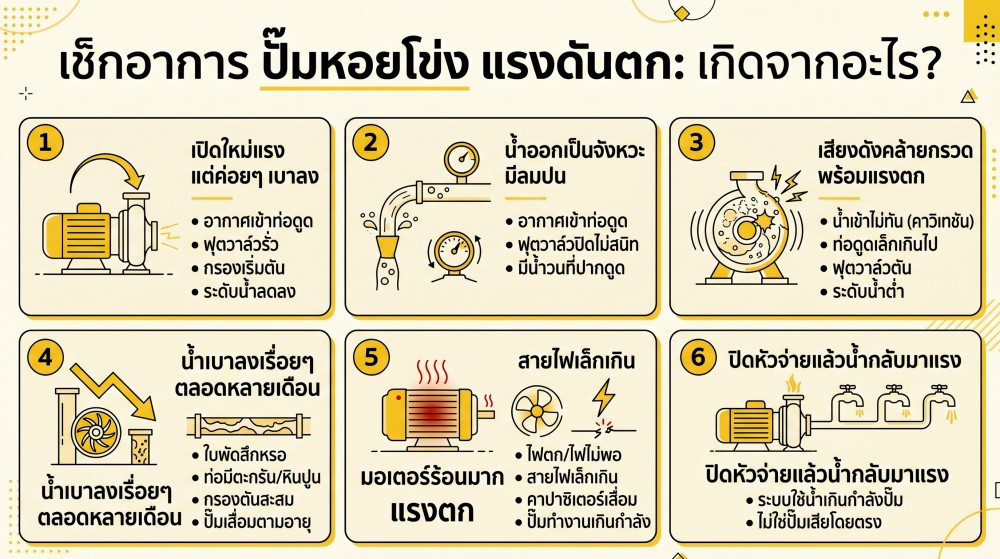
Basic Troubleshooting Steps Before Deciding to Replace a Centrifugal Pump
Before concluding that you need to buy a new centrifugal pump, we recommend troubleshooting from the easiest and lowest-cost points first, as many problems can be resolved without replacing the entire unit. Start by checking if the water source level is sufficient, whether the foot valve is submerged deep enough, and if there are whirlpools or air intake. Then inspect all points on the suction pipe for leaks, loose fittings, or deteriorated thread seal tape, before moving on to inspect the foot valve, filter strainer, and various valves.
Next, try cleaning the filter and foot valve, then turn the pump back on. If pressure returns to normal, the problem likely lies in a clog, not the pump itself. If it still does not improve, listen for cavitation noise from the pump, check whether the motor is unusually hot, and verify that the wiring size is adequate for the pump's power rating.
If you have checked everything and the water flow is still weak, you may need to open and inspect the impeller, pump casing, mechanical seal, and bearings—especially on pumps that have been used for a long time or operated with heavily silty water.
Conclusion
The symptom of strong initial flow turning weak can be caused by simple, overlooked issues (such as a clogged foot valve or a leaking pipe) to technical problems (such as air pockets or a worn impeller). The key is: don't rush to assume the motor is broken! A centrifugal pump doesn't work alone; it operates as a team with the entire plumbing system. To avoid wasting money on the wrong repairs, stay calm and go through these 3 steps:
- Step 1: Is enough water entering the pump? (Check the suction side, leaks, filter, and foot valve)
- Step 2: Is the pump generating normal pressure? (Check impeller noise, motor heat, and shaft seal leaks)
- Step 3: Is water demand at the destination too high? (Check if too many valves are open simultaneously beyond the pump's specifications)
Following these steps will help you narrow down the issue, fix it right at the source, save your money, and revive your water pump back to full, satisfying power!
Select Electric Centrifugal Pumps here