


 EN
 ไทย


Customers Also Purchased


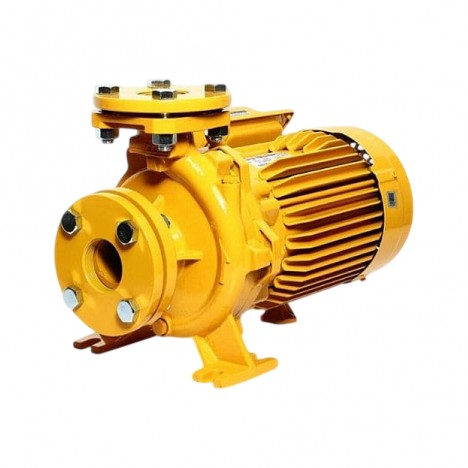


Many people who have just installed Electric Centrifugal Pumps for home or agricultural use often have a lingering worry: Is the machine designed for continuous operation? Or do we need to schedule rest periods to prevent motor failure? This question is crucial! Because how we operate it dictates the water pump's lifespan, monthly electricity bills, and overall system safety.
To clear up this doubt once and for all, in this article we'll explore and easily explain whether we can leave a centrifugal pump running day and night—and if faced with such heavy-duty tasks, how we should handle it to protect the machine and keep it running for a long time!
Are centrifugal pumps designed for continuous operation?
Before jumping to a definitive answer on whether running 24/7 is a sure thing, let's briefly understand the basic construction of a centrifugal pump. In fact, most centrifugal pumps—especially models used in industrial scales or large water systems—are engineered as heavy-duty workhorses with what is known as Continuous Duty specifications.
This means that theoretically and by design, its motor and structural components can easily run continuously day and night without needing any rest. But wait... this is crucial! Just because a machine is designed to do so doesn't mean it will survive safely under every situation!
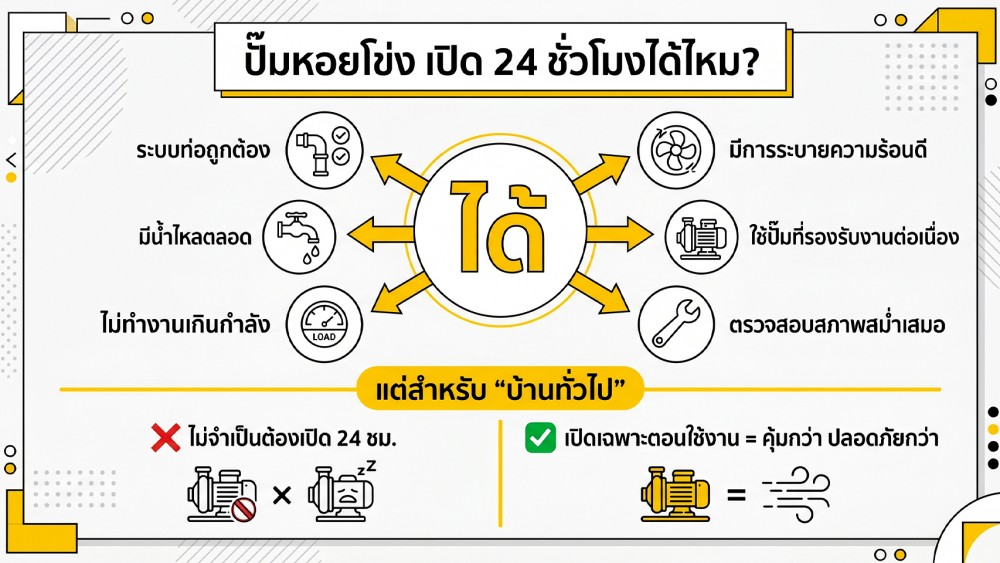
Running 24 hours is possible... but with conditions
To give the most straightforward answer: it's very easy to do if your water system is properly designed according to specifications. However, failure is certain if you misuse it, push beyond machine ratings, or work in unfavorable site conditions.
Here lies the crux of the matter... What determines whether your centrifugal pump can run 24 hours isn't just the pump's endurance alone, but is decided by the overall picture of the entire system the pump is connected to!
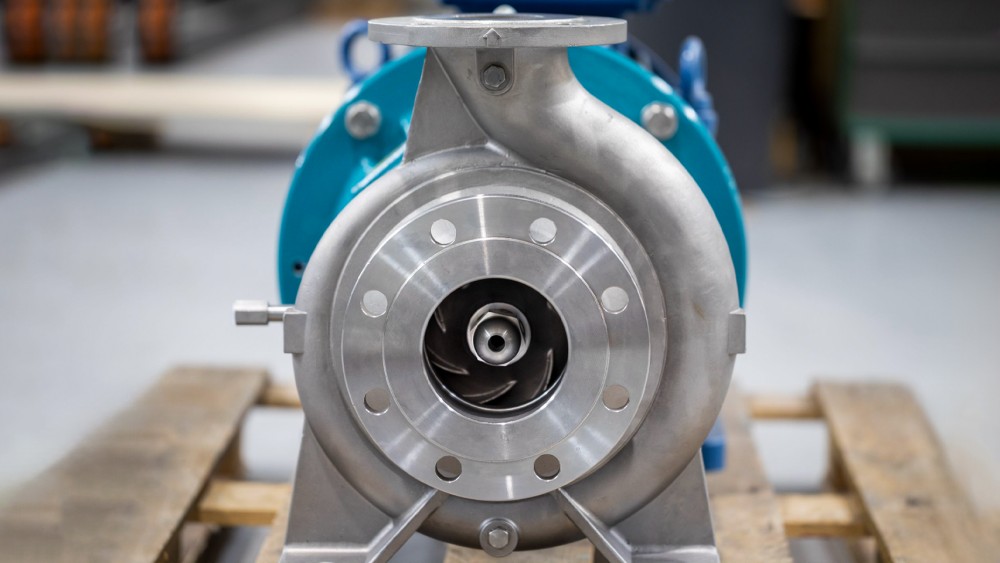
What determines whether a centrifugal pump can run 24/7?
Motor load (the burden it carries)
Every motor has its limits! If we exceed its specifications—such as using a small pump to push water to great heights or running water at multiple outlets simultaneously until the pressure drops—the machine has to strain and work beyond its limits. Consequently, heat will spike, continuously accumulating until finally... the motor burns out. A centrifugal pump meant to run day and night must operate strictly within its "equilibrium point"—never force it beyond its capacity.
Heat Accumulation (The Worst Enemy)
By nature, machinery radiates heat during operation. If you install the pump in a cramped, unventilated corner or leave it under blazing sunlight all day, heat won't be able to dissipate. Eventually, it will trap back into the motor windings, drastically shortening the machine's lifespan.
Flowing Water (The Ultimate Coolant)
Did you know that the water flowing through a centrifugal pump isn't just meant to be delivered to the destination, but also acts as a built-in coolant that dissipates heat and reduces friction? If the pump runs dry (Dry Run)—such as when a tank is empty, pipes are clogged, or a valve was forgotten to be opened—the centrifugal pump will overheat, melt its seals, and can be destroyed within minutes!
Piping System and Pressure (The Invisible Killer)
This is where most people stumble! If your pipe system is too small, has too many sharp right-angle elbows, or runs far beyond the machine's specs, these factors create backpressure and invisibly force the pump to work harder. Believe it or not, most centrifugal pumps don't fail because the pump itself is poor quality... but rather because the piping system and operating environment are improper!
Moving Parts (Seals and Bearings)
Running a centrifugal pump continuously for 24 hours is hardcore usage, subjecting the mechanical seal and bearings to constant friction. Especially if you use a budget model with less durable materials, these parts will deteriorate and wear out several times faster than normal.
Common Misconceptions
- Higher Horsepower = Can Run All Day: Not true. High horsepower = high pressure, but that doesn't mean “continuous durability.” If the system is not balanced, no matter how powerful the pump is, it can still break down.
- Leaving It Running Is Better Than Frequent On-Off Cycles: Only true in certain cases. In industrial systems, running continuously is better; in typical residential systems, turning it on only during use is better.
- Centrifugal pumps don't need any rest at all": The truth is, mechanically it doesn't need to rest, but it must operate in a suitable environment.
- Centrifugal Pump Operation and Maintenance Tips Every Technician Must Know
What Kind of System Can Truly Run 24 Hours?
Systems Built for a Marathon
- Industrial water systems: Water pumping tasks in factories that require continuous production lines.
- Cooling systems: Such as cooling towers in shopping malls or machinery requiring a constant water feed to reduce temperature around the clock.
- Circulation systems (e.g., filtration systems for large koi ponds or swimming pools)
- Large-scale smart agriculture systems that need to supply water to root zones or control humidity all day.
The secret behind why these systems survive (shared characteristics): These systems aren't just built by buying a pump and plugging it in. Instead, they feature 3 key elements that make them durable:
- Designed before construction: Pipe layouts, valves, and water intake are correctly planned from the very beginning.
- Precise spec calculations: Flow rate (water volume) and Head (pressure and delivery distance) are calculated to match the machine's specifications exactly, allowing the pump to operate at its "best efficiency point" without straining.
- A control panel with complete protection systems is installed, such as circuit breakers for overload protection or sensors that immediately cut off operation when running dry.
What about typical homes? Should it be run 24 hours a day?
Many people might think that leaving it on all the time ensures it's always ready for use. But in reality, doing that indirectly damages the machine, because...
- We don't actually use water all the time: Water usage patterns in a typical house or garden are usually periodic (like taking a shower in the morning or watering plants in the evening), not running continuously 24 hours a day like in a factory.
- The machine runs without purpose: When the pump is left on but no taps are turned on, the pump keeps trying to build pressure, causing deadheading (operating without actual flow to release). With no water circulating, heat builds up until the motor overheats.
- Electricity bills skyrocket: Letting the motor run idle or standby under no-demand conditions is simply throwing money away on power bills.
- A silent time bomb waiting to go off: Imagine an unexpected event occurring, such as a pipe leak, a stuck float valve, or the water tank running dry overnight while you're asleep. A pump left running will run continuously until the motor coils burn out... By the time you realize it, the motor is already dead!
Select Electric Centrifugal Pumps here