


 EN
 ไทย


Customers Also Purchased
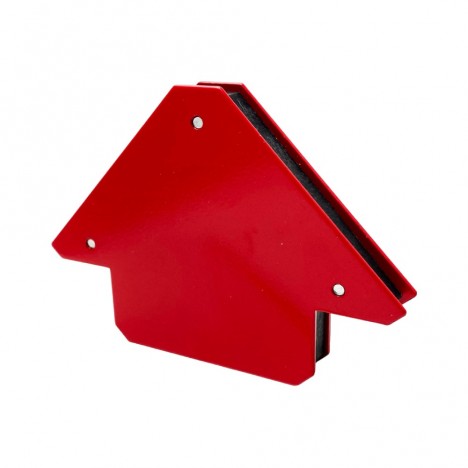


When talking about welding, we usually think of welding machines, welders, welding rods, or craftsmanship, right? But did you know that small accessories like Welding Magnets also affect work quality? They help hold workpieces at the desired angle before welding, keep the work stable, facilitate positioning, prevent metal from shifting during welding, and crucially, if the angle is set incorrectly, no matter how strong the weld is, the assembly could end up crooked or misaligned.
The next question is: does the size of a magnetic welding square really affect precision? Is a larger one always more accurate than a smaller one? In reality, size affects holding power, contact surface area, and workpiece stability, but that doesn't mean a large one is best for every job. For some tasks, a smaller one offers greater maneuverability. Conversely, for heavy or long workpieces, using a magnet that is too small may allow the piece to shift, leading to angle distortion.
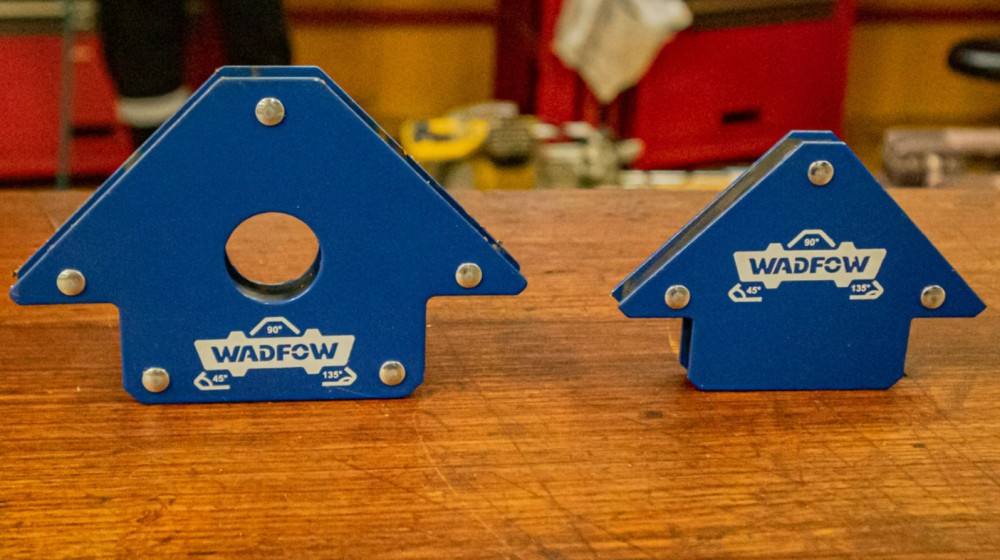
So, let's take a look at how small, medium, and large magnetic welding squares differ. In what ways does size affect accuracy, and which type should you choose for actual welding jobs? This will help you set up workpieces with more confidence and reduce tilt, twisting, or the need to rework after welding.
What is a magnetic welding square, and why should you use one for welding?
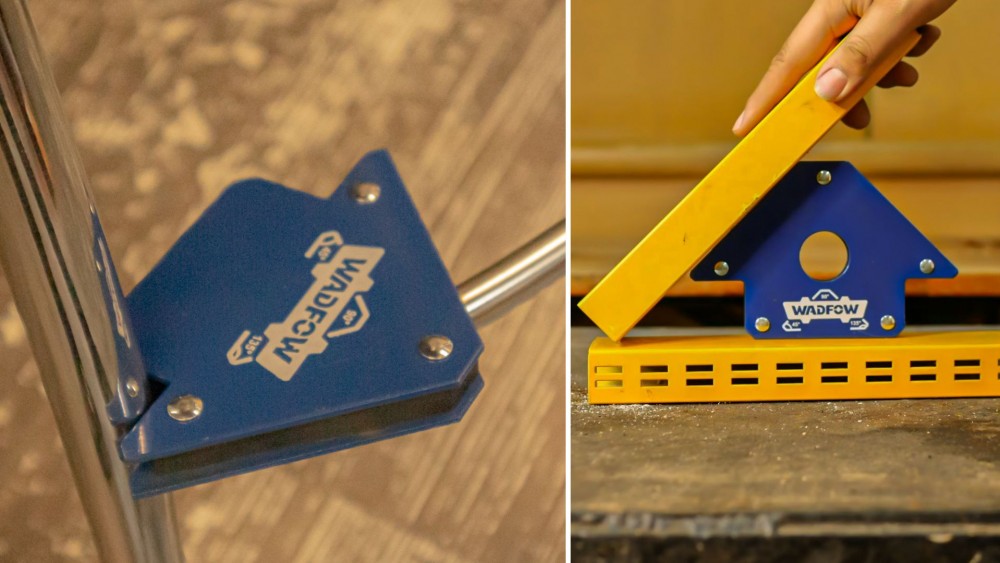
Magnetic welding squares: an essential tool for professional welders Used to hold metal workpieces at desired angles, such as 45 degrees, 90 degrees, or 135 degrees. Commonly used with square tubes, angle iron, flat bars, pipes, or various steel frames before tack welding and final welding. This tool is essential for helping welders work solo more easily, without needing hands to hold the workpiece all the time.
The importance of magnetic welding squares lies in the "setup before welding" phase, because if the setup is off, the final work may end up crooked. Even so, we must understand that magnetic squares are designed to hold pieces in place, not to serve as high-precision measuring tools. If the welding job requires extreme precision, they should always be used alongside try squares, tape measures, vernier calipers, or additional clamps.
Does the size of a magnetic welding square really affect accuracy?
The answer is It does, but it does not mean that "bigger is always more accurate." The size of a magnetic welding square affects stability, holding force, contact area, and weight capacity for the workpiece. The larger or longer the work, the greater the torsional and leverage forces. If you use a magnet that is too small, the workpiece may adhere, but it can still shift or slide during alignment.
Conversely, a large magnetic welding square holds workpieces significantly more steady, but that does not mean you will get a truer angle. Straightness still depends on manufacturing quality, contact surface, workpiece cleanliness, and positioning methods. Metal shavings sticking to the surface or not placing it flush against the workpiece can still cause angle deviations.
Larger does not always mean more precise angles.
Large magnetic welding squares perform well at holding workpieces steady, especially for heavy steel or framing jobs. However, angle accuracy—such as a true 90 degrees—does not depend on size alone. If a small magnet is well-made, has a flat surface, and is used with a suitable workpiece, it can also set angles very effectively.
"Stability" and "precision" are not the same thing. A magnetic welding square helps keep the workpiece stable, but if you need true precision, you should always re-measure with a square before fully welding.
How is the holding force of a magnetic welding square related to size?
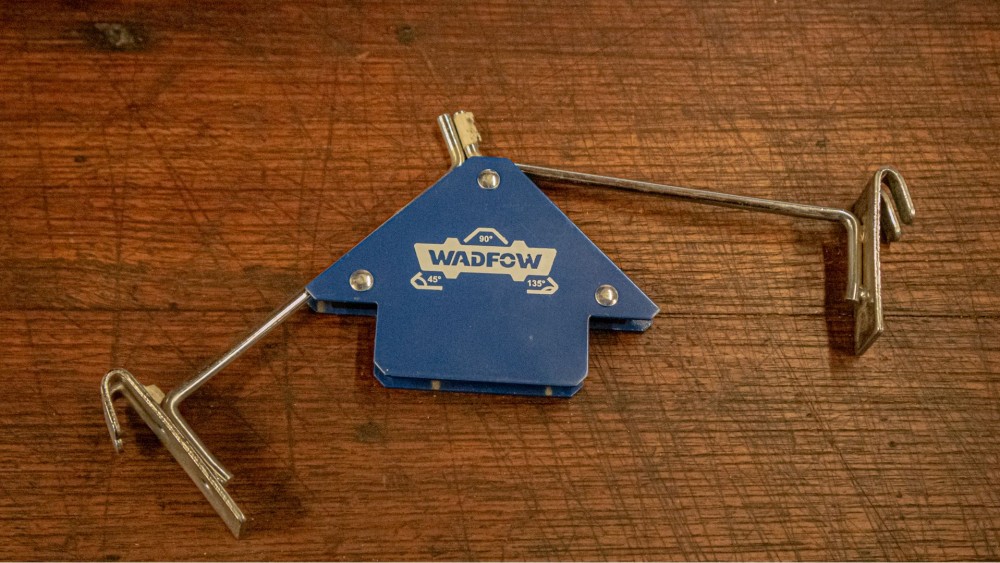
Generally, larger magnetic welding squares have stronger holding force because they have a larger contact area and more magnetic material. However, actual holding force also depends on the workpiece's surface condition. If the surface has rust, thick paint, oil stains, weld spatter, or steel dust, the holding force will decrease—even if the magnet is rated for high holding power.
If the holding force is insufficient, the workpiece may shift slightly during tack welding, especially with long square tubing where the other end carries cantilever weight. Crucially, a slight deviation at the clamping point can turn into a mismatch of several millimeters at the end of the workpiece.
Furthermore, if you ask whether What is the average lifespan of a magnetic welding clamp? How to use it without premature degradation? There is no specific numeric answer. Just avoid placing it too close to the weld seam, as heat and weld spatter can cause the magnet to degrade prematurely or get dirty enough to prevent flush contact.
Too Much Magnetic Pull Isn't Always Better
Welding magnets with very high magnetic force are great for heavy-duty work. However, when used on small parts, thin metals, or tasks requiring frequent fine adjustments, extreme pull force can make moving the workpiece difficult, requiring so much effort to pull free that the alignment shifts. In addition, high-strength magnets attract metal shavings and dust easily, requiring frequent cleaning; otherwise, trapped debris will prevent flush contact and throw off the angle.
What Kind of Work Are Small Welding Magnets Best Suited For?
Small welding magnets are ideal for small parts, tight spaces, or jobs requiring high maneuverability—such as small mounting brackets, flat bars, thin square tubing, or craft projects. Their strengths are that they are easy to pick up, easy to position, unobtrusive, and do not obstruct much of the weld seam.
Their limitation is lower magnetic pull and contact area. If used with heavy steel or very long workpieces, they might not hold securely enough, requiring support by hand or using multiple magnets together. Small welding magnets are therefore best suited for low-stress tasks, and the angle should always be rechecked before full welding.
Highlights of the Small Size
The advantage of small welding magnets is that they are lightweight and take up little space, making them ideal for tight corners, small points, or workpieces where large magnets cannot reach. When used for suitable applications, small magnets provide great precision and convenience, rivaling larger ones.
Are Medium-Sized Welding Magnets the Most Versatile?
For most users, medium-sized welding magnets are usually the most worthwhile choice because they strike a balance between maneuverability and holding power. They work well with general square tubing, shelving, light steel structures, small gates/fences, or general repairs—not too small to hold the work, and not too big to position comfortably.
The medium size is ideal as a first tool for beginners: it provides decent holding power, fine adjustments are still manageable, and it pairs well with angle squares or clamps. If you work on a wide variety of tasks, starting with a medium size is much more practical than going for extremely small or oversized magnets.
Should You Have More Than One Size of Welding Magnets?
In practical welding, different points on a workpiece require different holding forces. Some points need a large magnet to bear the main load, some need a small one to support secondary corners, and some need a medium one to keep from obstructing the weld seam. Having welding magnets of multiple sizes allows for much more flexible setups than relying on a single size for everything.
How Heavy-Duty Are Large Welding Magnets?
Large welding magnets are suited for heavy structural steel, large frames, fences, steel tables, or jobs with long pieces and high leverage forces. Their key strengths are high magnetic pull and large contact area, both of which help keep the workpiece steady during fit-up.
The downside of large welding magnets is that they are heavy, harder to reposition, can obstruct weld seams, and lack agility when used on very small workpieces.
For Large Jobs, Is One Big Welding Magnet Enough?
Not necessarily. For structural or long workpieces, using multiple magnets together is better than relying on a single large one, as it distributes the load, prevents workpiece rotation, and maintains control over multiple points. If high precision is required, reinforce the setup with clamps and recheck measurements before welding completely.
Accuracy Doesn't Rely on Welding Magnets Alone?
Welding magnets make fit-up easier, but welding accuracy also depends on thermal shrinkage. When metal is welded and then cools down, tensile forces can cause the workpiece to warp or shift angles. Therefore, an assembly that was perfectly squared initially may still warp after full welding.
The way to reduce problems is to tack weld at multiple points first, recheck the angle, and then proceed with full welding. Alternating sides while welding or allowing the workpiece to cool periodically can also help minimize distortion. Therefore, magnetic welding clamps are merely tools to assist in setup, not a total fix for distortion problems.
Common Mistakes
Issues that cause distortion even when using magnetic welding clamps often stem from placing the magnet on surfaces with rust, weld spatter, or debris, preventing true flush contact. Another case is using an undersized magnet on an overly heavy workpiece and assuming that "just sticking to it is enough," even though the holding force may not withstand the workpiece's torsional stress.
Another point is doing a full weld immediately without rechecking after tacking. After the first tack, the workpiece may have shifted or been pulled by shrinkage forces. You should recheck the angle before laying down the actual full weld to minimize later rework.
How to Choose the Right Size of Magnetic Welding Clamp for the Job
Choosing a magnetic welding clamp should primarily depend on the nature of the work, rather than selecting based on size alone. The simple guideline is that the magnet must have enough holding force to keep the workpiece steady, provide adequate contact area with the work, and not obstruct the weld seam. If it is too small, it won't hold securely; if it is too large, it will be cumbersome to place and get in the way. Professional welders therefore keep multiple sizes.
- Small parts, DIY projects, general repairs: Use small or medium sizes.
- Box section steel, fencing, structural frames: Use medium to large sizes.
- Long workpieces or those with high leverage forces: Multiple clamps should be used together.
- Jobs requiring high precision: Should be used in conjunction with try squares and clamps.
- Before use, always clean both the steel surface and the magnet face.
Once the workpiece is firmly held by tack welds, you may remove the magnetic welding clamp before fully welding in areas of high heat to extend its lifespan and keep the weld seam clear of obstructions.
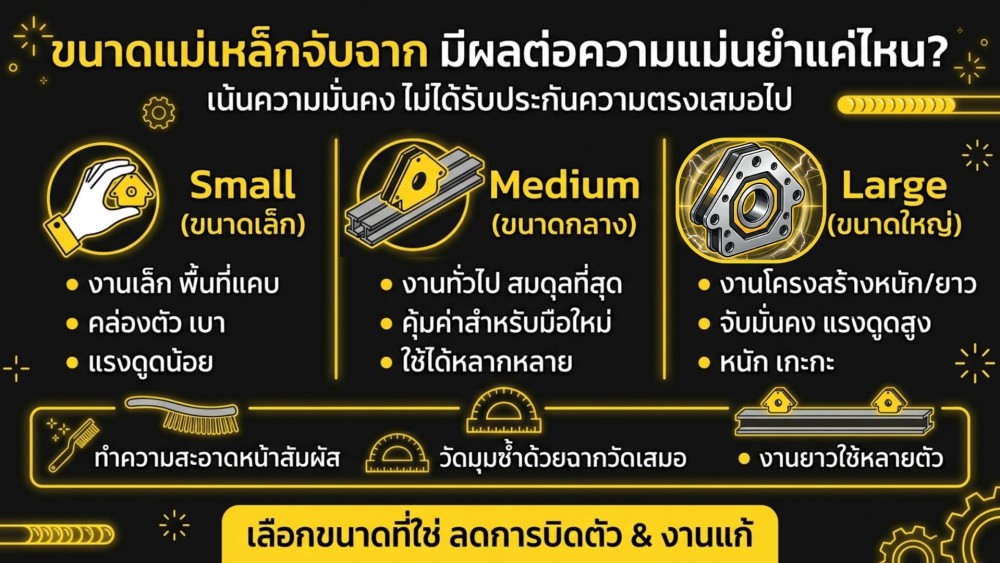
Conclusion: The size of a magnetic welding clamp matters, but it must be matched to the right job.
In conclusion, the size of a magnetic welding clamp does affect welding accuracy, but primarily in terms of holding stability rather than guaranteeing that the angle will inherently be truer.
Larger units help hold heavy workpieces steady; smaller ones offer agility and suit delicate work; while medium sizes are versatile and ideal as a starting size. Do not use magnetic welding clamps as a substitute for measuring tools. If true precision is required, use them alongside try squares, clamps, precise measuring, and welding techniques that minimize heat distortion.
Choose the right size Welding Magnets for the job, clean surfaces before use, and check angles before fully welding every time. Just by doing this, your welding work will be more stable and accurate.
and significantly reduces the chance of rework, even when working alone.