


 EN
 ไทย


Customers Also Purchased


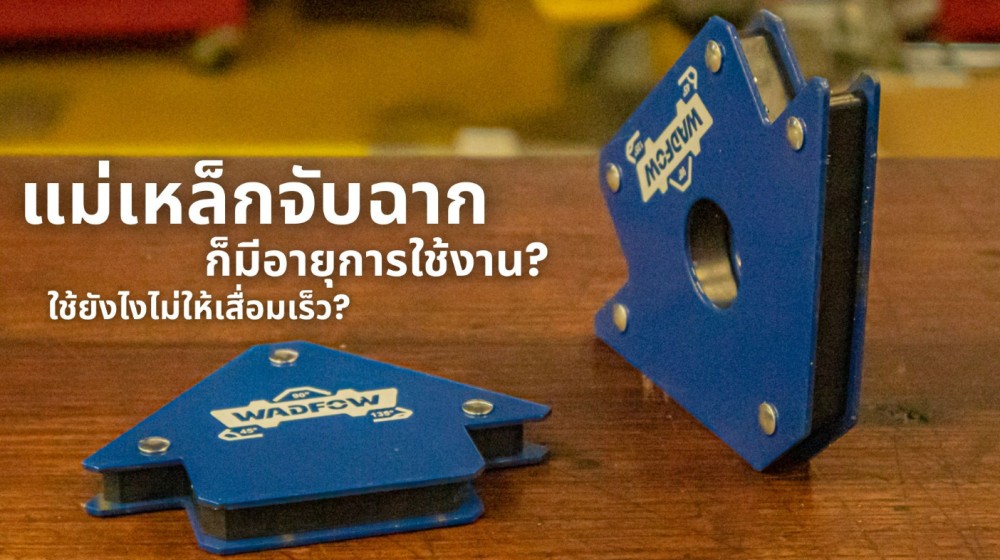
Any welder who has often picked up Welding Magnets and used one frequently has probably had this question pop up in their head at some point. “Why did this same magnet hold so tight before, but lately it feels like its holding power is gone?” Or some might wonder even further: does a magnetic welding clamp actually have a "lifespan," or should it retain the same suction power throughout its life because it's a permanent magnet?
These questions may start from curiosity over accumulating small incidents—like clamping steel and feeling the need to provide extra support, the workpiece shifting on its own during welding, or sometimes having to grab another magnetic clamp to help even though one used to be enough. Many think this is about skill, timing, or rushing, but in reality, the root cause might simply be that the condition of the magnetic clamp is no longer as intact as before.
Therefore, in this article, we will delve into what many people might not yet know about the lifespan of magnetic welding clamps—from general average figures and factors causing premature degradation, to storage methods that seem trivial but truly affect suction power with noticeable long-term results.
Do magnetic welding clamps really have a lifespan?
In physics, "magnets" do not have an expiration date like dry cells or batteries, nor do they degrade by suddenly stopping working like electrical equipment. However, looking from the perspective of practical use, especially Magnetic welding squares: an essential tool for professional welders having to endure heat from welding, impacts from repetitive work, as well as metal shavings and iron dust that continuously accumulate, their lifespan will certainly not be as ideal as a general magnet should be.
Most magnetic welding clamps on the market, both fixed-angle and adjustable magnetic welding clamps, are made from high-strength permanent magnets such as neodymium or metal-bonded ferrite. The magnet itself may retain its magnetic field for decades, but the "practical holding power" will gradually decrease according to daily operating conditions.
Simply put, a magnetic clamp will not "die" instantly, but it can noticeably weaken, especially if exposed to extreme heat or welding debris.
How many years can a magnetic clamp last when exposed to high heat?
To put it into concrete numbers, it can be summarized straightforwardly as:
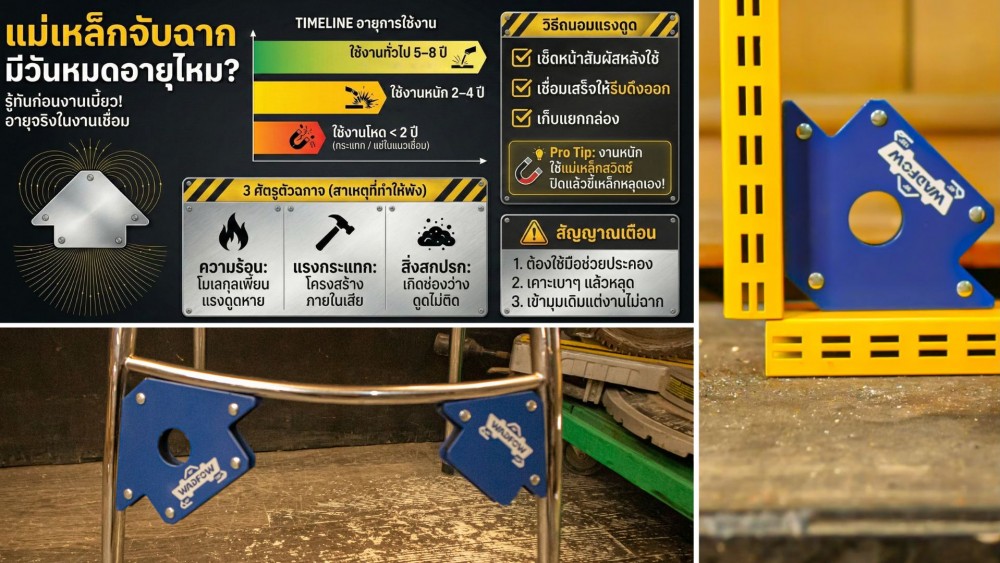
- General, non-heavy-duty use: Around 5–8 years, with magnetic pull remaining at a usable, effective level.
- Heavy use, frequent welding, regularly exposed to heat: 2–4 years, you will start to notice the magnetic pull is not the same as before.
- Used without care, stored among scrap iron, thrown into toolboxes: Sometimes in less than 2 years, the magnet will fail to perform at full capacity.
Why do magnetic welding clamps degrade when they are permanent magnets?
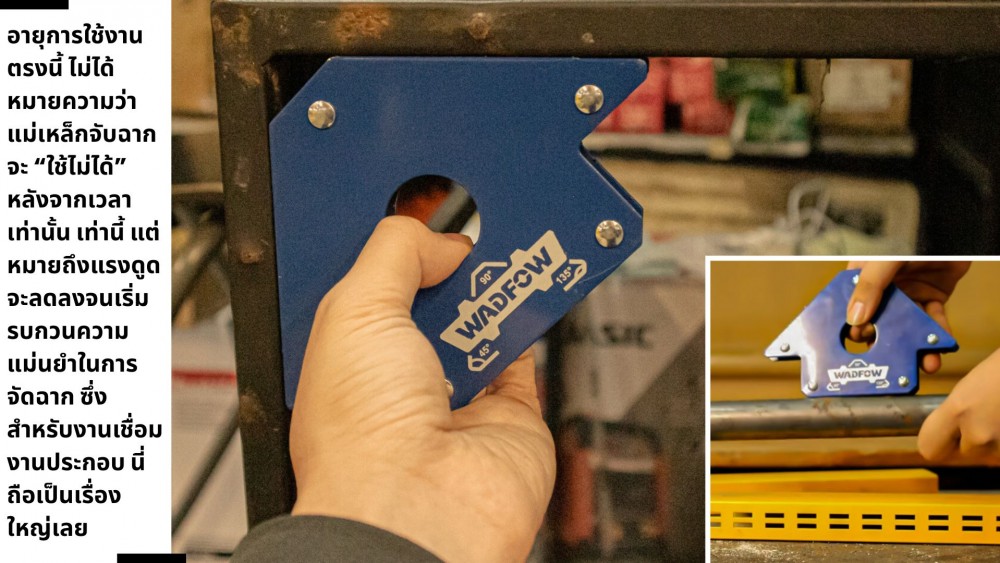
Many people assume that magnetic welding clamps are permanent magnets that should retain the same holding power forever, no matter how long they are used. In reality, magnetic fields can weaken due to various factors during actual use—especially in tasks involving heat, impact, and environments unfavorable to preserving magnetic properties.
Heat from welding: the biggest silent culprit
Most magnets do not tolerate heat well, especially strong magnets like neodymium, which are often used in magnetic welding clamps requiring high holding force. When exposed to heat buildup from weld seams or left near freshly welded workpieces, the internal magnetic field is disrupted, causing a permanent reduction in holding power.
The clearest example is leaving a magnetic welding clamp attached to hot steel, thinking you'll remove it in just a moment. This is often the unnoticed starting point of magnetic degradation.
Impact and drops
Magnets are vulnerable to impacts. Dropping them on the floor, tossing them into a toolbox, or subjecting them to repeated shocks disrupts the internal magnetic alignment of the welding clamp. The magnetic field scatters, weakening the holding force. Even if there are no visible cracks or breaks on the outside, internal damage has already occurred.
Accumulated iron filings give a false sense of holding power
Another common misconception is thinking "the magnetic welding clamp is still holding strong" when its actual holding power has decreased. Iron filings and metal dust covering the magnetic surface can make it seem strong, but during actual use, it won't hold workpieces as securely as before.
Can a degraded magnetic welding clamp be repaired?
The straightforward answer is: It cannot be repaired. and It cannot be remagnetized. For general everyday use, magnetic welding clamps are not designed to have their magnetic fields easily restored like replacing spare parts or fixing mechanical components. Once the pulling force drops, it is considered direct internal degradation of the magnet's structure.
In industrial contexts, although remagnetizing a magnet is technically possible, it requires specialized equipment like high-power magnetizers and complex control procedures. The equipment, time, and energy costs are extremely high. Compared to the price of a standard tradesman's magnetic welding clamp, it simply isn't cost-effective, and virtually no one chooses to do so.
Therefore, if the magnetic clamp's holding power drops to the point where it affects work precision—whether through misaligned angles or workpieces shifting easily—the most practical option is replacement. This preserves workpiece quality and reduces the risk of costly mistakes.
How to Store Magnetic Welding Squares to Prevent Premature Degradation?
Well-maintained magnetic welding squares can extend their service life by several years and help maintain a holding force close to when they were brand new.
This might sound basic, but small daily storage and usage habits for magnetic welding squares make a clear difference between magnets that last long and those that degrade sooner than they should.
1. Do Not Store Near Heat and Do Not Leave Attached During Welding
After use, remove the magnet from the workpiece immediately. Do not leave it exposed to accumulated heat, because even if the heat is tolerable to the touch, this heat buildup directly affects the internal structure and magnetic field.
Additionally, do not place magnetic welding squares near welding machines or still-hot workpieces, as continuous heat will accelerate the loss of holding force faster than usual.
2. Keep Away from Impacts
Do not throw magnetic welding squares together with other steel tools or let them bump around in a toolbox. Storing them in a separate box or a dedicated compartment will help reduce repeated impacts. These frequent minor shocks are a major cause of the gradual disruption of the internal magnetic structure.
3. Clean the Magnetic Faces Regularly
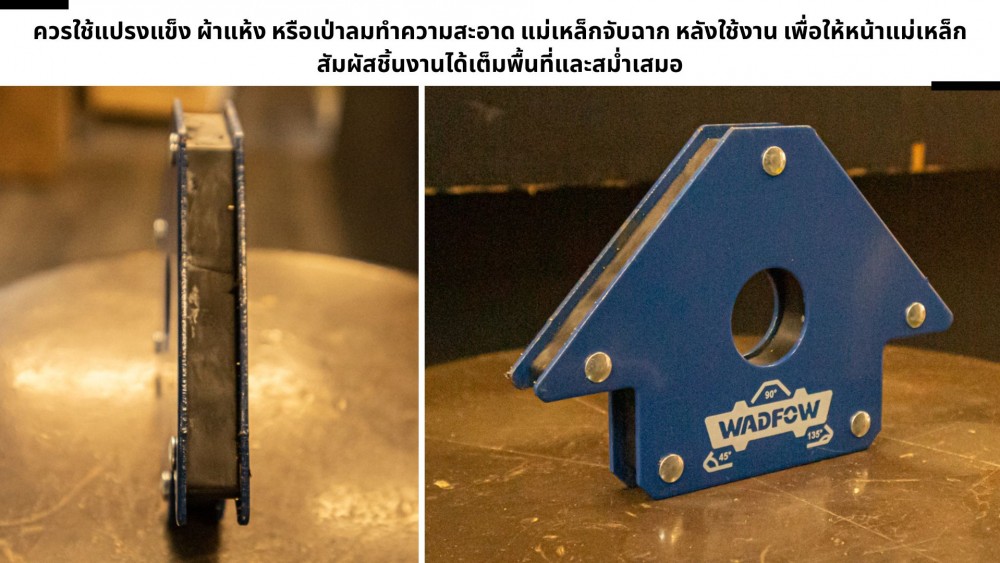
Iron shavings and debris adhering to the magnetic face do not increase holding power as many might think. On the contrary, they create an uneven contact surface and reduce the actual contact area between the magnetic welding square and the workpiece.
4. Do Not Misuse for the Wrong Purpose
Magnetic welding squares are designed to assist in aligning and supporting workpiece positions, not to bear weight in place of hands or clamps. Forcing them to bear heavy loads or using them as permanent fixtures constantly overloads the magnets and can accelerate the loss of holding force.
Warning Signs That Your Magnetic Welding Square is Failing
Often, magnetic welding squares do not fail visibly all at once. They do not break or crack, and they still stick to steel as usual. However, even a slight reduction in holding power is enough to cause misalignment in welding, assembly, or squaring. Let's look at the warning signs that gradually appear, which can save time, effort, and rework costs in the long run if caught early.
Holding the Workpiece Feels Like It Needs More "Manual Support"
This symptom is often the first sign that many people notice but choose to overlook because it is still somewhat usable. In reality, the magnetic holding force has diminished to the point where it cannot hold the workpiece as securely as before. Needing to support it by hand or constantly readjust the position indicates that the magnet is working near its limits.
The Workpiece Shifts Easily Despite Being in the Same Position
If you set the same angle using the same magnet, but the workpiece shifts more easily than before without any change in weight or size, this is a clear sign that the actual holding force has decreased. It is not an issue of skill or carelessness, but rather the equipment's performance no longer meeting precision requirements.
The Magnet Sticks, but Detaches Easily When Welding or Lightly Tapped
This symptom typically occurs with magnets that have already degraded to a certain level. They still have enough pull to attach to the workpiece, but cannot resist vibrations, heat, or recoil from welding. With just a minor disturbance, the magnet immediately comes loose, posing risks to both work quality and operational safety.
Many people try to keep forcing the use of magnetic welding squares with weakened suction because they think they're still usable. However, a slight deviation from misaligned angles can mean crooked weld beads, rework, or wasted time costing far more than the price of a magnet. Sometimes, replacing it with a new magnetic welding square is a much more worthwhile investment than pushing through with an old one whose performance has degraded.
Conclusion
Magnetic welding squares don't last forever. Even as permanent magnets, their magnetic force can degrade from heat, impact, and improper use. If you want your magnetic welding square to last long and maintain its original "precision," there are just a few key things to do consistently, including:
- Avoid unnecessary use near accumulated heat from welding
- Reduce impacts from drops or storing mixed together with other tools
- Clean the magnetic surface after use so it makes full contact with the workpiece
- Use it for its intended purpose: alignment assistance, not as a clamp or to bear heavy loads
When properly cared for, Welding Magnets it will last longer, maintain precision in your work, reduce repetitive rework,
and save on hidden costs in the long run.